Category Archives: Hiking

hiking

Duluth, MN Part 1 June 12, 2017

On Monday we left Wild River State Park and headed further northeast to Duluth.  As we approached Duluth we had splendid views of Lake Superior.  Duluth with a population of 86,000, is located on Lake Superior and the St Louis River.  It is one of the largest inland seaports in the world and an important grain center.  All along the busy forty-nine miles of dock waterfront, you can see grain elevators, ore docks and shipyards.  Duluth has plenty of outside activities with more than 130 city parks, 178 miles of trails, and sixteen designated trout streams.IMG_20170612_153958

Duluth has a rich history.  In 1869, due to the booming lumber and mining industries as well as the arrival of the railroad, it was the fastest growing city in the United States. We crossed the railroad tracks to get to the campground and we saw this strange sign.IMG_20170614_132225

When we arrived at the campground it was 80+ degrees and sunny.  The next day it barely reached 50 degrees and was overcast with occasional rain showers.  

Wednesday was more of the same with a heavy fog blanketing the area and we heard occasional fog horns in the distance.  We didn’t want to spend another day at home missing all Duluth had to offer, so we bundled up and decided to visit two museums downtown.

The first was a very small museum called the Karpeles Manuscript Library Museum.  It was a museum we probably wouldn’t have taken time to visit on a sunny day, but on a cold rainy day it was great.  The library museum, housing one of the world’s largest private manuscript collections, is inside a former Christian Scientist Church. It had original manuscripts, documents and handwritten letters, including letters from the Wright Brothers, small collections of Egyptian carvings, old telephones, ship models, and Plains Indians Treaties.  Currently they have a special collection on Bob Dylan.  Dylan was born in Duluth and went to elementary school there.  There is a 1.8 stretch of road in Duluth named “Bob Dylan Way”.  The manuscript library had some of his personal handwritten letters, handwritten sheet music and a copy of his 2016 Nobel Prize in Literature.  We found out he was born Robert Zimmerman and changed his name to Bob Dylan.  They had a copy of the court order application to change his name.  IMG_20170614_150854IMG_20170614_151025IMG_20170614_151031IMG_20170614_152142IMG_20170614_152159

We learned the owners of the museum, David and Marsha Karpeles of California, also own museums in Jacksonville, FL, Buffalo, NY, Newburgh, NY, Tacoma, WA, Charleston, SC and Santa Barbara, CA.  The collections are rotated among the museums.  The Karpeles think that once someone has mastered textbooks and reference books in their field, they can then verify, analyze and extend their knowledge by examining and consulting original manuscripts written in an individual’s own handwriting.  The Karpeles see it as a way to see a person’s first thoughts since you can see on the documents thoughts and ideas crossed out, ideas added but left out in the final document, as well as additional thoughts added later between the lines.

20170614_160527Next we visited the Lake Superior Maritime Visitor Center.  Here they had informative displays on the history of Lake Superior shipping including replicas of ship cabins, an operating steam engine, scale models of ships and information on shipwrecks and bridges.  They also had interesting displays on the history of the Army Corps of Engineers.  We learned Congress authorized a Corps of Engineers in 1779 to support the Continental Congress.  Its first mission was the building of fortifications to defend Boston at the Battle of Bunker Hill.  After victory at Yorktown and peace in 1783, the Corps of Engineers was dissolved to save money.  IMG_20170614_155435IMG_20170614_155816IMG_20170614_160131

In 1802 President Thomas Jefferson signed legislation to organize and establish a Corps of Engineers to be stationed at West Point and to constitute a military academy.  They played a large role during the Civil War while building roads and railroad bridges, forts and batteries and destroying enemy supply lines.  In the 20th century the Corps of Engineers contributed much to military construction in supporting the U.S. Army and Air Force as well as works of a civil nature.  They helped with federal flood control, hydroelectric energy and the country’s leading provider of recreational facilities.

Corps of Engineers projects included:

  • In Washington DC
    • Construction of the Washington Monument
    • US Capitol dome
    • Lincoln Memorial
    • Library of Congress
    • Washington DC water supply system and subways
  • Panama Canal
  • Bonneville Dam
  • The Manhattan Project
  • Planning and construction of the Pentagon
  • Everglades Restoration Plan
  • Construction at the Kennedy Space Center

We decided to run to Walmart to get some supplies and it was actually faster and closer to the campground to cross the bridge to Superior, Wisconsin than go to the one in Duluth.  The ports of Duluth and Superior are called “Twin Ports”.  They are the leading bulk cargo transshipment ports on the Great Lakes-St Lawrence Seaway system.  More than forty million tons of bulk cargo are shipped in and out each season, the most of the Great Lakes and one of the top twenty nationally.

On Thursday the temperature rose and the skies cleared so we decided to tour the Duluth lakefront area.  We parked at Bayfront Festival Park and walked over four miles.  Along the way we saw a replica of the Statue of Liberty,IMG_20170615_131340IMG_20170615_131438

Minnesota Slip Bridge,IMG_20170615_132333

the Aerial Lift Bridge,IMG_20170615_13063820170615_133234

Korean and Vietnam War Memorials,IMG_20170615_135126IMG_20170615_135104

and Leif Erikson Park where Erikson made his legendary landing somewhere along the rocky shore in approximately 1,001 AD (almost 500 years before Columbus).  IMG_20170615_141712IMG_20170615_141725

IMG_20170615_132916We also found the Duluth’s Ten Commandments Monument.  In 1946 a judge, who was a member of the Fraternal Order of the Eagles, sentenced a sixteen year old boy to memorize the Ten Commandments.  This led local chapters of the Fraternal Order of the Eagles to to finance construction of over 4,000 tablet shaped granite monuments to be dispersed around the nation.  Two Minnesota granite companies produced the monuments and in 1957 the monuments were donated to public places around the country.  This was done at the same time as the release of the movie “The Ten Commandments” and some stars of the film attended various monument dedications around the country.  This monument was displayed in front of the Duluth City Hall for almost 47 years.  Due to a threatened lawsuit by the American Civil Liberties Union of Minnesota it was removed in May 2004 and put up for auction.  Local citizens rallied to raise money but the winning bid came from a church in Lakeville, MN.  The church gave the monument to a group of Duluth citizens who placed it here on private property in late 2004.  

We enjoyed the great walk on a nice paved walkway with magnificent views of Lake Superior.  Across the Lake we could see Wisconsin in the distance.IMG_20170615_135432IMG_20170615_142819

After our walk we drove across the Aerial Lift Bridge to Park Point which is the world’s longest freshwater sandbar, spanning seven miles.  This area is popular for swimming and beach lovers.  We saw a sign saying the water temperature that day was 51 degrees.  Yikes!

On the way home we were held up at the Aerial Lift Bridge while we waited for the Mesabi Miner ship to pass under the bridge.  We were thrilled because we were able to see this very unusual 386 foot long bridge in action.  It is an elevator bridge that spans the Duluth Ship Canal.  The support columns on either side have counterweights that balance the lifting portion of the bridge.  The bridge can be raised to its full clearance of 135 feet in about a minute and has a 1,000 ton lift span.  It was first raised in 1930 and is raised about 5,000 times a year. The Mesabi Miner is an American coal and iron ore carrier that operates on the upper four North American Great Lakes.IMG_20170615_154407IMG_20170615_155333IMG_20170615_155354

Next blog: More exploring along the Minnesota North Shore

Minnesota Facts:

  • The company Target’s headquarters is in Minnesota.
  • Famous people from Minnesota include Judy Garland, F. Scott Fitzgerald, Peanuts cartoonist Charles Shultz, Bob Dylan, Prince, novelist Sinclair Lewis, former wrestler, actor and governor Jesse Ventura, Loni Anderson, Richard Dean Anderson, James Arness (Gunsmoke) and brother Peter Graves (Mission: Impossible), Eugene McCarthy, former Vice President Walter Mondale, Harry Reasoner, Jane Russell, Marion Ross
Wild Water & Interstate State Parks, MN June 11, 2017

On Sunday we drove to Wild River State Park located north of Minneapolis/St Paul. They were calling for severe weather to pass through that area so we delayed our departure from Whitewater State Park an hour to allow time for the bad weather to pass.  Even so, along the way the sky became dark as night and we found a safe place to pull over for the rain to pass and the sky to brighten.

20170611_132838We passed through St Paul, crossing the Mississippi River, and since it was a Sunday the traffic was light.  Luckily we did not encounter any severe weather but at one point we saw what looked like snow along the side of the interstate. We realized it was hail from the earlier storm.20170611_132724

We arrived at Wild River State Park located along the St Croix River.  It is called Wild River State Park because it is named after the St Croix River’s designation as a “National Wild and Scenic River”.

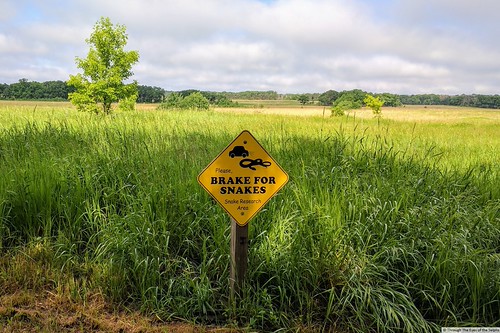
IMG_20170612_092130Upon arrival I was alarmed to see signs asking to brake for snakes, and we were not happy to find out that the earlier storm had knocked out power to the campground.  We were supposed to have an electric site but the power never came back on until about five minutes before we left.IMG_20170612_095237IMG_20170612_095140

On Monday we drove to nearby Interstate State Park​.  Established in 1895, Interstate State Park is made up of two parks, one in Minnesota and one in Wisconsin.  The Minnesota park is 1,330 acres and the Wisconsin park is 298 acres.  They​ both straddle the Dalles of the St Croix River, a deep basalt gorge with glacial and rock formations.

IMG_20170612_100930A billion years ago basalt rock formed here when lava escaped from a crack in the earth’s crust.  Ten thousand years ago, water from melting glaciers carved the river valley.  Within that melting water were fast moving whirlpools of swirling sand and water that wore deep holes in the rock, called glacial potholes.  There are more than 400 examples​ of the glacial potholes in the Minnesota park.  IMG_20170612_100503IMG_20170612_101827IMG_20170612_103426IMG_20170612_103109

We walked along the Glacial Pothole Trail where we could see some of the larger potholes.IMG_20170612_101153IMG_20170612_101204IMG_20170612_101347IMG_20170612_101442IMG_20170612_103025IMG_20170612_103031

This large pothole has stairs.IMG_20170612_102602IMG_20170612_102254IMG_20170612_102452IMG_20170612_102146

We then drove back to Wild River State Park, packed up and headed to Duluth.

Next stop: Duluth, Minnesota

Altura, Wabasha & Winona, MN June 8, 2017

IMG_20170609_154231Leaving Chester Woods County Park on Thursday, we continued traveling north through Minnesota’s dairyland.  We only had to drive a short distance to Whitewater State Park near Altura, Minnesota.  This is a lovely state park with lots of green areas and nice spacing between sites.

After getting settled into our spot, we decided to take a short hike in the park to Chimney Rock.  We crossed a pretty bridge with a little babbling creek beneath it.  The hike was rated as moderate and it definitely was not easy with many steps, some steps high and requiring stepping up high, not easy for someone with short legs like me.  Along the way I really wished I had brought along my walking sticks, but Bill is always willing to give me a helping hand.IMG_20170608_145345IMG_20170608_141441IMG_20170608_145157IMG_20170608_143154IMG_20170608_143101IMG_20170608_141341

20170609_103047On Friday we drove to nearby Wabasha to visit the National Eagle Center.  Wabasha is a lovely historic town, one of the oldest towns on the upper Mississippi River and the oldest continuous City in Minnesota.  Across the river you can see Wisconsin.  Wabasha is named after Sioux Nation Indian Chief Wapasha III.IMG_20170609_102740  It has over fifty buildings listed on the National Register of Historic Places.  Wabasha was called the “City of the Healing Waters” by Mark Twain.
The scenery along the riverwalk at the Eagle Center was lovely.20170609_10281520170609_104742

The writer of the movies “Grumpy Old Men” and “Grumpier Old Men” starring Jack Lemmon and Walter Matthau, had a grandfather who lived in Wabasha.  He thought the little historic river town was the perfect setting for the movie.  The town celebrates the “Grumpy Old Men Festival” the last Saturday of February each year.IMG_20170609_122730

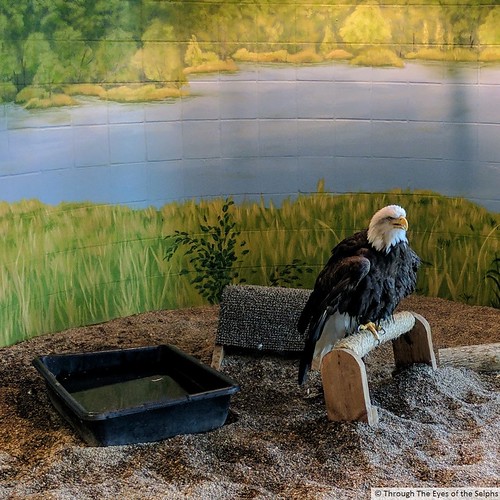
IMG_20170609_123555The National Eagle Center is dedicated to educating the public about eagles and caring for injured eagles brought to the center.  The center is an impressive two story building with floor to ceiling windows overlooking the Mississippi River.  We saw three bald eagles and a golden eagle.  We attended an excellent, informative show presented by a center volunteer.  The center also had many educational exhibits about these majestic raptors.  We really enjoyed our time there.IMG_20170609_10283120170609_10411420170609_104542(1)IMG_20170609_104001IMG_20170609_104011IMG_20170609_11331920170609_113435IMG_20170609_114115IMG_20170609_115053IMG_20170609_11491920170609_11572820170609_11582120170609_120024

20170609_122011After lunch at an Irish pub in Wabash, we decided to cross the bridge into Wisconsin and drive along the Mississippi River on what is called the “Great River Road”.  Along the way we saw limestone bluffs common in this part of Wisconsin and Minnesota.  This southeastern part of Minnesota is the only a part of the state that did not once have glacial activity.  A shallow sea covered much of North America, including southeastern Minnesota five hundred million years ago.  Sediment accumulated which turned into rock hundreds of feet thick.  The sea withdrew over four hundred million years ago and erosion has been cutting through the bedrock, creating these bluff lands.IMG_20170609_133345

Along the way we stopped in the tiny town of Alma, Wisconsin to see Lock and Dam #4, one of a series of many locks and dams along the Mississippi River.  It was not unusual to see population signs of 400 or less as we passed through these small towns.IMG_20170609_134635IMG_20170609_134653

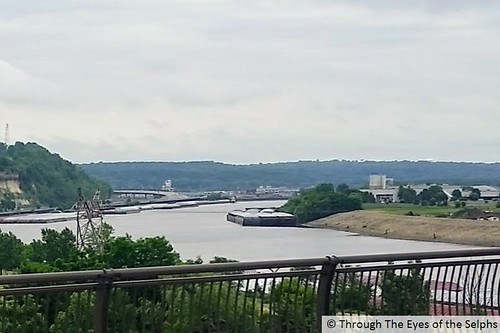
We crossed from Wisconsin back into Minnesota across a new 2,300 foot concrete bridge and ended our tour in the town of Winona.  It was founded in 1851 by a steamboat captain.  Winona profited early on from the lumber industry and by 1900 it claimed to have more millionaires per capita than any other place in the United States.  Today it still has a large number of architecturally significant historic buildings and grand homes. It is the largest Minnesota river town south of the Twin Cities.  While there we drove to the Garvin Heights Overlook where we stood on a 575 foot tall bluff with a fantastic view of Winona and the Mississippi River valley.  Another great day!IMG_20170609_143834PANO_20170609_143749

Saturday temperatures were forecasted to climb into the 90’s so we stayed close to home and visited the Whitewater State Park Visitors Center.  The only negative about the park is it sits deep down in a valley and therefore we had no cell phone service and therefore no internet.  The Visitors Center had WiFi so we checked our email while we were there.

Sunday we head further north to Wild River State Park near Center City, Minnesota.

Little Rock & Hot Springs AR May 7, 2017

20170506_114226Leaving Mississippi behind, we crossed the mighty Mississippi River where we could see evidence of the recent flooding. We skirted around Memphis, luckily passing through on a Saturday morning so the traffic was light.  The roads around Memphis were really rough and full of potholes.  Quickly we crossed over into the beautiful state of Arkansas.  We continued to see a lot of flooded farmland as we traveled towards Little Rock, the capital and largest city in the state.  The last time we were in Little Rock in Oct 2013 a government shut down closed the Clinton Presidential Library, so we were looking forward to checking another presidential library off our list.20170506_114205

We arrived at Downtown Riverside RV Park located right in the heart of North Little Rock.  It is little more than a parking lot with hookups, but wow, what a location!  It is located right on the Arkansas River with views of the Clinton Presidential Library in the distance across the river and a view of the Little Rock skyline.IMG_20170507_092842

IMG_20170509_144610

Pedestrian bridge looking toward campground from the Presidential Library

A walkway from the RV park led to the Clinton Presidential Park Bridge, which is a pedestrian bridge, so the Library was just a short walk away, no need to even drive your car.  The Park had security and a gated entrance so we felt safe even though we were in the heart of North Little Rock.  At night the bridge was lit up with lights that changed color. IMG_20170508_205345IMG_20170508_205337 Across the Bridge was the Arkansas River Trail, an 88 mile multi-use loop trail perfect for walking or biking.  The Clinton Presidential Park Bridge, dedicated on September 11, 2011, is one of Little Rock’s six bridges and connects pedestrians to Little Rock from North Little Rock.

IMG_20170507_114004On Sunday we decided to make the drive to Hot Springs to visit Hot Springs National Park.   The town of Hot Springs received its name from the rising steam from more than forty boiling springs. Native Americans were drawn to the area during the late 1700s and early 1800s for the healing potions given by the Great Spirit.  People today still come for the therapeutic auras and spas.  It is also the boyhood home of Bill Clinton.

The springs are found along the western slope of Hot Springs Mountain where thermal water, which is naturally sterile, begins as rainwater.  It is absorbed into the mountains and carried 4,000 to 8,000 feet underground where the earth’s extreme heat raises its temperature to 143 F.  The purified water makes its way back to the surface through cracks and pores in the form of hot springs.  The entire process takes around 4,000 years!  The 47 springs have an average daily flow of approximately 750,000 gallons.  The water is collected into one central system where it is distributed to bathhouses and drinking fountains.  Tub baths as well as fancy spa baths are available for a cost.

In 1832, because of the number of people coming to the area for the medicinal benefits, the federal government set aside the springs and surrounding area as the country’s first park-type federal reservation created to protect a natural resource.  In 1921 it became a national park.  The park Visitors Center is located in one of eight bathhouses known as Bathhouse Row.  The popularity​ of the springs began to decline in the 1950s.

IMG_20170507_121136It was definitely the strangest national park Visitors Center we have ever visited.  We parked in a parking garage and walked to the Visitors Center located in the restored Fordyce Bathhouse in the middle of Bathhouse Row.  There we found the usual park rangers, a film, exhibits and a self guided tour of 23 restored rooms furnished as they appeared during the height of the area’s popularity.   Behind the Visitors Center were display springs where we could feel how hot the water was as it emerges from the ground.  We found a couple of geocaches and then wanted to explore more of the natural areas of the park.  We drove to the nearby West Mountain Summit Drive where the car wound around Hot Springs Mountain with some nice views of the town below. A short hike in the park took us to another geocache.IMG_20170507_120202IMG_20170507_112205IMG_20170507_112119IMG_20170507_134002

Sunday morning before heading to Hot Springs I discovered a rash on my thighs that was very itchy.  Bill and I both thought it was bug bites.  During our visit in Hot Springs the rash and itching intensified and at times I felt dizzy and lightheaded.20170508_153446

By Monday morning the rash now covered a larger part of my body, the itching was driving me crazy and I was weak and very dizzy.  Bill took me to a nearby walk in clinic in North Little Rock.  By this time I was so lightheaded I could barely walk from the car to the waiting room.  As I walked to the examining room I briefly passed out and was sick to my stomach.  As the nurse asked me questions I mentioned that eight days earlier I had been bitten by a tick while hiking at Wind Creek State Park in Alabama.  That comment immediately alerted the nurse and doctor who diagnosed my sickness as a tick borne illness.  They gave me a shot at the clinic and i was put on Doxycycline antibiotic, Prednisone and an anti nausea medicine.  It has taken a week of treatment and excellent care from my wonderful husband for me to start feeling better.  The side effects of the Prednisone has been pretty unpleasant as well as the rash. I had no idea a tick bite could make a person so ill.  I have heard this is going to be a particularly bad year for ticks.  Please check yourself after any outdoor activities and check your pets as well!!

Needless to say our sightseeing in Little Rock did not happen as planned.  We drove by places I had hoped to walk around and visit.

IMG_20170509_114917One really beautiful place was The Old Mill at T.R. Pugh Memorial Park a short distance from the campground.  The Old Mill was built in 1933 and is on the National Register of Historic Places.  It was never a real working mill but was built to be a replica of an old water powered grist mill that was in service in Arkansas in the early 1800s as a tribute to Arkansas pioneers.  What caught my attention was it was used in the opening scene of  the 1939 classic film “Gone With the Wind” and is the last standing structure from the film.  The Old Mill was honored on the 50th anniversary of the film and was the site of the unveiling of the Gone With the Wind commemorative stamp.IMG_20170509_115220IMG_20170509_115313IMG_20170509_115602IMG_20170509_115107

It is truly a gorgeous setting.  I made it to the mill bridge while Bill went inside and looked around.

We drove by the state capitol building, something we try to do in all capital cities.  Constructed between 1899 and 1911, I had hoped to see the six doors at the front of the building up close. They are made of four inch thick bronze fashioned by Tiffany of New York .  In the early 20th century they cost $10,000 each.  Today all six would cost 1.5 million.  The capital grounds also include many memorials and monuments.  All that will have to wait for another visit.20170509_13205220170509_132301

IMG_20170509_130822Bill toured the MacArthur Museum of Arkansas Military History.  Located in the historic tower of the Old Arsenal which was built in 1840 as part of a frontier military post, it is the birthplace of General Douglas MacArthur and a National Historic Landmark.  MacArthur was born here while his father was stationed at the arsenal.  It houses exhibits of Arkansas military history from Territorial days to the present as well as exhibits about the Civil War, World War I and World War II.IMG_20170509_121955IMG_20170509_121927

IMG_20170509_130637

Bill’s Grandfather Robert Tucker served with the Rainbow Division

IMG_20170509_122634IMG_20170509_121609

The main reason we came to Little Rock was to see another presidential library, in this case the William J. Clinton Presidential Center and Park.  The original plan was to leave the car at the RV park and walk across the Clinton Presidential Park Bridge with its magnificent river views of Little Rock.  But a tiny little Alabama tick had other plans for me so we drove over instead.  The glass building projects over the Arkansas River representing a “bridge to the 21st century”.  There is 20,000 square feet of exhibition space including the largest collection of presidential archives and artifacts in U.S. history.  Also included are replicas of the Oval Office and Cabinet Room.  There is a penthouse suite above the museum where President Clinton often stays.IMG_20170509_140943

IMG_20170509_151900IMG_20170509_151729We began our visit with a twelve minute film about President Clinton’s life and political career before touring the museum. I sat on a lot of benches but Bill was able to spend time looking at the exhibits.IMG_20170507_161604

We liked Little Rock very much and there is certainly much to see and do there.  It certainly deserves another visit in the future.

Next stop: Bentonville, Arkansas to see my Aunt Shirley!

Summer Travels Begin, Farewell FLA, April 2017

This blog has been delayed due to my being under the weather.  It is from back in late April, but we didn’t want you to miss any of our travels, so bear with us as we catch up!

As our time in Florida came to a close, we reflected on arriving in Florida the beginning of November.  We began in the Panhandle and gradually worked our way counterclockwise around Florida.  We spent time with family and friends, had a major repair on the RV and completed our yearly physicals.  We counted many many alligators along the way and took our first airboat and swamp buggy rides.  Now it was time for our last stop in Florida.  We stayed three nights in Jacksonville and very much enjoyed visiting my Uncle Bill, Aunt Peggy and cousins.  We also managed to meet an old friend of Bill’s and his wife for dinner one evening.  Bill met a Boy Scout childhood friend he hadn’t seen in fifty years for coffee on Saturday morning and really enjoyed reminiscing and catching up.

IMG_20170423_135722

Aunt Peggy and Uncle Bill

IMG_20170423_132933

Rachel, Sarah, Peggy and Becky

And with that, our winter travels in Florida ended and our summer travels began!

First stop was in Cordele, Georgia for two nights so we could visit Bill’s cousins nearby.  Always nice to visit these sweet, lovely ladies!

IMG_20170424_161814

Bill and 2nd Cousin Helen

IMG_20170425_150431

Shirley (Ruby’s daughter), Bill and his 2nd Cousin Ruby

While in the area we made the short drive to Fitzgerald, Georgia to visit the Jefferson Davis Memorial Historic Site.  The museum was closed that day but we did walk around the thirteen acre historic site in the beautiful Georgia countryside.  Confederate President Jefferson Davis and a few men crossed the Savannah River into Georgia on May 3, 1865.  Davis was headed to unite rebel forces and continue the fight.  On May 9, 1865 they camped in this pine forest, unaware they were being pursued and the enemy was close.  At dawn they were captured by two groups of Union cavalry.  Strangely, the two Union forces were not aware of each other and briefly shot at each other, killing two Union cavalrymen.  Davis was taken prisoner and held in Virginia for two years until he was released.  A monument marks the spot he was captured.  We really enjoyed our visit here but the Georgia gnats were vicious!IMG_20170425_155134IMG_20170425_155238IMG_20170425_162242

Next up we said farewell to Georgia and hello to Alabama.  We spent four nights at the huge and beautiful Wind Creek State Park in Alexander City.  Our final days in Florida had been such a whirlwind we spent the time here resting, stocking up at Walmart, picking up our mail at the local post office, doing laundry at the park’s nice air conditioned laundry room and catching up on monthly paperwork.  We did drive over to the 2,040 acre Horseshoe Bend National Military Park in Daviston, Alabama.  IMG_20170427_135350It is the site of Andrew Jackson’s victory over the Red Stick Creeks, a faction of the Creek Nation in the horseshoe bend of the Tallapoosa River.  This was the last battle of the Creek War of 1813-1814 and resulted in the Treaty of Fort Jackson which gave 23 million acres of Creek land, half of their land, to the United States.  Today, three fifths of that land is now Alabama and one fifth is what is now Georgia.  It also brought national fame and recognition to Andrew Jackson, his first step on the road to the White House.  Nine months later (1815) Jackson defeated the British at the Battle of New Orleans, the last battle of the War of 1812. In 1828 Jackson was elected president and two years later signed the Indian Removal Bill, requiring southeastern tribes to move west of the Mississippi River to Indian Territory (Oklahoma) leading to what the Cherokees called the “Trail of Tears”.menawa 20170427_152617

I think this is definitely one of the lesser visited national parks but the ranger was very friendly and we toured the exhibits at the visitors center and watched their twenty minute movie about the Creek culture and the Battle of Horseshoe Bend.  There is a three mile loop drive with five stops where exhibits describe different events.  We enjoyed the beautiful drive and found several geocaches​.  On the way home as we crossed the Tallapoosa River, Bill noticed hundreds of turtles sunning on rocks.IMG_20170427_153609

One funny story about our stay here.  Our first day in the park we heard birds walking on our roof.  They sometimes do this when they are looking for food.  Back in November we were having the same problem and we could occasionally hear them pecking the roof.  Bill bought a large fake owl.  It is very lifelike and you fill the inside with small rocks to keep it stable.  We named him Hootie and when Bill placed Hootie on the roof we had no more bird problems.  So once again Bill got out Hootie and placed him on the roof of the RV.  That night we kept hearing an owl hooting.  He kept at it until we finally fell asleep.  We think the owl was trying to talk to Hootie!  We had the same thing happen when we used Hootie in Clearwater.  That time the hooting of the owl drew the neighbors and us outside where we saw it in a tree until we spooked it and it flew away.  Yes, Hootie looks very real and draws owl friends!IMG_20170429_112246

We really enjoyed our time at this lovely Alabama State Park.  Well done, Alabama!

Next we headed to Clear Creek Recreation Area in the Bankhead National Forest outside of Jasper, Alabama.  Bad weather was headed that way so we left Wind Creek State Park early, drove through Birmingham on a quiet Sunday and arrived at Clear Creek under a tornado watch.  We just settled in before the heavy rain started.  Fortunately the extreme weather stayed away and we just had about an inch of rain during the evening and through the night.  We were greeted the next morning with beautiful clear blue sunny skies, pleasant temperatures and a steady breeze.  We loved​ being able to open up the windows and letting the breeze in. While here we celebrated our sixth wedding anniversary with dinner at home and a bottle of Asti.

While at Clear Creek we went geocaching in an interesting area of the park.  One tricky geocache was located under these rocky overhangs, which served as shelters for prehistoric people for 10,000 years in this part of the United States.  During the Civil War this county seceded from the Confederacy and many people forced from their homes sought refuge here.  This geocache required some rock climbing which always makes me nervous so Bill found it without my help.IMG_20170502_155410

After a three night stay, just relaxing and enjoying the forest, we headed to Chewalla Lake Recreation Area in the Holly Springs National Forest outside of Holly Springs, Mississippi.  As we crossed the border into Mississippi we stopped at the Mississippi Welcome Center.  It was the prettiest Welcome Center we had ever stopped at with lovely antique furniture and paintings of Robert E Lee and Jefferson Davis.  There was definitely an Elvis presence to emphasize the fact that Elvis was born in Tupelo, Mississippi.IMG_20170503_113109IMG_20170503_113241

IMG_20170503_113157

General Robert E. Lee

IMG_20170503_113403

President Jefferson Davis

Our campsite at Chewalla Lake in the Holly Springs National Forest was almost empty and very quiet.  We considered driving an hour east to Tupelo to tour Elvis’s birthplace or driving an hour south to Oxford to see the home of the famous author William Faulkner while we were in the area, but both days it rained and the temperature hovered around 50 degrees.  We just couldn’t get motivated to get in the car and do any driving and sightseeing in those conditions.  We did make the short drive into Holly Springs to pick up some supplies at Walmart.  We also managed to grab two easy geocaches so we could add some Mississippi geocaches to our total.

Next stop is Little Rock, Arkansas where the drama got real!

Flagler Beach, FLA April 13, 2017

We were sad to leave Jetty Park at Cape Canaveral, but it was time to continue north.  We drove an hour and a half to our next stop, Gamble Rogers Memorial State Recreation Area at Flagler Beach.  This is a very popular park year round and since we booked ten months out instead of the maximum eleven months, we were not able to get a spot on the beach side.  We had to settle for the riverside campground across the road (A1A).   This campground area is newer and the sites are much more spacious and the entire area is less congested.  We missed being on the beach side but were quite content with our campsite.  Once again the wind was whipping each day with a minimum ten mph winds with gusts exceeding fifteen mph.  Too windy to even put the big awning out on the RV.IMG_20170415_171405

Everyone raves about the beach at Gamble Rogers but it didn’t begin to compare to the beach and boardwalks at Jetty Park.  The Flagler Beach area sustained significant erosion damage in Oct 2016 from Hurricane Matthew.  Parts of A1A were washed away and we could see where the new road had been constructed.  Gamble Rogers also sustained quite a bit of damage from erosion, and all but one of the walkways down to the beach had been destroyed.  They still have quite a bit of repairs to complete.

IMG_20170417_185727The park is named for James Gamble Rogers, IV, a man who gained national prominence playing lead acoustic and electric guitar with the Serendipity Singers.  He was also a storyteller whom some compared to Mark Twain and Will Rogers.  Gamble traveled the back roads of Florida with the up and coming Jimmy Buffet.  Gamble taught Buffet the trade and was the opening act for Buffet at Margaritaville in Key West.  In 1991 Gamble, his wife and another couple were camping at then Flagler Beach State Recreation Area.  Gamble jumped in the water to save a man who was drowning.  Both Gamble and the swimmer died.  A plaque was erected in honor of his bravery and in 1992 the park’s name was changed to Gamble Rogers Memorial State Recreation Area.

The park has some nice trails where we enjoyed walking and geocaching.

When we checked into the park the ranger said they are trying to promote other state parks in the area and gave us a free pass to visit Bulow Plantation Ruins Historic State Park located ten miles away in Ormond Beach.  On Easter Sunday we attended a sunrise service at Flagler Beach. IMG_20170416_065754IMG_20170416_065953IMG_20170416_070210IMG_20170416_065930 We then made the very short drive down to Ormond Beach to visit the state park.

IMG_20170416_144210

The Dirt Road to Bulow Plantation Ruins Historic State Park

The 2,200 acre Bulow Plantation was built in 1821 and was once a prosperous ante-bellum sugar plantation where the Bulow family grew sugar cane, cotton, rice and indigo with the help of 193 slaves.  The slaves lived in 46 slave cabins also on the plantation.  When war broke out with the Seminole Indians in December 1835 during the Second Seminole War, the U.S. army troops occupied the plantation against the wishes of Bulow.  In 1836  the plantation was destroyed by fire, probably by the Seminole Indians. (A sign at the Interpretive Center said the Second Seminole War was the “longest, costliest and bloodiest Indian War in United States History”). All that is left today are the ruins of the sugar mill, a spring house, several wells and the crumbling foundations of the plantation house and slave cabins.  The sugar mill was built of coquina sedimentary rock made up of crushed shells and the ruins are listed on the National Register of Historic Places. There is an interpretive center describing the plantation’s history and the process of turning sugar cane into sugar and molasses. Unlike sugar mills which used animal power before the 1800’s, this plantation used steam powered mills which allowed the cane to be processed faster.  However it was still a long, tedious and HOT process. The sugar mill business was profitable.  After the plantation and sugar mill was destroyed by fire, Bulow estimated his destroyed sugar crop for 1836 would have been worth at least $20,000.  The molasses was sold for making rum.  Like other Florida plantation owners they traded with the Seminole Indians, trading blankets, fabric, beads, black powder and lead for the Indians’ cattle and hogs. Naturalust John James Audubon visited the plantation on Christmas Day, 1831.  The property was acquired by the state of Florida in 1945 and was dedicated as a State Historic Park in 1957.

IMG_20170416_155016

Artist Rendering of Plantation Home

IMG_20170416_150915IMG_20170416_152526

After touring the grounds we spent some time geocaching in the area, hiking over four miles.  IMG_20170416_182640IMG_20170416_180950

One geocache we found was at the Fairchild Oak.  It is one of the largest trees in the South, and while it is impossible to know for sure, it is estimated to be between 2,000 and 2,500 years old!  The tree is named for Dr David Fairchild, a world famous botanist and naturalist.  Among his greatest accomplishments is the introduction of soybeans to American agriculture.  It was a really beautiful tree and another example of something we probably would have never found if not for geocaching!IMG_20170416_181211IMG_20170416_181524

While we were in Vero Beach we watched a rocket launch from the deck of a restaurant while having dinner with Sean and Cathy.  We were disappointed there weren’t any launches while we were at Jetty Park, an ideal place for viewing launches.  On our last day at Gamble Rogers there was another launch.  We stood on a beach overlook with several other people and waited but we were a little too far away and it was too hazy.IMG_20170418_111009

We ended our stay at Flagler Beach by driving up to nearby Palm Coast to meet Bill’s former boss and his wife for dinner.  We enjoyed fabulous barbecue food at Captain’s BBQ overlooking the river.  The food was great and we recommend it to anyone passing through the area.

We move tomorrow (Wednesday) to St Augustine for two days.

Wintering in Florida 2016-2017

We took a little break from blogging this winter.  When we last posted to the blog we had finished spending November in the Florida Panhandle.  December found us in Clearwater where most of the month was spent getting our yearly physicals and dental work.  20161224_165255This included colonoscopies for both of us and a bone density and mammogram for me.  Thankfully everything checked out fine for both of us.  It was certainly a relief to get that behind us.  We made a trip to Vero Beach the week preceding Christmas to see Bill’s son Sean and Bill’s Aunt Charlotte.  20161219_172649We attended the annual New Year’s Eve Pajama Party at the home of our friends Ben and Anne in Tampa.  Ben is an ordained minister and he performed the wedding of our mutual friends Denise and Ralph in Ben’s backyard around the pool.  It was certainly a unique New Year’s Eve!IMG_20161231_210129IMG_20161231_203807

In January we spent sixteen days in Seffner waiting to have our major slide mechanism replaced.  It was a frustrating time as we had issues with the warranty company and ordering the parts was put on hold until the issue could be resolved.

It wasn’t all bad.  Bill reconnected with Pete, a college friend he hadn’t seen in over thirty years. We certainly did enjoy getting together with Pete and his wife several times.  We accompanied them to the large Tampa RV show and our first ever visit to an IKEA store.  While at the RV show we were able to catch a quick visit with our good friends and fellow full timers, Jack and Karen.  It is always good to see them when our paths cross, which certainly isn’t often enough!

After our slide repair was finally completed we headed slightly north to Bushnell for a two week stay.  While there Bill enjoyed meeting some fellow amateur radio enthusiasts and attended one of their meetings.

We made a few day trips.  One trip was to the Florida National Cemetery located in the Withlacoochee State Forest located fifty miles north of Tampa in Sumter County.  In 1983 the state transferred land to the VA for development of the National Cemetery.  The first internment was in 1988.  There are committal shelters located throughout the cemetery for families to use for committal services prior to burial.  We walked along the peaceful Memorial Pathway lined with memorials honoring American veterans.

We also visited the Dade Battlefield Historic State Park.  This 80 acre park has a historic battlefield and Visitors Center.  At the Visitors Center we saw a video and toured the museum with displays of clothing and weapons used by the soldiers and Seminoles. On December, 1835, 108 U.S. soldiers and officers were marching from Fort Brooke in Tampa to reinforce Fort King in Ocala.  One hundred miles from Fort Brooke they were attacked by 180 Seminole warriors.  All but three of the soldiers were killed.  In 1921 the state legislature appropriated funds for the preservation of the battle site as a memorial.  We enjoyed our visit here which included some geocaching.IMG_20170205_153232

On February 8th we left Bushnell and drove to the Central Florida Fairgrounds in Orlando for the annual Hamcation.  Bill really looks forward to this amateur radio event each year.  This year we parked with members of the Family Motor Coach Association – Amateur Radio Club.  We enjoyed afternoon Happy Hours and a potluck dinner.  There is always lots to talk about when RVers meet! On Saturday Bill’s friend Terry came over to visit and attend the Hamcation with Bill.  Bill and Terry were Boy Scout friends and attended the same church many years ago in Orlando.

Too soon it was time for goodbye hugs and promises to meet sometime, somewhere down the road with our RV friends.  We headed south to tiny Wauchula for a two week stay at an Escapees SKP park.  Wauchula is not close to much of anything with Sarasota about an hour away, but it is hard to beat the campground price and friendliness of Escapees SKP parks.  Everyone is treated like family.  An example is the laundry room where washing is only $1.00 per load and drying is 75 cents.  You don’t go anywhere without being greeted with a wave, smile and a hug.

While in Wauchula we drove to do some geocaching at Paynes Creek Historic State Park. This is definitely one of Florida’s less known and visited state parks.  Even though it was President’s Day weekend, the parking lots were empty.  This park is the site where Fort Chokonikla once stood.  The fort was built in 1849 due to increasing tensions with the Seminole Indians.  The Seminoles didn’t want a war and the fort never came under attack.  The high number of casualties did not come from the Indians but rather from disease carrying mosquitoes.  In 1850 because of sickness the fort was abandoned and never reoccupied.  While in the park we went to the Visitors Center and watched an ancient movie about the fort.  The Visitors Center had a few displays but did not even have a park ranger on duty.  The only state employee we saw was the person at the gate taking the $3.00 per car admission fee.  I am sure they didn’t make enough on admission to even come close to paying the salary of the person taking money.

One day we drove down near Port Charlotte to visit with Bill’s childhood friend Bill and his wife Lynn.  Bill and Bill had not seen each other since 1971!  We had a lovely visit and lunch overlooking Lemon Bay.  After we finished eating we sat talking and Bill and I started coughing.  We were told it was from the dreaded red tide that had washed in.

Another day we drove an hour down to Northport to visit with Bill’s cousin Shirley and her husband Jim.  We had such a good time talking we forgot to take a picture!

Our next blog posting will be from Big Cypress National Preserve near the Everglades.

Oct 18, 2016 Hendersonville, NC

We left Waxhaw and traveled to Hendersonville, NC located in the western North Carolina Mountains between the Blue Ridge Mountains and the Great Smoky Mountains.  Hendersonville is twenty-two miles south of Asheville and fifteen miles north of the North Carolina/South Carolina border.
While in Hendersonville we enjoyed meeting Bill’s friend Alan, his wife, daughter and granddaughter for dinner.  Many years ago Bill and Alan’s family attended the same church in Orlando, FL and Bill and Alan were leaders in the same Boy Scout troop.
Bill and I enjoyed exploring Hendersonville.  Inside the Hendersonville City Hall were very nice statues of General Andrew Jackson, James Knox Polk (11th President and born in NC) and Andrew Johnson (17th President and born in NC).  Johnson was the only sitting senator from a Confederate state who stood with the Union and did not join the Confederate States of the Union.  He became President when Lincoln was assassinated.20161019_134600
The Hendersonville County Courthouse, built in 1905, has atop its copper dome a six foot statue of “Lady Justice”.  The statue is the Greek Goddess Themis, goddess of divine justice and law.  She does not have a blindfold and is holding a sword in her right hand and scales in her left.  It is believed this is one of only three statues of Themis in the United States without a blindfold.  The blindfold is meant to show that Justice should be impartial.20161019_133810
We drove to Jump Off Rock which has a scenic overlook of the Blue Ridge and Pisgah mountain ranges.  There is an Indian Legend about Jump Off Rock which says that over 300 years ago a young Cherokee Indian Chief fell in love with an Indian maiden.  They would often meet on top of the rock ledge.  When the Chief went off to war, the maiden promised him she would wait for him at the rocky ledge.  When she received news he had been killed in battle, she jumped off the rock.  Her body was found by tribal hunters below.  Indian legend says that on moonlit nights you can see the ghost of the Indian maiden on Jump Off Rock.20161019_14370020161019_14373320161019_14404320161019_144502
Another day we visited DuPont State Recreational Forest.  Many scenes from the movies “The Hunger Games”, “The Last of the Mohicans” and “Max” were filmed in this park.  We hiked to High Falls.20161020_12384120161020_130123

We also hiked to Triple Falls.20161020_140227

Scenes from “The Hunger Games” and “The Last of the Mohicans” were filmed at Triple Falls.
The days are warm and the nights cool.  We still are not seeing much fall foliage to our disappointment.20161020_125910

Sept. 15, 2016 Letchworth State Park, NY

Thursday we left Niagara Falls and headed to our last stop in New York State.  Along the way we passed around Buffalo.  This city gets its electricity from Niagara Falls and was the first city in the country to have electric street lights.  The traffic around Buffalo was pretty heavy even though it was past the morning rush hour.
20160916_134341We arrived at Letchworth State Park near Castile. This park was not originally on our planned itinerary.  We had actually booked a different state park.  But when we were in Seneca Falls I happened to read that Letchworth State Park was voted the most beautiful STATE park (not national park) in the United States in a 2015 USA Today Reader’s Poll.  So of course we had to change our plans and visit this park.
Also known as the Grand Canyon of the East, Letchworth State Park is 14,350 acres of magnificent beauty along the Genesee River.  Tens of millions of years of erosion wore away rock forming river valleys.  Glaciers buried areas of the valleys under masses of sand and gravel.  Three deep winding canyons are from the Genesee River detouring around the blocked sections of riverbeds.  Each year the river cuts deeper into the cliffs, with some cliffs 600 feet in height.
To call it the Grand Canyon of the East is definitely a stretch, but there is no denying the beauty of the seventeen mile Genesee Gorge, the thick forests and the three large waterfalls.20160916_15381220160916_15385320160916_16063120160916_16075120160916_160803

The state park once belonged to the Seneca Indians.  In the mid 1800’s William Letchworth purchased 1,000 acres of land and deeded it to the State of New York in 1907 to preserve the land for future generations.  Letchworth felt strongly about preserving the Native American history of the Seneca people and Genesee Valley.  On the park property is a restored Seneca Indian Council House, the statue and grave of Mary Jemison, and the cabin Mary lived in. 

20160916_130952Mary was born in 1743 on the ship “William and Mary” while her parents were en route to America from Northern Ireland.  They landed in Philadelphia and Mary and her parents were part of a group of Scots-Irish immigrants who headed west to settle on the frontier.  They settled on territory that was under the Iroquois Confederacy.  One morning in 1755 at the beginning of the French and Indian War, six Shawnee Indians and four Frenchmen kidnapped fifteen year old Mary and her family.   Mary’s family was killed and she was sold to the Seneca Indian tribe.  A Seneca family adopted her and she grew up there.  She fully assimilated into the Seneca culture, married and moved to Seneca land in what is now Letchworth State Park.  She chose to remain with the Senecas her entire life. The Seneca Indians honored Letchworth with the Native American name “Hai-wa-ye-is-tah” meaning “he who does the right thing”.20160916_13045020160916_131327

There are three major falls in Letchworth State Park, the Upper, Middle and Lower Falls. There are short hikes to each fall. Western New York is under an extreme drought so the falls were not as magnificent as they could have been. I would love to see them under normal conditions. In some of the pictures in this blog you can see how low the water level is in the Genesee River.

20160916_132631

Middle Falls in the middle and the Upper Falls is in the distance

The Upper Falls is 70 feet high and a horseshoe shape.20160916_124529
The Middle Falls is the largest of the three falls at 107 feet high and 285 feet wide.20160916_12225420160916_122523
20160916_152130
The Lower Falls had two ways to view the falls. There is an easy way and then a hike that involved 127 steps down and of course 127 back up. And of course we chose the hard way!20160916_14485620160916_145709

As we were trudged back up the 127 steps a lady in front of us suddenly stopped and called out to Bill for help. There was a big black snake stretched across the steps. Those who know me know I am terrified of snakes. Terrified. I hung back while Bill went up and waited for the snake to move. Mr. Snake took his good old time moving but eventually started slithering up the natural wall. Bill told me to go ahead and just not look to the left. I went up those last 50 steps so fast I don’t even remember climbing them! Bill managed to snap a couple pictures of him before he slithered under some tree roots at the top of the wall.20160916_15255820160916_152536
There is a nice footbridge down at the bottom that takes you from one side of the gorge to the other.
20160916_150834
20160916_143049We stopped by a statue of a CCC worker. We owe so many thanks to these young men who worked so hard in state and national parks all over the country so we have such wonderful parks to enjoy today. The stonework steps and walls they labored to put in is amazing, not to mention trails and buildings and picnic tables. The list goes on and on.20160916_14312320160916_160657
We also met a new friend!20160916_14350120160916_143645

20160916_201513

Middle falls taken at night

After dinner we drove back to the Middle Falls which is illuminated at night. There was a huge full moon over the falls. What a beautiful, peaceful setting.
We have certainly enjoyed our time in upstate New York.  Even with a drought the waterfalls have been magnificent.20160916_16000920160916_122730

The Adirondacks were beautiful and we loved the history we stumbled across in Seneca Falls.  On the downside, it is an expensive state to visit.  Even the state park campgrounds are pricey, the gas higher, and we paid about $75 in road and bridge tolls.  But we would like to return again, perhaps later in the fall when the leaves have turned.  But not too much later in the year as the temperature got down to the mid 40s one night at Letchworth!
Next stop: Pennsylvania as we head south

Because there’s a lot of life to live!

Sept 11, 2016 Niagara Falls

Picturesque Seneca Falls exceeded our expectations and we would have stayed a couple more days but we had reservations at Four Mile Creek Campground about fifteen minutes from Niagara Falls.  It was an easy drive and as soon as we got settled in our campground we drove to nearby Fort Niagara.

20160911_15410920160911_160445Originally the fort belonged to the French and was built in 1726.  It was expanded to its current size in 1755 because of increased tensions between the French and English.  The fort played an important role in the French and Indian War and fell to the British in 1759 during the Battle of Fort Niagara.  It served as a British base during the Revolutionary War and was ceded to the United States in 1783 at the end of the war.  The British recaptured the fort during the War of 1812 and held it during the remainder of the war.  After the war ended they gave it back to the United States.  It is now known as Old Fort Niagara State Historic Site and is a National Historic Landmark.  It is said the fort is haunted by a French soldier who was beheaded there during a duel and he wanders the grounds looking for his head.  The paranormal claims have been investigated by the “Ghost Lab” on the Discovery Channel and on the Syfy series “Ghost Hunters” in 2011.20160911_15583320160911_15585020160911_160405

20160911_161513We also found a marker that indicates that WW II prisoners of war were kept here.

Our campground is located along Lake Ontario and we have a lovely view of the lake from our campsite.  On a clear day you can see the Toronto skyline across the water.20160911_15474920160911_154622
Of course our main reason for coming here was to see the mighty Niagara Falls.  Monday morning we left bright and early for the short drive to Niagara Falls State Park.  There is no charge to enter the park but you do have to pay $8.00 a day for parking.  Niagara Falls is America’s FIRST state park, established on July 15, 1885.  There are few words to describe the power and beauty of the majestic falls where 750,000 gallons of water PER SECOND flows over Niagara Falls. Today we visited the American side of the falls and can see across the water to Canada.  Our first stop was the Observation Tower which provided us with a view of both the American and Horseshoe Falls.20160912_09435620160912_09454120160912_095132

20160912_10043720160912_100347Next up was a ride on the boat, Maid of the Mist.  The boat takes you right to the base of Horseshoe Falls where it hovers for several minutes while we are sprayed with water and feel and hear the thunderous falls above us.  But first we have to pay admission where we are handed a poncho to wear before boarding the boat.  The ride was short but it was exciting to be that close to the bottom of the falls and we could only gaze in wonder.  It was hard to get pictures because it was so wet we had to place the camera in a plastic bag to keep it from being ruined.  Between the water and the heavy mist it was hard to get pictures but I think Bill did a great job as always.  In some of the pictures you can see the boat we road on down below. 20160912_10014020160912_10133520160912_10065220160912_132252

We walked on some stairs near where the boat let us out.

20160912_10291420160912_10292620160912_10372020160912_113223
Next we wanted to do Cave of the Winds, but first we had quite a long walk from one side of the park to another.  For those unable to walk there is a shuttle to take you around the park for a small fee.
The walk was a wonderful way to see the falls and park.  We walked across a pedestrian bridge onto Goat Island.  There we walked to the overlook to view Horseshoe Falls which is on the Canadian side. We walked past a memorial to Nikola Tesla, an idol of Bill’s. This is where the first hydroelectric power plant was made and used to provide electricity to Buffalo NY.20160912_12032220160912_12133920160912_12151720160912_121257

We viewed the American falls from Goat Island.20160912_11515820160912_11530320160912_11534720160912_11552420160912_120517

20160912_123617We then bought tickets to our next attraction, Cave of the Winds.  Here we were given another poncho, water shoes and a bag to put our own shoes in.  We were then taken 175 feet down in an elevator where we walked along a series of steps and boardwalks at the base of the Bridal Veil Falls.20160912_123953

20160912_124319One location was called “Hurricane Deck ” where the power and wind from the thundering falls simulated a hurricane.  It was really fun and despite the ponchos we both got wet.  One amazing thing is every November the walkways and boardwalks are removed so they do not get caught in icy waters in the winter.  In the spring they are rebuilt for summer tourists.20160912_12500720160912_125023

We finally took a view of the Horseshoe Falls which has one side in the USA and the other in Canada.20160912_13172820160912_132105
After a walk back over the pedestrian bridge to the parking lot, we were tired and hungry.  We grabbed a late lunch.  On the way home we stopped by Whirlpool State Park where we walked down to an overlook of the Niagara Whirlpool on the Niagara River and the Niagara Gorge.
Tuesday we drove across the Rainbow Bridge to Canada to see Niagara Falls from the Canadian side.  The view of the falls is prettier from this side because you have more of a direct view of both the American Falls and Horseshoe Falls.  The Horseshoe Falls is located on the Canadian side of the river.  Another difference is when you look at the falls from the United States you look across the water at Canada.  The Canadian side is very touristy with hotels, casinos, a ferris wheel etc.  When you stand in Canada and look across the water at the American side you are looking at Niagara Falls State Park with plenty of trees and green space.  Much more appealing!20160913_18072720160913_18121420160913_181939

We also took this video of the American falls from the Canadian side https://youtu.be/pfDoIUPj6Qw


After getting a few pictures in daylight we grabbed dinner and waited for it to get dark.  At 8:30 PM they illuminate the Horseshoe falls with multicolored lights.  We were a little disappointed that the lights were not deeper in color.  It was really hard to get a decent picture with the darkness, moving water and mist.20160913_204514

This is chart that show how the Horseshoe Falls has receded over the years because the rock wall face underneath crumbles.20160913_211109
It was going to be a long walk uphill back to the car in the dark so we paid to ride the Inclined Railway (funicular) back up the hill.  After driving back across the border into the United States we arrived back home.
We enjoyed our short time at Niagara Falls and will next head to our last stop in New York State.

Here is a nighttime video of Horseshoe falls taken from the Canadian side. https://youtu.be/qBXjLr1Ns-8