Category Archives: Historic Landmark

Historic Landmark

Tucson, AZ Part 1, NOV 9, 2017

On Thursday November 9th we drove from Benson to Tucson, settling in at Justin’s Diamond J RV Park in the Sonoran Desert.  It was easy to tell we were in Tucson when we saw the tall saguaros and heard the coyotes howling at night.  We were last in Tucson in December, 2013.  You can read about that visit here: Tucson, Tucson Mountain Park and Tucson Desert Museum.

20171111_104058With temperatures averaging 10 to 14 degrees above average, on Saturday we spent a very hot day at Old Tucson.  In 1939 Columbia Pictures began building a replica of the 1860 Tucson city as a setting for the movie “Arizona” starring Jean Arthur and William Holden.  Over 350,000 handmade adobe bricks were used to build the dusty town. 20171111_104235IMG_20171111_125840IMG_20171111_111033

Old Tucson has been used for 400 films and commercial productions.  Some example movies:  

  • “Gunfight at the OK Corral”
  • “Cimmaron”
  • “McLintock”
  • “El. Dorado”
  • “Joe Kidd”

20171111_10404020171111_10442220171111_104846

and many episodes of TV shows: 

  • “Wagon Train”
  • “Little House on the Prairie”
  • “Bonanza”
  • “The High Chaparral”
  • “Death Valley Days”
  • “ Gunsmoke” to name just a few.  20171111_104654

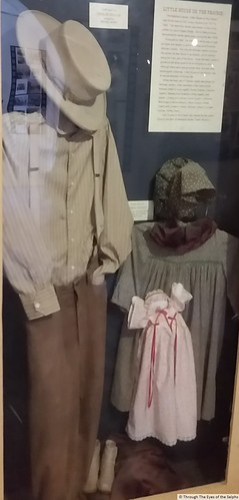
In the museum they had the shirt and hat worn by Hoss in “Bonanza” as well as some of the clothes worn on “Little House on the Prairie”.20171111_10510920171111_104512

It was easy to spend an entire day there riding the little train around the park, viewing live western shows, riding a stagecoach, touring an old mine and seeing reenactments of western scenes. IMG_20171111_111423IMG_20171111_122330IMG_20171111_152705 20171111_12352920171111_124432IMG_20171111_133506IMG_20171111_133552IMG_20171111_111229IMG_20171111_152249

Next up: more Tucson

Tombstone, AZ NOV 2, 2017

On November 2nd we left Willcox and arrived in Benson where we stayed for seven days at Valley Vista RV Park.  Benson is another small town, population 5,100.  Because it is on the Southern Pacific Railroad route, it once was a prime distribution center for copper and silver mines.  When the railroads began to decline in the 1920’s, like many similar towns Benson changed into more of a stopover for tourists traveling west and snowbirds seeking a warmer winter climate.

Saturday we made the short drive to Tombstone, known as the “town too tough to die”.  In the early 1880’s the town produced millions of dollars in silver and gold mining.  After seven years of mining, rising underground water forced the mining to end.IMG_20171104_133845IMG_20171104_13403220171104_105716IMG_20171104_124508IMG_20171104_132858

Much like Dodge City, Kansas and other western towns, Tombstone was known for lawlessness and violence.  The most infamous gunfight battle fought there was between Wyatt Earp and his brothers against the Clanton brothers.20171104_110019IMG_20171104_130803

We walked the old historic streets of Tombstone browsing some of the many souvenir and western apparel shops.  In one shop we met a couple visiting from Jacksonville, Florida.  They had vacationed on the west coast and were on their way back home.  We really enjoyed chatting with this nice couple from Bill’s hometown.20171104_105754IMG_20171104_11093020171104_13085220171104_131656

We had lunch at Big Nose Kate’s where Bill had their famous reuben sandwich.  Big Nose Kate’s was from Hungary and was Tombstone’s first prostitute.  She was also the longtime companion and common law wife of gunfighter Doc Holliday.  No, she didn’t have a big nose.  She got that name because she was always sticking her nose in other people’s business!  Big Nose Kate died just five days before her 90th birthday.IMG_20171104_125137IMG_20171104_121005IMG_20171104_130707IMG_20171104_125214

We took a narrated stagecoach ride which took us around Tombstone and told us some of the history of the area. IMG_20171104_11014320171104_12570820171104_125850 

Bill made sure to thank the horses for the ride!20171104_132028

The rest of our time in Benson went by quickly with laundry, grocery shopping and RV chores.

Next stop: Tucson, AZ

Arizona fun facts:

  • Arizona and Hawaii are the only two states that do not observe daylight savings time.
  • The Arizona Cardinals are the longest running continuous franchise in the National Football League (1898).
  • Autumn is an active season for rattlesnakes because they are finding food before hibernating for the winter.

Albuquerque Part 2, NM OCT 14, 2017

As I mentioned in the previous blog, Bill’s college friend Peter and his wife Beth flew in from Florida and joined us for several days in Albuquerque.  Besides the Balloon Fiesta there were other things to enjoy in the area.00000IMG_00000_BURST20171014150352_COVER
One afternoon we went to the National Museum of Nuclear Science and History.  This is the country’s official museum for the history and science of the Nuclear Age.  They have replicas of Little Boy and Fat Man, the world’s first two atomic weapons.

IMG_20171012_151508

The Trinity Test Tower. At 5:30 a.m. on July 16, 1945, Los Alamos scientists detonated a plutonium bomb at a test site located on the U.S. Air Force base at Alamogordo, New Mexico, some 120 miles south of Albuquerque.

They have exhibits on atomic theory, the Cold War, pioneers in nuclear science, uranium processing, facts about radiation and nuclear medicine/ medical technology.  We saw a movie about the Manhattan Project in Los Alamos about the design and testing of the nuclear bomb.  Outside were several planes, rockets, bombs and missiles.IMG_20171012_13231320171012_153936PANO_20171012_160821IMG_20171012_160938IMG_20171012_16101220171012_153807IMG_20171012_153345IMG_20171012_153053IMG_20171012_135248

Another day we all went into Old Town Albuquerque for lunch and wandered through some shops.IMG_20171014_152926IMG_20171014_150438IMG_20171014_150505IMG_20171014_132808IMG_20171014_132827

Bill and I visited Albuquerque in May, 2015.  You can read about our visit here. https://dianeandbill.selph.info/?p=4440

It was fun to catch up with the Wienermobile outside Peter and Beth’s hotel!20171012_130750

Many of you have commented on how much you enjoyed the Balloon Fiesta pictures in the last blog. There were way too many pictures to post in one blog.  Here is a link to more Balloon Fiesta pictures if you would like to see more. https://www.flickr.com/gp/lrun/Qw2399

Next stop: Valley of Fires, New Mexico for some rest and relaxation

Tent Rocks National Monument, NM SEPT 26, 2017

On Tuesday we drove just a few miles down the road to the Kasha-Katuwe Tent Rocks National Monument.  The 4,645 acre Park was established in 2001 after being designated an Area of Critical Environmental Concern and is managed by the Bureau of Land Management.  IMG_20170926_104514

In order to access the Park you need to drive through the Pueblo de Cochiti Reservation.  Kasha-Katuwe means “white cliffs” in the native language of the Pueblos.  There is evidence of human occupation in the area for over 4,000 years with the first Pueblos in the 14th and 15th centuries. The cone or tent shaped rock formations were created 6 to 7 million years ago from volcanic eruptions of the Jemez volcano that left pumice, ash and volcanic rock over 1,000 feet thick.  The tent rock shapes can be up to 90 feet tall.  IMG_20170926_105103IMG_20170926_112330

Here we hiked two trails.  The first trail, the Slot Canyon Trail, was a difficult trail involving some difficult scrambling over rocks and rock climbing.  IMG_20170926_112341IMG_20170926_112403IMG_20170926_112552IMG_20170926_112908IMG_20170926_113609IMG_20170926_113748IMG_20170926_114018IMG_20170926_114603IMG_20170926_114706IMG_20170926_114800IMG_20170926_114826
I really enjoyed walking in the Slot Canyon but at one point I just didn’t have enough upper body strength and had to give up and let Bill go ahead while I waited.
IMG_20170926_114832IMG_20170926_114907IMG_20170926_114931

The second trail, the Cave Loop Trail was a shorter and easier trail.  IMG_20170926_122947IMG_20170926_123136IMG_20170926_123145IMG_20170926_123254IMG_20170926_123225IMG_20170926_123314IMG_20170926_123355IMG_20170926_123806

Bill found a snakeskin but luckily not the owner!  IMG_20170926_122942

We met a very nice couple from Ohio on the trail and enjoyed talking with them along the way.  Before heading home we drove to the Veterans’ Memorial Scenic Overlook with a beautiful view of the picturesque Peralta Canyon and Jemez Mountain peaks.IMG_20170926_124034IMG_20170926_124706IMG_20170926_132648IMG_20170926_132713IMG_20170926_134515

Next up: Albuquerque and the Albuquerque International Balloon Fiesta.IMG_20170926_104809

Cochiti Lake COE, NM SEPT 25, 2017

After a short stop in White Rock we headed to Cochiti Lake Corps of Engineering campground about thirty miles outside of Santa Fe. It was a beautiful drive.20170922_10594220170922_112220

Cochiti Lake is located on the Rio Grande, the fifth longest river in North America.  The name Cochiti comes from the Native Americans who have lived in the area for over seven hundred years.  We passed through several Indian reservations on our way from White Rock to Cochiti Lake.  Many had signs prohibiting photography.IMG_20170924_155357

Cochiti Lake has one of the ten largest earthen dams in the United States.  It is 5.5 miles long and is 251 feet tall to enclose water from the Rio Grande and Santa Fe Rivers.  We paid a visit to the Dam Visitors Center.  A couple from Martinsville, Virginia was also visiting and it was nice to meet someone from my birth state!IMG_20170924_154626

On Monday we drove into Santa Fe, the oldest (407 years) and highest (7,000 ft above sea level) capital city in the United States.  We were there in 2015 and you can read about that visit here: Santa Fe, NM May 23, 2015 IMG_20170925_130324

This visit we wanted to tour the state capitol building.  The original capitol building was the Palace of Governors built in 1609 on the Plaza and served the Spanish, Mexican and American governments.  This current capitol building was constructed in 1966 and is the only round state capitol building in the United States.  IMG_20170925_122655IMG_20170925_123033

The building design forms the Zia sun symbol, a design found on a 19th century water jar from the Zia Pueblo.  The sun with four rays symbolizes the four directions, the four seasons, the four times of the day (sunrise, noon, evening and night) and life’s four divisions (childhood, youth, adulthood and old age).  The circle represents the circle of life, without a beginning or end.IMG_20170925_124249

 The Zia also believed man has four sacred obligations: strong body, clear mind, pure spirit and devotion to the welfare of his people.  We enjoyed walking around looking at the beautiful Native American and southwestern artwork. 20170925_12333420170925_12352220170925_12455820170925_12484620170925_124950

Of particular interest was a buffalo head made completely out of recycled materials including old paintbrushes, paper-mache, scrap metal and movie film.IMG_20170925_124309IMG_20170925_124454IMG_20170925_124503

On the way to lunch we stopped by Cross of the Martyrs, a park that was once the site of Fort Marcy and has a spectacular view of Santa Fe.  The white cross commemorates 21 Franciscan priests killed during the Pueblo Revolt of 1680.IMG_20170925_131428

We had lunch at a local recommended Mexican restaurant.  We struggled to eat our lunch with the hot green chile sauce.  Can you see the pain on Bill’s face?20170925_135626IMG_20170925_135646

After lunch we drove several miles east to the Pecos National Historical Park.  The Park was formed in 1990 and had a Visitors Center with an interesting movie and exhibits.IMG_20170925_143622

The area has a rich history.  From 1350-1838 it was home to the powerful Pecos Pueblo with pueblos rising four to five stories high and home to 2,000 people, including 500 warriors.  In the 1540’s Spain tried to colonize the area and convert the people to Catholicism.  Coronado and his men searching for the seven cities of gold clashed with the powerful, determined Pecos.  In the early 1600’s Franciscan friars again tried to convert the Pecos, destroying kivas, smashing statues and banning Pueblo ceremonies.  In 1621 a friar arrived who acknowledged the Pueblo culture, language and beliefs while also trying to educate and convert them.  A large mission church was built, some of which is still standing and we were able to visit.20170925_14480720170925_15081820170925_150834

By the late 1700’s, drought, disease, migration and Comanche raids greatly decreased the Peso population and by 1838 the last of the inhabitants had moved from the region.  From 1915-1929 archeological excavations of the site were done to study and save the remnants of six hundred plus years of human occupation.20170925_15153020170925_15164720170925_15173820170925_15191220170925_152648IMG_20170925_152117IMG_20170925_152609IMG_20170925_152011

In 1925, a man purchased 5,500 acres and created the Forked Lightning Ranch which was sold in 1941 to Buddy Fogelson, husband of actress Greer Garson.  In 1991 Greer Garson sold the ranch to a Conservation Fund which then donated it to the National Park Service.20170925_150917

There is always work to do!

Santa Fe facts:

  • Population of 82,800 (Santa Fe county is 147,423)
  • 37 square miles (Santa Fe county is 121,298 square miles)
  • Averages 325 days of sunshine a year
  • USA Today Readers’ Choice named it one of Top Historic Cities in the U.S.

White Rock, NM SEPT 20, 2017

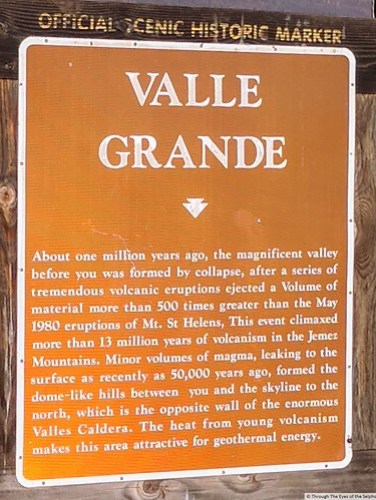
We left Abiquiu COE campground and headed to White Rock, New Mexico, elevation 6,365, just outside Los Alamos.  This was a short two night stopover, mainly to visit the Valles Caldera National Preserve, one of three super volcanoes in the United States.  The 89,000 acre Preserve is one of the newest additions to the National Park Service in October, 2015.  The Valles Caldera supervolcano erupted 1.2 million years ago and the center of the volcano collapsed, creating a volcanic caldera 13.7 miles wide.IMG_20170921_080004IMG_20170921_075645

Since they only allow thirty cars a day to drive around the backcountry of the Preserve, we got up earlier than we normally do to make the thirty minute drive there in order to arrive when they opened at 8:00 A.M.  It was a good thing we did because archery hunting season has begun and by the time we arrived fifteen of the passes had already been given out to hunters looking for elk.IMG_20170921_075709IMG_20170921_084139

We received our car pass from the ranger at the Valle Grande Contact Station and began our drive around the Preserve.  We were at an elevation of almost 10,000 feet and the car thermometer registered 28 degrees!IMG_20170921_083421  Can’t remember the last time we were in weather that cold. As we began the drive in the Valle Grande Valley, we saw a couple prairie dogs. We drove on unpaved roads around the dormant volcano caldera with expansive valley meadows, lush forested volcanic domes and streams where we saw an occasional fisherman.  Even though herds of elk and black bear also live in the Preserve, we only saw deer, cattle and prairie dogs.  Scenes from the 2013 movie “Lone Ranger” were filmed here.

IMG_20170921_083348

Prairie Dog

Los Alamos is famous as “The Secret City”, site of the top secret Manhattan Project during World War II which focused on atomic bomb design and testing.  When we were here in 2015 we toured the Bradbury Science Museum and the Los Alamos History Museum Campus.  You can read the blog about that visit here: Los Alamos, NM May, 20 201520170921_13224420170921_132336IMG_20170921_14503020170921_13200320170921_132059

This visit we wanted to see the new Manhattan Project National Historical Park operated by the National Park Service.  It is one of the few national parks that focuses on American science, technology and industry during World  War II.  We watched the movie about the Manhattan Project and looked at exhibits in the Visitors Center which focused not only on science but also the social and cultural life of the people who lived and worked in the “Secret City”.  Located in the Historical Park are life size bronze statues of Dr. J. Robert Oppenheimer and General Leslie R. Groves, leaders of the Manhattan Project.IMG_20170921_145021IMG_20170921_124449

IMG_20170921_141814

This is Where Dr. J. Robert Oppenheimer Lived

IMG_20170921_142836IMG_20170921_142817

Since we were last there the History Museum had been remodeled and additional exhibits added so we paid a second visit there.IMG_20170921_152816

IMG_20170921_152747

The Road To Los Alamos

The two days went by quickly and it was time to head to Cochiti Lake, outside of Santa Fe.

20170920_123935

Available at Local Grocery Store

Angel Fire, NM SEPT 4, 2017

As we continued our stay in Eagle Nest, one day we drove ten miles to visit the nearby town of Angel Fire.  The name Angel Fire comes from the Moache Ute Indians in the 1780’s.  During their autumn celebration they noticed red and orange flickering in the northern sky.  They saw it as a blessing of the fire gods and named their yearly celebration “Angel Fire”.  Years later Kit Carson mentioned seeing the Angel Fire at dawn and dusk and accredited the glow to sunlight striking frost on the branches of trees.

Eagle Nest and Angel Fire are very popular ski resort areas in the winter and fishing in the summer.IMG_20170905_123706

Some of the TV series “Lonesome Dove” was filmed around Angel Fire.  We drove to the location where the closing cabin scene was filmed here at Black Lake and meadow.  The property is now privately owned and we could not get close for a great picture. IMG_20170905_130104

After lunch at the local barbecue restaurant, we visited the Vietnam Veterans Memorial.  This Memorial was the first major Vietnam Veterans Memorial in the United States.  It was built by Dr. Victor and Jeanne Westphall to honor their son, 1st Lt. David Westphall who died in combat in a 1968 ambush in Vietnam.  In 1994 Dr. Westphall visited  the site in Vietnam where his son died. He took with him a handful of soil from the Memorial to scatter at the site of the ambush.  He also brought back Vietnamese soil from the site and scattered it at the Memorial.   

This Memorial received national attention in the 1970’s and was the inspiration for the Vietnam Veterans Memorial in Washington, D.C in 1982.  In 1987 the Angel Fire Memorial was recognized as a Memorial of National Significance.  IMG_20170905_133307IMG_20170905_133046IMG_20170905_160200

Today the Memorial is maintained by the David Westphall Veterans Foundation and the New Mexico Department of Veterans Affairs.20170905_15250020170905_15273120170905_152653

At the entrance to the free Memorial is a Huey helicopter which served two tours in Vietnam.  On its first tour it was badly damaged with 135 bullet holes, repaired and sent for a second tour.IMG_20170905_133743

Along the sidewalk leading to the Visitors Center are sponsored bricks with names of veterans.  The dates are dates of service.  Two stars signify a person killed in action and one star is missing in action.  New bricks are added every September and bricks were being added while we were there.

20170905_134650

Pop Music Was Nostalgic Reminder of the World They Left Behind

This statue is of a soldier in the field trying to write a letter to keep in touch with family back home.  It is called “Dear Mom and Dad”.IMG_20170905_13382220170905_133826

The Visitors Center has exhibits and a very moving ninety minute HBO documentary titled “Dear America: Letters Home From Vietnam”. It was extremely moving; there are no words to describe the power of the movie.  

The Visitors Center has over 2,000 photos.

IMG_20170905_134709

98 Pairs of Empty Boots Bear Witness to the 173rd Airborne Casualties from the Battle For Hill 875

Just like the Memorial in Washington, D.C., notes and mementos are left around the Memorial.  They collect them and put them on display in the Visitors Center.  One brief, heartfelt note caught my attention.  Well said!20170905_154151

This painting shows a shackled eagle, representing the frustration and futility of being captured.   The Statue of Liberty in the distance and sunshine represents freedom and a ray of hope for the future.20170905_152845

In a separate area is the Peace and Brotherhood Chapel which displays a photo of David Westphall and rotating photos of thirteen men also killed in the ambush.20170905_15162720170905_15433320170905_15430620170905_154245

Many Native American volunteered and died in Vietnam.IMG_20170905_154326IMG_20170905_153308

Next up: A drive on the Enchanted Circle

The Enchanted Circle, NM SEPT 2, 2017

On August 31st we drove further west to Eagle Nest, elevation 8,238 feet.  At this elevation we had nightly temperatures in the upper 30’s and low 40’s.  Time to turn on the heat and add a second blanket!  The daytime temperatures were very pleasant  Due to the short drive and mountainous roads, I drove the tow car instead of towing it behind the RV.  I managed to get a picture of our RV ahead of me as we approached picturesque Eagle Nest Lake.20170831_123607

IMG_20170901_150049We had a nice campsite with the only problem being very weak Verizon cell phone service and unreliable WiFi furnished by the campground.  One day we went a mile up the road to the Eagle Nest Public Library to use their internet to get a blog published.  While we were there a storm came up quickly with heavy rain and hail.  The temperature dropped almost thirty degrees and we were cold on the short drive home without a jacket or coat.

On Saturday we drove the 84 mile Enchanted Circle Scenic Byway.  We began in Eagle Nest and traveled counterclockwise around the circle, passing through many small towns.  We climbed steadily to Bobcat Pass and then dropped down slightly into the town of Red River, a popular ski area and summer resort. IMG_20170902_110136IMG_20170902_110740 

We stopped by a pretty little red schoolhouse.  I am always partial to these little schoolhouses.IMG_20170902_111152

This area of New Mexico was once a prosperous, productive mining district, securing six million dollars of gold between 1866 and 1907.  Surface ore was rapidly depleted and by the 1930’s all mining had ceased.  The only thing that kept the area alive was the creation of a dam built between 1916 and 1921.  The dammed water became known as Eagle Nest Lake.  The towns of Eagle Nest, Angel Fire and others became popular hunting, fishing and winter resort areas.  In Red River and other towns we saw ski slopes and lodges.

As we continued on to the town of Questa we traveled through the Carson National Forest.  The views were lovely but hard to capture on camera.  There was a haze from the forest fires to the northwest.  This haze continued our entire stay in Eagle Nest.  It wasn’t enough to cause us breathing problems but an obvious haze which the local tv station said was coming from the western wildfires.

IMG_20170902_123601We took a short detour to the Rio Grande del Norte National Monument to see the Rio Grande Gorge Bridge.  It is 1,280 feet long and towers 565 feet above the Rio Grande River.  It is the seventh highest bridge in the United States and 82nd highest bridge in the world.  The bridge was in several movies including “Natural Born Killers”, “Twins”, “White Sands”, “She’s Having a Baby”, “The Signal”, “Wild Hogs” and “Terminator Salvation”.20170902_123831IMG_20170902_122241IMG_20170902_12285620170902_12421420170902_124322IMG_20170902_12462320170902_124946

Near bridge are many vendors, especially Native Americans, selling their wares.

Next up was the town of Taos where we stopped for lunch and did some grocery shopping.  The town was crowded with Labor Day weekend visitors.IMG_20170902_134447

Before heading home we drove by the Orilla Verde Recreation Area to check it out as a possible future camping location.  We decided not to camp there but we really enjoyed seeing kayakers on the Rio Grande and big horn sheep grazing on the hillside. IMG_20170902_152545IMG_20170902_155059IMG_20170902_163028 

The sheep were pretty far away and blended in with the landscape so it was difficult to get a good picture.

Another great day in New Mexico!

Raton, NM August 28, 2017

We had an enjoyable, relaxing five night stay at the NRA Whittington Center near Raton, New Mexico, elevation 6,885 feet.  At this elevation the weather was cooler and the mountain views gorgeous. 20170826_152247  

IMG_20170829_112224

Charlton Heston as The Scout

IMG_20170828_182630

This Rabbit Was Checking Me Out on “His Gun Range”

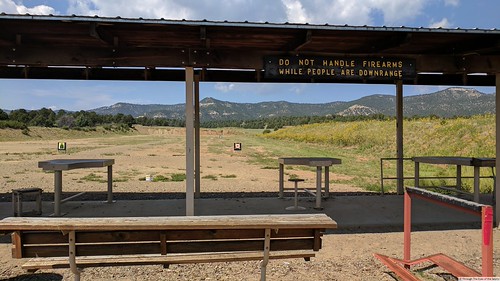
Bill spent some time target shooting at their nice facility. IMG_20170829_144640 

The Santa Fe Trail passes through the Whittington Center grounds.  IMG_20170829_111804IMG_20170829_111928IMG_20170829_11202120170830_155447

They have a nice museum there as well with many weapons from the west.

IMG_20170829_114405

“The Gun That Won The West” Winchester Model 1873 721,000 Produced

One day we drove into Raton for lunch and a little geocaching.  20170830_155848

We stopped in the small local grocery store to pick up some items and noticed elk jerky for sale.  No thanks!IMG_20170830_143220

Dodge City, KS August 26, 2017

We left Hutchinson and headed west, passing fields of yellow flowers and pumps pumping oil.  We have seen quite a few of these pumps throughout Kansas.  As we drove through the small town of Kingsley we saw that it is nicknamed “Midway, U.S.A” because it is halfway between New York City and San Francisco.IMG_20170826_14065220170825_165627

We made a stop in Dodge City, nicknamed “The Wickedest Little City in America”.  20170825_121521

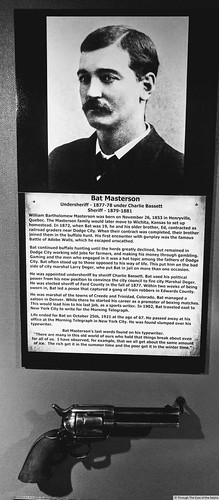
In the late 1800’s its Front Street was one of the wildest on the western frontier.  There was one saloon for every twenty citizens, as well as card sharks and brothels.  Cattlemen, buffalo hunters, soldiers, settlers, railroad men and gunfighters crowded the streets with drinking, gambling and fighting.  Bat Masterson and Wyatt Earp were two of the most famous lawmen who tried to bring law and order to the town.

Dodge City grew up near Fort Dodge which offered them protection.

20170825_140248

This is General George Custer taken at an Indian Village near Fort Dodge

Dodge City was a stopover on the Santa Fe Trail, IMG_20170825_134411and by late 1872, a station on the railroad.  Buffalo hunting was popular and the trading and selling of buffalo hides, meat and bones brought considerable wealth to the area.  By the time buffalo became almost extinct, the cattle trade had taken over with herds of Texas cattle being the main source of income.  Dodge City was one of the largest cattle markets in the country.  Today it is still a meat processing, major cattle shipping point as well as a supply and trade center for wheat.IMG_20170825_14090020170825_130042

Boot Hill was the highest point in Dodge City and the original location of the Boot Hill Cemetery.  From this lookout point you could see wild game and buffalo as well as enemies approaching. Huge herds of buffalo roamed the prairie.  Boot Hill was a burial ground for about six years from 1872 to 1878.  During the town’s first year nearly thirty people were killed, a large number for a town of 500.  Boot Hill became a cemetery for those who did not have money for a proper burial at Fort Dodge.  They were stripped of their valuables and any clothes worth saving, and buried without a coffin or ceremony.  They were buried with their boots on, thus giving the area the name Boot Hill.   They thought it better to bury bodies on a slope so they would be better preserved because the water would run down the hill and not soak in.  One theory is burying them on the hill gave them a boost to Heaven which they thought some needed. In 1878 a new cemetery was built east of town.  The bodies in Boot Hill were moved to the cemetery.  Today there are no known bodies remaining at Boot Hill and the markers and boots sticking up are there just to entertain and fascinate tourists.IMG_20170825_135429IMG_20170825_141802IMG_20170825_135319IMG_20170825_135637   

“When Gabriel blows his horn, verily it will be a motley crowd of sinners that the graves on Boot Hill send forth to attend the final judgement.” May 4, 1878 Dodge City TimesIMG_20170825_135217

We paid admission to visit the Boot Hill Museum and tour Front Street.  We began our visit by seeing a short movie on the history of the area, with some emphasis on the settlement’s impact on the Native Americans. We were saddened to learn that the U.S. soldiers and settlers purposely killed off the buffalo herds to take away the Native American’s food supply and force them off their land. IMG_20170825_140803IMG_20170825_140054 

After the movie we toured the Boot Hill Cemetery, the jail and the museum with exhibits on Native Americans and life in 1876 Dodge City.  They had fake storefronts of shops such as the general store, post office, gunsmith, undertaker, bank and doctor’s office.  IMG_20170825_141143IMG_20170825_141123They had a working saloon but we were the only ones there when we walked through.  I was disappointed to see it really didn’t look much like the Long Branch Saloon on Gunsmoke.  Supposedly they have Miss Kitty there and fake gunfights only on the weekends. IMG_20170825_13390220170825_141940IMG_20170825_142035 20170825_14223320170825_143517IMG_20170825_142113IMG_20170825_142423IMG_20170825_142448

We visited the one room schoolhouse but didn’t bother with the Victorian house or church.IMG_20170825_143919

Inside the museum they had a room of Gunsmoke memorabilia which we enjoyed.   I guess Gunsmoke is what brings many people to Dodge City, including us.  But if you come thinking it will look like Dodge City on Gunsmoke, you will be disappointed.  We didn’t have high expectations and knew ahead of time it was a tourist trap.IMG_20170825_14145920170825_141251

We didn’t have a campground reservation and had considered staying overnight in Dodge City, but our museum visit didn’t take long and we had most of the afternoon ahead, so we decided to press on.

As we continued west we passed one tiny town after another with mile after mile of flat land and frankly, pretty much a lot of nothingness.  Each little town had a few houses and each one seemed to have a huge grain elevator, nicknamed “Prairie Cathedrals”.  It was a long smelly ride since we passed a lot of very large feedlots crammed full of cattle.  The horrible smell was overpowering at times, taking our breath away.20170825_161450

There were also many wind turbines, wildflowers and crops of corn and sorghum as well as other vegetables.20170825_160340

We stopped for the night in the little town of Elkhart, right on the border of Kansas and Oklahoma at a small and economical RV park with full hookups.  It was perfect for a one night stopover and sure beats a Walmart parking lot!

We noticed a nearby geocache a few miles down the road so after dinner at the local cafe we drove over to it.  The geocache was located at a tri-state point, a point where Kansas, Oklahoma and Colorado states meet.  We took pictures standing in three states at once!IMG_20170825_201211

After a great night’s sleep we continued west, crossing into Oklahoma. We took a two mile detour to find another tri-state point, this one for Oklahoma, Texas and New Mexico.  So in twelve hours time we stood in five states!20170826_135501(0)IMG_20170826_140742IMG_20170826_140528

We left Oklahoma and crossed into New Mexico, our home for the next two  months.  We were excited to see the mountains of New Mexico ahead of us.  We love the west and are really excited to be back!

We arrived at the NRA Whittington Center in Raton, New Mexico for a five night stay.

Famous Kansans:

  • Robert Dole, U.S. Senator and war hero
  • Clyde Cessna of Cessna aircraft
  • Russell Stover of the candy company
  • Edward Asner, actor
  • Kirstie Alley, actress
  • Burt Bacharach, singer and songwriter
  • Martina McBride, singer and songwriter
  • Walter Chrysler of Chrysler Motors, established in 1925
  • Amelia Earhart, female pilot and first woman to fly nonstop and solo across the Atlantic Ocean
  • Aneta Corsaut, played Helen on “The Andy Griffith Show”
  • Milburn Stone, played Doc on “GunsmokeIMG_20170825_144844