Category Archives: Historic Landmark

Historic Landmark

Central OR Coast, Part 2, AUG 24, 2018

Continuing with our time in Yachats at the Tillicum Beach Campground, we were relieved to finally have the smoky haze gone and see sunshine and clear skies. We drove seven miles south to the Cape Perpetua Headland which at 800 feet is the highest point accessible by car on the Oregon coast.  It was a fairly clear day and there were beautiful views extending 37 miles along the Oregon coastline. Captain James Cook first sighted the Headland in 1778 and named it after Saint Perpetua. 20180824_140451IMG_20180824_141448

In 1933 President Franklin D. Roosevelt formed the Civilian Conservation Corps and Cape Perpetua was a base camp.  The CCC’s built a stone structure which we were able to stand in at the overlook. They chose to build this structure here because of the magnificent views. The stone structure served as a lookout for enemy ships and planes during WWII. IMG_3822IMG_20180824_141755-EFFECTS

One day we were out geocaching and whale watching and stopped to pick some blackberries.  In a short time we had enough for a cobbler. Oregon produces nearly 100% of the nation’s commercial blackberries, black raspberries and boysenberries. They also grow more than 70 million pounds of blueberries a year. 20180824_15491820180824_154949

We spent quite a bit of time stopping at viewpoints looking for whales, often with much success. IMG_20180824_155933IMG_3825IMG_392920180825_161412IMG_3931

One day we took chairs and sat at a viewpoint watching and waiting. As you can see from this picture, it was very chilly.  20180825_133906

We could see whale watching tour boats circling around which meant whales were close by. It takes time and patience when watching for them. IMG_3875IMG_3921

Their pattern is usually they surface and blow or spout to replenish their oxygen supply.  The number of blows depends on how many minutes they have been down, one blow for every minute down. The spout or blow shoots nearly twelve feet high, expelling 400 liters of air in a single blast. They then dive below the surface for three to five minutes and swim 300 to 400 yards. They then come up for another series of blows. IMG_3937

If they are frightened or sense danger they may stay down for 30 minutes. Sometimes they dive and can reappear a quarter of a mile away, so you really have to have a keen eye as you search the horizon. Some whales “spyhop” which means they lift their heads above the surface of the water to get a better view of their surroundings and spy on local whale watching tour boats. Whales have the largest brain of any animal on earth and they are very intelligent and curious. Those whales sure are quick which makes it really hard to get a good picture! IMG_3877-ANIMATIONIMG_3887-ANIMATION

the whales pass twice a year while migrating north in the early spring and south in early winter. Those are the best time to see the whales but there are some resident gray whales who hang out in this area year round, feeding close to shore.  There are volunteers at 24 viewpoints along the coast from Ilwaco, Washington to Crescent City, California to answer questions and help visitors spot whales. IMG_3938-ANIMATION

Our last day in the area we drove north to Cape Foulweather which was discovered by Captain James Cook in 1778.  The weather was particularly stormy the day Cook arrived with winds of 100 MPH so he named the area Cape Foulweather.  Winds of 100 MPH are not uncommon here during storms. 20180825_14181120180825_141746

This area is the first geographic location named on his voyage to the north Pacific coast.  Captain Cook’s accounts of this voyage were published and aroused world wide interest which was followed by the fur trade. The views here are stunning. IMG_393620180825_143432

BYE! IMG_3828

Next up: Florence, OR and huge sand dunes

Central OR Coast Part 1, AUG 21, 2018

After two and a half months in Washington state it was time to continue south back into Oregon. We really hated to leave gorgeous South Beach and our campsite overlooking the ocean. As we pulled out early in the morning there was already someone waiting to grab the site.

We headed south down highway 101.  We spent one night at the Elks Lodge in Hoquiam, WA and the next morning we crossed the Astoria-Megler Bridge which spans the Columbia River. It is the longest continuous truss bridge in North America. In the middle of the bridge is the state line between Washington and Oregon. And just like that, we were back in Oregon!  20180819_111436(0)20180819_112009

Unfortunately it was a foggy morning and we were unable to get good pictures of the bridge or view from the bridge of Astoria. 20180819_11184720180819_111911

We stopped in Seaside for a two night stay and then drove to Tillicum Beach Campground located in the Siuslaw National Forest for a five night stay.  

IMG_3584

US Highway 101 on the Oregon Coast

Along the way we passed the 45th Parallel, the halfway point between the Equator and the North Pole. We were last at the Tillicum campground in June 2014. Our view of the ocean here wasn’t quite as nice as South Beach, but we could see the water and hear the waves crashing.

Tillicum National Forest campground is located just a few miles from the tiny town of Yachats, pop 700. Our first couple days there the sky was hazy and smoky from the Canadian wildfires and we were under an air quality alert. We drove around the beach at Yachats but it was hard to get any pictures through the haze.

We definitely prefer the Oregon coast over the Washington coast. The views driving down the coast are better, the beaches are sandy rather than rocky and the beaches are much more accessible. The beach at the Tillicum campground could be easily reached by walking down some steps. IMG_3760

Even though the haze was still in the area the next day we drove north to see two lighthouses. We crossed the beautiful Yaquina Bay Bridge into Newport and visited the Yaquina Bay Lighthouse, the second oldest standing lighthouse on the Oregon coast.  IMG_3772IMG_3773IMG_3769

Built in 1871 it was decommissioned in 1874. Yes, after only three years! It is the only existing lighthouse with the living quarters attached and the only historic wooden Oregon lighthouse still standing. It was restored to a working lighthouse in 1996 as a privately maintained by the Oregon Parks and Recreation as a navigation aid for the United States Coast Guard. Today a steady white light shines from dusk to dawn. IMG_3764IMG_3767

Next we drove to Yaquina Head Outstanding Natural Area.  The Yaquina Head Lighthouse located there, is also called the Cape Foulweather Lighthouse because when it was built they mistakenly thought they were at Cape Foulweather. At 93 feet, it is the tallest lighthouse in Oregon. It was first lit in 1873 and was automated in 1966.  It is still active today. IMG_3778IMG_3801

We first stopped at the Interpretive Center where we saw exhibits on whales and watched a movie about the area. 

IMG_3779

Even the Doors have Lighthouse Silhouettes

IMG_3776

We then drove to the lighthouse which has beautiful views. IMG_3781IMG_3804

We could see whales spouting in the distance, seals lounging on rocks and lots of birds. IMG_3799

As we walked up towards the lighthouse we noticed a bad smell. At first we thought it was from the seals. Then in the distance we saw huge rocks with  seabirds sitting on them. The rocks were covered in white bird poop. That was the source of the smell. Yuk! IMG_3802

We read that the common murres bird colonies here are the most rapidly growing on the Oregon coast. IMG_3791IMG_3790

Sunset from our beach side campsite. IMG_3806IMG_3809IMG_3813

Next up : more time on the Oregon coast

San Juan Island, WA July 13, 2018

We continued our stay in Birch Harbor, Washington (pop 8,400) which is very close to the Canadian border.  In fact the nearby town of Blaine, located on the U.S./Canada border is the busiest border crossing between British Columbia and Washington state. IMG_3107

In Blaine is the Peace Arch Historical State and Province Park with a Peace Arch. It commemorates the signing of the Treaty of Ghent in 1814, the peace treaty between the U.S. and the United Kingdom that ended the War of 1812.  IMG_3122IMG_3100IMG_3115

The Arch, dedicated in 1921, is 70 feet tall and the first such structure in the world.  It was built on the International Boundary between the two countries. IMG_3120

School children from the United States and Canada donated money for the purchase of the land surrounding the Peace Arch.  IMG_3111IMG_3118

It is located in a WA state park with beautiful gardens, including one garden representing the flag of the United States and another flower garden representing the Canadian flag. IMG_3126IMG_3112

We could walk freely between the two countries at the Arch with no need to worry about a passport.  

It was interesting to see the houses and the street across from the state park are in Canada. IMG_20180715_13412820180715_134221

IMG_3133

On this Border is a Ditch and Not A WALL

On Friday we took the ferry over to San Juan Island.  This island is the westernmost island of the San Juan Islands and lies between the mouth of the Puget Sound and the Vancouver Island.  it is also the second largest and most populated of the 172 isles of the archipelago (group of islands). We originally planned to just walk on the ferry and ride a bus around the island but decided at the last minute to take the car along if there was space available.  We had to drive from our campground in Birch Bay to the ferry landing in Anacortes and arrived about an hour before departure. To our delight there was room for the car. Quite a surprise on a Friday in the middle of summer. The ride took a little over an hour and we certainly enjoyed the view of Mount Baker in the distance.  IMG_3043

Since San Juan is the westernmost island we also passed the major islands of Shaw, Lopez and Orcas. IMG_3030IMG_3046IMG_3048

We arrived at Friday Harbor which is the island’s largest town, ferry landing and a U.S. Port of Entry.  It is one of the last remaining 19th century wood-built fishing villages in Puget Sound. One square mile in size, Friday Harbor has about 2,000 year round residents and 15,000 summer residents.  Friday Harbor is the touristy section of the island with shops, restaurants, etc. We knew the rest of the island was going to be remote and without restaurants. Because we just decided on the way to the ferry to take the car, we hadn’t packed any food or drinks.  No worries. We stopped by a Friday Harbor grocery store and stocked up on snacks and drinks to get us through the day. Off we went! 20180713_10291720180713_10294120180713_103023

The island is only 55 square miles of land and it only takes fifteen minutes to travel from east to west.  We were surprised at the farmland and woodlands, prairies, as well as small seaside villages with miles of sandy beaches and bluffs.  It was typical to see unattended baskets of eggs for sale along the side of the road. IMG_3065

First up was the English Camp part of the San Juan Island National Historical Park, located on the northern part of the island.  Near South Beach and the southern end of the island is the American Camp. This English Camp commemorates the British and American struggle for possession of the San Juan Islands.  

The dispute resulted in the Pig War of 1859. Ever heard of that war? Neither had we. The war began in 1859 when an Englishman’s pig strayed onto land claimed by an American and started eating his potatoes.  The American shot the pig, who was the only casualty of the conflict. Both sides set up camps to lay claim to the land with neither side wanting to go to war, especially Lincoln who had the approaching Civil War to worry over.  For 12 years there was a joint U.S./British occupation of the island while the countries argued over who owned the San Juan Islands. Finally in 1872 arbitration gave the San Juan Islands to the United States and set the boundary between the United States and Canada.  

We read that this former English camp in a National Historical Park is the only place in the United States today where the British flag is raised each morning. The ranger pointed out that the park has an American flag on higher ground up the hill, therefore the American flag is always higher! IMG_3059

We were surprised to see a totem pole there as well.  Dedicated in 2016 it acknowledges the history of the native Coast Salish people at the site of a Coast Salish village. IMG_3062

Later in the day we stopped by the American Camp.  Not really all that much to see at either camp, but still a fun piece of history to learn about! IMG_3087

Next up was Lime Kiln State Park, a 41 acre state park named after the former lime kiln operations in the area.  It is also called “Whale Watch Park” because it is one of the top places to view orca whales in the world. Unfortunately we did not see any whales even though several had passed by a couple hours earlier.  We did enjoy seeing the 1919 picturesque Lime Kiln lighthouse. IMG_3085IMG_308220180713_125051-EFFECTS20180713_12490520180713_130019-EFFECTS

In the distance we could see the snow-capped mountains of the Olympic Mountains. IMG_3067IMG_3068

We ended our travels at the far tip of the island called Cattle Point where we saw another lonely lighthouse standing guard. IMG_3089IMG_3093

We cut our visit a little short and got to the ferry early.  Since we didn’t have a reservation for the car, we wanted to be sure we could get on the late afternoon ferry back to Anacortes.  What a great day!

Mt Baker stands out in this area of Washington, what a sight to see. IMG_3098

Next up:  Another ferry trip!

Juneau, AK June 28, 2018

Our next port stop was in Juneau, the capital of Alaska, pop 31,275.  Juneau lies along the Gastineau Channel at the foot of the snow covered Mount Roberts and Mount Juneau. The mountains give a natural protection against cold winds giving Juneau a milder climate, but also isolates Juneau from the rest of Alaska. The only way to reach Juneau is by ship or plane. It was named the capital in 1906.

In 1880, Joe Juneau and Richard Harris discovered gold in this area which started the first gold rush in Alaska. Juneau and Harris laid claim to the area which they named Gold Creek.  They built a town along the banks and in 1881 gold miners voted to name the town Juneau. IMG_20180628_08261620180628_165922-EFFECTS20180628_165857

From our balcony on the ship we could see the Goldbelt Mount Roberts Tramway which is a five minute ride to the 1,800 foot level of Mount Roberts. We didn’t ride the tram because we really didn’t have time and it wasn’t a clear day so the view from the top wouldn’t have been very good. 20180628_165934

On the way to the boat we past a field of Eagles, we could not believe we were seeing that many Eagles at one time in one area. They appeared to be drying their feathers in the morning sun. DSC_0961DSC_0963

While in Juneau we went on another whale watching excursion along the Gastineau Channel of the Inside Passage.  Remember the rough ride on the Haines excursion? This ride was as smooth as silk. Everyone could comfortably walk around and no fear of seasickness. We were so excited to see several humpback whales, including some breaching. They are really quick and so hard to catch on camera. But Bill and Beth were hard at work getting these great pictures! IMG_2662IMG_2675IMG_2679IMG_2697IMG_2703IMG_2706DSC_0035DSC_0051

We also saw bald eagles, more harbor seals and those lazy sea lions enjoying their day. What a life! DSCN6584DSC_0132DSC_0100IMG_2794

After out boat excursion we went by bus to the Mendenhall Glacier and Visitors Center. The glacier is 13 miles long and 1.5 miles wide at its widest point and is fed by the 1,500 square mile Juneau Icefield. It is one of 38 large glaciers that flow from the Icefield. DSCN6603IMG_2833DSC_0178DSC_0173DSCN6594DSC_0180IMG_2836IMG_2831

Nearby is the lovely Nugget Creek Falls. We really wished we had more time here but we were limited to one hour. DSC_0179

When we returned from our excursion Bill and I grabbed some lunch in town and walked up to the state capitol building. All uphill I might add! Of course we had to continue our goal of touring every state capitol building. There is a running joke among Alaskans about how ugly their state capitol building is and they joke it is the 50th prettiest capitol building in the country. Well, they are right. Unlike other capitol buildings, it did not have a guided tour and had one of the most unfriendly and indifferent greeters at the information desk we have ever encountered. We picked up a self guided tour brochure and walked around. Very little to see. The building was constructed in 1931 and underwent a $36 million dollar renovation in 2017.  Outside the building across the street is a statue of William Seward, former secretary of state under presidents Lincoln and Johnson. Seward played a large role in purchasing Alaska from Russia. IMG_2850IMG_2846IMG_2854IMG_2852

Walking back towards the ship we found a couple of geocaches. DSC_0136DSC_0141DSC_0144

Another great day in Alaska!

Chehalis, WA June 14, 2018

Leaving the Columbia River behind us we traveled further north to the small town of Chehalis, Washington for a four night stay.  

The highlight of our stay here was driving to Olympia, the capital of Washington.  In keeping with tradition we took a guided tour of the state capitol building. We had a great tour guide who led us through the capitol completed in 1928.  IMG_20180611_113431

It has one of the tallest masonry domes in the world and one of the world’s largest collection of Tiffany chandeliers. IMG_20180611_121756IMG_20180611_124719IMG_20180611_122640

This is the state seal on the floor in the capitol building. IMG_20180611_121741

The front entrance has these high ceilings. IMG_20180611_11525620180611_121035

Missing were the murals and paintings found in most state capitol buildings.  The guide told us that since so much money was spent on building the capitol there was no money left for murals and paintings. Over the years money was set aside each year for future paintings and murals but now that they have the money, the legislators cannot agree on what the paintings and murals should depict.  So the walls remain bare. The guide pointed out several places where murals would look nice, but nothing so far. Sad when government leaders cannot agree on something which seems so simple. 20180611_121811

The House side: PANO_20180611_123511IMG_20180611_125046

The Senate side: IMG_20180611_124932IMG_20180611_124834

We saw a nice picture of Mount Ranier, we could not see the mountain from our campground directly. IMG_20180611_161733

Outside is a replica of the Washington State Monument in the medal of honor grove located at Valley Forge PA. IMG_20180611_133337IMG_20180611_133115

Currently we are in Bothell, WA. Our next blog posting will be a surprise. Can’t wait to share it with you!

Seaside, Oregon May 20, 2018

After four days of heavy clouds and cool temperatures, we left Pacific City and headed further north up the coast to Seaside, Oregon (pop 6,500).  Seaside first welcomed vacationers in 1850 and is Oregon’s oldest ocean resort community. IMG_20180521_202928

We arrived at our campground for a fourteen day stay and finally saw sun in the afternoon! We have found that it is usually cloudy in the mornings and clears up by noon. IMG_20180528_145425IMG_20180521_205002

Seaside is a charming beach community.  Can you find Bill in this picture? IMG_20180528_160129IMG_20180528_155956a

Seaside has a promenade nicknamed “The Prom”, a 1.8 mile concrete walking path that parallels the Pacific Ocean. There is a statue there of Lewis and Clark and Lewis’ dog Seaman. This area of Oregon was the final destination of Lewis and Clark and their Corps of Discovery after their 1804-1806 westward journey.  They wintered at nearby Fort Clatsop and during that time several of the men came to Seaside to build a salt cairn to boil water from the ocean and remove salt which they used to flavor and preserve meat. IMG_20180521_202800IMG_20180521_202855

One day we drove north to nearby Warrenton to get together with an amateur radio group for brunch. It is always nice to meet other amateur radio enthusiasts around the country and learn firsthand about their community.  If you want to know the best places to eat, shop or visit, just ask a local. On the way home we stopped by Fort Stevens State Park in Hammond. Fort Stevens was named for Territorial Governor Stevens, constructed during the Civil War and remained active until shortly after World War II. The Fort guarded the mouth of the Columbia River from Confederate gunboats during the Civil War and included eight concrete gun batteries. The post later was Oregon’s only coastal defense fort during the Spanish-American War and both World Wars.  IMG_20180522_134836IMG_20180522_161957IMG_20180522_162250

The fort is the only military fort in the United States since the War of 1812 to be fired upon by an enemy during time of war when it was attacked by a Japanese submarine on June 21, 1942. IMG_20180522_133431

We enjoyed taking the self guided walking tour of the Fort and found several geocaches as well as nice views of the Columbia River. On the other side of the park was the Pacific Ocean with the Wreck of the Peter Iredale. This shipwreck was a ship which ran ashore in 1906 and is one of the most accessible shipwrecks of the “Graveyard of the Pacific”. IMG_20180522_171421

A geocache led us to this historical marker, the site of a Japanese shell explosion that was one of seventeen fired in June, 1942. IMG_20180522_173425

On Memorial Day we spent the day exploring Cannon Beach south of Seaside. The picturesque town is named after a cannon that washed up on the beach in 1846.  As expected on a holiday the beach was crowded. IMG_20180528_114646-EFFECTSIMG_20180528_115010

We especially enjoyed seeing the famous Haystack Rock and “Terrible Tilly”, the Tillamook Rock Lighthouse. IMG_20180528_124525-EFFECTSIMG_20180528_125349

Built in 1881 because ships needed guidance to get around Tillamook Head, the lighthouse is located a mile offshore.  The conditions there were so physically and mentally grueling that light keepers were assigned shorter rotations than other light keepers. After 77 years the lighthouse lights were turned off for good and today it is not open to the public. It looks rather lonely out there by itself.

While in Seaside we had our teeth cleaned.  We were very pleased with the dentist and his friendly staff.  Our dentist was very thorough in his exam and drove a pickup truck with a surfboard in the back!  Fun!

One of our main reasons for visiting Seaside was so Bill could attend the largest amateur radio convention in the northwest.  It was conveniently located right in Seaside at the Seaside Convention Center. IMG_20180602_122028IMG_20180603_130428

Seaside may be small but they have learned how to take full advantage of their beautiful location.  In the days before the convention Bill volunteered to help with pre-convention set up. He really enjoyed attending seminars and talking with other radio enthusiasts.

He had already met members of the local Seaside amateur radio club and twice met them for breakfast at a local restaurant.  Friday evening we attended their spaghetti dinner fundraiser. Bill won a big box of salt water taffy which was great since we had talked about buying some at one of the beachside shops. Since we had just had our teeth cleaned we each ate a couple pieces and gave the rest away!

We had a great two weeks in Seaside and the days flew by.  The weather was for the most part sunny but still very cool with lows in the upper forties and daytime highs in the upper fifties to low sixties.  Such is the late spring weather along the Oregon coast. IMG_20180521_202951-EFFECTSIMG_20180521_204810

Next stop will be in Washington state.

Lodi & Sacramento, CA APR 12, 2018

Leaving the Hollister area we drove to the town of Lodi for a stay at the Elks Lodge. Lodi is a major wine producing region with more than 80 wineries located in the area. The town has nicknamed itself the “Zinfandel Capital of the World”. We enjoyed doing some geocaching and found the people to be very friendly.

20180415_152145

Beside the road was this exchange library where we found a geocache hide

Next up was the town of Nicolaus about thirty miles from Sacramento, the capital of California. Even though we drove on major highways, the roads were really rough in some places.  California really needs to spend some money repairing their roads!

On Saturday we drove into Sacramento to visit the state capitol building. It is our quest to visit every capitol building in the country. I will start with the bad comments first.  You may have heard on the news that California has an alarming number of homeless people living on the streets. That fact was very evident in Sacramento. I am not usually frightened by this, but in Sacramento wherever we were there seemed to be several people arguing loudly, cursing, and in one instance approached me for money. It is common to see people wandering the streets with suitcases or carts with all their belongings or sleeping along the roads and in parks. In and around the city, bathrooms in restaurants and stores are locked and you must ask to use the facilities. Their situation is very sad, very disturbing and a little frightening.

California has a lovely state capitol building and we took their tour with an exceptional tour guide. IMG_20180421_111813IMG_20180421_111851IMG_20180421_111919IMG_20180421_115036

He clearly loves his job. California became the 31st state in 1850 and construction on the capitol building began in 1860 and concluded in 1874.  Sacramento was chosen as the capital during the gold rush era because it was located near the highly populated gold rush areas. The capitol is modeled after the U. S. capitol building and has a beautiful 120 foot high rotunda. IMG_20180421_124646

IMG_20180421_124936

A page boy, Queen Isabella and Christopher Columbus

We loved the statue of Ronald Reagan and seeing the legislative chambers. 20180421_11403620180421_121909

IMG_20180421_123958

George Washington portrait overlooking the State Senators

We heard an interesting story about the portrait of former governor Arnold Schwarzenegger. He had the portrait commissioned by an artist in Austria, his birth country. The artist chose not to give it an ornate frame or nameplate like the portraits of other past governors and it was hung that way. Not having a nameplate may not be a problem now, but 100 years from now will people recognize the governor without a nameplate? IMG_20180421_121410IMG_20180421_121433

We went into the gift shop and this bumper sticker caught my eye. 20180421_114419

The capitol building is located on a 40 acre park. We always look for the Liberty Bell located at all state capitals. IMG_20180421_130037IMG_20180421_130100

Next we visited nearby Old Sacramento, a four block area that was the city’s commercial district during the gold rush era and pony express.

The area has cobblestone streets and wooden walkways which give it a feeling of yesteryear. It is very much a tourist area today with restaurants, souvenir shops, carriage rides, paddle boat tours and train rides. We visited the Wells Fargo History Museum. IMG_20180421_143245IMG_20180421_143226IMG_20180421_144242IMG_20180421_144304IMG_20180421_145749IMG_20180421_150506

IMG_20180421_150519

The Sacramento River is crossed by this yellow bridge

Watch their train here: 

We finished the day at Sutter Fort State Historic Park, site of the first European outpost in California. IMG_20180421_155124IMG_20180421_162517

It was established by Swiss immigrant John Sutter with a land grant from the Mexican government and was known as New Switzerland. IMG_20180421_161401

After the discovery of gold the land were taken from Sutter by prospectors. We were surprised to find that the original structures were made by men from Hawaii. IMG_20180421_160405IMG_20180421_160411IMG_20180421_160716

On Monday we made the long drive from Nicolaus to visit Donner Memorial State Park. In order to get there we had to drive over Donner Pass using I-80 and the Lincoln Highway, elevation 7,227. IMG_20180423_12121120180423_143220  

The snow was beautiful on this bright sunny day. IMG_20180423_115410IMG_20180423_122257IMG_20180423_122441

The state park had a very nice visitors center with displays and a movie about the Donner party, a group of pioneers who set out from Missouri for California in May 1846 in a wagon train. 20180423_135733IMG_20180423_135926

The trip usually took four to six months, but due to mishaps and bad decisions they found themselves snowbound in the Sierra Nevada Mountains during the winter of 1846-1947, a record breaking snowy winter.

Of the original 87 pioneers, only 48 survived. It is one of the most famous and tragic tales of pioneer journeys, which included cannibalism to survive. 20180423_135816

On the state park grounds is a monument to the Donner party. IMG_20180423_144029

Next stop: Paradise, CA to see a former co-worker from my teaching days

Death Valley National Park, CA MAR 23, 2018

Death Valley National Park has been on our bucket list for a long time. After three days of wind and rain, we woke up to sunny skies as we left Ridgecrest and traveled to Death Valley.  It was not far, but not an easy drive as we passed over two mountain passes, with the second pass at an elevation of almost 5,000 feet. It was then quite a drop down to sea level, a real workout on the brakes!20180323_11575320180323_11110920180323_110939

Death Valley National Park is made up of 3,336,000 acres, making it the largest national park in the lower 48 states and one of the biggest expanses of protected warm desert in the world. There are four National Parks in Alaska which are larger.IMG_20180324_143846

Death Valley is the lowest point in North America and the hottest, driest weather in the country.  It is officially the hottest place on Earth and holds the world record for the hottest air temperature of 134°F.  The valley’s steep mountain walls trap the rising hot air and recirculates it down to the basin for further heating. It has the lowest average rainfall of any place in the country with less than two inches per year, with some years no rain at all. Once again the mountains are to blame.  The mountains capture moisture from passing storms before it can reach the valley.IMG_20180325_170746

Several people have asked us what the weather was like while we were there. This was a great time of year to visit with daily temperatures in the low 70’s with a nice breeze. At night we slept with the windows open.IMG_20180324_141924

One day we stopped by the Visitors Center and saw a twenty minute movie about the park. We then drove through the south end of the park, stopping at Zabriskie Point with beautiful views.  There are many times in our travels over the past five years where places have surprised us with their beauty and exceeded our expectations. Death Valley was definitely one of those places.20180324_130702IMG_20180324_13095420180324_13115520180324_131240IMG_20180324_131357

We took a drive down the Twenty Mule Team Canyon Road which was named for the twenty mule teams which pulled wagon loads of borax across the desert. The mule teams pulled loads weighing up to 36 tons. The rear wagon wheels were seven feet high and the entire mule team was more than 100 feet long.  IMG_20180324_131058

We also drove the Artists Palette Drive with magnificent colors that are impossible to catch with a camera.IMG_20180324_144117IMG_20180324_144155

We visited the Borax Museum where in 1881 borax was found nearby. The Pacific Coast Borax Company mining was done in the area from the 1880’s until the 1920’s when mining slowed down and the area started to become a popular tourist area.  Death Valley became a national monument in 1933 and a national park in 1994.IMG_20180324_120034IMG_20180324_120155IMG_20180324_120858

We hiked a nice trail to Natural Bridge. It seems like almost every park we go to has a natural bridge!IMG_20180324_161223IMG_20180324_161627

A highlight of the day was visiting Badwater Basin, which at 282 feet below sea level is the lowest elevation in North America.  Up on the mountainside was a sign showing sea level.Inked20180324_153230_LIIMG_20180324_152606

As we drove around the park we would see signs showing sea level and various places below sea level.IMG_20180324_141104

Badwater Basin is made up of salt flats. Sodium chloride, or table salt, makes up the majority of the salt at Saltwater Basin.IMG_20180324_152300

Another day we continued exploring by visiting the Harmony Borax Works, the site of one of Death Valley’s first borax operations from 1883-1888.  While searches for gold yielded little success, borax became known as the “White Gold of the Desert “ and was the valley’s most profitable mineral. Borates, or salt minerals, were deposited in the ancient lake beds where water dissolved the borates and carried them to the floor of Death Valley.  Here they recrystallized as borax which was used by blacksmith, potters, dairy farmers, housewives, meat packers and morticians. Many Chinese laborers were recruited from San Francisco to scrape the borax off the salt flats and carry it to wagons to be sent to the refinery. They were paid $1.30 a day minus the cost of lodging and food. They lived in crude shelters and tents.IMG_20180325_111416

Next we walked the beautiful Gold Canyon Trail and enjoyed every second of the hike.20180325_120342IMG_20180325_123917IMG_20180325_12394420180325_12423420180325_13133320180325_130648

Because we hiked at least two trails in the park we each earned a Death Valley decal.IMG_20180325_113621

After lunch we stopped by Salt Creek Interpretive Trail where we walked on the boardwalk through the marshes. Imagine our surprise to find a stream with numerous pupfish. The water originates from brackish springs and marshes more than a mile upstream. The water becomes increasingly salty due to evaporation as it flows downstream. The stream flows alongside the boardwalk in winter and spring and is more salty than seawater. Soon the stream will be dry up until next winter.20180325_14432920180325_144956

The water is too salty for human consumption but manages to sustain life for many plants and animals, including the pupfish. The pupfish have a lifespan of one year or less so they use this time to quickly feed and breed. They are one of the toughest of all fish and are able to survive in salinity several times that of seawater as well as extreme temperatures.IMG_20180325_144350

On our last day we drove in the northern section of the park to the amazing Ubehebe Crater which is only about 2,000 years old. The Crater is a half mile across and about 500 feet deep. If it hadn’t been late in the day we would have walked the trail around the rim.20180325_161426

We had a wonderful time in Death Valley and can now mark it off the bucket list.  We are currently back at the Elks Lodge in Ridgecrest. Thursday we travel to a recreation area in Taft, CA.

Casa Grande, AZ NOV 21, 2017

We arrived in Casa Grande for a relaxing twelve day stay at the Fiesta Grande RV Resort.  We stayed here in December 2013 when passing through the area.

On Saturday we drove to Phoenix to tour the state capitol building.  The traffic in Phoenix is terrible, even on a Saturday morning.  

IMG_20171118_104614

Phoenix Skyline

The capitol building is not the prettiest capitol we have seen and didn’t have beautiful architecture and paintings compared to other capitols. But it had one of the friendliest security guards we had encountered who went out of his way to be helpful.

It is the only capitol building we have been in that is a museum and not a working building.  Due to overcrowding, additions were built on either side of the museum for the House of Representatives and Senate to conduct business and the capitol building became a museum.  The museum capitol was built from Arizona rock, stone and granite, opened in 1901 and served as the terrorial capitol until Arizona became the 48th state in 1912.  On top is a copper dome with a large weathervane in the shape of Nike, the Greek goddess of victory.20171118_121342IMG_20171118_121053

In 1923 the large tile mosaic of the State Seal was laid.  Unfortunately the artist lived in Ohio and had never seen the Arizona State Seal before.  He was only furnished with a written description and some drawings.  When the tile mosaic was laid, it was missing the cow to the right of the miner. IMG_20171118_115343 

The artist offered to fix the mistake but it was determined to be too difficult to take up the tile to fix the mistake.  The motto Ditat Deus means God Enriches.  The sun rising symbolizes Arizona’s climate and the reservoir and dam represents water reclamation farming.  The irrigated fields of cotton and citrus trees symbolizes Arizona’s rich agriculture.  The quartz mill and miner represents Arizona’s mining industry.IMG_20171118_112136

We enjoyed walking through the museum with four floors of comprehensive exhibits on the history of Arizona.  The Miranda warning law used today was a result of the Miranda v. Arizona court case when a man by the last name of Miranda was arrested in Phoenix, not read his rights and was later convicted.  The case was taken all the way to the U.S. Supreme Court.20171118_114725

The Arizona State flag is divided into two parts.  The top half has thirteen alternating red and yellow rays representing the thirteen original colonies.  Because Arizona is a western state, the rays show a setting sun.  The red and yellow colors refer to the Spanish flags carried by Coronado when he came to Arizona in the sixteenth century.20171118_113635

The large copper colored star in the center identifies Arizona as the largest producer of copper in the United States.  The bottom half of the flag is solid blue, same as the blue in the United States flag.IMG_20171118_114044

The friendly security guard offered to allow us access to a part of the museum currently off limits to the public and under renovation.  Inside the large room were silver items originally on the battleship U.S.S. Arizona which had been removed before it was destroyed in Pearl Harbor. 20171118_120431 

There was also a model of the ship and a hull recovered from the ship.20171118_120606

20171118_120543

A piece of the Arizona Battleship

In front of the capitol are pieces of petrified wood found in the state.20171118_121201

On the way back to the car we stopped by a park dedicated to veterans and pioneers.20171118_12154320171118_12162720171118_12183420171118_12191620171118_122112IMG_20171118_121558
We also looked at a Confederate troops memorial.

IMG_20171118_12193220171118_122518

IMG_20171118_121932(1)

A Nation That Forgets Its Past Has No Future

While in Casa Grande we also celebrated Bill’s birthday on November 22nd and joined in a Thanksgiving dinner with others at the RV park.20171123_13284520171123_132856IMG_20171127_174229

It has been hot and dry.  We heard the weatherman out of Phoenix say they have not had rain in 100 days.

Next stop: Organ Pipe Cactus National Monument.

Titan Missile Museum, AZ NOV 13, 2017

Continuing with our time in Tucson, on Monday we drove to nearby Sahuarita to visit the Titan Missile Museum.  IMG_20171113_144234IMG_20171113_124255IMG_20171113_124801

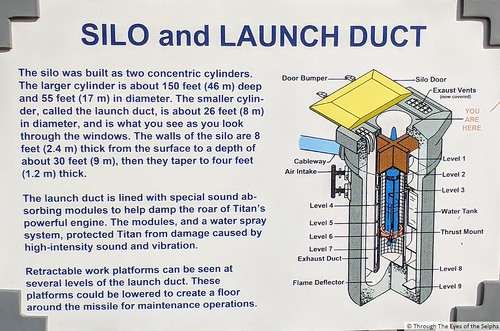
After watching a short video, we took a guided tour of the underground control center and saw the 103 foot tall Titan II missile in its underground silo.  IMG_20171113_142220IMG_20171113_142228

We had an excellent guide who gave an in depth description of the missile facility.  This was once an active intercontinental Ballistic Missile complex.  Of the Titan II sites in the U.S. weapon system, this is the only one not destroyed.  At one time there were 54 missiles sites, with eighteen each distributed over three locations (Little Rock, Arkansas, Wichita, Kansas and Tucson, Arizona).

IMG_20171113_142514

The Missile Silos Around Tuscon

IMG_20171113_142450

Site in 1962

IMG_20171113_142457

Site in 2012

The elevator into the underground silo was under maintenance so we took the 55 steps in and then back out, not too strenuous.  Anyone over six feet tall was required to wear a hard hat because we were entering low areas and they didn’t want to risk anyone injuring their head.  For sanitary reasons each hard hat had a hair net, giving the wearer an unusual look!  Bill didn’t seem to mind.  He is always such a good sport.IMG_20171113_131859

The Titan II is the largest ballistic missile developed by the United States.  It can carry a warhead of nine megatons, equal to nine million tons of TNT.  The amount of TNT needed to equal the explosive power of the Titan II warhead would require a train of 90,000 boxcars.  The train would be 1,534 miles long, stretching from Tucson to Lexington, Kentucky.  While we were in the launch command center the guide simulated what a launch would have been like.  It was sobering and rather scary to think what might have been.IMG_20171113_141158IMG_20171113_141150

During the Cold War the facility, and others like it, was manned twenty four hours a day, waiting for the command to launch.  While they waited, men and women worked keeping the extremely complex system of hundreds of electronic and mechanical systems which must interact perfectly with each other, safe and ready to fire. IMG_20171113_133240IMG_20171113_133246IMG_20171113_133313IMG_20171113_135335 IMG_20171113_135504

There was an accident at a Titan II missile site in Little Rock, Arkansas.  IMG_20171113_124920IMG_20171113_124954

A movie made for television, called “Disaster at Silo Seven” was filmed here.  Also in 1996 part of the movie “Star Trek: First Contact” was filmed at this facility.

The power of the Titan wasn’t all potentially devastatingly destructive.  When no longer needed as a weapon, the Titan also launched the Gemini Program’s astronauts into orbit, sent the Viking probes to Mars and launched Voyager into the outer solar system.  While it can be said the Titan missile prevented a possible catastrophic war with the Soviet Union, it also advanced the exploration of space.IMG_20171113_125143

After our tour we walked around outside.  We saw the cover over the missile which allows satellites from other countries to see the missile silo is inactive.  Our guide told us we had to explain to our potential enemies why we wanted to keep one of the missiles instead of destroying them all.IMG_20171113_141344IMG_20171113_141312IMG_20171113_14140320171113_141817IMG_20171113_125101

Bill was also excited to find an amateur radio antenna where ham radio operators can bring their radios and talk to people around the world using this very large antenna.20171113143704