Category Archives: Geocaching

Geocaching

Yellowstone NP part 1 June 20, 2020

We looked forward to visiting Yellowstone National Park again this summer. We were last there in 2015. We left Idaho Falls and traveled to Island Park, Idaho for a two night stay. Along the way we could see the beautiful Grand Tetons mountain range in the distance. IMG_20200620_120115MVIMG_20200620_120131

Island Park, located just outside the west entrance of Yellowstone, was the perfect place to stay to visit the Old Faithful geyser. 

Established in 1872, Yellowstone is the world’s first national park.  Of the 2.2 million acres, 80% is forest, 15% is grassland and 5% is water.  Ninety-six percent of the park is in Wyoming with 3% in Montana and 1% in Idaho.

Yellowstone is HUGE with:

  • five entrances into the park
  • ten visitor or information centers
  • three medical clinics
  • six gas stations
  • seven general stores
  • five hotels or lodges
  • twelve campgrounds of various sizes
  • and numerous restaurants and gift shops

But it was a very different Yellowstone than what we visited five years ago. The Visitors Centers were all closed. We always really enjoy the movies about the park shown at the Visitors Centers and we were disappointed not to see them again. With the Visitors Centers closed, access to Rangers and information on the park was very difficult. There were no informative Ranger talks and hikes. Restaurants were closed leaving tourists scrambling for food at the few general stores open. Most lodges and hotels were closed. Crowds were down but there were still plenty of people enjoying the park, some with masks and many without. In spite of it all, we were very grateful the park was open for us to visit and enjoy. 

Unfortunately the day we chose to visit Old Faithful was cold and windy with rain showers. The cold and high humidity gave us a very different perspective at the geysers. IMG_20200621_103745

This was most noticeable at the Grand Prismatic Spring. The wind was blowing so hard and there was so much hot steam as we walked along the boardwalk, we were not able to see the beauty of the hot spring. We noticed that some Bison had stomped around before we got here. IMG_20200621_101446

As we walked along the boardwalk we were enveloped in hot blowing steam, which quickly would fog your glasses. Here are pictures taken today IMG_20200621_095725IMG_20200621_101001IMG_20200621_101020IMG_20200621_101253IMG_20200621_102650IMG_20200621_101436

followed by pictures taken five years ago on a much better weather day. IMG_20200621_101706IMG_0555IMG_0560

It is always a thrill to see Old Faithful, the most popular and famous attraction in Yellowstone. It is rightfully named because it faithfully erupts every 60 to 90 minutes, spewing 8,400 gallons of steaming hot water up to 180 feet into the air. It is one of the most predictable geysers on earth. We timed our visit just right so we only had a ten minute wait for the next eruption. MVIMG_20200621_105605IMG_20200621_105910IMG_20200621_105741IMG_20200621_110637

Yellowstone is home to more geysers than any other place on earth and is one of the world’s most active geothermal areas.  Within the park are hundreds of geysers, hot springs, mud pots and steam vents.  This is because the park sits atop an enormous “supervolcano” and the immense heat from the underground magma powers the geysers.  The volcano last erupted 640,000 years ago and shows no signs of erupting anytime soon. Water from precipitation seeps into the ground, meeting the superheated earth near the underground magma chamber.  Tremendous pressure builds up until the water is forced back to the surface.  Some geysers like Old Faithful have their own underground “plumbing systems” and erupt at predictable intervals.  Other geysers share plumbing “pipes” with adjacent geysers and erupt more sporadically.

Yellowstone has approximately 700 to 3,000 earthquakes a year, most not felt. IMG_20200621_140157IMG_20200621_140245IMG_20200621_141824

After seeing Old Faithful show off, we explored some more of this side of the park. IMG_20200621_134327IMG_20200621_134054IMG_20200621_134439

We stopped by beautiful Kepler Cascades IMG_20200621_131058

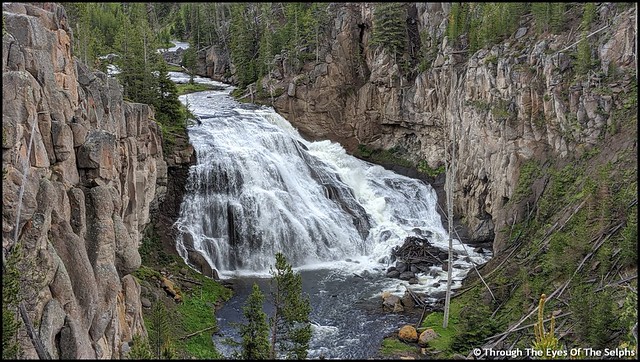
and then impressive Gibbon Falls. IMG_20200621_145509

We also stopped at the Continental Divide and had lunch. IMG_20200621_125739

Despite the weather, a great first day in the park! 

Next up: Yellowstone part 2: Bison, pronghorn sheep and bears, oh my! 

Soda Springs & Idaho Falls, ID June 10, 2020

As we continued with our summer travels, we left Twin Falls and drove to Pocatello (pop 55,000) for a one week stay. Truthfully there wasn’t a lot to do in Pocatello, but we relaxed and killed time waiting for the weather to warm up at Yellowstone National Park. Pocatello is home to Idaho State University. 

Over the years on the road we have learned how to sniff out unique places. One day we drove an hour to Soda Springs to see their geyser. Soda Springs has approximately thirty mineral salt springs. Early trappers and pioneers called the area “Beer Springs” because of its natural soda water. They documented people drinking the soda water in large amounts while the Indians refused to taste it. Women used the water to make bread and documented it as being great light bread similar to yeast bread. 

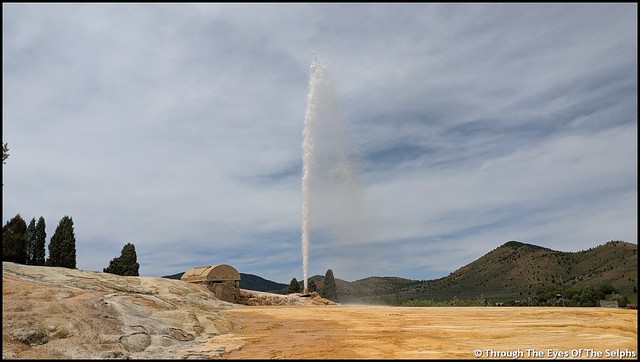
Captive Geyser in Soda Springs is a carbon dioxide geyser controlled to erupt every hour on the hour. The town made the geyser into a tourist attraction with a viewing area. I was surprised to see on a weekday afternoon the small town geyser had attracted a small crowd.

The geyser is said to be the world’s only “captive” geyser. In 1937 some people in Soda Springs were trying to locate hot water for a community swimming pool. They drilled into the ground and unleashed the 100 foot geyser roaring like a dragon. They were surprised to say the least! For most of the night the town was enveloped in a mist of steam water running down Main Street and threatening to flood businesses. IMG_20200612_134933

Two weeks later the geyser was capped. IMG_20200612_135129

The Secretary of the Interior sent a telegram to Soda Springs asking the City to turn off the geyser because it was taking attention from the world famous Old Faithful geyser in Yellowstone. Today a timer on a valve permits the eruption of the 72 degrees water every hour on the hour throughout the year. IMG_20200612_140227IMG_20200612_140411

Also at the viewing area is a Ground Observer Corps Skywatch Post used from 1956-1959. It was manned due to concerns about the growing capabilities of the Soviet Union to launch surprise air attacks against the United States. IMG_20200612_135005

On the way home we were on a hunt for Oregon Trail wagon ruts. As many as 350,000 pioneers and tens of thousands of covered wagons traveled the Oregon Trail between 1840 and 1870. In certain areas of the west, wagon ruts are still visible and we had read they were visible in this area. We stopped and tried to see the ruts but it would take some imagination to see them. IMG_20200612_142457IMG_20200612_143221IMG_20200612_143128

We also did some geocaching. One place we stopped for a cache was at Sheep Rock which towers 1,200 feet above the Bear River. Sheep Rock was a prominent landmark described in many pioneer journals as they traveled west on the Oregon and California Trails. Sheep Rock received its name from the pioneers because of the sizable flock of bighorn mountain sheep which occupied the rocky ridge above the river throughout the year. IMG_20200612_151005IMG_20200612_150428IMG_20200612_150151

On June 17th we moved to Idaho Falls (pop 57,000) for a three night stay. Our travel day was cold, rainy and windy. When we left Pocatello around noon the temperature was 44 degrees with rain and 20 mph winds. When we arrived at Idaho Falls it was 43 degrees, raining and 20 mph winds. We were so glad to get set up and turn on the furnace! Meanwhile the Yellowstone National Park area was getting some late season snow. IMG_20200618_132107

We had a short time in Idaho Falls but we did want to see the falls. The Idaho Falls waterfalls are created by a diversion dam for a hydroelectric plant. The original dam was created in 1909. The dam today was constructed in 1982 as part of a hydroelectric power development project. IMG_20200618_142946IMG_20200618_143202IMG_20200618_143315IMG_20200618_143332IMG_20200618_143549IMG_20200618_143907IMG_20200618_144007IMG_20200618_144137MVIMG_20200618_144200IMG_20200618_150158

This plant, as well as three other hydroelectric plants help the city of Idaho Falls generate approximately 50% of its own electric power needs. MVIMG_20200618_145747

Along the falls is the Snake River Greenbelt with paved walking trails along beautifully landscaped areas where people can sit on benches and enjoy the beauty and sound of the falls. IMG_20200618_142345IMG_20200618_142632

Next up: Yellowstone National Park at last!! 

Twin Falls, ID June 02, 2020

Leaving Utah, we headed northwest into Idaho. We had reservations for a week at a campground about ten miles south of Twin Falls. 

Twin Falls city, pop 45,000 is a lovely city with waterfalls, big and small in all directions. Twin Falls is the center of 500,000 acres of prime farmland irrigated by the waters of the Snake River. This area is referred to as “Magic Valley” because the early settlers seemed to magically transform the arid, largely uninhabitable land into a lush, agricultural paradise by irrigating their fields with water from the nearby Snake River.  IMG_20200605_113754

Twin Falls is also on the edge of the Snake River Canyon which was gouged out by the Great Bonneville Flood 15,000 years ago.

The city got its name from the two falls co-located on the Snake River that resulted from this flood. However the 1935 Twin Falls Dam and power plant, built to control the flow of water for irrigation and hydroelectric power, diverted the flow of the Snake River away from the southern falls. This left a single waterfall that plunges 200 feet into the Snake River from upstream lakes. So Twin Falls is no longer a twin falls. The power plant is capable of generating enough power to provide electricity for approximately 31,900 homes. IMG_20200605_115115IMG_20200605_115637IMG_20200605_125445

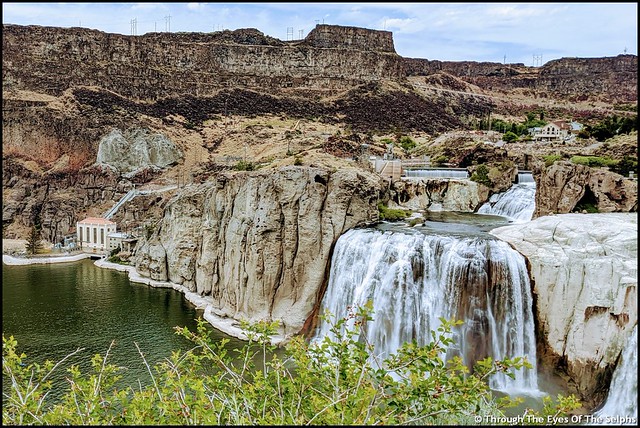
Five miles northeast of Twin Falls city is the much more impressive Shoshone Falls where the rushing white waters of the Snake River plunge more than 212 feet. It is called “the Niagara of the West” which is quite a stretch in our opinion. It is said to be one of the tallest waterfalls in the United States and is 46 feet higher than Niagara FallsIMG_20200605_141327IMG_20200605_140201IMG_20200605_140142

We stopped by the Visitors Center at the Perrine Bridge.  IMG_20200605_113734

The bridge, called the “Gateway to Twin Falls”, spans 1,500 feet and rises 486 feet above the Snake River Canyon. It is a popular bridge for parachute jumping. IMG_20200603_165126IMG_20200603_165113IMG_20200603_165107IMG_20200605_133758

In a nearby park is the Perrine Coulee Falls, which free falls nearly 200 FT.  IMG_20200605_133651_MP

In 1974 Evel Knievel attempted to fly his sky cycle/rocket across the Snake River Canyon but was not successful because his parachute opened too soon. There was a memorial to Knievel for many years but the plaque was continually stolen so the memorial is no longer available. 

Another day we drove the 68 mile Thousand Springs Scenic Byway through farmland with natural springs, hot mineral springs and cascading waterfalls.  IMG_20200603_153714IMG_20200603_144607IMG_20200603_144627IMG_20200603_150220IMG_20200603_150514IMG_20200603_150936
We drove through Buhl, the “Trout Capital of the World” which produce a majority of the rainbow trout consumed in the United States.
IMG_20200603_153306

Parts of the Byway had visible evidence of volcanic rock known in this part of Idaho. The area is known as “A Land Born of Fire and Water”. IMG_20200603_143150IMG_20200603_143252

We really enjoyed our visit to beautiful Twin Falls/Magic Valley. During the week the weather ranged from a high of 94 degrees one day followed by days with highs in the upper 40’s to low 50’s with strong winds. IMG_20200605_113845

Next up: Pocatello, Idaho as we work our way toward Yellowstone. 

Brigham City, UT May 26, 2020

Leaving Provo we drove 100 miles north to Brigham City, Utah pop 19,000. Brigham City is much smaller than Provo or Salt Lake City and we enjoyed the small town feeling of the city. Brigham City was named in 1877 for Brigham Young who delivered his last public address there in 1877.  IMG_20200531_121100

Bill and I felt comfortable enough there to both get haircuts which we really needed. 

We were there for a week and enjoyed touring the area. One day we drove 32 miles to Corinne where we visited the Golden Spike National Historic Site.  IMG_20200527_124309IMG_20200527_125511It was here at Promontory Summit that the Union Pacific (UP) and Central Pacific (CP) rails converged to form the nation’s first transcontinental railroad on May 10, 1869. A golden spike and three other precious metal spikes were placed to commemorate the occasion. Those spikes were then removed and replaced by a regular wooden tie secured to the rail with iron spikes to officially complete the railroad.  IMG_20200527_131556~2

It had taken six million spikes and six years of hard work to complete the railroad. At times distracted by the Civil War, facing rough terrain and raids by Sioux and Cheyenne, they managed to get the job completed. Eight flatcars of material was needed for each mile of track and every rail, spike and locomotive had to be shipped 15,000 miles around Cape Horn. What a logistical nightmare! With the help of unemployed Irish, German and Italian immigrants, Civil War veterans, ex slaves and Native Americans, a total of 8,000 to 10,000 workers laid two to five miles of track a day on flat land. 

The Pacific Railroad Act of 1862 mandated that only American made iron could be used. The demand for iron for building the railroad helped boost the domestic economy. By the 1870’s the iron rail was replaced with sturdy steel rail which had become more widely available after the Civil War. 

Congress authorized Central Pacific to build a railroad eastward from Sacramento and at the same time chartered the Union Pacific in New York to go westward. Due to a lack of precise instructions from Congress as to where the rails should meet and financial rewards for building the railroad, the two railroads prepared rail-beds parallel to each other for 250 miles.  IMG_20200527_130738IMG_20200527_130845

Each railroad received loan subsidies of $16,000 to $48,000 per mile depending on the difficulty of the terrain. Once it was determined the rail-beds were parallel, the railroads were ordered to unite the track. No railroad tracks were ever laid on the parallel beds. Promontory Summit was then chosen as the point to join the tracks. IMG_20200527_140209IMG_20200527_140231big trestle~2

Central Pacific (CP) laid 690 miles of track and Union Pacific (UP) 1,086 miles of track across desert, rivers and mountains to unite the east and west coast with 1,776 miles of rail. This brought big changes to the country. People were now able to travel cross country, there were new opportunities for commerce and it opened up settlement in California, Colorado, Nebraska, Nevada, Wyoming and Utah. What had once been a six month journey was now just a week. The prairie schooner was replaced by a railroad coach with all its comforts.  

Legislation also called for a telegraph line to be strung along the transcontinental route to bring in a new era of instant communication from coast to coast. When word went out by telegraph in May, 1869 that the railroad and telegraph were completed, Americans celebrated in city after city with church bells ringing, cannons firing, parades, prayers, and singing of the “Star-Spangled Banner”. IMG_20200527_131958

Due to the pandemic we were disappointed that the Visitors Center and theater was closed. The working replicas of the 1869 steam locomotives named “119” (Union Pacific”and “Jupiter” (Central Pacific) were in storage and not in view. Last year on the 150th anniversary they were placed nose to nose.

We were able to drive the two mile East Auto tour which followed old railroad grades and showed the parallel grading completed by the railroad companies.  IMG_20200527_135216IMG_20200527_135001~2IMG_20200527_135011~2

We saw the Chinese Arch formed by waves crashing against the ancient shore 300 million years ago which eroded the rock. It is believed it was given the name Chinese Arch in recognition of the presence and contribution made by the Chinese who worked on the railroad. IMG_20200527_135415~2

On the way home we stopped by the Northrop Grumman Innovation Systems Rocket Garden. The garden displays rockets and missiles built from the 1950’s to the 2000’s. IMG_20200527_144045~2

One of the rockets is a shuttle booster that took the spaceship with its astronauts to a speed of 17,4000 miles per second. There is also a Minuteman intercontinental ballistic missile, a Maverick air to ground missile designed to be launched from Black Hawk helicopters and an Atlas rocket motor just to name a few of the 39 exhibits.  IMG_20200527_143411IMG_20200527_142248

Patriot missiles are a long-range, all-altitude, all-weather air defence system to counter tactical ballistic missiles, cruise missiles and advanced aircraft.  IMG_20200527_143503~2

On another day we drove over an hour on the Logan Canyon National Scenic Byway to beautiful Bear Lake. Often called “The Caribbean of the Rockies” because of its intense turquoise blue water, the color of the lake comes from limestone that has calcium in it. IMG_20200531_141230

The calcium, like millions of microscopic mirrors, reflects light from the sky. Bear Lake changes color depending on the weather, wind and time of day. It is believed Bear Lake formed 455,000 years ago. From 1350-1850, thousands of years Native Americans such as the Shoshoni, Ute and Bannock tribes lived in Bear Valley. Bear Lake was discovered in 1812 by trappers returning home from Astori, Oregon. The valley became an important fur trade center. Most of the settlers came from Britain. IMG_20200531_141610IMG_20200531_143951

We enjoyed driving around part of Bear Lake on the Oregon Trail Bear Lake Scenic Byway. Bear Lake is so big it is located in both Utah and Idaho. IMG_20200531_160505IMG_20200531_150836IMG_20200531_153547IMG_20200531_153617

After six weeks in beautiful Utah it is time to move on. IMG_20200531_172629

Next up: Twin Falls, Idaho

Provo, Utah May 20, 2020

We left Panguitch a day late due to high winds with gusts of 55+ mph forecast for the area. We had to drive back over the pass towards Salt Lake City and didn’t want to do that with extreme winds. 

Our next stop was in Provo, pop 119,000 about 45 miles south of Salt Lake City. We were once again treated to beautiful views of snow capped mountains. The first thing we noticed at the campground was all the green trees and grass. After being in southwest Arizona for so long, we had forgotten the sights and smells of green trees and freshly cut grass. IMG_20200520_155442IMG_20200520_155603IMG_20200520_155630

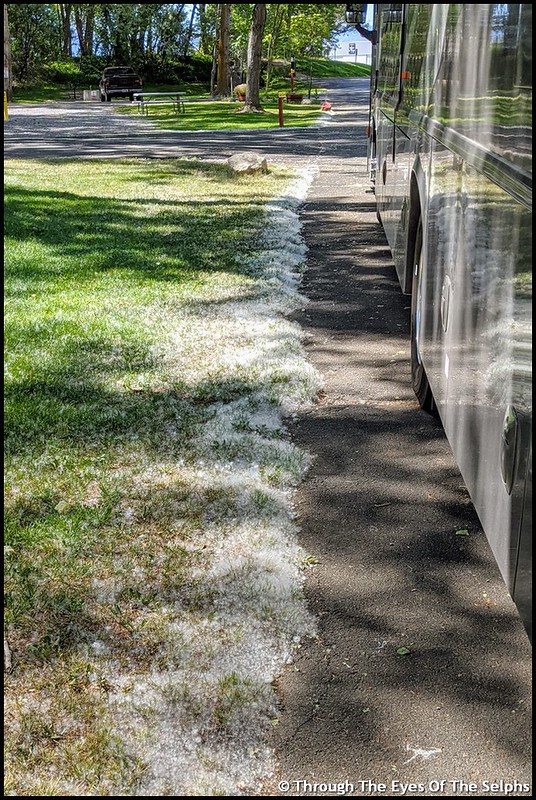
We also noticed tiny white seeds falling from the cottonwood trees. If it had been winter we would have thought it was snow flurries. After an especially windy day the ground was covered in cotton seeds that looked like snow. We learned that this shedding of the cottonwood seeds occurs in late spring and early fall. In the past Bill and I have both had allergies from the cottonwood trees in Arizona. Thankfully this time they didn’t bother us.  IMG_20200526_102720IMG_20200526_102725IMG_20200526_102749

During our time in Provo the weather was very chilly with nighttime lows in the 30’s.

Utah continued to be under a yellow advisory and we were still careful and wore masks when going to the grocery store. Other than grocery shopping we stayed away from stores and public areas. 

When we planned our summer travels last fall we planned to visit the Utah state capitol building in nearby Salt Lake City. When we were in Salt Lake City five years ago we drove by the outside of the capitol but didn’t take the time to tour the inside. Unfortunately, this time the building was closed to the public due to the pandemic. IMG_20200525_132239-EFFECTS

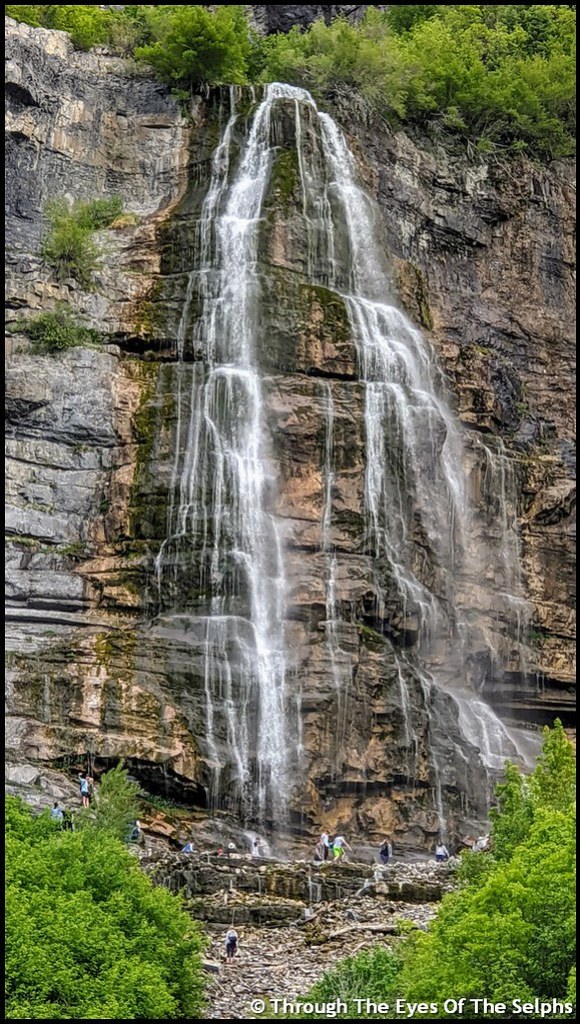
We did manage to visit Bridal Veil Falls, a short drive from the campground. It was a beautiful drive with the snow capped mountains around us. The falls is a beautiful natural 607 foot tall double waterfall in Provo Canyon along the Provo River. In 1961, a tram was built, supposedly one of the steepest in the world which took visitors to the top of the falls. The tram was destroyed in an avalanche in 1996 and was never repaired. Such a shame as that would have really been fun to ride! IMG_20200523_142650IMG_20200523_142641

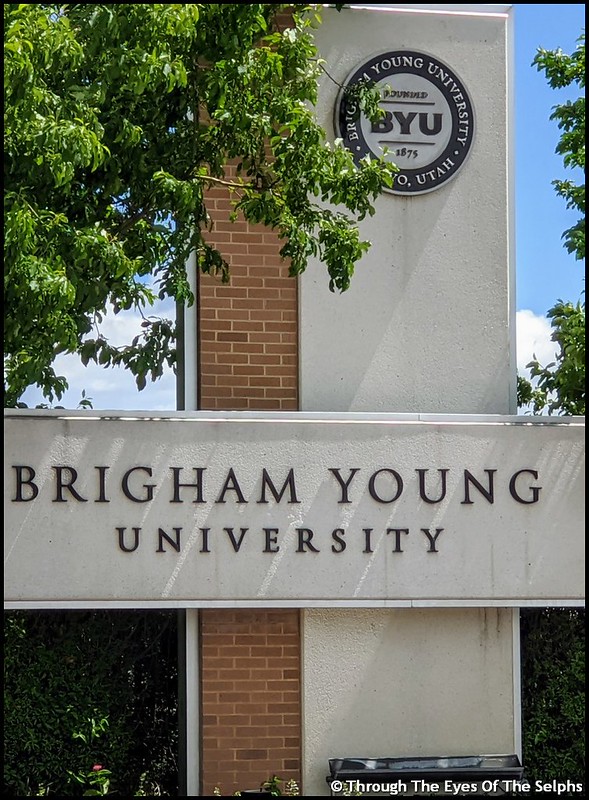
One afternoon we drove around the campus of Brigham Young University in Provo. Opened in 1877 and with a 634 acre campus, it is one of the largest church related private universities in the country.  IMG_20200523_144655

We saw the 112 foot Centennial Carillon Tower where 52 bells ring at intervals during the day. The university was closed and the campus empty due to the pandemic.  IMG_20200523_150848-EFFECTS

Next door to our campground was an interesting area with antique gas station signs. IMG_20200523_135622IMG_20200523_135812IMG_20200523_135838IMG_20200523_135933IMG_20200523_140056_MP

We even saw Elvis and Marilyn! IMG_20200523_135858

Next up: Brigham City, our last stop in Utah


Arizona, Nov 27, 2019

After leaving Big Bend National Park in Texas we headed west to Arizona. We spent a week in Benson, Arizona and a week in Tucson. 

While in Tucson we enjoyed beautiful sunsets and a stroll in the desert near our campsite. IMG_20191110_173215IMG_20191116_165743IMG_20191116_165649

Back in late September while attending the Albuquerque Hamfest I took and passed the General exam, raising my amateur radio license from Technician to General. I decided then I wanted to take the Extra exam to achieve the highest level amateur radio license. The fact that Bill is an Extra probably had something to do with it. Studying for the exam involved learning and memorizing over seven hundred questions about radio frequencies, antennas, policies, electrical components, etc. It was hard! I spent October studying and while we were in Tucson the amateur radio club there held testing on Nov 11th. I took the test and passed, only missing one question! Glad to know the brain and memory still works. I even got a celebration cake with my call sign on it. Thanks Bill! 20191114_155438

While in Tucson we also met the Walmart floor cleaning robot. We named him Robbie the Robot and had a good laugh at him. I saw a small boy, about three years of age, trying to talk to Robbie. So cute! 20191114_144127

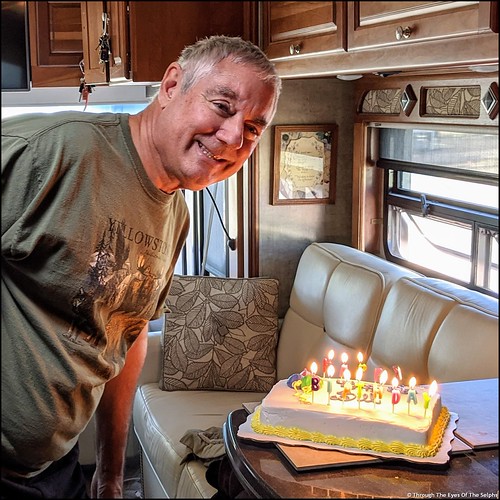
Next was Casa Grande, Arizona where Bill celebrated his birthday on November 22nd.  We will be celebrating Thanksgiving here before moving to Yuma on Dec 1st. IMG_20191122_153203IMG_20191122_153207_MPIMG_20191122_152212

Happy Thanksgiving everyone from Bill and Diane!! 

Big Bend NP Texas Oct 25, 2019

We left cold, windy Marfa and headed to Big Bend National Park located in southwestern Texas along the Rio Grande River and the boundary with Mexico. It is a long drive to Big Bend, one of the most remote and least visited national parks in the contiguous United States.  The nearest city is 75 miles away and there is no cell phone service and very limited WiFi which is only available at the park visitors centers. Conveniently there are two gas stations located in the park. IMG_20191026_130448

Big Bend gets its name from the 90 degree turn in the Rio Grande River near the southern tip of the park. The river is the natural border between the United States and Mexico which creates some complicated security issues for the Border Patrol in the area. We saw border patrol vehicles throughout the park.

We had a wide range of temperatures the week we were there with daytime highs ranging from a high of 97 to a high of only 67 degrees in a matter of days. A cold front blew in near the end of our seven day stay and we had winds of 25 to 35 mph for almost 24 hours. IMG_20191026_165109IMG_20191026_151058IMG_20191029_171452IMG_20191029_171521

One striking thing about this park is how big the park is and how far you have to drive to get from one side to the other. To get from the east side of the park to the west side is over fifty miles and takes an hour and a half. Because of the extreme heat in the summer, the high season here begins Nov 15th and runs to April 15th. The park is so large it has five visitors centers but only two were open this time of year. The park has a limited number of paved roads and many gravel and dirt roads. We learned from a park ranger that since they had just finished their rainy season, any unpaved roads were in too bad a shape to drive our Honda CRV. This was disappointing because it limited the amount of park we could explore. IMG_20191026_161551

The first day we visited Panther Junction Visitors Center and saw the park movie. IMG_20191026_13435120191026_155109

IMG_20191026_154323

Our First Texas View Of The Rio Grande River West OF The Park

During our time in the park we saw many roadrunner and sharp eyed Bill caught sight of a javelina along the side of the road. He managed to get a picture before it got spooked and ran off. We learned from the park movie that javelinas have a snout like a pig and smell like a skunk. IMG_20191027_164932

One day we drove to Santa Elena Canyon to do a hike into the canyon. When we arrived we discovered that the river bed that is normally dried up and must be crossed to reach the trail, was now covered in knee deep water. We seriously considered taking off our shoes and socks and walking across until we heard from others that there was thick deep mud we would have to plow through. We watched other people cross and when they emerged from the sludge it looked like they had on gray knee socks from the mud. No thanks. IMG_20191027_135815

We were content looking at the canyon from a distance. This canyon, like others in the park, had nearly vertical walls made primarily of limestone. IMG_20191027_135527IMG_20191027_140520

We drove the Ross Maxwell Scenic Drive enjoying the geologic splendor of the park. IMG_20191027_143838IMG_20191027_153213IMG_20191027_143435

We stopped by the Fossil Discovery Exhibit where we learned about the plants and animals that lived here millions of years ago. At one time a shallow sea covered Big Bend and much of Texas, leaving behind fossils of fish, sharks and swimming reptiles. As the water receded the area was inhabited by dinosaurs and giant alligators. IMG_20191026_171802IMG_20191026_172421

Over the years many fossils and bones have been discovered in the park. IMG_20191026_172516

Another day we drove an hour from our campground which was located in the park to the Chisos Basin section. To get to this area the car climbed two thousand feet above the desert floor. Here there is a lodge and the other visitors center which was open. We took a nice walk on a paved trail to the “Window View” with beautiful views of mountain vistas and the valley basin below. 20191029_15312520191029_15232920191029_15330420191029_163339

Near the end of our stay we drove to the hot springs section of the park. In the early 1900’s people began to come to the area to bathe in the hot springs. It was believed that the mineral springs had healing powers. The owner of the land recognized the potential monetary value of the 105 degree mineral springs and built a bathhouse and desert health resort. By 1927 the availability of automobiles and improved roads meant even more people visiting and so a store, post office and motel were added. In 1942 the landowner sold the land to the state of Texas. In 1944 Texas gave the land to the United States for a national park. 20191026_135024

The unpaved gravel road was very narrow and a little tricky to navigate but the Ranger assured us it was the one unpaved road still accessible. We parked and began the short trail to the springs. IMG_20191030_144448

We could see the remains of some of the buildings from this once prosperous community. IMG_20191030_142513

We arrived at the hot springs where three older women had arrived just ahead of us. They nonchalantly glanced at us and then proceeded to completely strip off their clothes and walk naked down into the springs. Any desire to go down and dip our toes in disappeared at that point. We didn’t stay long. IMG_20191030_144836_MP

Next up we drove to the Boquillas Canyon overlook with more spectacular canyon and Rio Grande river views. IMG_20191030_154528

Across the river, we could see the Mexican town of Boquillas. There is a border water crossing there that is open several times a week. 

We enjoyed our time in Big Bend National Park. It had been on Bill’s bucket list for several years. We probably would not return mainly because it is so remote and takes so much driving time to get there.

On the way back west in one small Texas town a crowd of people had stopped along the train tracks, some with cameras on tripods. We wondered what they were waiting for and then Bill remembered seeing on the El Paso TV news about the 150th anniversary of the Union Pacific’s Big Boy No. 4014, the world’s largest steam locomotive. It was doing a “Great Race Across the Southwest” run with stops in El Paso, San Antonio and Houston. We stopped along the roadside and snapped a few pictures as it went by. Great timing! IMG_20191101_14322320191101_143439

This ends our summer travels which took us to Monument Valley and into Colorado before making our way back down to New Mexico and Texas. 

Next up we are headed back west to spend some time in Tucson and Casa Grande before spending the winter once again in Yuma, Arizona. 

New Mexico & Texas, OCT 2019

After our visit to the Trinity Site we left Socorro and headed to Caballo Lake, New Mexico. We stayed a week at a small RV park owned by an 82 year old lady. It was one of the cleanest parks we have ever stayed at. Every afternoon she had Happy Hour on her covered veranda for everyone. She furnished snacks and each person brought something to drink. By snacks I am talking about meatballs in a delicious sauce, cheese and crackers, chips and guacamole, watermelon, cookies and cakes. Every day! After talking with other people we realized many of them come back for a visit year after year. I think these Happy Hours give the owner some social interaction and also enable everyone in the park to get to know each other. We can see why people come back year after year. 

Next up was Las Cruces, our last stop in New Mexico. When we arrived we unhooked the tow car and discovered the battery was dead. Using the RV, Bill was able to jumpstart the car. We took it to Walmart and since the battery was bad and still under warranty, they gave us another one. But we also learned that the alternator was bad. After learning it would be over $500 plus labor at the Las Cruces Honda dealer, we hired the Walmart mechanic to come to the RV park when he got off work and replace the alternator. For a total of $280 he picked up a new alternator at Autozone, took out the old one and put the new one in. 

After seven weeks, our time in New Mexico came to an end as we crossed into Texas. We took the bypass around the very congested El Paso and after overnighting in Van Horn, we stopped in Marfa, Texas for a three night stay. 

Our reason for spending three nights in Marfa was to visit three nearby places we wanted to visit. 

First up was the Fort Davis National Historic Site. Named after Secretary of War Jefferson Davis, it is one of the best remaining examples of a frontier military post and the role the military played in the settlement and development of the western frontier. IMG_20191023_102128IMG_20191023_102212

From 1854 until 1891 troops stationed at Fort Davis protected pioneers, freighters, mail coaches and travelers on the San Antonio-El Paso Road. The troops spent much of their time protecting area travelers from attack by Comanches and Apaches. During the Civil War the fort was first occupied by Confederate troops in the spring of 1861 until the summer of 1862 when Union forces took possession back. After the war ended the fort once again protected travelers on the San Antonio-El Paso Road from Indian attack. By June, 1891 the fort had outlived its usefulness and was abandoned. It became a National Historic Site in 1963. IMG_20191023_110253
During the summer months they have more activities and living history programs, but on this late October mid week visit things were very quiet. After watching a film at the Visitors Center, we enjoyed walking through the buildings that were open including the enlisted men’s barracks, the commissary, Officer’s kitchen, the post hospital and Officer’s Quarters.

IMG_20191023_111214

Enlisted Barracks

IMG_20191023_114511

Hospital Beds

IMG_20191023_114807

Operating Table

20191023_120148

Officer Housing For Two Families

In the kitchen there was a woman in period costume making chili, corn bread and banana bread over a wood burning stove. She was a little flustered because her wood fire had gone out and she had promised to provide lunch to the staff at the Visitors Center. 20191023_113516

The second attraction was the McDonald Observatory located 45 minutes from Marfa. The observatory is part of the University of Texas at Austin. IMG_20191023_124121

We had booked online a two and a half tour of the observatory. Before our tour started we looked around the Visitors Center and saw a movie. Our tour was a nice small group of fourteen and we had a fantastic tour guide. A former public school science teacher, it was quite obvious that she loves her job. After talking about the sun and showing us a live picture of the sun from one of the telescopes, we all boarded a shuttle bus to tour two telescopes. 20191023_145920

The first telescope we visited was located on Mt Locke which at 6,790 feet is the highest point on the Texas highway system. The view from there was beautiful. The Harlan J. Smith Telescope was completed in 1968 and supported NASA. This telescope’s mirror is 2.7 meters or 107 inches. IMG_20191023_162138IMG_20191023_153918

Our guide told us and showed us about how the telescope and dome moved. She talked about the mirror monthly maintenance which involves cleaning with dry ice. 

We all boarded the bus again to the summit of Mt Fowlkes (6,660 ft) to see the Hobby-Eberly Telescope dedicated in 1997. This telescope, after upgrades, is now tied with another telescope as the second largest optical telescope in the world (11-meter or 433-inch). IMG_20191023_16322020191023_163404IMG_20191023_165500
The mirror looks like a honeycomb made up of 91 hexagonal mirrors.

IMG_20191023_163604

Hexagonal Mirrors – The Curved Bars Are Reflections

IMG_20191023_165555

Our guide was so enthusiastic and eager to answer questions, our tour ended up lasting three hours instead of two and a half. Amazing to get such an interesting and informative tour for $7 (senior rate). IMG_20191023_165224

Mark you calendars – here is the time and places for the next Total Solar Eclipse. IMG_20191023_144009

Marfa is an interesting tiny Texas town. Most of the visitors, like us, pass through here on their way to Big Bend National Park. It has a very pretty courthouse and some interesting sounding restaurants, unfortunately for us most are only open on the weekend. IMG_20191023_095732

We did read about a Mediterranean food truck which had excellent reviews. Bill got a falafel called a Marfalafel named after the town. While Bill enjoys Mediterranean food, it was his first falafel and probably his last.  20191024_123122IMG_20191024_123158

Marfa is also known as having a phenomenon known as the Marfa ghost lights.  The town built a large viewing area outside of town with bathroom facilities and benches. One evening, just to say we did it, we drove to the viewing area and spent about thirty minutes looking for the lights. Other people there were convinced they saw the Marfa lights. We didn’t see anything that couldn’t be explained as man made such as lights from cars in the distance or radio towers. 
IMG_20191023_180434
Our last day in Marfa a cold front blew in. We had wind gusts up to 30 mph and that night a low of 27.  Time to move on! 

Next stop: Big Bend National Park, Texas

New Mexico, Sept 2019

Santa Fe RV Rally

We have had an enjoyable slow paced fall. In early September we attended a Family Motor Coach Association – amateur radio rally in Santa Fe, New Mexico. It was an enjoyable four days with eleven couples, a few we had met before and others for the first time. 20190901_18385320190901_184054

It was fun to see all the RVs with their antennas in the campground. IMG_20190903_103553

Santa Fe is a pretty little capital city. This was our third visit to the area. 

Albuquerque and Hamfest

Next up was a month in Albuquerque. We spent the time getting some medical appointments taken care of and working on travel plans for the rest of 2019 and 2020. IMG_20190918_140903

While we were here the Albuquerque amateur radio group had a three day Hamfest which we attended. I studied hard and was able to pass a test to update my amateur radio license from Technician to General operator class. Bill already has an Extra license, the highest level available. 20190921_155647

Trinity Site

Leaving Albuquerque we traveled south to Socorro, New Mexico for a four night stay. Our main reason for stopping here was to visit the nearby Trinity Site. The site is only open twice a year, the first Saturday in April and October. IMG_5192

We have wanted to visit this historic site for several years and this is the first time we have been in New Mexico at the right time. They only open the site twice a year because the site is located on the United States Army White Sands Missile Range where they often conduct missile tests. White Sands Missile Range is one of the most sophisticated test facilities in the world. IMG_5198

Since the site is only open twice a year, it can attract quite a few visitors. I had read that the site opens at 8:00 A.M. but that cars start lining up to get in as early as 6:30 A.M. Since we had an hour drive we left at 5:45 in darkness and heavy fog. It was so foggy we could hardly see to drive.  But even with the fog we arrived at 7:00 and there were about 25 cars in line in front of us. Instead of 8:00 they didn’t open the gate until 8:30 for reasons unknown. We had to pass through security and show our driver’s licenses and confirm we had no weapons or firearms. IMG_5212

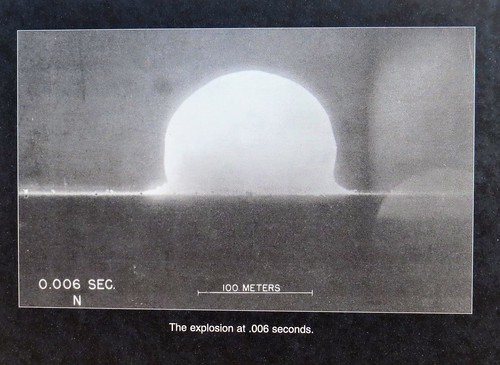
The Trinity Site is where the first atomic bomb was tested early in the morning of July 16, 1945.  The 51,500 acre area where the 19 kiloton explosion occurred was designated a national historic landmark in 1975.  Several potential sites in California, Texas, New Mexico and Colorado were considered but this site was ultimately selected because it was already controlled by the government. It was part of the Alamogordo Bombing and Gunnery Range which had been established in 1942.  The area was secluded which provided secrecy and safety and was also close to Los Alamos where the atomic bomb was designed and built. 

The Trinity Site area where the bomb was placed and exploded is called “Ground Zero”.  It is reached by walking a third of a mile from the parking lot. IMG_5213IMG_5214IMG_5216IMG_5218IMG_5228

An obelisk made of lava stone marks the actual spot. IMG_5226IMG_5229IMG_5233IMG_5225IMG_5222

IMG_5227

This Is What Is Left Of One OF The Tower Legs


They had a replica of Fat Man, the bomb that was dropped on Nagasaki, Japan in 1945. This is the type of bomb tested at the Trinity Site. IMG_5234

We also took a bus from the parking lot to Schmidt/McDonald Ranch House. IMG_5208IMG_5204

This is where the plutonium core to the bomb, about the size of a briefcase, was assembled. IMG_5200

I was interested in the radiation levels at the Trinity Site. They say the radiation levels are very low with the maximum levels about ten times greater than the region’s natural background radiation. Many places on earth are naturally more radioactive than the Trinity Site. A one hour visit to the site will result in a whole body exposure of one half to one millirem. To put this in perspective, Americans receive an average of 620 millirem every year from natural and medical sources. A sequence of pictures taken that day were on display. IMG_5230IMG_5231IMG_5232

As we were leaving the Trinity Site we passed protesters from New Mexico.  They claim families in the area were affected by the testing in 1945 and never received any restitution. We were told the protesters gather every year. 

National Radio Astronomy Observatory – Very Large Array

After stopping home for lunch we decided to make a full day of sightseeing and drove up to see the Very Large Array. IMG_5236IMG_5239

They were having free admission since it was the first Saturday in October. The Very Large Array is one of the world’s premier astronomical radio observatories. It features 27 radio antennas in a Y shaped configuration. Each antenna is 82 feet in diameter and weighs 230 tons. Bill took a 50 minute guided tour of the facility and really enjoyed learning about these radio antennas. IMG_5238IMG_5243IMG_5244IMG_5237

The individual signals are merged to one picture and then colored to add perspective. Here is an example of one picture made from radio wave emissions from outer space. dwarf galaxy UGC5288 gas_large-1006x1024

Here is what radio waves are transmitted when pointed at Saturn. IMG_5240

The Next Generation Very Large Array is underway and will start construction of two hundred plus radio antennas to improve the sensitivity ten times. IMG_5248IMG_5245IMG_5246

We have just a couple more stops in New Mexico. 

Abiquiu Lake, NM AUG 25, 2019

We said a sad farewell to beautiful Colorado and headed to New Mexico. We drove over two passes, our last two passes of the summer. 20190823_111523IMG_20190823_161322

The road was an open range area and we had to watch carefully for cattle in the roadway. IMG_20190823_162730IMG_20190823_16273820190823_112957

As we neared our campground it looked more and more like New Mexico landscape, just beautiful! IMG_20190827_134649IMG_20190827_134931IMG_20190827_135216IMG_20190827_135222IMG_20190827_135320IMG_20190827_135332IMG_20190827_135355IMG_20190827_135948

We had a four night reservation at the Abiquiu Lake Reservoir in the Riana section campground, a COE (Corps of Engineers) facility. We were last here in Sept, 2017. IMG_20190827_142715EFFECTSIMG_20190827_143025IMG_20190827_143436IMG_20190827_143358

I remembered this sign and wasn’t any happier to see it now than I was the last time. Luckily, none were spotted. Whew! But I would be lying if I said I wasn’t on guard every time I stepped out the door. IMG_20190827_143127

Boy was it hot with temperatures in the mid 90’s. It didn’t take us long to miss Colorado even more. 

Abiquiu Lake is a reservoir of water impounded from the Rio Chama River by the earth-filled Abiquiu Dam. The Rio Chama River is a major tributary of the Rio Grande River. We drove over the dam and could see the water in the reservoir is significantly down this visit. IMG_20190827_104002IMG_20190827_104009IMG_20190827_141457IMG_20190827_142122IMG_20190827_142116

Next up: A week long visit to Santa Fe to attend the Family Motor Coach Association Amateur Radio Fall Rally