Category Archives: Exploring

Exploring

Sept 8, 2016 Seneca Falls, NY

Thursday morning we left the Adirondacks and headed west to Seneca Falls, population 6,700. We thought it was going to be a short three night stop on our way to Niagara Falls without much to see or do. Boy were we wrong!!
We camped at Cayuga Lake State Park near beautiful Cayuga Lake, one of the longest of the Finger Lakes. During the past million years, glaciers covered New York state. As they moved through river valleys they carved deep troughs with steep sides. When the glaciers receded about 10,000 years ago, water filled these troughs, creating eleven Finger Lakes. Cayuga Lake is thirty-eight miles long and 435 feet deep at its deepest spot. Cayuga Lake is named after the Cayuga Indians, one of the Six Nations of the Iroquois in New York.
20160909_110825
I was looking through some literature about the area and came across Watkins Glen State Park about thirty minutes from our campground. I read that in 2015 it was voted the third most beautiful state park in the country in a USA Today poll. All the reviews I read talked about a gorgeous 1.5 mile (three miles roundtrip) hike with 832 steps and nineteen waterfalls. We both love waterfalls so even though the 832 steps seemed a bit daunting, we decided to give it a try.20160909_111629
20160909_093118We headed out early Friday morning. On the way to Watkins Glen we came across a plaque in the small town of Waterloo. We had no idea that Waterloo, NY was the official birthplace of Memorial Day, with the first ceremony held in 1866. Some of the interesting things we just happen to stumble across is amazing to us. 20160909_093044We drove beside Seneca Lake, the largest of the Finger Lakes and the deepest lake in the state.
We didn’t realize that the town of Watkins Glen is renowned for auto racing and is considered the birthplace of American racing.   Since 1948 Watkins Gen has hosted international automobile car racing and in 2015 was voted the best NASCAR track in the country in a USA Today Reader’s Poll.  The town has an International Motor Racing Research Center with 5,000 square feet of racing history.  From April through September they host NASCAR sports car and racing events. This weekend was the U.S. Vintage Grand Prix and as we drove down Main Street they were getting ready to close off the street for a parade. To our dismay we discovered that even though the state park was open, the parking lot was closed. We asked where we could park and they said our only option was to find a parking lot or side street parking, which seemed highly unlikely on a parade day in a tiny town. Across the street from the park was a restaurant and Bill decided to go inside and ask if we could park in their restaurant parking lot for a few hours. I told him there was no way they would allow that on parade day. We pulled into the lot and I stayed with the car while he went inside to ask. He came back a few minutes later and said the owner said no problem and refused to take any money. Yeah!!
We grabbed our walking sticks and headed over to the entrance. We had an idea what was ahead when we saw a beautiful waterfall at the entrance. This park certainly lived up to its #3 best ranking. Everywhere we looked there was beauty. We were apprehensive about the steps but they were nice stone steps put in years ago by the CCC and easy to climb. I had worried they might be uneven and slick, but no problem. The hike on the Gorge Trail was not tiring at all because we were constantly stopping to gaze in wonder and awe at the beauty. We followed the gorge trail as it wound over and under waterfalls.20160909_11111420160909_11403320160909_11431820160909_11592220160909_12072320160909_12192020160909_12201920160909_12264920160909_11234620160909_135502
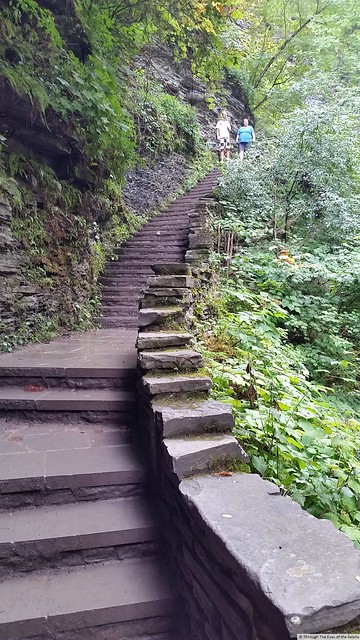
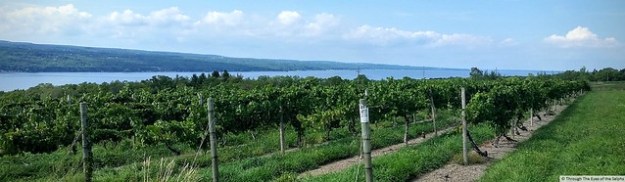
At the end we walked up the last of the stairs which were steel steps called “Jacob’s Ladder”. Once at the top we could either walk back down the 832 steps or take the easy “Indian Trail” back. We chose the easy hike and once we were back to the car we put our hiking gear away and decided to go into the restaurant for a late lunch. We thought it was a small way to thank them for letting us park in their lot. Bill had lunch and I had a big slice of fresh blueberry pie! On the way home we took a different route and followed Cayuga Lake seeing wineries along the lake.20160909_154053
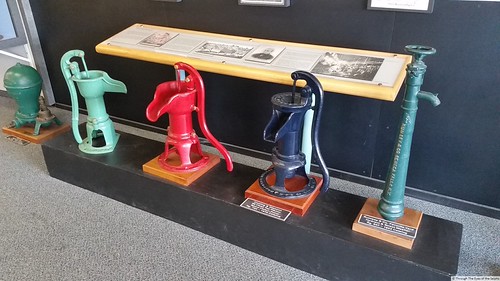
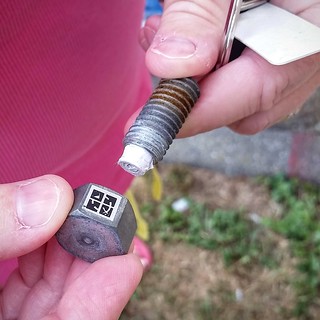
20160910_14073820160910_142224On Saturday we decided to spend our last day in Seneca Falls exploring the small town and finding some geocaches. First we stopped by the town Visitors Center which had a fantastic museum detailing the history of the town. European settlers first moved to the area and began farming. In the 1820’s the construction of the Erie Canal changed Seneca Falls to an industrial and shipping center. We were surprised to see all the items designed and manufactured there from water pumps, TV picture tubes to wooden rulers.20160910_13314820160910_13425520160910_13505320160910_140408
20160910_150328Seneca Falls is the birthplace of the Women’s Rights Movement led by resident Elizabeth Cady Stanton. The first women’s rights convention was held here on July 19-20, 1848. Today there is a Women’s Rights National Historical Park, established in 1980, in the middle of town. We stopped by the park, saw a film and looked at the exhibits. Amelia Bloomer, for whom bloomers were named, lived in Seneca Falls. She didn’t invent bloomers but wore them and promoted them in magazines.20160910_15050020160910_150738
20160910_14312620160910_143112Our last stop of the day was at the “It’s a Wonderful Life” museum. In 1945 Frank Capra stopped by Seneca Falls to get a haircut on his way to visit his sister. It is said that he was so taken with the quaint little town that it was his inspiration for the fictional town of Bedford Falls in the famous Christmas movie. There are several similarities between Seneca Falls and the fictional Bedford Falls, including they are both mill towns, had a grassy median down Main Street, homes of Victorian architecture, a large Italian population and a toll bridge. The free museum opened in 2010 and is full of memorabilia from the film that fans have donated or loaned to the museum. We were the only visitors there when we stopped by and enjoyed talking with the guide who obviously loves the movie. He said he has lost track of the number of times he has seen it. Every year in December they celebrate with a parade and all sorts of events. This year will be a big celebration since it is the 70th anniversary of the movie.20160910_144641 20160910_14471220160910_14474820160910_142407The guide so enthusiastically described the upcoming celebration it almost made me want to brave the snow to attend. Almost, but not quite!
Yes, tiny Seneca Falls far exceeded our expectations. We could have stayed a couple more days but Niagara Falls was calling!

Sept 6, 2016 Ticonderoga, NY

20160906_14423220160906_10033920160906_103144Our time in the Adirondacks was drawing to a close so on Tuesday we traveled to nearby Ticonderoga where Bill was ecstatic to visit the newly opened Star Trek: The Original Series Set Tour.  The sets, under license by CBS Consumer Products, recreated the sets of the Starship Enterprise as they were laid out at Desilu Studios Stage 9 in Hollywood.  Visitors are transported back to 1966.  Bill is a huge Star Trek fan and loved touring this set.  He didn’t know that Lucille Ball was instrumental in getting Star Trek on the air when she agreed to film the series at Desilu Studios.20160906_10111220160906_10121420160906_10143120160906_10163120160906_10253420160906_10275820160906_114618
20160906_115101Next we went to Fort Ticonderoga which played an important role both in the French and Indian War and the Revolutionary War.  It was originally built by the French in 1755 and called Fort Carillon.  Located a the southern end of Lake Champlain, it was captured by the British in 1759 and named Ticonderoga, an Iroquois name meaning “it is at the junction of two waterways”.  In 1775 Ethan Allen and his Green Mountain Boys along with Benedict Arnold took the fort from the British in a surprise attack during the Revolutionary War.  This was the first victory of the Revolutionary War.  The cannons from the fort were taken to Boston and helped persuade the British to evacuate Boston in 1777.20160906_11443920160906_11470620160906_12225020160906_12270720160906_122723
20160906_12395720160906_124005The British abandoned the fort in 1781 and it was looted for stone, metal and wood by settlers looking for material to build homes.  In 1785 the fort’s lands became the property of New York state who then donated the property to Columbia and Union colleges in 1803.   In 1820 the fort was sold to William Ferris Pell who first used the property for a summer home.  When more and more tourists came to the Adirondacks, he converted his home to a hotel.  In 1909 the Pell family restored the fort and opened it to the public.  The fort is now maintained by the Fort Ticonderoga Association, a not for profit organization.
We enjoyed touring the fort, soaking up the historical significance of the events which took place here.  It was somewhat disappointing to discover the original fort was wooden, not the stone structure of today.  We asked about this and it was explained that the fort was in such poor shape that only the stone foundation remained, leading the Pell family to mistakenly believe that the entire fort was stone.  It was also pointed out that a member of the Pell family was related to a stone mason so they were able to get stonework done easily and cheaply.
20160906_14422420160906_145725As part of our admission we were given access to Mount Defiance, an 853 foot high hill on the New York side of Lake Champlain.  In the 1777 Siege of Fort Ticonderoga, the British army placed artillery on Mount Defiance, causing the Americans to withdraw without a fight.  The Americans had mistakenly thought the hill to be inaccessible and never fortified it.

World War II Navy aircraft carriers were named after Revolutionary War victories: Lexington, Ticonderoga, Saratoga and Yorktown.
20160906_152522On the way home we stopped to find a geocache.  The short hike led us to a peaceful little waterfall.  We love it when geocaching takes us to such beautiful places we wouldn’t otherwise find.
We enjoyed our time in the Adirondacks.  We were glad to see Labor Day end and with it all the summer tourists.  The campground is now quiet and peaceful once again.  Ahhhhhh!
Next stop:. Seneca Falls, New York


Sept 1, 2016 Adirondacks, NY

20160902_153825After a month in Maine it was time to head south.  We had a long travel day as we left Maine and passed through New Hampshire and Vermont before entering New York State.  As soon as we entered New York I started sneezing.  We are thinking either oak trees or goldenrod is bothering me.  Despite the long day the miles went by quickly and before we knew it we arrived at our Lake George campsite for a week.  We were glad to get checked in and settled before the bombardment of Labor Day campers arrived on Friday for the three day weekend.
20160902_15375320160906_092213Lake George is a 32 mile long lake located at the foot of the Adirondack Mountains.  It drains into Lake Champlain and the St Lawrence River basin.  The village of Lake George has a yearly population of around 900 which swells to over 50,000 residents during the summer season.  In 1755 British colonial forces occupied the region during the French and Indian War and the lake was named Lake George for King George II.  On May 31, 1791, Thomas Jefferson wrote a letter to his daughter saying, “Lake George is without comparison, the most beautiful water I ever saw; formed by a contour of mountains into a basin….finely interspersed with islands, its waters limpid as crystal, and the mountain sides covered with rich groves“.
After the long travel day on Thursday and with Labor Day traffic building we stayed close to home Friday and Saturday.  It was amazing to watch the campground swell to full capacity with campers setting up, kids on bikes and pedestrians everywhere.
20160904_122616Sunday we decided to take a scenic drive through the Adirondack Mountains.  The Adirondack Park encompasses two thirds of upstate New York with over six million acres of private and state (40%) land.  Nearly half the land is wilderness.  There are 46 mountains that exceed an elevation of 4,000 feet.  The Adirondack Park includes more than 2,000 miles of hiking trails, 3,000 lakes and ponds, more than 30,000 miles of rivers and streams, 1,100 miles of highway and 120 miles of railroad.  It was named after the Algonquin Indians.  The Iroquois called the Algonquins “Ha-De-Ron-Dah” or “bark eaters” because they ate certain kinds of tree bark.  After the Civil War the area became a summer retreat for the wealthy.
20160904_183240We followed one of several scenic byways which took us from Lake George to the Canadian border.  We passed beautiful Indian Lake, Blue Mountain Lake and Tupper Lake to name just a few.  We stopped along the way finding geocaches, including one less than five miles from the Canadian border.  We could see the border crossing checkpoint which didn’t seem too busy considering the holiday weekend.  As we headed back south towards home we entered the Akwesasne Mohawk Indian Reservation.  We stopped and bought gas which was about 15 cents cheaper per gallon on the reservation.
20160904_184121We stopped by Saranac Lake to see the Robert Louis Stevenson cottage.  The cottage was closed but we did get a picture of the outside.  Stevenson lived here during the winter of 1887-1888 and the cottage has a large collection of Stevenson memorabilia.  The librarian in me was glad to see it!
20160904_185454By now it was getting late.  We reached gorgeous Lake Placid as daylight was fading.  We snapped a couple shots of the lake and grabbed a late dinner.  There is so much to see in Lake Placid, site of the 1932 and 1980 winter Olympics.  It is on our list of places to return to someday.  We arrived home late in the evening after an eleven hour sightseeing adventure.20160904_19013120160904_19004720160904_12255520160904_12252720160904_120624
20160905_12310520160905_13053320160905_145651The next day we decided to take advantage of the Labor Day holiday (therefore no city workers) and drive to Albany to see the state capitol.  One goal we have is to try to see the state capitol building of every state we visit.  We decided to drive first to the small town of Kinderhook to visit the home of Martin Van Buren, the 8th President of the United States.  Near the house was was a tiny “Visitors Center” located in a trailer where we saw a short film on his life.  Van Buren purchased his home and 130 acres of land in 1839 while President.  He named the estate Lindenwald after the linden trees lining the road in front of the home.  He returned here after his presidency ended.  He died here in 1862.
Van Buren was president from 1837 to 1841.  As president he was blamed for the depression of 1837, one of the worst depressions in U.S. history, with hostile newspapers calling him “Martin Van Ruin”.  He also had problems with foreign affairs, denying Texas’ application for admission to the Union because he didn’t want to upset the balance of free and slave states.
In 1840 he was voted out of office when Whig candidate William Henry Harrison won the election.  Van Buren tried to make a comeback in 1844 when he tried to win the Democratic nomination but lost to James Polk who went on to win the election.  In 1848 he ran for president yet again as a third party candidate with the Free-Soil party, a group opposing extending slavery.  His defeat in that election ended his political career.
Before leaving Kinderhook we visited his birthplace (the Van Buren family tavern where he was born burned long ago, no longer stands and is merely noted with a marker) and then his gravesite at the Dutch Reformed Church.

  • Van Buren’s wife Hannah died in 1819 after twelve years of marriage.
  • He is buried with her.
  • He never remarried.
  • They had four sons.

20160905_16115420160905_161829Next was Albany, capital of New York.  The traffic was light and we had no problem finding parking.  Albany was chartered in 1686.  Robert Fulton’s steamboat made the first successful steamboat run from New York to Albany in 1807.  The opening of the Erie Canal between Buffalo and Albany in 1825 caused the city to flourish.  Over the years Presidents Martin Van Buren, Millard Fillmore, Theodore and Franklin Roosevelt all lived at one time in Albany.20160905_16363420160905_165054
The state capitol building was built in the late 1800’s.
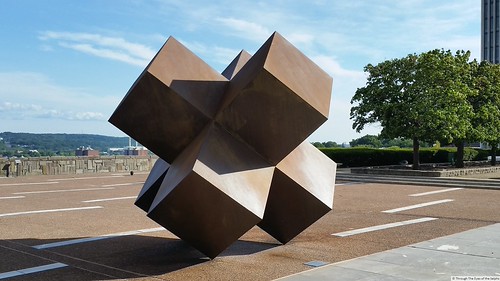
We walked to the Governor Nelson Rockefeller Empire State Plaza, a huge government complex.  This was a massive urban renewal project initiated by then Governor Rockefeller.  It was started in the 1960’s and not completed until 1978.  We found some geocaches in the area, including one at the Egg, a performing arts center.  The plaza’s 96 acres includes more than 90 abstract impressionist paintings, sculptures and tapestries as well as the tallest building in New York state except those in New York City.  The plaza also has several memorials honoring women veterans, fallen firefighters, MIA’s and Vietnam veterans.20160905_162716


August 25, 2016 Wells, Maine

We had a wonderful week in Bar Harbor but now it was time to head south.  We have been in Maine for three weeks and we were now headed to the small town of Wells for our last week in Maine.  We are really enjoying our time along the Maine coast.  If you measure the coast of Maine DIRECTLY it is only 228 miles.  BUT, Maine’s SHORELINE is 3,478 miles, which is longer than California’s.  Three fourths of all visitors to Maine stay along the coastline.
We had a pleasant drive except for some roadwork which they DO need.  We settled into our campground and started planning our week.  The week in Bar Harbor had been quite intense and busy, so we decided to make this week more laid back and relaxing, along with catching up on paperwork and the blog.  Even life on the road has paperwork and cleaning and laundry that needs to be done and it sure piles up fast!
Nevertheless we did find time to explore the area. On Saturday we drove to Mount Agamenticus where we were promised a fantastic view of the White Mountains of New Hampshire to the west and far out to sea in the east.  At 692 feet it is not a very big mountain as mountains go, but since it was a beautiful day we decided it was worth the drive.  The view at the top was nice but as summer views often are, it was too hazy to get a great view or picture.

20160829_155535Monday we drove up to Kennebunkport, a popular summer resort and location of one of the homes of the President George Bush family. Kennebunkport is a small touristy town but we loved the view along the beach where we could see the Bush residence. The home is located on a peninsula called Walkers Point. We took pictures from the closest point allowed.   At this viewpoint an anchor was placed in honor of George H. W. Bush.20160829_16101320160829_16113220160829_161326

During our time in the area we spent time in the various little coastal towns of Wells, Kennebunkport and York. The beautiful homes and picturesque views along the water were in my opinion prettier than Martha’s Vineyard.20160829_16055820160830_13041220160830_13042820160830_13175220160830_185925
Next we leave Maine and head to the Adirondacks in New York.


August 23, 2016 Bar Harbor & Acadia N. P. Part 2

We spent most of our time in Acadia National Park but we did go into Bar Harbor a couple times. Bar Harbor was originally incorporated in 1763 and named Eden after Sir Richard Eden, an English statesman. It was renamed Bar Harbor in 1918 because of a sand bar that is visible at low tide. In the 1800’s tourists were attracted to Bar Harbor by the writings of Henry David Thoreau and paintings showing the Maine landscapes by famous painters. The area attracted families such as the Astors, Fords, Morgans, Rockefellers and Vanderbilts. The Great Fire of 1947 destroyed nearly half of the eastern side of Mount Desert Island. Sixty-seven of the 222 palatial summer homes and five grand hotels were destroyed in addition to 170 year round homes. The town’s business district survived the fire. More than 10,000 acres of Acadia National Park was destroyed.
Parking in Bar Harbor is scarce so a free shuttle bus called the “Island Explorer” is available to residents and tourists. The shuttle stops at several campgrounds near Bar Harbor, including ours. There are also shuttle buses that travel throughout Acadia National Park to encourage people not to drive. The shuttle buses are all free and funded by local, state and federal tax dollars, including a sizable donation from L. L. Bean whose flagship store is located in Freeport, Maine.
We usually don’t do many activities geared to tourists because they tend to be expensive, but two activities caught our eye. The first was a horse drawn carriage ride along one of the carriage roads in the park. John D Rockefeller Jr was one of the main contributors of Acadia National Park, donating about a third of the park’s land. In his efforts to preserve the park he had over 45 miles of crushed stone roads built between 1913 and 1940. The roads are sixteen feet wide with crowns that provide drainage. The roads are considered the best example of broken stone roads in the United States. Local workers quarried granite from the island to build the roads and seventeen stone bridges. No motor vehicle traffic is allowed on the carriage roads throughout the park, allowing for a safe and peaceful roadway for hikers, bikers and horses.
20160823_08241820160823_09005720160823_09055020160823_09504820160823_100914We decided to take a one hour carriage ride on a carriage road and made a reservation with Wildwood Stables located in the park. The morning of our ride we arrived early enough to see some of the horses having a morning bath. I must say I have been opposed to horses being used in places like Central Park where they spend hours each day pulling people around in carriages in all kinds of weather. I was very glad to hear that there are 26 horses and only three tours conducted each day. The horses work no more than four hours a day, twice a week. They also only work five months of the year. We were assured they really have an easy life and are very well cared for. There were three families on the tour with us with children ranging in age from twelve years to thirteen months. They were all very well behaved. We really enjoyed our ride along the tree lined shaded road with occasional views of the ocean shimmering in the morning sun.20160823_09501720160823_095153
20160820_14203220160820_14111020160820_13393920160823_144745Our second activity was a two hour excursion on a sailboat. Bill had mentioned he would really like to go on a sailboat while in Bar Harbor, so we were excited to find the 151 foot Margaret Todd, the first four masted schooner to sail the New England waters in over half a century. We knew parking in the afternoon would be hard to find so we took the shuttle bus from the campground into Bar Harbor and then back home after our cruise. So convenient! Our voyage took us around Frenchman’s Bay with beautiful views of Acadia National Park. We saw lobster boats, many many lobster pots, a porpoise and several seals. They are so quick it is impossible to get a picture. We loved our time on the boat!

20160823_142833

All these floats are connected to lobster traps

20160823_14345720160823_143759

20160823_142338

The view of Cadillac Mountain from Bar Harbor and our ship

20160824_16031720160824_145428Our last day in Bar Harbor we decided to drive around the “quiet” side of the island. This part of the island is less visited by tourists and is more like what the island was like before Bar Harbor became so touristy. 20160824_160005We enjoyed riding through the small villages finding geocaches and taking a picture of the most photographed bridge in Maine.  We took our last hike of the visit on the Wonderland Trail.  It was an easy trail and we were rewarded with a beautiful ocean view at the end. On the way home we stopped at a restaurant where Bill had a lobster dinner. We left the camera in the car so I missed getting a picture of him with the lobster bib!

Bar Harbor Facts:

  • Bar Harbor and two other Mount Desert towns have light ordinances to protect the quality of the night skies.
  • Bar Harbor was the birthplace of vice president Nelson Rockefeller.
  • The Bar Harbor area was used for naval practices during World War II when nearby Bald Porcupine Island was fired upon by live torpedoes from the submarine USS Piper.
  • President William Howard Taft enjoyed playing golf in Bar Harbor.
  • Current residents include Martha Stewart and Roxanne Quincy, the co-founder and CEO of Burt’s Bees.


August 18, 2016 Bar Harbor & Acadia National Park, Maine

On August 18th we left the easternmost area of the United States and headed south to Bar Harbor and Acadia National Park. I have mentioned before how bad the roads are in Maine, and this trip was no better. The roads do not seem that bad in a car, but in a large vehicle it is a bumpy and rocky trip. By the time we reached the campground the cap on our exhaust pipe had once again worked loose.
20160819_104734Bar Harbor and Acadia National Park are both located on Mount Desert Island. There are no fast food restaurants, box stores or large grocery stores on the island, so just before crossing the Trenton Bridge we stopped at a Walmart Supercenter and stocked up. Before leaving New Hampshire three weeks ago we planned ahead and bought a month’s worth of any drinks that come in bottles and cans because Maine has deposits on all of them. We also liked New Hampshire’s no state sales tax and stocked up on paper products, canned goods etc, keeping in mind we only have so much room in the pantry and freezer.
20160819_12041820160819_12200120160819_133241We then crossed Trenton Bridge onto Mount Desert Island. The views were amazing. Mount Desert Island is the third largest island on the eastern seaboard and the largest rock based island on the Atlantic coast. It is 108 square miles; sixteen miles wide and thirteen miles long. It also has “Some Sound”, the only national fjord on the east coast.
Our major reason for coming to this area was to visit Acadia National Park. We had so much to see and do, we hit the ground running the next day. We stopped by the Visitors Center first and bought an audio tape tour of the park to listen to as we drove around the Park Loop Road. Unlike most parks, they did not have a free list of hiking trails so we bought a book on hiking trails in the park that listed details such as length and difficulty.
20160819_141217Acadia National Park is the second most visited national park in the country with over two million visitors a year (Smoky Mountain is the most visited) and one of the smallest. It covers over 2/5 of Mount Desert Island and is 35,000 acres in area with 41 miles of spectacular coastline. Established in 1916 by President Woodrow Wilson, it is the oldest American national park east of the Mississippi River, the only national park in the northeast, and the first park where land was donated to the federal government (most notable being 11,000 acres by John D Rockefeller, Jr). The park has a diverse landscape with glacial mountain ridges, rivers, lakes and streams carved from receding glaciers at the end of the last Ice Age, woodland forests and miles of dramatic rocky coastline.
French explorer Samuel Champlain documented the first European record of this area in 1604. Attempts were made to settle the island after his visit but 150 years of war between the French and British made the area unsafe for habitation until 1761 when English colonists established a permanent settlement. Colonists farmed, fished, quarried granite and engaged in shipping. When tourists began to arrive in the mid 1800’s, tourism became a new and important source of income. The small farming and fishing villages were transformed with hotels and large extravagant summer cottages for wealthy summer residents.
This first day our plan was to drive the 27 mile Park Loop Road and listen to the audio tour.

20160819_131150

Two Beaver Lodges are across the lake they made

This took pretty much all day because of all the overlooks where we passed some beaver lodges and admired the magnificent beauty of the park.

20160819_151137

Bar Harbor is located on the left

Our last stop of the day was on Cadillac Mountain which at 1,530 feet is the highest point on the eastern seaboard north of Rio de Janeiro. Bill and I spent two days in Acadia back in 2011. It was rainy and foggy and we couldn’t see a thing from Cadillac Mountain. What a difference today was! We had a 360° view of Bar Harbor, Frenchman Bay and Cranberry Isles (see our video below). One bit of drama was I left my cell phone in the restroom. Thirty minutes later as we were getting ready to leave I remembered. Fortunately some kind person has turned it in to the gift shop personnel.
20160820_094251We knew we wanted to do some hiking and with 120 miles of hiking trails in the park we had several to choose from. Our first choice was the Ocean Path Trail which we started at Sand Beach, a popular spot in the park. In order to get a parking spot this time of year you have to arrive no later than 10:00 A.M. The trail was an easy hike along the cliff with views of Sand Beach and the coastline.20160819_14121720160819_14131720160819_14134220160819_142824
20160821_132813Sunday was our one foggy day and we drove past a harbor and hiked up 200 primitive rock steps and along a trail to find two geocaches. What we thought was going to be an easy walk turned into a longer hike along a rocky trail with big tree roots in the path. But we found two geocaches!
On Wednesday we hiked the popular Jordan Pond Trail which took us around the beautiful peaceful pond where we saw kayakers.
In the next blog we will talk about Bar Harbor and a couple special activities!20160824_10074920160824_10080820160824_10110820160824_10113620160824_10115620160824_10200520160824_11074320160824_11141320160824_111500
Maine Facts:

  • Maine has 3,500 miles of coastline.  That is all the way across the United States and halfway back.
  • There are over 3,000 islands along Maine’s coast.
  • Maine’s coastline has so many deep harbors, it could provide anchorage for all the navy fleets in the world.
  • Smoking is prohibited in a motor vehicle by the driver or passenger when a person under the age of 16 is present.

Our Video http://www.youtube.com/watch?v=VEi7pWtz3nk

August 11, 2016 Eastport, Maine

We left Millinocket and traveled to Eastport, our most easterly location in 2016.  This area of Maine is the first place in the United States to see the sunrise each day.  As before, the roads were in bad shape from frost heaves and we rocked and bounced our way along.
We arrived at our campground in Eastport with a view from our campsite of Canada across the water.  The weather until now had been hot and dry, but some cooler, wet weather was settling in for our week here.20160813_161128
We spent some time on 2017 planning and enjoyed the cooler temperatures.  Sunday we drove into the small downtown area to find some geocaches. We loved the small library geocache and took some pictures of a fisherman and Bill flirting with a local mermaid.20160813_16054120160813_16151520160813_16072720160814_144412
Tuesday we drove to the tiny town of Machias and had lunch at Helen’s Restaurant. Bill had a lobster roll and we shared a huge slice of blueberry pie. While in Machias we found a couple geocaches including a neat one inside a small lighthouse.20160815_15323720160815_154331
Wednesday we drove to Lubec and Quoddy Head State Park, the easternmost point of the United States.  The views were beautiful at the West Quoddy Head Lighthouse, which in 1808 became the easternmost lighthouse in the country.  Its light and fog cannon warned seamen of the dangerous cliffs and rocks.  It was among the first lighthouses to use a fog bell and later a steam powered foghorn.  Today its automated light still shines and is monitored and serviced by the U.S. Coast Guard.20160816_13361120160816_10550020160816_11023020160816_110405
Across the water we could see Campobello Island in Canada.  The strong tidal currents between West Quoddy Head and Campobello Island are the cause of the largest whirlpool in the Western Hemisphere.20160817_18132320160817_184828
We found a geocache in the park and enjoyed finding several more on the way home. It was lots of fun but the mosquitoes were really biting!
Next stop:. Bar Harbor and Acadia National Park
Maine Facts:

  • Approximately 40 million pounds of lobster (nearly 90% of the country’s supply) are caught off the coast of Maine.
  • 90% of the nation’s toothpick supply is produced in Maine.
  • L. L. Bean’s flagship store is located in Freeport and is the first retail clothier to be open 24/7/365.


July 29, 2016 Glen, N.H. & Millinocket, ME

20160730_143604On July 29th we left the RV rally fairgrounds in Essex Junction, Vermont and headed back to New Hampshire for a week in the White Mountains. Along the way we saw many signs on the highway warning of moose crossings, but we never saw any moose. We arrived at our campground in Glen, New Hampshire. This is a touristy town in the White Mountains advertising among other things snowmobile rentals and scenic train rides. The town is busy year round with summer tourists, fall foliage viewing and winter skiing.
20160730_13115120160730_131212We were in this area back in September, 2011 and took the cog railroad to Mt Washington so we passed on doing it. We did drive the scenic Kancamagus Highway, the first National Scenic Byway in the northeastern United States. The highway is named for Kancamagus, the grandson of Chief Passaconaway. The road was first begun in 1837 and much of the work was completed by the CCC. It was opened in 1959. Along the drive we passed many areas with people lounging on the rocks or swimming in the Swift River. Over time the Swift River has worn a narrow cleft in the rock forming a rocky gorge. We walked two short trails to the Rocky Gorge Falls and Sabbaday Falls, so named because it was discovered on a Sunday.20160730_13234420160730_13235720160802_12022420160802_12024520160802_12072520160802_12080320160808_102433
On August 5th we left Glen and headed to Maine. A few days before we left, Bill discovered there was an amateur radio gathering, called a Hamfest, in Milo along our route. I had thought many times about taking the exam to get my amateur radio license with the FCC, but never took the time to prepare. When I learned they would be doing testing in Milo, I decided to go for it. I got busy studying using the test preparation materials available online. It wasn’t easy for me because I do not have any background in electronics or radios. I studied hard and had lots of questions for Bill. The morning of the test I was pretty nervous. Three examiners are required to be present during the written exam. It turns out one of the examiners attended medical school at UVA many years ago. What a small world. I passed the exam and was pretty proud of myself! As Bill said, I am now radioactive!
After enjoying the Hamfest festivities we continued on to tiny Millinocket, Maine for five days. This was a pretty remote area of Maine and our most northern point for 2016. The roads in this part of Maine are pretty bad from frost heaves which causes the roads to buckle. We bounced our way along over bumps and dips, swaying from side to side. When we finally arrived at our campsite, our exhaust pipe cap had worked its way loose and the ladder attached on the back of the RV had shifted!
20160808_103349While in this area we wanted to visit Baxter State Park. The park is unique because it isn’t really a state park. It was a gift to the people of Maine by former Maine Governor Percival P. Baxter in 1931 on the condition it remain a wilderness. The park is made up of 209,644 acres, including Katahdin, Maine’s highest mountain. Baxter Park is Maine’s largest public trust and is administered by a special authority and is independently funded.
According to Baxter, the land and animals are primary and people secondary. Therefore visitors are responsible for their own safety and there are no facilities available except for the occasional pit toilet. There are signs throughout the park warning to treat the water before drinking. When we entered the park and paid the entrance fee (Maine residents are free), the worker took our names and emergency contact information. We were given a card to turn in when we left so they would know we left safely. When we asked about the possibility of seeing moose we were told it was the wrong time of year. In the summer they are further up in the mountains where it is cooler.
20160808_114256We wanted to take a hike in the park but it was hard to find a hike that was not too difficult. Keeping with the land and animals first theme, the trails throughout the park have not been altered to make hiking easier. The most famous trail in the park is the Katahdin Trail to the mountain peak. It is also the beginning/end of the 2,200 mile Appalachian Trail. I had read that the most difficult sections of the Appalachian Trail are in New Hampshire and Maine. In fact Maine and New Hampshire are the two most forested states in the country. It is recommended that hikers not start the trail in Maine. Less than 1,300 people have ever finished the famous Appalachian Trail if they started in Maine, which makes up 280 miles of the Trail.
We knew that trail was too intense so we decided on the trail to Small Niagara and Big Niagara falls. At the beginning of the trail was a sheet where you signed in and later signed out, just in case. The trail was less than three  miles round trip, but it kicked my butt. It wasn’t as hard for Bill but I think he was glad when it was over too. We had to watch our footing constantly as we clambered over huge tree roots and rocks. In the beginning we balanced ourselves on narrow boards placed over marshy areas to protect the fragile plants. The worst part of the hike was at the Small Niagara Falls and later at Big Niagara where some tricky footing was required to get down to see the falls. At Big Niagara we watched a woman hiking alone fall on her face before we could assist with a helping hand. Bill helped her up and she was fine.20160808_12461420160808_12454220160808_13152220160808_131534
Back at the car we had a late lunch and continued our drive through the park before leaving at the far entrance. Unfortunately we never saw a moose. Besides being the wrong time of year I also read that the moose population has significantly declined in recent years due to calves dying from an illness caused by ticks.20160808_16170320160808_161734
Maine Facts:
Geographically, Maine is larger than the other five New England states combined.

  • The state animal is the moose and there are more moose per square mile than any other state.
  • Maine has over 32,000 miles of rivers and streams and over 6,000 lakes and ponds.
  • Maine has over 542,629 acres of state and national parks.
  • Maine produces 99% of all wild blueberries in the country, making it the largest producer of blueberries in the country.

Next stop: Eastport, Maine

July 22, 2016 Plymouth, NH. & Essex Junction, VT

20160722_144234The day before we left Hanover, New Hampshire we drove to Plymouth, Vermont to visit the President Calvin Coolidge State Historic Site. We were quite surprised to find not only a small museum but grounds that included among other things his birthplace, his boyhood home, a church, a general store, an active post office, a one room schoolhouse, a cheese factory and a large barn.20160722_14441220160722_15070320160722_14524520160722_145257
First we watched a video in the museum on his life from his birth in 1872, to his presidency.  It was a nice video but I wish it had continued through his presidency so we could learn more about his accomplishments and challenges while President.  The small museum also told us very little about his presidency.
20160722_152629Calvin Coolidge is the only president born on the 4th of July and he also was the 30th president of the United States.  Vice President Coolidge was actually at his home in Plymouth, Vermont when he received word that President Harding had unexpectedly passed away.  Coolidge’s father was a notary public and swore his son in as president of the United States in the family home on August 3, 1923.  We don’t usually take tours of homes but the tour of his birthplace and boyhood home was included in the admission to the grounds so we took the tour so we could see things like the room where he was sworn in as president.
20160722_145402The church was built in 1840 and was the church the Coolidge family attended.  It was beautiful inside with pine wood cut at a local mill.  The 1900 Estey pump organ is still used today.
Coolidge was president from 1923 to 1929.  20160722_144820He was known as a man of few words and as a small government conservative.  Coolidge’s presidency was during the “Roaring Twenties”, a time of rapid economic growth.  Some historians argue that Coolidge’s laissez-faire ideology and disdain of regulation led the country into the Great Depression.20160722_15433820160722_15450820160722_15345720160722_15574520160722_16084420160722_144044
20160722_153511Coolidge chose not to run for a second term, saying that would mean he would spend ten years as President and that is too long because the office of President takes a heavy toll on the President and his family.
He retired to Northampton, Massachusetts.  He died in 1933 at the age of 60.  He is buried in Plymouth, Vermont down the road from his birthplace.  We stopped by to visit the gravesite.20160722_161818
20160722_165755On the way home we stopped by Quechee Gorge, advertised as Vermont’s Little Grand Canyon.  What a disappointment.  Calling this a little Grand Canyon is quite a stretch.  Thankfully it was on the way home and we didn’t make a special trip to see it.
Saturday we drove to Essex Junction, Vermont for the Escapade RV Rally, held by our camping group: Escapees. Along the way we stopped at the Vermont state capitol building in Montpellier.  20160723_105110Now that is a beautiful gold-plated state capitol building and one of the most picturesque we have seen.  Nestled in the hills, it is one of the oldest preserved state capitols in the country.  The House and Senate Chambers are the oldest legislative chambers in their original condition in the United States.  The building was constructed in 1859 and the Greek Revival Architecture is similar to the US Capitol. The dome was gilded in the early twentieth century  and on top of the building is a statue of the ancient Roman goddess of agriculture.  Montpelier is the smallest capital city in the United States.
20160724_11434320160724_114533On Sunday we took some time before the rally began to drive 45 minutes to the Chester A. Arthur Historic Site in Fairfield, Vermont.   There is some mystery about where Arthur was really born and the granite marker is located where their best guess is for his birthplace.  The house is a replica of what they think his boyhood home looked like and inside is a very small museum with some display boards about Arthur’s life and presidency.  The museum is only open July through mid October.   Arthur, born in 1829 in Fairfield, was the 21st President of the United States and succeeded President James A. Garfield when Garfield was assassinated.  Strangely enough, the only other president from Vermont, Calvin Coolidge, also became president when the incumbent president died in office.  Arthur served from 1881-1885 and did not have a Vice President the entire time he was president.  Our museum volunteer guide and the museum displays were open about Arthur’s early career when he was seen as a corrupt man who used his position as Collector of Customs to collect bribes and was the political puppet of New York Senator Roscoe Conkling. This political control by Conkling continued into Arthur’s vice presidency.  Less than four months after Garfield’s inauguration, he was shot.  President Garfield lingered near death for 80 days.  During that time Arthur was often accused of having something to do with Garfield’s death, reportedly causing him much anguish.  When he assumed the presidency many expected him to continue to be a political puppet of corrupt politicians.  But according to the guide, the museum displays and what I have read, the presidency seemed to bring out the best in Arthur.  As president he is known for signing the Pendleton Civil Service Act:

  • mandating that certain federal government jobs be distributed based on merit rather than political connections
  • The act also forbade workers from being fired for political reasons and prohibited compulsory political employee donations
  • The Civil Service Commission was established to enforce the law

20160724_120904He did not seek reelection due to poor health.  He died in 1886 at the age of 57 and was buried in Menands, New York.  His wife, Nell Arthur died the year before he became President.  Arthur’s sister served as the unofficial First Lady during his Presidency.
20160728_151812We enjoyed the Escapade RV rally. It was a time of fun and fellowship as well as learning new things at daily seminars. Vermont is a beautiful state. We enjoyed being in Essex Junction in the Champlain Valley of Vermont. Nearby Lake Champlain stretches 125 miles to the Canadian border. To the east are the Green Mountains and to the west are the Adirondacks. Vermont:

  • ranks 43rd in population with approximately 626,000 residents
  • was the first state to abolish slavery in its constitution
  • has the highest number of sugar maple trees in the United States
  • the largest producer of sugar maple sugar, producing about 1.3 million gallons per year, which is one third of the country’s supply.

Vermont is a very popular state to view the fall foliage.
Next stop is Glen, New Hampshire for a week.

July 18, 2016 Contoocook and Hanover, New Hampshire

We left our campground in Brookline, New Hampshire and drove a short distance to Contoocook. Along the way we drove through quaint small towns with Main Streets lined with American flags and stores and homes adorned with red, white and blue bunting from July 4th.
It was hot and we were glad to get settled into our campground. The friendly camp hosts helped us find just the right spot.
20160718_10551120160718_10554420160718_11033720160718_11035220160718_11042320160718_11064320160718_110718Monday we drove to nearby Hillsboro-ugh to visit the Franklin Pierce Homestead National Historic Landmark, the boyhood home of the 14th president. Even though it is a national landmark, it is maintained by the New Hampshire state parks. Along with the 1804 restored mansion, there was a very small Visitors Center/gift shop. The workers in the gift shop really tried to talk us into taking the admission fee tour of the home, but we are not fond of old home tours where you walk down a hallway peaking into roped off rooms. The Visitors Center had a small bust of Pierce and his sleigh. I remarked that Pierce was one of the least liked Presidents which seemed to slightly offend one of the workers, so I quickly added he was one of the least known. Perhaps he is one of the least known because he was the least popular?? Some historians say he is one of the worst presidents but I didn’t want to say something that negative to the workers. Regardless, we have the goal of learning as much as we can about all our presidents in our travels.
Franklin Pierce was president from 1853 to 1857. He was a Democrat who saw the abolitionist movement as a threat to national unity. At first the Democrats saw him as a good compromise candidate who could unite northern and southern interests. However while president some felt his policies helped push the United States into Civil War. The downfall of his presidency is attributed to his championing and signing the Kansas-Nebraska Act and enforcing the Fugitive Slave Act. The Kansas-Nebraska Act opened the territories to settlement and railroad building and repealed the ban on slavery in Kansas mandated by the 1820 Missouri Compromise which prohibited slavery north of latitude 36°30′. This new bill gave the citizens of each territory, not Congress, the right to choose whether to allow slavery and infuriated northerners. His enforcement of the Fugitive Slave Act confused people and he was seen as someone who couldn’t make up his mind and he became very unpopular. All of this confusion led antislavery Democrats and Whigs to form the new Republican party. Kansas soon became a battleground of tensions over sectional slavery. Because of what became known as “Bleeding Kansas”, Pierce was denied the Democratic presidential nomination in 1856. Instead it went to James Buchanan.
Until Kennedy, Franklin Pierce was the youngest president ever elected. His family life was tragic. He married Jane Appleton who was devoutly religious, constantly ill and despised politics which created tension in the marriage. They had three sons, all of whom died in childhood. Their youngest son died at the age of eleven when he was killed in a train accident while traveling with his parents from Boston shortly after Pierce was elected president. According to wikipedia, both Franklin and his wife suffered from severe depression after the accident which most likely affected Pierce’s performance as president. His wife avoided social functions for the first two years of his presidency. She did not attend the inauguration. Pierce chose to affirm his oath of office on a law book rather than swear it on a bible.
In his later years both his wife and author Nathaniel Hawthorne, his close friend died. Pierce drank heavily and died from severe cirrhosis of the liver in 1869 at the age of 64 with no family present.20160718_115745
20160718_112638After leaving the Pierce Homestead we explored the area, enjoying the beautiful stone and covered bridges and finding a couple geocaches.
20160719_10592920160719_105852Tuesday we drove to Concord, capital of New Hampshire since 1808. We like to visit state capitals wherever we go, however this one was a bit of a disappoint-ment because the roof was covered with scaffolding. This state house is the country’s oldest state house in which the legislature continues to meet in the original chambers.

20160719_11050120160719_112342The Memorial Arch was built in 1891 to honor New Hampshire’s soldiers and sailors.
Next we drove to the Franklin Pierce grave site in Old North Cemetery. With no directions as to where to find his grave, we wandered around a bit. Suddenly a lady hustled up the cemetery road and said she noticed us wandering around from the window of her house and wanted to know if she could help. She led us to his grave site, eagerly giving us a history of various citizens interred in the cemetery. She was very kind and helpful and we would have surely wandered for quite awhile before eventually finding his grave site in a more remote section of the cemetery.

On Wednesday we moved a short distance to Hanover, New Hampshire.  We are on our way to an RV rally in Vermont and this was a convenient p!ace to stay for a couple days on the way.  Hanover is the home of Dartmouth College.  Founded in 1769, Dartmouth is the ninth oldest college in the country and the northernmost of the eight Ivy League schools.  We drove around some areas of the beautiful campus.

20160721_115719On Thursday we drove to Windsor, Vermont to see the Windsor-Cornish Covered Bridge.  Along the way we passed through a small corner of Vermont.  Windsor is in Vermont and on the other side of the bridge is New Hampshire.  Windsor is nicknamed “The Birthplace of Vermont” and is where the state constitution was written and adopted on July 8, 1777. The general assembly met in Windsor until 1805 when Montpelier became the permanent capital.  In the 19th century Windsor was the center of invention, including firearms, the hydraulic pump, the coffee percolator and the sewing machine.  We enjoyed driving through this small, picturesque town.

20160721_114655Built in 1866 at a cost of $9,000, the Windsor-Cornish Bridge spans the Connecti-cut River between Windsor, Vermont and Corning, New Hampshire.  It is the longest WOODEN covered bridge in the United States and is the longest two span covered bridge in the world.20160721_11480620160721_11485420160721_115227  The bridge was a toll bridge until 1943.   It is featured on many New England postcards.