Category Archives: Waterfalls

waterfalls

March 8, 2015 Napier, New Zealand

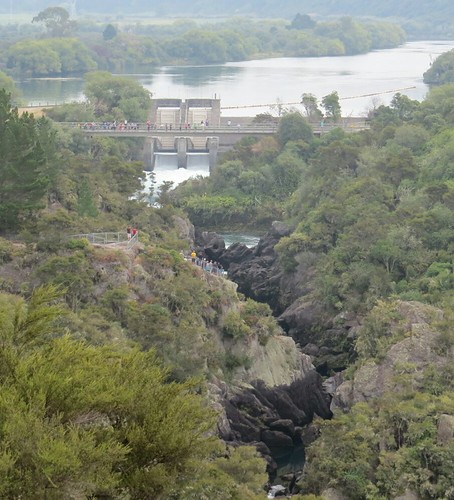
We left Turangi and drove toward Napier.  We stopped at an an overlook, only expecting a view of the cloud draped landscape but were pleasantly surprised to see a beautiful waterfall Waipunga Falls.PicsArt_1426065419667

Our two and a half hour drive took us through pastures and I mountainous terrain before descending to the coast and a fabulous view of Hawkes Bay in the Pacific Ocean.  Due to its fertile soil and temperate climate, it has thousands of acres of farms, orchards and vineyards.  It is a major food producing area of New Zealand.
We arrived in Napier, scene of a devastating earthquake in 1931, and checked into our motel.  Our room was on the third floor and motels do not have lifts (elevators), so we had to haul all our stuff up the stairs.  It was all worth it when we opened the door to our room and saw the balcony overlooking the Pacific Ocean and heard the waves crashing against the shore.PicsArt_1426066672862PicsArt_1426065903769PicsArt_1426065997719
Napier is a cool little town with tree lined boulevards along the beach and an art deco theme.  It is one of the cruise ship destinations and we saw a cruise ship in port while we were there.
We spent one day just exploring the little town, doing some geocaching and enjoying our ocean front balcony.
Our second day we chose to do a hike to Shine Falls.  It is 190 feet tall and without a doubt one of the prettiest we have ever seen.  It was about an hour’s drive from our motel along some PicsArt_1426068328493PicsArt_1426068548594PicsArt_1426067697716pretty winding roads that included six miles of gravel road.  We passed pasture after pasture of cattle sheep and horses along the way.  While the hike was advertised as “moderate” in difficulty, it did include some challenging ascents and descents and we were glad we had our walking sticks and hiking boots.  We started by walking through a pasture and the path led us over hills to the bush (forest) area.  We arrived at the falls hot and tired, but my oh my was it worth the trip!!  We sat for awhile drinking in the beauty.  Bill contemplated getting in the pool of water at the base of the waterfall until he felt how cold it was!PicsArt_1426068644368PicsArt_1426068183266PicsArt_1426068097150PicsArt_1426068003493PicsArt_1426067849044
Some observations:
In our travels so far around the North Island we have seen very very few billboards of any kind along the roadways.
I mentioned the price of gas in the last blog posting.  It has averaged us around $1.38 US dollars per liter so far.  There are 3.785 liters per gallon, which puts the gas in New Zealand at around $5.22 US dollars per gallon.
We often hear radio stations in restaurants and stores playing American music.
We have been able to watch American Idol, The Tonight Show with Jimmy Fallon and occasionally Fox News on about a seven hour delay.  Many other American shows we normally watch on CBS, ABC and NBC are several weeks to months behind schedule so we have seen many of them already.  We have also been able to watch some great American movies on the tv in our motel rooms.
Sometimes we see New Zealand on a map in a Visitors Center or on a weather map on tv and we are struck by just how remote and isolated New Zealand really is!  We really are in the middle of nowhere!  COOL!

March 5, 2015 Turangi, New Zealand

Our next stop was Turangi, about a 45 minute drive from Taupo.  We were glad we had timed our visit to Taupo just right since they were having an Ironman Marathon competition there that weekend and hordes of people were beginning to descend on the town, traffic was picking up and the hotels were all displaying No Vacancy signs.  I had practiced a little driving while in Taupo and felt comfortable driving to Turangi.  Along with driving on the wrong side of the road with the steering wheel on the right, the turn signals are on the right side of the steering wheel with up meaning left turn and down a right turn.  The windshield wiper control is on the left side of the steering wheel.  The lights on the right.  My biggest fear are the round a bouts where you drive on the wrong side of the road going in a clockwise direction in a circle.  Back in the States we drive in a counterclockwise direction.

We arrived in Turangi, a sleepy little town known as the “Trout Fishing Capital of the World”.  It is known for three things: trout fishi white water rafting, and its close proximity to Tongariro National Park.  Can you guess which of those three brought us to Turangi?

We checked into our home for the next two nights which was really a fishing lodge with several cottages spread around the property.  We are no longer surprised to receive our complimentary bottle of milk (we always have a choice of whole or skinny).  We were pleased with our cottage with a living room area, kitchen, bathroom and separate bedroom.

If you guessed Tongariro National Park as our reason for coming to Turangi, you are correct!  Tongariro National Park is the first national park in New Zealand and the fourth oldest in the world.  It is a Dual World Heritage Area because of its cultural and physical attributes.  It is made up of three active volcanoes, Ruapehu, Tongariro, and Ngauruhoe.  It is a 80,000 hecacre park with lava flows, craters, hot springs, forests, and ski areas in the winter.  Much of the Lord of the Rings movie was filmed in this park.  Mt Ruapehu is New Zealand’s largest volcano with its peak rising to 2797 meters and the largest ski area in New Zealand.

We knew that bad weather was forecast for the next day, so after settling into the cottage we drove part of the way to the park in hopes of getting some pictures of the mountains before they became fogged in the next day.  We stopped at an overlook on the way back to grab a geocache and spent a few minutes chatting with some French tourists.  We are surprised we have still not met any Americans.PicsArt_1425893920648PicsArt_1425894203351

By now we were getting hungry and since the restaurant choices were very limited in Turangi, we decided to stop by the grocery store.  There was only one grocery store in town, a chain called New World.  They proudly advertise themselves as being 100% New Zealand owned.  We prefer Pak n Save since the prices tend to be a little cheaper, but the New World stores are always clean and the people very friendly.

We decided to get some bread, peanut butter and jelly to make sandwiches since eating lunch out was getting old and we needed to pack a lunch to take to the park the next day.  We noticed you can buy sliced bread for sandwiches or thicker bread for toast.  One of the first things we did after arriving in New Zealand was purchasing a large cooler and that has really come in handy as we travel from place to place.

The frozen dinner selections in New Zealand are extremely limited, no matter which store you go to.  We settled on a frozen pizza to cook back at the cottage.  I needed something to cook the pizza on so it wouldn’t make a mess in the oven, so I walked up to the office and asked the owner for a cookie sheet and a pot holder.  He looked at me like I had three heads since he had no idea what I was talking about.  After explaining why I needed them he went into his house adjacent to the office and after consulting with his wife he came out with something resembRings (LOTR) a cookie sheet and a dish towel.  Guess they don’t use pot holders/oven mitts in New Zealand.

The next day we awoke to clouds and showers and drove to Tongariro National Park.  New Zealand does not charge a fee to enter their National Parks.  In return you are not furnished with free maps and information on the park like we receive in the States.  We passed the beautiful Tongariro Chalet on our way to the Visitors Center.  The rangers at the Visitors CenterPicsArt_1425894759930PicsArt_1425895367737PicsArt_1425895869605 were warning hikers about the forecast calling for heavy rain, cold temperatures and gale force winds, especially on the mountain trails which are famous for their hiking, one being the Tongariro Alpine Crossing.  They had stopped running the shuttle that takes hikers to the beginning of the trails in an effort to discourage hiking that day.  There were still some die hard hikers who failed to heed the warning and headed out.  We contented ourselves with seeing two great movies about the park which explained how in 1887 Chief Horonwku presented the land to the Crown for the purpose of a national park to ensure the land’s everlasting preservation.  This area of New Zealand was one of the last to be settled.  Development was slow until the railroad reached there in 1909 and the first visitors began to arrive.  In 1936 WWII servicemen settled in the remote valleys under a government program to transform the forest into farmland.  Though initially prosperous, the farmers eventually gave up due to difficult access for trading and the Great Depression.  A bridge called “The Bridge to Nowhere” is a memorial to their dreams. Development began to mushroom in the 1950’s and 1960’s with the building of roads.

After finishing at the Visitors Center we decided to drive the loop road around the park and do some geocaching.  We had hoped to take some short hikes, but by now the rain had picked up and the wind was really whipping.  With temperatures around 50, not factoring in the wind chill, any hikes were unpleasant.  The rain did let up long enough for us to take a short hike to Tawhai Falls and we did stop a few times to grab some geocaches close to the car.  With the rain and fog we didn’t have a chance to see much except for field after field of sheep.  A lot of sheep! By the time we headed home the rain had turned into a steady downpour.  We stopped for a quick dinner at a pub and were glad to get home, somewhat wet and cold.PicsArt_1425896138763PicsArt_1425896362586PicsArt_1425896504018PicsArt_1425896702790

Some more thoughts on food:

If you want a burger most like back home go to a fast food restaurant.  All larger towns have a McDonald’s or a Burger King or both.  Wendy’s is most like back home but they are harder to find.  If you order a burger in a sit down restaurant it is standard for it to come with an egg, beets, carrots, lettuce, tomato and onion all piled on top. If you ask, they will leave off the egg and beets, but we went in one restaurant where the snarly waitress told Bill that is the only way they fix it and told him to order something else.  That kind of rudeness is rare here.  Most people are eager to please and helpful.

I am supplementing my diet with shortbread cookies, but I am getting tired of them.  They have never heard of White Zinfandel wine here so I have adjusted to drinking Rose and it isn’t bad.  Wouldn’t you know my one positive adjustment was wine? And I don’t drink that much.

Bill’s biggest adjustment was the coffee.  Both the price and the weak taste.  He finally decided to buy some instant coffee at the grocery store and uses the pot furnished in all the hotels to heat water.  American beer is also ridiculously expensive here or not offered.

Since we have no way to keep ice cream in the tiny freezers, we have broken our habit of eating ice cream at night.  Just as well since the ice cream here isn’t as good as back home.  There are no donut shops in New Zealand.  They have bakeries but things taste different.  I think it is the flour. French fries are always good and mashed potatoes are always fresh, never instant.

Some observations:

The government wants to make the country completely smoke free which makes the tourism industry very nervous because they feel it will keep tourists from coming.

Gasoline is averaging about $1.92 a liter.  Half of the money goes back to the government.  We got a free card from BP which gives us a few cents off at the pump and gives us more money off as we add up points from purchasing fuel. There is no pre-pay at the pump.  You pump your gas first and then go inside to pay.

No 7/11 convenience stores here.  They have something similar throughout the country called “The Dairy”.

March 3, 2015 Taupo, New Zealand

We drove the Thermal Explorer Highway from Rotorua to Taupo, occasionally seeing steaming vents puffing steam from deep inside the earth amid the scenic farmland.  It was easy to see all around us where the land had been pushed up leaving tall pointed hills. After about an hour drive we entered Taupo, a beautiful town hugging the shoreline of huge Lake Taupo.  With many shops and restaurants lining the shoreline, this town PicsArt_1425590488482appeared more like a resort town.We stopped for lunch and parked in a P60 space (60 minute limit).  We noticed what appeared to be sensors in the asphalt under each car.  We surmised these must be a kind of device that keeps track of how long you have been in that parking spot.
For the first time since we arrived in New Zealand we saw several souvenir shops.  We did not see any in Thames and Rotorua only had one.
We checked into our motel with a small fridge, microwave and private patio with table and chairs where we could sit in the mornings or afternoons and relax with coffee or a drink.  No plunge pool.  Once again we were given a container of milk for coffee or tea, so Bill uses it for his cereal.
While in Taupo we visited the Aratiatia Rapids.  This once natural whitewater gorge was damned up behind the gates of the Aratiatia hydro-dam. Due to public outcry over the loss of the rapids, four times a day the floodgates are raised and a torrent of river water rages again through the Aratiatia gorge.  Beginning eight minutes before the gates are PicsArt_1425591243364PicsArt_1425591328771PicsArt_1425590743304raised and at two minute intervals, bells and whistles sound.  We had a choice of three viewing platforms and chose to hike to the highest one.  We arrived early enough to grab a geocache close by the viewing platform.  Bill showed a family walking nearby with small children the geocache and explained geocaching.  The parents were intrigued and the children thought it was really neat!  By the time the gates were raised all three viewing platforms were full of observers.PicsArt_1425590862347PicsArt_1425590925548
Also while in Taupo we visited Huka Falls.  This is advertised as one of the most beautiful tourist attractions in New Zealand.  The Falls are a 100 meter basalt crevice channeling the Waikato River over a 15 meter ledge.  The falls were lovely though we felt the viewing areas did not provide a really great view of the falls. The water flows through the crevice or channel at 62,000 gallons per SECOND!PicsArt_1425591054510
Our last day in Taupo we spent geocaching.  We searched the geocaching.com site and chose several caches where people had given the caches many favorite mark.  We have found that geocaching in new places takes us to beautiful areas we would not ordinarily know about and see.  And this day did not disappoint with two geocaches that led us to a cave and one with a beautiful view of Lake Taupo.PicsArt_1425590393444PicsArt_1425590130933
Some observations:
Tipping is not expected and the service reflects this.  Once your order is taken and your food delivered, you never see the waiter again.  No one checks to see if you need anything or if you like your food.  If you need something you flag a waiter down.  We learned after waiting for our check a couple times that your check is not delivered to the table.  You go inside to the register and they ring up the bill.
Salad and bread is never provided with your entree.  They are separate items on the menu.
When you order water with your meal it rarely has ice and they give you a decanter since they won’t be coming back!
If you order a burger and it says it comes with a salad, the salad is the lettuce and tomato on the burger.  After waiting a couple times for the salad that never came, we figured it out.
If you order a side salad with your entree it is delivered with the meal, not ahead of time.
The mattresses are on the floor.  There is no space between the box springs and the bed.PicsArt_1425589966804PicsArt_1425589831860PicsArt_1425589618705

March 1, 2015 Rotorua, New Zealand


We arrived in Rotorua and checked into our motel.  Our room had a private patio area with our own plunge pool.  It is similar to a hot tub but without the jets.  The motel owner gave us milkIMG_3558 for our tea or coffee and bottle of gel for the plunge pool.  We enjoyed the small fridge and microwave in the room.
Tour books say Rotorua is known by locals as RotoVegas because of the strip of hotels that resembles the Vegas Strip.  I can tell you that comparison is a real stretch with Rotorua being nothing like Vegas!  Thank heavens!  We learned on a hike that Rotorua was the fourth city in New Zealand to have electricity.
Rotorua is an active geothermal area and it is common to see steam rising from the ground.  Another thing you immediately notice is the smell of rotten eggs that permeates the town, with some areas being smellier than others.  Just as many places in the western United States have taken advantage of solar and wind turbine power, the people in the Rotorua area have taken advantage of the geothermal activity.  A sign at the motel PicsArt_1425459178526described how they use the geothermal energy to heat the water we used for showers.  When we filled the plunge pool up the first time we were amazed at the steaming hot water coming from the faucet and had to quickly add cold water.
On one of our days in Rotorua we drove to the Hamurana Springs Loop Walkway for a short walk through a forest of California Coast redwoods.  Yes, I said California coast!  The IMG_3570IMG_3571redwoods were planted in 1901 as an experiment to test the suitability of different forest species for commercial planting.  They discovered other trees were faster growing and more suited to this area.  It was a beautiful walk through the 200 feet tall redwoods but did not begin to compare to the redwoods in California we saw last year.
Next we visited Okere Falls and the Kaituna Rapids.  At seven meters, this is the world’s largest commercially operated rafted waterfall drop.  We hiked the trail down many steps to the falls IMG_3564overlook and a cave.  We hoped to see some rafters shoot thru the rapids.  We waited awhile with no luck and since we had more to do that day we hiked back to the car.
We finished the day at Kuirau Park.  What a unique park this was located centrally in the middle of Rotorua.  Where else could you see a children’s playground, a ballfield, barbeque pits, picnic tables and beautiful walking paths amid seething mudpits and PicsArt_1425457411657steaming cauldrons spewing from the earth?  We spent time walking around looking at all the steaming vents and boiling sputtering mud pits.  We came across a foot pool provided for people to soak their feet in clean water heated from the geothermal activity.  Some Japanese tourists were sitting PicsArt_1425457344589PicsArt_1425457254945IMG_3581enjoying the water and invited me to join them.  I put one foot in and was shocked at how hot the water was.  I took my now very pink foot out of the water and we continued on our way.  We decided to finish our time at the park by finding a geocache located close by.  As we were searching it dawned on us that a young New Zealand couple near us was looking for the same geocache.  We struck up a conversation with them and joined forces in the quest for the elusive geocache.  Eventually it was found and we signed the log and told our new friends farewell.  It sure was fun geocaching with them!
On our last day in Rotorua we decided to hike the Whaka-Rewa-Rewa Viewpoint Trek.  We had read that this trail would take us to a beautiful view of Rotorua and the Pohutu Geyser.  This geyser was recently ranked as one of the world’s top 5 geysers by Lonely Planet.  It is said to erupt 100 feet twenty times a day.  It is said that eruptions can last for several minutes to several IMG_3590IMG_3594IMG_3597days.  In 2000-2001 it erupted for a straight 250 days.
We parked in the carpark and hiked up and down a fairly difficult trail which at times was no more than a deeply rutted path.  By the time we got to the lookout we were pretty hot and tired and with no shade or place to sit, began the wait for an eruption.  After close to an hour we were discouraged and ready to give up.  A Kiwi (New Zealander) came by and told us due to a drop in the water table and more and more people tapping into the area’s geothermal resources, the dependability and frequency of eruption is changing.  Broiling in the heat and sunburning by the second we decided to give up.  The Kiwi told us a shorter and easier way to get back to the carpark.  Even though we only got pictures of the Pohutu Geyser teasing us with lots of steam, we still enjoyed the views of Rotorua and if truth be told the exercise wasn’t bad for us either.  We did spend some time in the plunge pool that night relaxing our tired muscles.
The next morning as we were heading out of Rotorua we stopped by the Ohinemutu Village to see the impressive museum and some Maori carvings.  We noticed a group playing a game on the village green.  We found out it is a type of bowling played there since 1901.PicsArt_1425458206166PicsArt_1425458157844PicsArt_1425458109684
Some observations:
I struggle a lot with different food in new places.  Bill will eat anything and has enjoyed venison pie and lamb.
I do love their shortbread cookies here!
Coffee is ridiculously expensive at a minimum of $3 USD for a medium cup at McDonald’s or anywhere.
You do not see health signs in restaurants warning of everything that can cause cancer or birth defects.

November 30, 2014 Big Island, Hawaii Part 3

Hawai’i, the Big Island, has ten different climate zones and we experienced them while in Kona and Hilo.  We left the warm 85+ sunny weather in Kona and headed to Hilo where the weather was cool, overcast and it often drizzled rain.  Quite a contrast for us and I really didn’t have enough warm clothes for that side of the island to be comfortable.

We drove north from Kona taking the slow route to Hilo, stopping at points of interest along the way.  One particularly beautiful spot was this overlook of the Waipi’o Valley with a waterfall nestled near the ocean cliffs.  It is a difficult trip down the road into the valley and since we did not have a four wheel drive vehicle, we didn’t even consider attempting it.  We were told the people in the valley do not have electricity or any modern conveniences and are very content with their isolated lifestyle.  Even with the heavy mist, it was a beautiful sight.

The Waipio valley is to the left

The Waipio valley is to the left

The Waipio valley is to the left

The Waipio valley is to the left

The Waipio valley requires some serious vehicle and driving experience

The Waipio valley requires some serious vehicle and driving experience

North Shore

North Shore

Later we stopped at Akaka Falls State Park where we took a beautiful circular walk amid a lush tropical setting to see the falls.  The falls plummet 442 feet into a stream eroded gorge.  It is said that this is the Big Island’s most famous waterfall.

Looking up where we came from in  Akaka Falls State Park

Looking up where we came from in Akaka Falls State Park

Widescreen view of Akaka Falls, 422 feet tall

Widescreen view of Akaka Falls, 422 feet tall

We arrived at Volcano Village next to the entrance to Volcanoes National Park. Here we stayed in a sweet little cottage in a rainforest setting. This park was our main reason for coming to this side of the Big Island.  We will tell you all about the park in our next blog entry.  For now I will tell you more about other adventures on this side of the Big Island.

We drove thirty minutes back into Hilo, known as Hawaii’s Little Big City, to explore more of that area.  We had hoped to get a view of the current lava flow, but streets were blocked off for blocks near the flow with guards stopping anyone but residents.  We did see where they have taken precautions around electrical poles in the little town of Pahoa which is the town being

The electric company has wrapped 20 foot of the power poles with lava rock

The electric company has wrapped 20 foot of the power poles with lava rock

threatened by the approaching lava.  We saw on TV that a new shopping center in Pahoa is expected to be destroyed by lava if the current rate and direction of flow continues.  The island continues to grow due to volcanic activity, but sometimes at a great expense to its citizens.

Like Kona, Hilo is a port city and we saw a cruise ship docked.  Hilo is nestled on the slopes of three volcanoes and has a population of around 41,000.  It is one of the wettest towns in the United States.  The University of Hawaii has a campus there as well as on other islands.  Hilo was hit by tsunamis in 1946 and 1960.  A couple months ago a hurricane hit Hilo and we saw evidence of the damage, especially to trees.

Bill was especially fond of some huge, lovely trees called Monkeypod we noticed around the town of Hilo.

The Monkeypod trees look like large umbrellas

The Monkeypod trees look like large umbrellas

We drove to Rainbow Falls, an 80 foot tall falls located in Hilo, where it is said you can often see a rainbow when the morning sun shines through the mist.  Since it was late afternoon we didn’t see a rainbow but it was still beautiful!

Rainbow Falls usually make rainbows in the morning hours

Rainbow Falls usually make rainbows in the morning hours

Also we drove to a lighthouse on the easternmost point of the state of Hawaii called Cape Kumukahi.  Since this is where the sun first shines in Hawaii every day of every year, it is of spiritual importance to native Hawaiians.  In 1960 Kilauea erupted, destroying a town near the lighthouse and crops nearby.  Just as it appeared the lighthouse would be engulfed by the lava, it split into two streams and flowed into the sea on either side, sparing the structure.  People were amazed by this phenomenon and felt it was a message from the god Pele telling them of the lighthouse’s importance to the people.

This Cape Kumukahi lighhouse was saved in 1960 when the lava flow split and went around the lighhouse fence

This Cape Kumukahi lighhouse was saved on 1960 when the lava flow split and went around the lighhouse fence

This is the East tip of Hawaii Island, Cape Kumukahi

This is the East tip of Hawaii Island, Cape Kumukahi

Here is the height of the 1960 lava flow next to the Cape Kumukahi lighthouse

Here is the height of the 1960 lava flow next to the Cape Kumukahi lighthouse


November 21, 2014 Maui, Hawaii Part 2

Our adventures in Maui continued with a drive on the “Road to Hana”.   This drive was definitely more about the journey than the destination.   When we first arrived in Maui, Bill purchased and downloaded to his phone an audio tour of Maui which came in very handy,  especially on the drive to Haleakala National Park which I described in the previous blog,  as well as during the Road to Hana.   This 64 mile drive takes almost three hours if you don’t make any stops.   Why so long?  In those 64 miles there are 59 one way bridges and approximately 620 hairpin turns.   Most of the bridges date back to 1910.  The road was originally built for sugar plantation

The road to Hana

The road to Hana

IMG_2958

Maliko Bay

Maliko Bay

workers traveling to and from work. And keep in mind,  once you drive those 64 miles of one lane bridges and hairpin turns,  you have to turn around and do it again on the way back since rental car agreements forbid you to continue any further than 15 miles past Hana due to unpaved and hazardous road conditions.   So why do it you must be asking. Because the scenery of unspoiled beaches, waterfalls, caves, and lush tropical scenery is breathtaking.

Wailua falls

Wailua falls

Wailua falls

Wailua falls

At one point our audio tour guide suggested we take a small,  safe detour which took us down to one of the beautiful beaches in Keanae.  The water here was too rough for swimming and

Coconut tree

Coconut tree

In 1946 the Keanae area was almost completely destroyed by a tsunami. The only building said to have been left standing was the ‘Ihi’ihi o Iehowa Ona Kaua Church

In 1946 the Keanae area was almost completely destroyed by a tsunami. The only building said to have been left standing was the ‘Ihi’ihi o Iehowa Ona Kaua Church

Keanae area

Keanae area

Keanae area

Keanae area

there was no easy access to  the water,  but we enjoyed watching the waves crash against the shore.  We stopped at a small vegetable stand near the beach and bought a loaf of delicious banana bread, still warm.

We visited Waianapanap State Park where we saw a black sand beach, caves, blowholes and a natural arch.   We also stopped by Haleakala National Park to see Ohe’o Gulch also known as Seven Sacred Pools which stretches down from the same volcano summit we mentioned in our

The Kipahulu visitor center has pools that were off limits to swimming because of the high water levels

The Kipahulu visitor center has pools that were off limits to swimming because of the high water levels

Banyan Tree

Banyan Tree

IMG_2950 IMG_2949

last post. If the water is high there are as many as 7 pools formed from falling water which can be a delightful place to swim.   When we were there the weather  was very overcast and water rough so the swimming areas were closed.

At the end of the road before we turned around,  we visited the grave of Charles Lindbergh. Located on a remote section of Hana Road behind a small church,  the graveside is relatively

Palapala Hoʻomau Congregational Church located in Kipahulu

Palapala Hoʻomau Congregational Church located in Kipahulu

Following his death in 1974, Lindbergh was buried in the graveyard of Palapala Hoʻomau Congregational Church

Following his death in 1974, Lindbergh was buried in the graveyard of Palapala Hoʻomau Congregational Church

IMG_2954simple with no signs leading to his grave.   Lindbergh was introduced to Maui by a friend and thought it was one of the most beautiful places he had ever seen. He and his wife built a home on Maui. In 1974, suffering from incurable cancer Lindbergh flew from New York to Maui to live out his remaining days saying he would rather live for 2 days in Maui than prolong his life in New York. His simple coffin was made of eucalyptus and was taken to the church in the back of a pickup truck.

Jagged Kipahulu coast

Jagged Kipahulu coast

On one of our last days in Maui we celebrated Bill’s birthday.   We decided to go to a recommended Italian restaurant since Bill had already had several seafood meals.  Upon learning it was his birthday, the owner brought out a huge slice of tiramisu on the house with a candle burning and sang Happy Birthday.IMG_20141122_191241

Sadly our time on Maui came to an end and it was time for the next adventure.

November 15, 2014 Kauai, Hawaii Part 2

Wow, Kauai is a beautiful place!  One of the highlights of our time there was driving to Waimea Canyon State Park.  The Waimea Canyon, located on the west side of Kauai, is also known as the “Grand Canyon of the Pacific”.  While it is not as big or as old as the Arizona one, we were awestruck by its beauty.  It is 14 miles long, one mile wide and 3,600 feet deep.  The canyon was

The canyon was full of mist

The canyon was full of mist

Waipoo Falls

Waipoo Falls

Closer view of Waipoo Falls

Closer view of Waipoo Falls

Waimea Canyon

Waimea Canyon

Waimea Canyon with helicopter

Waimea Canyon with helicopter

Waimea Canyon with Waipoo Falls on the right

Waimea Canyon with Waipoo Falls on the right

Waimea Canyon

Waimea Canyon

formed by the collapse of the volcano that created Kauai, as well as erosion caused by the Waimea River arising from extreme rainfall from Mount Wai’ale’ale, one of the wettest places on earth.

This sign point to a nearby peak

This sign point to a nearby peak

Kalalau lookout

Kalalau lookout

Kalepa Ridge from Kalalau Lookout

Kalepa Ridge from Kalalau Lookout

While viewing the canyon we heard the faint bleating of a mountain goat.  We had to wait awhile but eventually caught a brief glimpse of him before he disappeared.  Amazing how they can keep their footing on the canyon walls!

Another day we drove to Wailua Falls a popular tourist attraction, the falls drop 80 feet into a pool of water.  The falls was used in the opening credits of “Fantasy Island”.

Wailua falls of Kauai

Wailua falls of Kauai

We loved going to restaurants with tropical settings.

Duke's Restaurant with a tropical interior

Duke’s Restaurant with a tropical interior

Captain Cook landed two ships in Kauai in 1778 and called the islands “Sandwich Islands”.

Replica of statue in Whitby, England of Captain James Cook 1728 - 1779

Replica of statue in Whitby, England of Captain James Cook 1728 – 1779

Our five nights in Kauai came to an end much too soon.  We packed our bags and headed to the airport, but we weren’t ready to fly back to San Diego just yet.  Stay tuned!IMG_20141113_172750-1-1

November 12, 2014 Kauai, Hawaii Part 1

Aloha from Hawaii!  Yes you read that right.  We are on the island of Kauai.  After a six hour flight from San Diego, and a short flight from Honolulu, we arrived on Kauai also known as the

Our first view from the aircraft of Oahu Island and Waikiki Beach

Our first view from the aircraft of Oahu Island and Waikiki Beach

Garden Isle.  Like the other Hawaiian Islands, Kauai is the top of an enormous volcano rising from the ocean floor.  Kauai is the fourth largest island, the northernmost island, the oldest and the first to be free of volcanic activity.  It is 33 miles long and 25 miles wide with a population of around 63,000. It is believed that this island was the first inhabited.  While we were able to drive around most of the perimeter of the island, the interior is mostly inaccessible.  The temperature averages between 69 and 84 degrees year round.  One of the first things we noticed when stepping off the plane was the humidity the likes of which we hadn’t felt since leaving Florida eighteen months ago.  The Hawaiian trade winds help somewhat with making the humidity more tolerable.IMG_20141116_141136-1

With ocean temperatures of between 72 and 80 degrees year round we enjoyed snorkeling at two beaches while on the island.  Kauai is known for roosters and chickens roaming free, so it is common to see them everywhere you go on the island,  even sunbathing with Bill on the beach.

These roosters where everywhere

These roosters where everywhere

We were also awakened every morning by the sound of roosters crowing. While driving to one beach we came upon a blowhole.

Spouting Horn

Spouting Horn

Spouting Horn

Spouting Horn

We stayed at a beautiful condo we booked through Vacation Rentals By Owner.  We enjoyed watching cruise ships coming in from our balcony.  Electricity is very expensive on the island and it is very common to see solar panels on most of the roofs of buildings including our condo.

View from our balcony

View from our balcony

We rented a jeep and set off to explore the island during our five night stay.

One day we drove to the North Shore of the island on Highway 50 to the “End of the Road”.  This part of the island is known for its gorgeous scenery, amazing beaches, dry and wet caves, waterfalls and many one lane bridges where you had to stop and wait your turn to cross.  The  movie ” South Pacific ” was filmed here as well as Elvis Presley’s “Blue Hawaii”.  We also

Left view of Lumahai Beach part of South Pacific movie

Left view of Lumahai Beach part of South Pacific movie

Right view of Lumahai Beach part of South Pacific movie

Right view of Lumahai Beach part of South Pacific movie

stopped at an overlook with taro fields, which is widely grown in Hawaii.  This valley was used during the filming of the movie “Uncommon Valor” starring Gene Hackman.

Hanalei Wildlife Refuse

Hanalei Wildlife Refuse

Haena park

Haena park

Haena park

Haena park

Haena park

Haena park

Haena park

Haena park