Category Archives: State Park

State Park visited or camped here

August 9, 2015 Antelope Island State Park, Utah

IMG_20150809_120534One of our RVing friends suggested we visit Antelope Island while we were in the Salt Lake City area.  It was about a 45 minute drive from our campground so we decided to dedicate one of our days to visit the island.IMG_0867IMG_0871
IMG_0869Antelope Island is the largest island in the Great Salt Lake.  The Great Salt Lake is the largest natural lake west of the Mississippi River.  The lake is a remnant of prehistoric Lake Bonneville which covered more than 20,000 square miles of land during the Ice Ages.  Water flows into the lake from four rivers, carrying 2.2 million tons of minerals into the lake each year.  Great Salt Lake has no outlet so water leaves only through evaporation, leaving high concentrations of minerals behind.  The salinity of the water is too high to support fish and other aquatic life, however brine shrimp, brine flies and algae thrive in the lake.  Because of the brine shrimp and flies, there are millions of migrating birds feeding off this food source. Nearly 80% of Utah’s wetlands surround Great Salt Lake, making its ecosystem one of the most important resources for migratory and nesting birds in North America.  The area has over 250 bird species with six to nine million birds migrating through each year.IMG_0874IMG_0878IMG_0879

IMG_0914The island is home to free roaming herds of bison, mule deer, pronghorn antelope and bighorn sheep as well as coyotes, bobcats, badgers and birds of prey.  While on the island we saw plenty of bison, one antelope, two mule deer, a hungry looking coyote and a ton of birds.  Antelope Island has more than 40 major freshwater springs that produce 36 million gallons of water each year which supports the wildlife and vegetation.  Twelve bison were brought to the island in 1893.  Today there is a herd of between 500 to 700.  In the fall some of the bison are rounded up and sold to national and state parks and ranches.  The pronghorn antelope are native to Utah and the island.  They are the fastest animals in North America and can reach speeds of up to 70 miles per hour.IMG_0883IMG_0885IMG_0923IMG_0886IMG_0922IMG_0888IMG_0893IMG_0895IMG_0918IMG_0897IMG_0906IMG_0908

Antelope Island comprises 28,022 acres and is 15 miles long and 4.5 miles across at its widest.  The oldest rocks on Antelope Island are some of the oldest anywhere in Utah.  Canyon rocks on the island are 1.7 billion years old which are the same age as rocks found at the bottom of the Grand Canyon.

Artifacts tell us that prehistoric people inhabited the island more than 6,000 years ago.  John Fremont and Kit Carson explored the island in 1845 and named the island after observing several pronghorn antelope grazing.  The first permanent residence on the island was established in 1848 and is Utah’s oldest Anglo built structure still standing on its existing foundation.IMG_0890IMG_20150809_120546

The beauty and wildlife of Antelope Island was beyond our expectations and it took us much of the day to see it all.  We even found two geocaches there!

August 6, 2015 Willard Bay State Park, Willard UT

IMG_20150805_125655On our way to Salt Lake City we stopped for two nights at Willard Bay State Park.  There really   is not much to do here except enjoy the views of the water, but we needed a stopover point to break up the drive from Idaho to Salt Lake City.

IMG_20150805_160536Willard Bay State Park has nice long sites with full hookup ups, but it is unfortunately very close to the freeway and therefore has lots of traffic noise.  The positive with that is it is very easy access on and off the freeway.

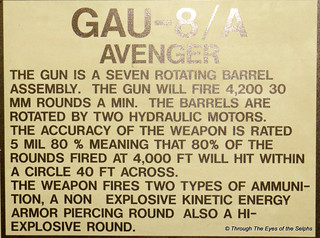
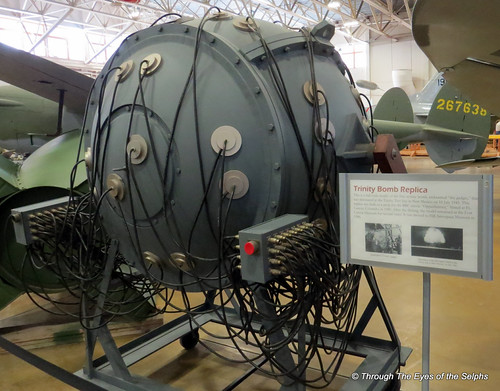
While there we made the short drive to the Hill Aerospace Museum located at the Hill Air Force Base about five miles from Ogden, Utah.  The museum has more than 90 aircraft, Missiles and aerospace vehicles from around the world and is home of the Utah Aviation Hall of Fame. Ployer Hill was an Army Air Corps’ test pilot for more than 60 aircraft. IMG_0865During his test of a Boeing experimental aircraft, which became the B-17 Flying Fortress of World War II, he died at age 41. In 1939 the Ogden airfield was named Hill Field and now Hill Air Force Base.IMG_0844

Four exhibits in the museum that are outstanding are the Willys Jeep, Link Pilot Trainer/Simulator, A-10 Thunderbolt/Warthog Aircraft, F-16 Fighting Falcon Aircraft and a Trinity Atomic Bomb Replica. Both aircraft are in service today.IMG_0845IMG_0846IMG_0848IMG_0847IMG_0861IMG_0851IMG_0854IMG_0858IMG_0856IMG_0849

We head next to Salt Lake City!

July 10, 2015 Thermopolis, Wyoming

We stopped in Thermopolis because of the hot springs located there which are advertised as the largest mineral hot springs in the world.  The name Thermopolis comes from the Greek words for hot and cities.  Located at the foot of Owl Creek Mountain and beside the Big Horn River it was once part of the Wind River Indian Reservation.  The town was founded in 1897 and attracted outlaws such as Butch Cassidy and the Sundance Kid.  Today it has a population of around 3,200 and tourists who come for the healing powers of the hot springs.

Hot Springs State Park was purchased from the Arapaho and Shoshone tribes in 1876  for $60,000 as part of a treaty with the provision it remain accessible free of charge to the public.  Native Americans believe the mineral water has therapeutic powers.  Today the park and public bath house are free of charge and it is the most visited state park in Wyoming.
The mineral rich hot water creates colorful geological formations which has occurred over millions of years forming beautiful rainbow terraces.  The hot springs are naturally colored and formed by mineral deposits.  They look like waterfalls and form a 125 degree F lake. The Big Spring in the park has more than 3.6 million gallons of 127 degree F water flow over colorful terraces every day.  The water contains at least 27 different minerals.  Most of the water is IMG_20150710_122608IMG_20150710_122914thought to come underground from the Owl Creek Mountains through the Big Spring.  Rain enters porous rock layers, moves slowly downward and is forced to the surface through crevices in the rock.  The heat and chemicals in the water come from the rock through which it passes and from gases that rise from deeply buried volcanic rocks.  Some geologists think the underground formation that supplies the spring is the same that provides Yellowstone National Park its famous hot waters.IMG_20150710_123625

20150710_114837From the Big Spring the water flows into cooling ponds and runs into swimming pools, jacuzzis and the Big Horn River.  The State Bath House water is 104 degrees F and they have an employee check the water temperature often.  You are limited to 20 minutes in the water.  The pools are filled with 100% mineral water; no chemicals or municipal water is used.  There is an indoor and an outdoor pool and they are both cleaned every 48 hours.  I could not get past the strong sulfur smell of the water and was happy to wait while Bill enjoyed the water.  It took a couple showers to get the sulphur smell out of his skin!

There is a very small bison herd of around eleven buffalo in the park.  We drove around trying to see them but they were hiding.

We stayed one night in Thermopolis and drove towards Jackson Hole.  We drove through the Wind River Indian Reservation through beautiful Wind River Canyon with 2,500 foot walls of rock.  There are informative signs along the route describing the geologic history of over a billion years of geology.

Along the way we continued to enjoy the views of the Wind River Canyon as we followed the Wind River to where it flows into the Big Horn River.  When early explorers came across the river from opposite directions they each named the river.  One named it Wind River and the other named it Big Horn River.  The river changes names just south of Thermopolis.IMG_20150710_144618IMG_20150710_144946IMG_20150710_145050IMG_20150710_145244IMG_20150710_145441IMG_20150710_145455

We  stayed overnight in Riverton at the Wind River Casino.  They allow free overnight parking in their parking lot and even have a few electric (15 AMP) hookups which we were lucky to use.  We went inside the casino and both signed up for a players card which gave us each $10.00 to use at the slot machines.  We had fun playing the machines and ended up winning $8.00 between us.  We had dinner at one of the restaurants in the casino.  We were amazed at how quiet the parking lot was and woke the next morning refreshed and ready to hit the road.

Our next overnight stop was at a national forest campground in Shoshone National Forest. On our route we saw ranches and homes built right up against the canyon walls.  IMG_20150711_134932IMG_20150711_135928IMG_20150711_141212IMG_20150711_141247IMG_20150711_141342We had a nice campsite in the forest with electric only.  For the first time in quite awhile we had absolutely no cell phone service which usually would not have been a problem but we had a family member we needed to check on.  We enjoyed camping in the forest and smelling the pine trees.  IMG_20150711_152105IMG_20150711_161029It has been awhile since we had camped in the forest.  The next day we will finish our drive to Jackson Hole.

July 8, 2015 Buffalo Bill Center – Cody WY

IMG_20150707_172649Cody has a wonderful museum called the Buffalo Bill Center of the West.  It is actually five museums all under one roof on over seven acres.  You could easily spend an entire day there seeing the Buffalo Bill Museum, the Draper Natural History Museum, the Cody Firearms Museum, the Plains Indian Museum, and the Whitney Western Art Museum.IMG_0308

IMG_0322

North African Miquelet Jezail given to Jefferson in 1805 This gift influenced the inclusion of the lyrics “to the shores of Tripoli” in the Marine’s Hymn

Bill loved visiting the Cody Firearms Museum which has one of the largest firearms collections in the world.  They had firearms on loan from the Smithsonian as well.  They had firearms Bill had never seen.  IMG_0320I especially enjoyed seeing a musket once owned by Thomas Jefferson as well as a gun owned by Annie Oakley and several former U.S. Presidents.  I loved seeing the guns IMG_0310IMG_0311IMG_0312IMG_0309IMG_0313IMG_0316used on the TV set by Ben Cartwright and his sons on Bonanza as well as the Lone Ranger. Some interesting people in the development of firearms:

  • Oliver F. Winchester was a successful shirt manufacturer established Winchester Repeating Arms Company in 1866
  • John M. Browning (1855 – 1926)
    • was the most ingenious and prolific arms designer America has produced
    • his designs were manufactured under patent assignment by noted firms like Winchester, Colt and Remington
    • from 1884 to 1901 he worked for Winchester and sold all his patents to them
    • he designed the Colt Model 1911, “Army .45”

We also spent a lot of time in the Buffalo Bill Museum which had many exhibits about the life of Buffalo Bill, including movie footage of one of his Wild West shows.  He took his Wild West shows to England and Europe, once performing for Queen Victoria.IMG_0329IMG_0315

The Buffalo Bill Center of the West is often called the Smithsonian of the West and we could see why!

IMG_0326

Crazy Horse

IMG_0327

Sacagawea

We really enjoyed our short time in Cody.  There were things we didn’t have time to see and added Cody to our list of places we would like to return to someday.

July 6, 2015 Cody, Wyoming

IMG_20150707_120324We left Buffalo and traveled to Buffalo Bill State Park just outside of Cody.  This is a nice state park and since we booked early we were able to get one of the few sites with electric and water hookup.  We drove through three tunnels to get to the park which is located near the Buffalo Bill Dam.IMG_20150706_121159

We stopped by the Buffalo Bill Dam Visitors Center.  Construction of the dam took place from 1905 to 1910.  During the construction period several contractors went broke due to bad weather and floods hindering the work.  Laborers refused to work for $2.50 for a ten hour day.  When the U.S. Fidelity and Guaranty Co. took over the project in 1906 the workers demanded and received $3.00 for an eight hour day.   The original dam cost $929,658.  At that time it was the tallest dam in the world.  Subsequent projects for major canals, roads, bridges, buildings and land inundated by the reservoir waters cost $3.3 million.  Through the years it has helped turn the arid high plains of the Big Horn Basin into one of Wyoming’s most fertile farming regions, irrigating over 93,000 acres.IMG_20150706_151450IMG_0333IMG_0334

IMG_0337In 1946 the name of the dam was changed from Shoshone to Buffalo Bill.  In 1993 a $132 million dollar project which took seven years was completed.  This raised the dam by 25 feet and added about 50% to the amount of water stored in the reservoir.  With this addition came opportunities for more hydro-electricity generation, recreational activities such as boating and fishing.

IMG_0339Another day we made the short drive to the small town of Powell to see the Heart Mountain WWII Japanese American Confinement Site.  Six weeks after the attack on Pearl Harbor, President Franklin Roosevelt issued Executive Order 9066 which led to the forced removal of all persons of Japanese ancestry from the West Coast.  They were forced to leave everything behind except what they could carry in one suitcase.  By August, the War Relocation Authority had constructed ten camps in remote, isolated locations.  A total of 120,000 Japanese Americans were incarcerated behind barbed wire.  The Heart Mountain Relocation Center was one of those camps.  From 1942 to 1945, a total of 14,025 people lived at Heart MountainIMG_0340IMG_0341 Relocation Center making it Wyoming’s third largest city.  It was a city surrounded by barbed wire, guard towers and armed guards.  Of the people kept there, seventy percent were American citizens having been born in the United States with thirty percent being born in Japan.  These people had done nothing wrong, it was merely “guilt by association”.  With most of the people being from California, they were not used to the cold, snowy Wyoming winters.  In the summer it was hot and dusty with dust and dirt blowing in through cracks in the walls and under the doors.  Besides leaving friends, jobs and possessions behind, the food was poor and they lived in IMG_0345IMG_0344IMG_0343uninsulated barracks with seven people to a room with no privacy.  The bathrooms and showers were just large rooms.  Later the Heart Mountain Relocation Center included a hospital, two grade schools and one high school, post office, fire and police systems, a judicial system, a newspaper printed in Cody, and a sewage treatment system.  They developed a successful agricultural program to provide fresh food and had recreational programs including Boy Scouts and Girl Scouts.

From 1942 to 1945, five hundred and fifty six babies were born, 148 people died, and 800 men and women served in the Armed Forces.  Their allegiance to the United States was tested by placing them in their own infantry which ended up being one of the most decorated infantry of the war.  Eight five protesters refused to serve the draft order. Sixty three were charged with resisting the draft and were sent to federal penitentiaries.  They felt like they were merely trading one prison for another.IMG_0342IMG_0346

The Heart Mountain Relocation Center officially closed on November 10, 1945.  They received a train ticket and $25 to begin their new lives.  Some manages to rebuild their lives while others struggled and never recovered.  In 1988, the federal government apologized calling it a result of wartime hysteria, racial prejudice and failure in political leadership.

Today the Heart Mountain Relocation Center has a museum with exhibits, photographs and oral histories of former residents.  The barracks are all gone and a boiler house chimney on the hill is all that is left of the once 150 bed hospital.  On the hill overlooking the museum is a memorial listing the names of the men and women from Heart Mountain who served in the U.S. military during WWII.IMG_0347IMG_0348

We really enjoyed our short time in Cody.  There were things we didn’t have time to see and added Cody to our list of places we would like to return to someday.


June 16, 2015 Rapid City and Custer S.P. South Dakota

While staying at Mount Rushmore we drove to Rapid City, population 70,000, the second largest city in South Dakota.  The town was founded in 1876 by a group of prospectors who had come to the Black Hills in search of gold and named the town after a spring fed creek which passes through it. We took a 90 minute trolley ride tour which included a visit to Dinosaur Park on a hill overlooking the city.  The park has seven life size concrete dinosaur replicas as well as a spectacular view of Rapid City.IMG_0187

Rapid City is known as the “City of Presidents” because of its proximity to Mount Rushmore but also because of a public art project that resulted in 43 life size bronze presidential statues of all past presidents which are located on street corners downtown.  Using a map to guide us we enjoyed finding the statues.  The figures are displayed in different poses and tries to emphasize a unique part of their personality such as Ronald Reagan wearing a cowboy hat. Rapid City was another small western town we have enjoyed on our travels this year.IMG_0199IMG_0200IMG_0194IMG_0196IMG_0189IMG_0190IMG_0201

Another day we wanted to drive back to Custer State Park to continue exploring the rest of the park. At 71,000 acres, it is one of the nation’s largest state parks. We drove towards the park on the Needles Highway through pine and spruce forests with meadows surrounded by rugged IMG_0206IMG_0203IMG_0210IMG_0207granite mountains. The road gets its name from the many needle like granite formations along the highway. The roadway was planned by former South Dakota governor Peter Norbeck who marked the entire course on foot and horseback. With the aid of 150,000 pounds of dynamite, construction was completed in 1922. We passed through three very narrow tunnels.

The State Game Lodge in Custer State Park was the summer White House for President Calvin Coolidge and was visited by Dwight Eisenhower. A really neat time to visit the park would be the last Friday in September when they do the bison roundup. Some of these bison are auctioned off in November with the money going towards operating costs of the park.

Next we drove to Wind Cave National Park. We had driven through a small section of the park on our way to Mount Rushmore and we wanted to continue to explore more of the park and stop by the Visitors Center.

Wind Cave National Park was established in 1903 and is the eighth national park created. It was the first national park set aside to protect a cave. Wind Cave is one of the world’s longest and most complex caves. Currently there are over 143 miles of twisting passageways under only 1.2 square miles of surface area. Close your eyes and visualize what a maze of tunnels that creates deep below the surface of the land! Portions of Wind Cave are believed to be over 300 million years old, making it one of the oldest caves in the world. Barometric wind studies estimate that only five percent of the total cave has been discovered.

Wind Cave is considered sacred and culturally significant to Native Americans who roamed the area for centuries. You could say it was rediscovered in 1881 by Tom and Jesse Bingham when they heard whistling noises coming from the small entrance to the cave.

We enjoyed touring the Visitors Center where they had a movie and many interesting exhibits about the cave.

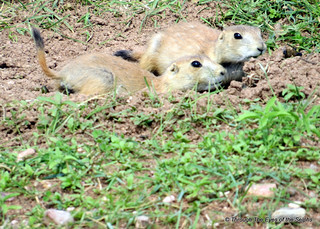
As we drove around the park we continued to see buffalo and a lot of prairie dogs. We stopped to watch them and take pictures as they played a game with us of now you see us, now you don’t.  The prairie dogs live in large social groups called towns.  The round mound of dirt that surrounds the prairie dog hole keeps rain water from running into the burrow and serves as an observation post to watch for danger.IMG_0216IMG_0219IMG_0222IMG_0228IMG_0225IMG_0229IMG_0233IMG_0237

Tomorrow we leave Mount Rushmore for the Badlands of South Dakota.

June 12, 2015 Mount Rushmore NP, South Dakota

Bill and I had both waited a long time to see Mount Rushmore so the next morning we eagerly made the drive to Mount Rushmore National Park.  While there is no charge to get in, you have to pay $11 to park with the money going to pay for the large parking garage built to accommodate all the tourists. No federal money was used to pay for the garage. The parking pass is good for a year. We were told that the garage will be paid off in 2016 and the trustees will give the garage to the park service.IMG_0153

Mount Rushmore is an amazing place with an Information Center, Visitors Center, three bookstores, a gift shop, sculptor’s studio, two theaters with movies, nature trails and an amphitheater. A Grand View Terrace to view Mount Rushmore is at the end of the Avenue of Flags where flags from all fifty states are displayed. IMG_0142IMG_0147We enjoyed the exhibits and movie and spent time just looking at the faces of Washington, Jefferson, Roosevelt and Lincoln. We had lunch at the cafe there and Bill tried the buffalo chili which he said was good.IMG_0136IMG_0140

Between 1927 and 1941, sculptor Gutzon Borglum carved the memorial with the help of over 400 workers. When Borglum died his son Lincoln Borglum supervised the completion. Work stopped in October, 1941 near the beginning of World War II. It was interesting to read that Gutzon Borglum wanted to build a special place to share important pieces of American history so he planned to build a large room which would be carved into the vertical wall of the canyon behind the faces. This room would be called the Hall of Records and would store important documents like the Declaration of Independence, the U.S. Constitution and the Bill of Rights. Work on the Hall of Records began in 1938 but the U.S. government would not approve funding for the addition and workers were only able to carve a doorway and small hallway before Congress stopped the Hall of Records project.IMG_0149IMG_0150

IMG_0154After leaving Mount Rushmore we drove through part of Black Hills National Forest and Custer State Park along the Iron Mountain Road and the Wildlife Loop Road where we encountered “pigtail curves”. Back in Denver we were excited to see buffalo in the distance behind a fence. Little did we know we would see herds of buffalo here. We saw a lot of buffalo and calves.IMG_0157 The buffalo were right by the side of the road and a couple times we had to stop and wait while they crossed the road. The buffalo were shedding their winter coats so they looked especially scruffy.IMG_0169IMG_0163

Today the park is home to as many as 1,450 head of North American bison, also known as buffalo. There were once millions of bison, but by 1900 fewer than 1,000 bison remained on the entire continent. Peter Norbeck, known as the “Father of Custer State Park”, decided to take action to preserve the bison.  In 1914 the park purchased thirty-six bison which grew to 2,500 by the 1940’s. The bison numbers are great enough today to have a roundup each year and some of the bison are auctioned off.IMG_0159IMG_0161IMG_0162IMG_0164IMG_0166IMG_0171IMG_0175IMG_0176

We came across prairie dogs chattering as they popped up from their holes in the ground, deer and a lazy burro.IMG_0180IMG_0178

Later that evening we returned to the Mount Rushmore Amphitheater for the Evening Lighting Ceremony. IMG_0181IMG_0184IMG_20150612_213230After watching a patriotic movie the faces on Mount Rushmore were lighted, we sang the National Anthem and the flag was then lowered. They invited all past and current members of the military service to come down to the stage. The stage was full and each person was asked to give their name and rank. Several of them participated in the folding of the flag.

Some facts about Mount Rushmore:

  • Each face is 60 feet tall. Each eye is 11 feet wide.
  • Washington’s nose is 21 feet long. All the other noses are 20 feet long.
  • Washington’s mouth is 18 feet wide.
  • Washington’s head is as tall as a six story building.
  • Total cost was $989,992.32
  • Main tool was dynamite and the drill was the jackhammer.
  • The rock is Harney Peak Granite.

June 5, 2015 Denver, Colorado

Bill and I calculated that since we were at the Grand Canyon the beginning of May we have had rain everyday. What a crazy spring this has been weather wise and the crazy weather continued to follow us through Colorado.IMG_20150607_120939
We drove from Colorado Springs north to a state park campground just outside of Denver. We have been very happy with the Colorado state parks, and this campground, Cherry Creek State Park, was another winner. We had a large pull through site with full hookup and a lot of green space between each site. Everyday we had rabbits playing around the RV.
The first day the weather service was calling for severe weather so we decided to stay home. The day was spent listening to tornado sirens and the sound of heavy rain and thunder. The tornado siren would sound and after the storm passed the all clear siren would sound. In a matter of minutes another storm would roll in and the tornado siren would sound again. This cycle was repeated several times throughout the day. We listened to continuous coverage on the local TV station and Bill listened to ham radio operators helping the sheriff departments on his ham radio. We never had to evacuate the RV, but we were ready just in case.IMG_20150607_114039IMG_20150606_134014
The next day brought sunny blue skies in the morning but the forecast called for severe storms during the afternoon. We made a quick drive on the Lariat Loop Scenic and Historic Byway. Due to the weather forecast we did not drive the entire loop but we saw some beautiful views of snow capped mountains and stopped by to visit the gravesite of William F. Cody, known as Buffalo Bill. The museum and gravesite is located in Lookout Mountain Park. The area has great views of the plains and Rockies, however our view was limited due to the clouds quickly rolling in. As we made the short walk to the gravesite, thunder rumbled in the distance. Buffalo Bill earned his nickname because of his skill as a buffalo hunter and he traveled the world with his Buffalo Bill Wild West shows.
On the way home we passed through some charming little western towns with tall tree covered rock cliff walls and streams with rushing water from recent rains along the roadway. We noticed a Buffalo Overlook area on the map and were surprised when the overlook was nothing more than a pull over on busy Interstate 70. It seemed like a pretty dangerous area to encourage people to stop, but we pulled over and got out and were rewarded with a herd of buffalo (American Bison), including some babies nuzzling their mothers.IMG_20150606_143327IMG_20150606_143312IMG_20150606_143113IMG_20150606_143055IMG_20150606_142821
The next day we took advantage of it being a Sunday with less traffic and drove into downtown Denver. We had originally planned to go on Monday so we could tour the U.S. Mint in Denver. When we went online Friday to reserve a tour, we found out all tours were full for at least the next 30 days. Since they give six tours a day Monday thru Thursday, that is pretty amazing. We put the Mint tour on our list to do on our next visit to Denver.IMG_20150607_114745IMG_20150607_115923
While downtown we drove by the Mint and the capitol building. We spent some time driving around just getting a feel for the city. IMG_20150607_120405IMG_20150607_120422IMG_20150607_120432IMG_20150607_122119We ended with a stop at the Sports Authority Field at Mile High, home of the Denver Broncos. We made it home before the first of two thunderstorms rolled through the area.IMG_20150607_123026IMG_20150607_123108
We saved Rocky Mountain National Park for Monday, our last day in the area, when the weather forecast called for the best weather. The day turned out to be beautiful with no afternoon thunderstorms, the first day without rain in a long time! IMG_20150608_105457This park was created in 1915, the nation’s 10th national park, and they are celebrating their centennial this year. The park is so large there are several visitors centers and we stopped by three of them. We drove the Trail Ridge Road to the Alpine Visitors Center, at one point the road took us atop the alpine tundra to an elevation of 12,183 feet. The road is the highest continuous paved highway in the U.S. Because the IMG_20150608_131527IMG_20150608_130927deepest, wettest snow occurs in the spring, snow plow operators work hard to have the road open each year by Memorial Day. Tall poles along the side of the road is the only way the snow plow operators know where the edges of IMG_20150608_121728the road are. Even in June the road can occasionally be closed due to snow or ice. The views of the Rocky Mountains along the Trail Ridge Road were breathtaking!IMG_20150608_113301IMG_20150608_114830IMG_20150608_115721IMG_20150608_115818IMG_20150608_120234IMG_20150608_134908
We really enjoyed our time in Denver. The area is prettier than Colorado Springs due to more beautiful views of snow capped mountains. Huge pot holes continued to be a problem. Colorado definitely has more pot holes than any other state! Denver traffic can be challenging. They do not have HOV lanes so the morning and afternoon commuter traffic is pretty bad! Regardless of the traffic and bad roads, we will add Denver to our list of places we would like to visit again.

June 1, 2015 Colorado Springs, Colorado

We continued our time in Colorado with a four night stop in Colorado Springs.  At first the weather continued to be cool with gusty winds and afternoon thunderstorms.  After a couple days we had temperatures in the 90’s and the mosquitoes came out in force at dusk. We had very gusty winds in New Mexico and the winds followed us to Colorado.  We camped at Cheyenne Mountain State Park, Colorado’s newest state park.  It is a very nice park with terraced campsites and full hookups.  Our campsite had a view of Colorado Springs which was especially pretty at night with the twinkling lights of the city shining below us.  Nearby is Fort Carson and in the evenings we could hear the sound of bugles as the flag was lowered.IMG_20150603_085748

We camped at the foot of Cheyenne Mountain, a very foreboding looking mountain.  Perhaps the history of the mountain makes it more mysterious.  The underground operations center for the North American Aerospace Defense Command (NORAD) was built in the early 1960’s during the Cold War to monitor the North American airspace for missile launches and Soviet military aircraft.  The command center is buried 2,000 feet underground in the granite mountain on five acres and was designed with a bunker to withstand bombing and fallout from a nuclear bomb.  Today it is still off limits but many of its functions were transfered in 2006 to Peterson Air Force Base nearby.  On top of Cheyenne Mountain is an antennae farm visible for miles around with transmitters for cell phones, radio, television and law enforcement.

We wanted to tour the Peterson Air and Space Museum located on the Peterson Air Force Base.  We read that for security reasons you had to go onto their website at least 24 hours in advance to request a visitor pass.  When we went online it said they were not accepting visitors at this time due to security precautions.

On our last day we rode the Pikes Peak Cog Railway, the longest and highest cog railway inIMG_20150603_100843 the world.  The trip began in Manitou Springs (elevation 6,320) for an 8.9 mile, hour and a half ride through high plains with aspen groves and dense pine forests to an alpine tundra.  As we neared the top the snow was piled high along the tracks, higher than the windows.  When we reached the summit of Pike’s Peak we were at an elevation of 14,110 ft.  The snow was ten feet high and the temperature was 36 degrees with a wind chill of 28 degrees.  We had read that at 14,000 feet you may experience breathing problems and nausea.  The air at Pike’s Peak has 50% of the oxygen pressure compared to sea level.  Since we had both been suffering quite a bit with allergy problems this spring we invested in a little spray bottle of oxygen at the gift shop before getting on the train.  Bill used it a few times.  I didn’t have any problems until we reached the summit.  When I stood and walked off the train I suddenly felt very lightheaded and dizzy.  After several sprays of oxygen I felt better.  They do have Medic services at the summit for people who experience serious problems.

Bill had to climb over some slippery snow drifts to get some pictures, including a memorial to Katharine Lee Bates.  Her visit to Pike’s Peak in 1893 inspired her to write a poem which later became the lyrics of “America the Beautiful”.  Pike’s Peak is nicknamed ” America’s Mountain”.IMG_20150603_102106IMG_20150603_113616IMG_20150603_114543IMG_20150603_115558IMG_20150603_130357IMG_20150603_120518IMG_20150603_120506IMG_20150603_121444IMG_20150603_120617IMG_20150603_120633IMG_20150603_121515

We lucked out on the right time to visit Pike’s Peak.  Less than a week earlier the train had not yet been able to reach the summit of the mountain due to ice and snow on the tracks.   Besides taking the train you can reach the summit by car and hiking.  The driving road has still not yet opened for the season.  Pike’s Peak has the possibility of snow any day of the year!IMG_20150602_155304

Pike’s Peak is named after Lieutenant Zebulon Pike, an American explorer who was sent to the southwest in 1806 to explore the source of the Arkansas River.  He attempted, but never reached the summit, but they named the mountain after him anyway.

After grabbing a late lunch we drove to the nearby Garden of the God’s Park, a National Natural Landmark.  This beautiful city park was once owned by railroad magnate Charles Eliot Perkins.  In 1909 he bequeathed the land to the city of Colorado Springs with the stipulation that it remain open and free to the public.  It is obvious people love this park.  One of the nicest and most elaborate Visitors Centers we have visited is in the park, staffed by volunteers.  It has a first class nature center as well as over 30 interactive exhibits on the geology, ecology and history of the area.  It has the world’s only Theiophytalia kerri dinosaur fossil replica.  The dinosaur skull was discovered in the park in 1886.  The park has nature talks, guided walks and guided rock climbing opportunities.  There are beautiful views of Pike’s Peak from the observation deck of the visitors center.   There is a nice loop drive around the park which we decided to do since it was late in the day.  The red sandstone formations were beautiful.IMG_20150603_153624IMG_20150603_150409IMG_20150603_151511IMG_20150603_151602IMG_20150603_154403IMG_20150603_160624IMG_20150603_160904

We had mixed feelings about Colorado Springs.  I expected more breathtaking views of snow capped mountains and a funky, quirky little town with boutiques and an active downtown area with restaurants.  Instead the town came across as old and tired.  The roads were terrible with constant potholes which made driving around town feel like driving an obstacle course.  On the positive side I saw my first revolving McDonald’s sign!

May 29, 2015 Trinidad Lake State Park, Colorado

Driving from the Albuquerque area we made the short drive to Springer, New Mexico for a one night stay.  Before heading to Colorado the next morning we drove to the Philmont Boy Scout Ranch in Cimarron, New Mexico.  IMG_20150528_112318Bill had been looking forward to visiting Philmont for a long time.  In 1938, an oil magnate who was very impressed with boy scouts who visited his ranch, donated 35,857 acres of land to the Boy Scouts of America.  IMG_20150528_101515Today the Philmont Boy Scout Ranch, whose name is derived from Waite Phillips who gave them the land, is a National High Adventure Base where Boy Scouts take part in backpacking expeditions and other outdoor activities.  It is one of the largest youth camps in the world in land with over 23,000 Scouts and adults leaders visiting each summer between the beginning of June and middle of August.  IMG_20150528_101711While we were there Bill toured their Philmont Museum and Seton Memorial Library.  The only documented Tyrannosaurus Rex track in the world was discovered within the camp’s boundaries in 1993. We noticed that the Santa Fe Trail ran thru the ranch.IMG_20150528_110832

On the way to Colorado we stopped in Raton, New Mexico at the NRA Whittington Center,  the largest and most complete shooting and hunting complex in the United States.  Bill was able to spend some time doing some pistol shooting practice.

As we passed through the end of the dusty plains of New Mexico into Colorado we were met with the green mountains to our west and the sight of even more snow capped mountains. We climbed and dropped in elevation until arriving at Trinidad Lake State Park (elevation 6300 ft) outside of Trinidad, Colorado.  The 800 acre Trinidad Lake was created in 1978 when the U.S. Army Corps of Engineers built a dam.  The Trinidad Lake State Park is a very popular area for fishermen.IMG_20150528_161412

While there we drove into the small town of Trinidad and did a bit of sightseeing.  We visited a statue of Christopher (Kit) Carson an American frontiersman and found a geocache nearby.  IMG_20150529_153149We drove a dirt road to the top of Simpson’s Rest, a sandstone bluff on a mountain with great views of Trinidad, Purgatoire Valley and the Sangre De Cristo Mountain Range, part of the Rocky Mountains.  It was amazing to see the combination of rolling prairies, hills and mountains.  Across those prairies the pioneers and traders traveled along the Santa Fe Trail.  This trail wound through what is now downtown Trinidad and across the mountainous Raton Pass which we crossed over on the way to Trinidad.  On the top is a Trinidad sign which lights up at night as well as the grave marker of George S. Simpson.  IMG_20150529_160950Simpson was a famous trail blazer, scout, trader and explorer in the area.  Legend says that in 1867 Simpson was confronted by warring Ute Indians.  He fled up the sandstone bluff and hid for three days.  He was thankful for the sandstone bluff that saved his life and requested to be buried there.  Simpson is credited with the first discovery of gold in Colorado which led to the famous 1859 Rush to the Rockies.IMG_20150529_160400

We stopped by the town’s Mount San Rafael Hospital to see a 28 by 12 foot ceramic mural designed and created by a nun, Sister Augusta Zimmer.  The history of Trinidad is depicted in the beautiful mural.IMG_20150529_162912

We enjoyed our time in Trinidad and it is always fascinating to see the history found in these small towns in America!