Category Archives: National Landmark

National landmark or historical place

Black Canyon of the Gunnison NP, CO AUG 2, 2019

Our time at Ridgway State Park came to an end after six days but we really could have used another two or three days to see everything. Every afternoon we had a rainstorm which hampered our hiking and exploring. There were trails in Ridgway State Park we never got to experience. But our reservation came to an end and we had another reservation waiting at our next destination. 

Next up was Black Canyon of the Gunnison National Park in southwestern Colorado. Formerly designated a National Monument in 1933, it became a National Park in 1999.  IMG_20190802_152647IMG_20190802_154930The Black Canyon is 48 miles long with astonishingly steep walls that rise more than 2,700 vertical feet from the Gunnison River at the base of the canyon. A combination of hard rocks, uplifting, ancient volcanoes and erosion have all played a part in shaping the canyon. It took about two million years to shape the canyon as it is seen today. Fourteen miles of the deepest part of the Canyon are located in the National Park. The narrowest part of the Canyon is 1,100 feet across the top and only forty feet across at the riverbed bottom. IMG_4865IMG_4870IMG_4879IMG_488020190803_135602

The Gunnison River drops over 2,000 feet through the 53 mile canyon. During spring runoff the water can fluctuate from 3,000 to 12,000 cubic feet per second. Water at just 5,000 cubic feet per second can carry rocks up to two feet across and weighing almost 700 pounds. This erosive energy from the river carves the canyon walls deeper faster than it erodes the sides wider. This is what causes the Black Canyon to be much deeper than it is wide. But even at that level of power the canyon only changes about a hair’s width each year. The erosion has been slowed somewhat by construction of dams upstream. IMG_4944IMG_4950IMG_4959

We went to the Chasm View overlook which has the greatest descent of the Gunnison River in the canyon where it drops 240 feet per mile. IMG_4947IMG_4960

The cliff rock is composed of two billion year old metamorphic rock, some of the oldest rock on Earth. It is so steep some parts of the canyon only receive 33 minutes of sunlight a day and the walls are often in shadow making them appear black, hence the name Black Rock Canyon. Gunnison comes from Captain John Gunnison who came to the area in 1853 leading an expedition in search of a route across the Continental Divide for a railroad from St Louis to San Francisco. He was killed by Ute Indians and the river was named in his honor. 

The Ute Indians were the first to live in the canyon long before the first Europeans. They referred to the river as “much rocks, big water” and avoided the canyon due to superstition. 

We camped on the South Rim where there is a Visitors Center and a seven mile paved road with twelve overlooks of the canyon. Most overlooks had a hike to each viewpoint, some short and some longer. Since we were staying six nights in the Park, we were able to take our time. While not terribly hot, at 8,320 feet the sun was very intense. 

We stopped by the Visitors Center with amazing views of the canyon and watched a short movie. IMG_4963

Over the next several days we worked our way along the overlooks. All of the overlooks had dramatic views. From high above we could hear the Gunnison River below, often with whitewater. Definitely not a river you could safely raft in the park. 

One overlook was the Painted Wall, which at 2,300 feet is the highest cliff in Colorado. If the Empire State Building stood on the canyon floor, it would reach only slightly halfway to the top of the cliff. The patterns in the wall were created more than a billion years ago when molten rock was squeezed into fractures and joints of the existing rock, then cooled and hardened. IMG_4979

Another day we took a different drive in the park, the East Portal Road, with a 16% grade and hairpin curves. The road took us down over 2,000 feet to the Gunnison River and two dams. This section of the river was much tamer and could be easily navigated by boat. IMG_4932IMG_4898

Our main reason for driving this road was to see the beginning of the Gunnison Tunnel, built from 1905 to 1909 to carry water to the town of Montrose and the Uncompahgre Valley. Back then the area was suffering from a water shortage due to the influx of settlers. Working underground using only candlelight and manual labor, it took the tunneling crew almost a year to bore through 2,000 feet of water filled rock. IMG_4900IMG_4904The work was so physically demanding and dangerous, even though the pay and benefits were good, men only stayed an average of two weeks before quitting. Twenty six men were killed during the four years of construction. The tunnel was completed in 1909, stretched 5.8 miles and cost three million dollars. The dam is used to fill the tunnel when water is low in the river. The tunnel can carry 495,000 gallons every minute. The Gunnison Tunnel was honored as a Civil Engineering Landmark joining others such as the Statue of Liberty and the Golden Gate Bridge. IMG_4905IMG_4930

Further down East Portal Road is the Crystal Dam built in 1978.  It is a unique structure because it curves from side to side and from top to bottom which gives it exceptional strength. Unfortunately the road to the Crystal Dam was closed and we couldn’t see it close up. IMG_4910IMG_4912IMG_4916IMG_4927

We often saw deer in the park and campground. Because deer often give birth in the campground and are fiercely protective of their fawn, dogs and other pets are not allowed outside each campsite from June 1 to Aug 10th. This year the pet ban was extended to Aug 26th due to late fawning. You are not allowed to carry your dogs in your arms or walk them in the campground outside of your designated campsite. IMG_20190802_160718IMG_20190804_192002IMG_20190807_112233

On our last day in the park we drove to nearby Cimarron to see a restored train that was part of the railroad built in 1882 to pull trains through western Colorado. Here we saw Locomotive #278, its coal tender, a boxcar, and caboose standing atop the last remaining railroad trestle along the Black Canyon of the Gunnison route.  The trestle was constructed in 1895. In 1881 a railroad line was built through the Black Canyon. It took Irish and Italian laborers a year to carve through the tough terrain. It cost $165,000 per mile. In 1882 the first passenger train passed through the canyon. It was said that there were probably not more than a quarter mile of straight track through the canyon. Due to the difficulty in operating and maintaining the track, it was abandoned in the early 1950s.  IMG_5005IMG_5021IMG_5019

Not far from the train display was another dam, the Morrow Point Dam, a 468 foot tall concrete double arch dam. It is the first dam of its type built by the U.S. Bureau of Reclamation and was constructed from 1963-1968. IMG_5016IMG_20190802_204551

Next up:  more time in beautiful Colorado


Ridgway, CO July 28, 2019

After a wonderful time in Rico and Telluride we headed north on the San Juan Skyway to Ridgway State Park. Even though we were going north, we were dropping from 9,000 feet to just under 7,000 feet which meant warmer temperatures. We sure were going to miss the cool temperatures!

Ridgway State Park is located in Ridgway (yes, it doesn’t have an e). Ridgway, Colorado has a population of around 1,000 and an elevation of 6,985.  Beginning in 1891 it was a railroad town until part of the rail line was abandoned in 1953 and then completely abandoned due to a reservoir being built. The original location of the dam for the reservoir would have placed Ridgway underwater. A 1975 decision to put the dam further downstream saved the town, earning it the nickname “The Town That Refused to Die”. Ridgway has the only stop light in Ouray County. 

The Grammy Awards trophy is handcrafted by Billings Artworks in Ridgway. The trophies are hand cast in an alloy called grammium and then hand filed, ground and polished before being plated in 24k gold.

Ridgway and the surrounding area was the setting for John Wayne’s “True Grit” and “How the West Was Won”. In fact more than 100 films have been made in southwestern Colorado. 

Actor Dennis Weaver, from Gunsmoke and McCloud fame had a home in Ridgway and died there in 2006. Weaver was committed to preserving the environment and commissioned an architect to design and build his home from recycled materials such as old automobile tires and discarded cans. The Dennis Weaver Memorial Park in Ridgway is a sixty acre wildlife preserve with several walking trails. 

Ridgway State Park has three campgrounds and our campsite was located in the Pa-Co-Chu-Puk section with full hookups. 

We stopped by the park’s Visitors Center where they had a large display of animals native to the area. IMG_20190727_140437IMG_4836

The highlight of our stay here was the drive we took on the US Highway 550, also called “The Million Dollar Highway”.  I thought it was called this because of the million dollar views but research says the reason is disputed. Some say it is because it took a million dollars to build it in the late 1880’s, while others say it is because the fill dirt contains a million dollars in gold ore. Another idea is that people say you couldn’t pay them a million dollars to drive it during bad winter weather. Regardless of the reason, it is known as one of the most scenic drives in America but is also known as one of the 25 most dangerous roads in America. IMG_4729

US Highway 550 runs from New Mexico and ends/starts at Montrose  Colorado but the most scenic, and dangerous part runs 25 miles between Ouray and Silverton that goes over Red Mountain Pass, elevation 11,018. And that is the part we drove!

The road is cut into the side of a mountain with steep drop offs, narrow lanes, hair pin curves and no guardrails. It takes 100% of the driver’s concentration while passengers hold their breath as they look over the side. Along with 8% grades there are 153 curves! IMG_4742IMG_4778IMG_4755IMG_4811

We first passed through Ouray, known as the “Switzerland of America” and the “Outdoor Recreation Capital of Colorado”. It is a picturesque mountain town at the base of the San Juan Mountains with one main street and no traffic lights. IMG_4715IMG_4707IMG_4710IMG_4717

We stopped by Cascade Falls Park with a lovely waterfall. IMG_4833

Red Mountain Pass at 11,018 feet is one of Colorado’s highest paved passes. IMG_4777

We saw avalanche signs and could see damage to trees that happened during an avalanche. IMG_4766IMG_4765

Along the way we saw waterfalls such as Bear Creek Falls, tunnels and evidence of once active mining in the area. IMG_4730IMG_4720IMG_4827IMG_4762IMG_4764

This area was used by gold and silver miners in the 1870’s.  It produced four million ounces of gold, 21 million ounces of silver and twelve million tons of lead, zinc and copper. It helped fuel the industrial revolution and supplied raw materials to support America’s involvement in two World Wars. 20190728_122602IMG_4822IMG_4770IMG_4824

Our turn around point was Silverton, a former silver mining camp. With a population of 630, its main source of income today is tourism, like Ouray. IMG_4781IMG_20190728_13484520190728_125802IMG_4785IMG_4786

We drove a dirt road that took us to a nice spot overlooking the town and the Christ of the Mines Shrine. 20190728_115943IMG_4791

After lunch at a little barbecue restaurant we headed back home. The road wasn’t quite as scary going the other direction, but we still had the hairpin turns and the occasional steep drop offs. It was the lack of guardrails that made it very unsettling.

Another day we drove a short distance from our campsite to the Dallas Divide Summit, elevation 8,970 ft, to take pictures of the mountains. So beautiful! IMG_4843IMG_4846IMG_4847

One evening we had visitors stop by our campsite. IMG_4854

Next stop: Black Canyon of the Gunnison National Park

Mesa Verde NP, CO July 16, 2019

We left Monument Valley and headed to Colorado and hopefully cooler temperatures. It was a beautiful drive with more rock formations and occasional farmland with horses and cattle. We were surprised to see some working oil pumps. 20190714_12572320190714_130203

Our destination was the McPhee Reservoir Recreation Area in the San Juan National Forest for a seven night stay. We had a lovely, private campsite with electric only located at an elevation of 7,200 feet. In the distance we saw snow capped mountains. IMG_20190715_155701

Near our campsite is an overlook of the reservoir.  Where you see water now is where at one time the lumber company town of McPhee stood. In the late 1920’s McPhee was Colorado’s largest lumber mill town with a population of 1,400 and produced over half of the state’s lumber output. In 1948 after a second major fire in a decade destroyed the sawmill, it was not rebuilt. Today the former lumber town is submerged by reservoir waters. 20190719_201653

One day we drove over to Mesa Verde National Park. As we were leaving our campground early in the morning we saw a very large herd of cattle being led down the road to another pasture. It was hard to get a good picture of the large herd because we were facing into the sun. IMG_20190716_070819

We were last at Mesa Verde National Park in 2015 (see link: Mesa Verde National Park, CO).  The 52,000 acre park is one of the country’s major archeological preserves with almost 5,000 archeological sites including 600 cliff dwellings. Mesa Verde, Spanish for “green table”, was the home of Ancestral Pueblo people for more than 750 years. IMG_20150517_110223 IMG_4506

They lived in the area from around 500 A.D. to 1276 A.D. It was approximately around 1200 when they began to build the cliff dwellings that Mesa Verde is best known for today. When a drought struck that lasted for twenty-four years, it eventually forced the people to leave the area and migrate to New Mexico and Arizona in search of water and better living conditions. IMG_4509

Last time we were here we drove the loop road where some of the larger cliff dwellings are viewed from a distance. In order to see the cliff dwellings up close you have to go on a park ranger led tour for the very reasonable fee of $5.00. IMG_20190716_095017IMG_20190716_095042IMG_20190716_100143IMG_20190716_094632IMG_4516

This time Bill decided he wanted to take the hour long tour of the largest cliff dwelling in the United States, Cliff Palace. He had a reservation for 9:30 A.M. in order to avoid the hottest part of the day. Even though we were now in southwestern Colorado we were still having afternoon temperatures in the upper 80’s. The tour was labeled as strenuous with steep, uneven stone stairs both going and coming and you had to climb four steep ten foot wooden ladders to access the cliff dwelling. I decided not to go and waited in a shady seating area while he was gone. It was the idea of the four steep ten foot wooden ladders that got to me. IMG_20190716_094517IMG_20190716_103253IMG_20190716_103247

Bill had a great time but he did say the walk out was pretty strenuous. He said the ranger did a nice job describing what everyday life was like at the Cliff Palace over 800 years ago. Cliff Palace consisted of about 150 rooms made of sandstone and mortar made of sand, clay and ash. Water had to be hauled in to make the mortar. It is almost inconceivable to imagine how they accomplished this herculean effort in twenty years. In addition to the 150 rooms they had 75 open spaces and 21 kivas, below ground circular rooms used for ceremonies and gatherings. IMG_20190716_101341IMG_20190716_101239

IMG_20190716_101231

Kiva – Round Room Without Roof

IMG_20190716_102739

Picture Taken From Window Of Three Story Tower – Shows Floor Logs


IMG_20190716_102758

After Bill’s tour we stopped at the archeological museum to see a movie about the park and view exhibits and artifacts on the Ancestral Puebloans. IMG_4524
We stopped by the Far View Sites where homes were built on the top of mesas.

IMG_4521

Far View House

IMG_4528

Far View House Walls

IMG_4523

Kiva at Far View House

IMG_4527

Unique Stone In Outer Wall Of Pipe Shrine House

After a late lunch it was starting to get quite hot and we were very glad we had gotten an early start.

Mesa Verde National Park is an amazing place!

Next up: more exploring in southwestern Colorado

Monument Valley, UT July 13, 2019

We left Prescott, AZ and headed toward Monument Valley. After an overnight stop in Flagstaff we left Arizona and entered Utah. Even before we reached Monument Valley we began to see the majestic rock formations. 20190712_145822

The campground for our two night stay was a pricey, dusty campground with no shade. The choice of campgrounds is very limited in the area so they can all charge high prices for very basic services. At least it was a full hookup campground and when we saw the beautiful view of the formations from our site, it definitely took away some of the pain from the high cost. 20190712_183708

The last time we were here was in the fall of 2015 and we just drove up for the day.

IMG_20190713_102646

Looks Like A Indian Head With Feathers?

IMG_20190713_103017

Looks Like A Rabbit On The Right?

IMG_20190713_110250

Looks Like A Chicken On A Nest?

IMG_20190713_102651

Monument Valley is located on Navajo land and is part of the Navajo Tribal Park which was established in 1958 to preserve the environment.  Monument Valley sits at 5,564 feet above sea level and its 91,696 acres is located in both Arizona and Utah. The monuments or rock formations are natural structures created by erosion and range from 100 to 1,500 feet tall.  There was a $20 fee per car to enter the park and make the seventeen mile loop drive. The road is made of soft sand and dirt with deep ruts making it almost necessary to have a four wheel drive vehicle.

IMG_20190713_113256

Elephant Butte – Trunk On The Left

20190713_130141

Rain God Mesa – This Is Where Water Flowed Occasionally

20190713_130337

We Saw Horses In Many Areas

20190713_132142

Spearhead

IMG_20190713_122529

Merrick Mesa

IMG_20190713_123641

Camel Butte

20190713_115556(0)

East Mitten Butte, West Mitten Butte and Merrick Butte

IMG_20190713_130600

Totem Pole

IMG_20190713_131342

Balance Rock

IMG_20190713_133000

Thumb

IMG_20190713_133907

Battleship?

IMG_20190713_134653-EFFECTS

West Mitten Butte

It was fun as we drove around to see the names of the various formations, some reasons for the names more obvious than others. More popular formations are the mittens and the three sisters. The three sisters are supposed to be three nuns, with one nun being the teacher talking to her two pupils. IMG_20190713_124146-EFFECTSIMG_20190713_12445720190713_124651IMG_20190713_124238

We stopped by a couple visitors centers. One center had a nice display on the western movies directed by John Ford, many starring John Wayne. IMG_20190713_111522IMG_20190713_111508IMG_20190713_111847IMG_20190713_111719

The other center had an excellent display featuring the Navajo Code Talkers of World War II. The Navajo Code Talkers provided accurate, fast, sophisticated and secure means of communication during WWII. There were nearly 400 Navajo Code Talkers spanning six Marine divisions. They spoke in a code derived from their native language which baffled the Japanese and greatly helped win WWII in the Pacific.

Another popular place is located on the road leading away from Monument Valley. It is the setting of a scene from the movie “Forrest Gump” when Forrest was running through Monument Valley. There were many people who had stopped their cars on the side of the road so they could stand in the middle of the road and reenact the scene from the movie. Some stood in the road with cars and trucks approaching waiting until the last minute to get out of the way! I was glad Bill wisely chose to stand on the side of the road! 20190713_104541IMG_20190713_104304IMG_20190713_110319

20190714_113212

Mexican Hat

It was very hot in Monument Valley and we are headed next to Colorado and hopefully cooler temperatures! 20190714_12451220190714_115726  

IMG_20190713_204302

Sunset From Our Campsite


Grand Canyon NP South Rim Part 2 APR 25, 2019

Grand Canyon National Park has a great free shuttle bus service. Since private vehicles are not allowed in the Hermit’s Rest western area of the Park between March 1 and November 30th, it is the only way to get around and see the area. The buses arrive at each the many stops throughout the Park every 10 to 15 minutes and the bus drivers are friendly and helpful. The first eight seats are reserved for seniors or the disabled and the drivers are pretty aggressive about keeping those seats available for those who need it. The buses are well utilized and stay very crowded and a few times we had to stand which wasn’t a big deal to us. As I mentioned in the last post, the Park was very busy the week after Easter. Most of the people we heard talking on the buses or trails were non-English speaking tourists.

One day we walked part of the thirteen mile paved path along the Canyon rim. In the distance we could see snow on the mountains (San Francisco Peaks) near Flagstaff.  IMG_20190424_134720We had a view of all the buildings that make up the Grand Canyon Village which includes the Visitors Center, lodges, restaurants, a grocery store and a train depot. IMG_20190424_135047PANO_20190424_135414.vrAs we walked along the rim we could see all the trails that lead down into the canyon. We could see people like tiny ants walking on the trails. As you look at the pictures look for all the trails. IMG_20190424_135618Also look for glimpses of the Colorado River. In how many pictures can you spot a piece of the river at the bottom? IMG_20190424_13155220190424_13250220190424_13274420190424_132900IMG_20190424_13503220190424_141703

After walking on the trail and enjoying the views we hopped on a bus and rode to Hermit’s Rest, the westernmost point and end of the bus line. Hermit’s Rest was built in 1914 and is another Canyon structure designed by architect Mary Jane Colter. It was built as a rest stop for tourists who came by train to visit the area years ago. img_20150505_152001a

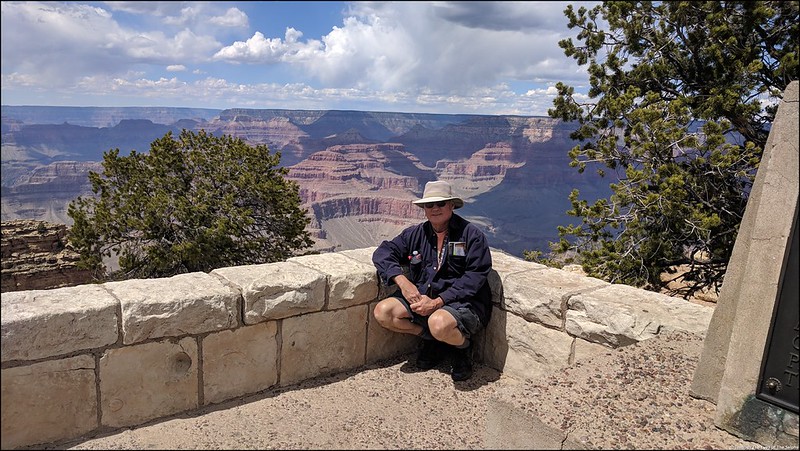
Another day we took the bus to several popular viewpoints. It was easy to hop on and off the buses since we knew another one would be along in 10 to 15 minutes. IMG_20190426_140555IMG_20190426_14355420190426_14445200006IMG_00006_BURST20190426134308One stop was Powell Point where there is a large granite memorial to Major John Wesley Powell. In 1869 Powell led one of the first documented explorations down the Colorado River through the Grand Canyon. He led another exploration in 1872. 20190426_133916IMG_20190426_134050IMG_20190426_134020

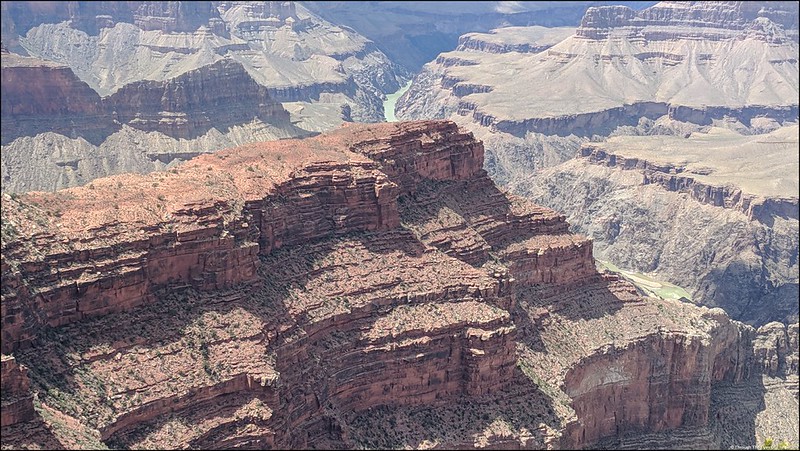
We also stopped at Hopi Point, Mohave Point and Pima Point, all with amazing views. Do you see the trails and Colorado River in the pictures? IMG_20190426_135833IMG_20190426_144010IMG_20190426_135933IMG_20190426_135925IMG_20190426_143957

We loved our five days in Grand Canyon National Park and can’t wait to go back. IMG_20190424_135142

Next up: We are currently in Show Low in the White Mountains of northeastern Arizona for the month of May.

Grand Canyon NP South Rim, part 1, APR 24, 2019

The week after Easter we visited the South Rim of Grand Canyon National Park for five days. 20190422_125006We didn’t realize it when we made the reservation, but the week before and the week after Easter are very busy in the park. We knew that to be true by the long line of cars waiting at the entrance gate to enter the park. We last visited Grand Canyon in 2015 and this time we stayed at the same campground inside the park. I was delighted to see elk roaming free throughout the campground, just like last time. 20190422_170133IMG_20190422_172348These Rocky Mountain elk were brought to the park from 1913-1928 from Yellowstone National Park. They appear to be tame and unafraid of people or cars. Regardless of how tame they are, we obeyed the rules and kept our distance and didn’t feed them. 20190422_174618

We couldn’t wait to get to popular Mather Point for our first view of the Canyon. One of the Seven Wonders of the World, there are no words to adequately describe the Grand Canyon. Amazing, vast, awe inspiring, beautiful are words that do not do it justice. It is hard to comprehend that the Colorado River carved this magnificent canyon. IMG_20190425_145521The canyon is 277 miles long, four to 18 miles in width and one mile deep. IMG_20190423_143350IMG_20190423_14352620190423_143536IMG_20190423_144807

The Colorado River flows below at an average speed of four miles per hour. The river averages 300 feet wide and 100 feet deep. It flows through the Canyon and eventually empties into the Gulf of California in Mexico. From the rim of the Canyon the Colorado River is small and hard to see. However there are whitewater areas that make rafting on the river challenging and dangerous. The depth of the Canyon erodes about the width of a sheet of paper each year, so the Canyon is continually changing. IMG_20190425_132216

The Grand Canyon became a national park in 1919 so this is the 100th anniversary of the 1.2 million acre park. 20190423_152136Recently there have been three deaths in the park due to people falling to their death. The day after we arrived we heard a 70 year old woman fell to her death. Some people ask why the park rangers can’t do more to prevent this from happening. The park is huge and with over six million visitors a year, there is no way the park service can prevent accidents from happening. There are warnings everywhere about not getting close to the edge. The Grand Canyon can be a dangerous place and people have to accept responsibility for their actions. In the five days we were there we observed people doing crazy, dangerous things. And in all cases it was because of picture taking. A few times I had to walk away for fear of seeing a tragedy I wouldn’t be able to forget. No picture is worth risking your life. IMG_20190423_145040

Most of the areas of the park can be reached by their free shuttle buses. But Desert View Watchtower has to be driven to by car. So one day we made the 25 mile trip to the eastern most developed section of the park to see the tower and the beautiful views of the Canyon. The four story 70 foot stone tower was built in 1932 and designed by architect Mary Elizabeth Jane Colter. 20190425_120815IMG_20190425_121119-EFFECTSIMG_20190425_121654IMG_20190425_121627-PANO

We climbed to one of the lookout points in the tower and then had a picnic lunch. 20190425_12331420190425_124825

We really enjoyed the drive there and back because there are scenic viewpoints along the way. As we started home, heavy clouds began to form which can dramatically change the lighting and appearance of the Canyon. No two days there are the same. IMG_20190425_131343-EFFECTSIMG_20190425_132228IMG_20190425_140634

Next up: part two of our visit to Grand Canyon National Park

Boulder City, NV APR 12, 2019

Leaving Lake Havasu City we drove to Boulder City, Utah for a six night stay. Boulder City (pop 15,600) is a lovely city which was built in 1931 to house workers contracted to build Hoover Dam, formerly called Boulder Dam. 20190413_150655Previously, men who hoped to work on the Dam were living with their families in tents and shacks on land chosen as the site of the Dam. The town was built by the Bureau of Reclamation as the “Boulder Canyon Project Federal Reservation”.  Federal rangers maintained law and order on the “reservation”. Boulder City is very rare in that it was fully planned under government supervision. The town was designed to house around 5,000 workers and the status of the workers was reflected by the size and location of their house. Commercial development was restricted and severely limited by a stern, iron fisted city manager. There was no provision for schools at first because it was assumed only single men would be working on the Dam. No hospital was built for years with injured workers taken to nearby Las Vegas. When a hospital was eventually built, it was a number of years before females were allowed to be admitted.  Visitors to Boulder City had to go through a gatehouse, and gambling was prohibited. Today, Boulder City is one of only two Nevada cities which prohibit gambling. Alcohol was prohibited until 1969. Las Vegas had campaigned to have the workers housed in Las Vegas but because of its rowdy, risqué reputation, it was passed over in favor of Boulder City. Today Boulder City is very proud of its nickname “Home of Hoover Dam”. The federal government gave up control of Boulder City in 1959 when it was incorporated.

We visited the Boulder City-Hoover Dam Museum located inside the historic Boulder Dam Hotel. The hotel, built in 1933, is on the National Register of Historic Places. 20190413_150536

In the 1930’s and 1940’s the hotel was the accommodation for Shirley Temple, Betts Davis, Howard Hughes, Will Rogers, Boris Karloff and other celebrities who came to see the Dam being built. The museum had an excellent movie and exhibits on life in Boulder City in the 1930’s as well as the construction of the Dam.  Working conditions were hard and treacherous to say the least. Because of a fine of $3,000 for every day the construction ran over deadline, the men were pushed to the limit and often competitions were used to push the men even harder. 20190413_13514720190413_135544Occurring in the days immediately after the Great Depression, men were afraid to complain of unbearable heat and working conditions for fear of being fired. Only American citizens could work on the Dam which essentially meant whites only. In 1932 only a few African Americans were hired but were not allowed to live in Boulder City. This changed after Franklin Roosevelt was elected.20190413_13512820190413_13502320190413_135556IMG_20190413_14030020190413_134902

We enjoyed walking around the town doing some geocaching. Evidence of the town’s history was everywhere. 20190413_150356

IMG_20190413_144457

34 Ton Water Runner Converts Water Power To One Generator

One day we drove to the nearby Lake Mead National Recreation Area. This is the nation’s first national recreation area and the largest reservoir in the country. It was formed by the Hoover Dam in 1935 and provides water to twenty million people and farmland in Arizona, California and Nevada as well as some to Mexico. The Lake has not reached full capacity since 1983 due to water demands and drought. In August, 2017 it was only at 40%.

Our main reason for going there was to hike the Historic Railroad Trail. IMG_20190415_122735This trail is a portion of the former railroad route that carried supplies from Boulder City to Hoover Dam during construction of the Dam. The trail is no longer a railroad but has been replaced with crushed rock. Along the trail are panoramic views of Lake Mead. 20190415_123839Hikers pass through five tunnels approximately 300 feet in length and 25 feet in diameter. The trail can take you all the way to Hoover Dam but on this day we had to stop at tunnel three because the tunnel was closed due to unstable conditions. Since it was a hot sunny day with no shade on the trail, we were okay with turning around at that point. We had walked 10,000 steps by the time we returned to the car. 20190415_12590020190415_123435IMG_20190415_123702

We then drove to Hoover Dam. Back in Jan, 2015 we visited Hoover Dam and took a tour of the facility. This time we wanted to stop at the visitor area at the Mike O’Callaghan-Pat Tillman Memorial Bridge which is the first concrete-steel composite bridge in the United States and the widest concrete arch in the Western Hemisphere. IMG_20190415_141507At 880 feet above the Colorado River it is the second highest bridge in the United States and the world’s highest concrete arch bridge. IMG_20190415_142635IMG_20190415_143317IMG_20190415_143255The bridge connects Arizona and Nevada.  The visitor’s area, in Nevada was super busy with limited parking. I did the musical chairs game with all the other cars trying to find a parking spot. In the meantime Bill walked up the steep trail to the top of the Bridge. It was a very windy day and when he walked out onto the bridge he took his sunglasses off because he was afraid they would blow off his face! IMG_20190415_142510IMG_20190415_142145He took some great shots of Hoover Dam from the top of the bridge. IMG_20190415_142156

We then drove from Nevada over the dam to the Arizona side to have another look at this marvelous structure.

IMG_20190415_145237

Hoover Dam from the Arizona Side With Memorial Bridge in the Distance

Another day we hiked around the Nature Discovery Trail and Rock Garden. We loved the beautiful rocks, desert flora and giant statues of desert animals. Plaques gave interesting facts about the animals and flora. Did you know jackrabbits can run up to forty miles an hour or that the roadrunner can survive its entire life without drinking water but receives moisture from its prey? 20190413_15225920190413_15273720190413_15262620190413_153051

We finished the day by finding a geocache at the Nevada State Railroad Museum. We not only found a geocache but some great old trains too. IMG_20190413_155028

Railway Post Offices (RPO) were used to transport and sort mail using the hanging mail bag system. RPO were started in the 1830’s and ended in 1950’s. IMG_20190413_160306IMG_20190413_160526IMG_20190413_160534

We had a wonderful time in Boulder City.

Here is the link to our previous visit to Hoover Dam where we took the inside tour January 27, 2015 Boulder City, Nevada

Next up : Valley of Fire State Park, Nevada

Catching Up & Lake Havasu, AZ Apr 8, 2019

Yes, it has been a long time since our last blog posting. We spent the winter in Yuma, AZ, one of our favorite winter destinations. It was cooler with more rain than past winters there, but still better than cold and snow.

IMG_20190323_062606-EFFECTS

A Saturday Sunrise In Yuma AZ

In February we took a two week break from Yuma and attended the amateur radio Quartzsfest in Quartzsite, AZ. This year the amateur radio gathering broke a record with over one thousand people attending. Bill spent the time at seminars on all things related to amateur radio and we both attended the daily happy hour gathering where hundreds of prizes were given away. We didn’t win anything but the daily anticipation of possibly winning was fun. 20190120_135137IMG_20190126_140210

March found us back in Yuma and Bill helped out with the three day Yuma Amateur Radio Hamfest. One day was cool and rainy and unfortunately that was the day Bill had to be outside all day helping park RVs attending the event.

IMG_20190216_175234

Waiting To Win A Super Radio At Yuma Hamfest

By the end of March there was a mass exodus of snowbirds since Yuma was getting way too hot. It was time to move on with our spring travels.

First stop was Lake Havasu City, best known for their London Bridge and water sports. Lake Havasu is a large reservoir formed by Parker Dam and provides lots of opportunities for boating and fishing. The city website advertises 400 miles of coastline, 300 days of sunshine and 60 miles of navigable waterways.IMG_20190410_160048

In 1968 Businessman Robert McCulloch bought the London Bridge from England for $2.5 million. The bridge was being replaced in England and McCulloch hoped bringing the London Bridge to Lake Havasu City would attract tourists and encourage people to select the city as their home. The Bridge was disassembled and shipped stone by stone for another $7 million and it took three years to complete putting it back together. The Lake Havasu City website says it is the second largest tourist attraction in Arizona after the Grand Canyon. I question whether that is really true. IMG_20190410_155700IMG_20190410_155721

One day we rode over to see Parker Dam located on the Colorado River, 155 miles downstream from Hoover Dam. Parker Dam is known as the deepest dam in the world. Engineers digging for bedrock to build the dam upon had to excavate very deep beneath the Colorado River. 73% of Parker Dam’s 320 foot structural height is not visible. IMG_20190408_113606IMG_20190408_114125IMG_20190408_114135IMG_20190408_114717(1)IMG_20190408_114717

Construction began in 1934 and was completed in 1938.  Located on the border of Arizona and California, arguments over water rights began almost immediately with the Arizona Governor calling out the National Guard in 1934 to take possession of the land around the dam site. He was angry that water stored behind the Dam was going to be pumped to California. Continuing arguments and litigation stopped construction at times and contributed to the long completion time.

We drove across the Dam into California and looked for the burros that were supposed to roam freely along the roadway. We saw many signs cautioning us to watch for them but had a very difficult time finding any. IMG_20190408_114554IMG_20190408_130432IMG_20190408_125244

We saw evidence of them by the burro poop on and alongside the road. It was a very hot day and we decided they were resting in the shady trees out of sight. Someone decorated this large rock to appear like a alien head. IMG_20190408_121827

We turned around and headed home and suddenly Bill spotted several burros yards from the roadway. Seeing the Dam and the burros made for a fun day. IMG_20190408_123002

The Colorado River is enjoyed by all. IMG_20190408_131921

Next stop: Boulder City, home of Hoover Dam

UPDATED: Petaluma, CA OCT 6, 2018

In the last blog post we left off with the dilemma of a screw in one of our four back tires. Since it was inadvisable to continue down the coastal road, we were headed from California SR 1 to US 101 in the hope of making it to a tire repair center before the tire went flat. We sure didn’t want a blow out on one of the narrow curvy and coastal steep roads.

I drove the car and we started out slowly with Bill listening for any beeps on the tire monitor system signaling a problem. We backtracked on SR 1 to SR 128. So far, so good. Then came SR 253 which was recommended for us to take to US 101. The southern end of SR 128 is also not advised for large vehicles.  Highway SR 253 was the scariest drive of the day with descents of 8% and 10% grades. Really steep, but at least they were not uphill. Not good on the best of days and downright nerve wracking with a potential tire problem. Reaching US 101 never felt so good.

When we had a good phone signal Bill was on the phone with several tire companies. Of course none of them had the RV tire in stock and certainly would not recommend removing the screw without a tire to replace it. We continued on, and after almost six hours of driving with rest stops and lunch we arrived at the Petaluma Elks Lodge, a wonderful lodge with full hookups. Jeff, the friendly camp host, was extremely helpful in getting us set up there. Amazingly the tire had not lost air even though Bill noticed a disturbing crack in the tire in addition to the screw.  We were definitely blessed to have made it safely. We knew we would have to wait it out until at least Monday.

On Sunday Bill went to sit in on a taping of TWIT (This Week In Tech), one of his favorite tech podcasts which is taped right in a studio in Petaluma. We were last in Petaluma in 2014 and he also sat in on a taping then. After a stressful day on Saturday, he certainly enjoyed the diversion and had lots of fun. IMG_20181007_142830aIMG_20181007_153507IMG_20181007_140107IMG_20181007_172924

Back on the phone Monday morning Bill found a tire company who could order us the tire. And since the tires were over five years old with almost 44,000 miles on them, we decided to replace all four back tires. We had replaced the two front tires last year. A definite bright spot was the screw was not in one of our new tires.

The tires came in on Wednesday and that day was spent getting the new tires installed and then settling back in at the Elks Lodge.

Before the tire drama our original plan was to stay at a RV park in Pacifica outside of San Francisco for four days. With the delay for the tires to be ordered and installed, we had to cancel our Pacifica plans. I explained the tire situation to the lady at Pacifica and she graciously refunded all our money since we had prepaid the full amount. We were disappointed but we had visited San Francisco in 2014 and done all the touristy things including riding the cable cars, visiting Pier 39 and Alcatraz and driving on Lombard Street, aka “The Crookedest Street in the World”. Over the past couple weeks we have been watching the San Francisco local news. While it is without a doubt located in a beautiful area, it definitely appears to be a city in crisis. With garbage in the streets, rising crime rate (especially car break-ins) , homeless population as well as drug use, it is a city in deep trouble.

One thing we had looked forward to doing again was walking on the beautiful Golden Gate Bridge. Since Petaluma was a 35 minute drive to the north end of the 1.7 mile long Bridge, we decided to drive there on Thursday. We drove to the north vista point and parked the car in a free visitor parking area. We were nervous about leaving the car because of all the news reports of recent break-ins in broad daylight throughout the San Francisco area.  Signs in the parking lot warned of break-ins. From there it was a quick walk to the Bridge. IMG_20181011_135628IMG_4307IMG_431520181011_142525

IMG_4345

Alcatraz Island

We walked to the halfway point, enjoying the spectacular views of San Francisco, Alcatraz and the San Francisco Bay.  There were lots of tourists walking and bike riding on the Bridge. IMG_4330IMG_4342IMG_4339IMG_20181011_150326IMG_4334 In the water we saw sea lions, including this one with a big fish in his mouth. Several sea gulls were diving down fighting him for the fish. IMG_4357IMG_4393IMG_4395 On the other side of the Bridge we could see the Pacific Ocean and a viewpoint which we later drove to with the most magnificent views of the Bridge and city. 

IMG_4346

Looking toward the bridge viewpoint

IMG_4396IMG_20181011_155935 As World War II approached, the Army made further improvements to the Harbor Defenses of San Francisco. They had plans to install a 16-inch gun high on the hill but when the gun arrived the decision was made to abandon the plan. Thus leaving this concrete mount and tunnels. IMG_4404 It had been an easy quick 35 minute drive to the Bridge that morning but later that afternoon it was a slow stop and go, hour and fifteen minute drive back home.

After getting new tires we were ready to get back on the road and continue our travels. While heavy traffic doesn’t bother Bill, I wasn’t looking forward to the drive around San Francisco and through San Jose. We had three route options and after asking for advice from locals we chose the route which took us furthest around San Francisco rather than over the Golden Gate Bridge or through the bay area. Leaving the Elks Lodge we meandered through some vineyards and eventually on the interstate. 20181012_095229 The worst traffic was around Walnut Creek. We continued around the bay to San Jose, the center of the Silicon Valley. All in all the traffic wasn’t nearly as bad as I had feared. 20181012_113350 We reached Morgan Hill and were almost at our campground destination when we were stopped by a sign saying the road had a bridge ahead which was restricted to traffic under seven tons. Oops! I called the campground to get their advice only to have no one answer at either number. Not willing to take a chance, we had to find an alternate route nineteen miles out of our way and many narrow passages. When we arrived at the campground and asked about the bridge restriction they told us that was just something the locals put up to keep big trucks off the road. Grrrrr…..

We are now safely at Morgan Hill, California for four days.

Next up:  Back to the coast

Petaluma, CA OCT 6, 2018

In the last blog post we left off with the dilemma of a screw in one of our four back tires. Since it was inadvisable to continue down the coastal road, we were headed from California SR 1 to US 101 in the hope of making it to a tire repair center before the tire went flat. We sure didn’t want a blow out on one of the narrow curvy and coastal steep roads. I drove the car and we started out slowly with Bill listening for any beeps on the tire monitor system signaling a problem. We backtracked on SR 1 to SR 128. So far, so good. Then came SR 253 which was recommended for us to take to US 101. The southern end of SR 128 is also inadvised for large vehicles.  Highway SR 253 was the scariest drive of the day with descents of 8% and 10% grades. Really steep, but at least they were not uphill. Not good on the best of days and downright nerve wracking with a potential tire problem. Reaching US 101 never felt so good. When we had a good phone signal Bill was on the phone with several tire companies. Of course none of them had the RV tire in stock and certainly would not recommend removing the screw without a tire to replace it. We continued on, and after almost six hours of driving with rest stops and lunch we arrived at the Petaluma Elks Lodge, a wonderful lodge with full hookups. Jeff, the friendly camp host, was extremely helpful in getting us set up there. Amazingly the tire had not lost air even though Bill noticed a disturbing crack in the tire in addition to the screw.  We were definitely blessed to have made it safely. We knew we would have to wait it out until at least Monday.

On Sunday Bill went to sit in on a taping of TWIT (This Week In Tech), one of his favorite tech podcasts which is taped right in a studio in Petaluma. We were last in Petaluma in 2014 and he also sat in on a taping then. After a stressful day on Saturday, he certainly enjoyed the diversion and had lots of fun.

Back on the phone Monday morning Bill found a tire company who could order us the tire. And since the tires were over five years old with almost 44,000 miles on them, we decided to replace all four back tires. We had replaced the two front tires last year. A definite bright spot was the screw was not in one of our new tires.

The tires came in on Wednesday and that day was spent getting the new tires installed and then settling back in at the Elks Lodge.

Before the tire drama our original plan was to stay at a RV park in Pacifica outside of San Francisco for four days. With the delay for the tires to be ordered and installed, we had to cancel our Pacifica plans. I explained the tire situation to the lady at Pacifica and she graciously refunded all our money since we had prepaid the full amount. We were disappointed but we had visited San Francisco in 2014 and done all the touristy things including riding the cable cars, visiting Pier 39 and Alcatraz and driving on Lombard Street, aka “The Crookedest Street in the World”. Over the past couple weeks we have been watching the San Francisco local news. While it is without a doubt located in a beautiful area, it definitely appears to be a city in crisis. With garbage in the streets, rising crime rate (especially car break-ins) , homeless population as well as drug use, it is a city in deep trouble.

One thing we had looked forward to doing again was walking on the beautiful Golden Gate Bridge. Since Petaluma was a 35 minute drive to the north end of the 1.7 mile long Bridge, we decided to drive there on Thursday. We drove to the north vista point and parked the car in a free visitor parking area. We were nervous about leaving the car because of all the news reports of recent break-ins in broad daylight throughout the San Francisco area.  Signs in the parking lot warned of break-ins. From there it was a quick walk to the Bridge. IMG_20181011_135628IMG_4307IMG_431520181011_142525

IMG_4345

Alcatraz Island

We walked to the halfway point, enjoying the spectacular views of San Francisco, Alcatraz and the San Francisco Bay.  There were lots of tourists walking and bike riding on the Bridge. IMG_4330IMG_4342IMG_4339IMG_20181011_150326IMG_4334

In the water we saw sea lions, including this one with a big fish in his mouth. Several sea gulls were diving down fighting him for the fish. IMG_4357IMG_4393IMG_4395

On the other side of the Bridge we could see the Pacific Ocean and a viewpoint which we later drove to with the most magnificent views of the Bridge and city. 

IMG_4346

Looking toward the bridge viewpoint

IMG_4396IMG_20181011_155935
As World War II approached, the Army made further improvements to the Harbor Defenses of San Francisco. They had plans to install a 16-inch gun high on the hill but when the gun arrived the decision was made to abandon the plan. Thus leaving this concrete mount and tunnels.
IMG_4404

It had been an easy quick 35 minute drive to the Bridge that morning but later that afternoon it was a slow stop and go, hour and fifteen minute drive back home.

After getting new tires we were ready to get back on the road and continue our travels. While heavy traffic doesn’t bother Bill, I wasn’t looking forward to the drive around San Francisco and through San Jose. We had three route options and after asking for advice from locals we chose the route which took us furthest around San Francisco rather than over the Golden Gate Bridge or through the bay area. Leaving the Elks Lodge we meandered through some vineyards and eventually on the interstate. 20181012_095229

The worst traffic was around Walnut Creek. We continued around the bay to San Jose, the center of the Silicon Valley. All in all the traffic wasn’t nearly as bad as I had feared. 20181012_113350

We reached Morgan Hill and were almost at our campground destination when we were stopped by a sign saying the road had a bridge ahead which was restricted to traffic under seven tons. Oops! I called the campground to get their advice only to have no one answer at either number. Not willing to take a chance, we had to find an alternate route nineteen miles out of our way and many narrow passages. When we arrived at the campground and asked about the bridge restriction they told us that was just something the locals put up to keep big trucks off the road. Grrrrr…..

We are now safely at Morgan Hill, California for four days.

Next up:  Back to the coast