Category Archives: Historic Landmark

Historic Landmark

Oct 21, 2016 Stone Mountain, GA

After our short stay in Hendersonville NC we headed south. On the way both to and from Hendersonville we passed the Eastern Continental Divide which separates the waters flowing to the Atlantic Ocean from those flowing to the Gulf of Mexico. The divide runs from Pennsylvania to Florida. It crosses Virginia from Carroll County at the North Carolina line to Giles County at the West Virginia border. Rainwater in southwestern Virginia flows to the Gulf of Mexico. Before 1760 it was the boundary between British and French colonial possessions in North America. It was also the line separating the Thirteen Colonies from the west. Sure didn’t know this until I saw the sign and looked it up!
We passed through South Carolina, which had the cheapest gas, and endured gusty winds and a major Friday afternoon traffic jam outside of Atlanta. We were glad when we reached our destination, the Stone Mountain RV Park.
Stone Mountain is an exposed quartz monzonite dome rock 825 feet tall and more than five miles in circumference at its base. It was formed during the formation of the Blue Ridge Mountains around 300-350 million years ago. Stone Mountain continues underground for nine miles at its longest point.

On the north face of the rock is an enormous rock relief carving of three Confederate figures: Stonewall Jackson, Robert E. Lee, and Jefferson Davis. It is the largest “bas-relief” in the world, larger than Mount Rushmore!!20161022_194316
Stone Mountain is surrounded by a family oriented theme park. We were not too attracted to the touristy stuff but did spend a morning riding the train on the five mile scenic loop around the park and then took the Summit Skyride. 20161023_12164320161023_13202220161023_131126The Skyride is a high speed cable car which carries visitors to the top of Stone Mountain. As we rode up we had a nice view of the Confederate carving. 20161023_130904At the top we walked around and enjoyed the beautiful views of the Appalachian Mountains and the Atlanta skyline.  It is only a few miles east of downtown Atlanta.20161023_13242520161023_132737
On Saturday evening they had the last laser show of the season. It was very chilly and we had to really bundle up for the 45 minute nighttime show. With videos and high-powered lasers the mountain became a nighttime canvas. With the last laser show completed they began preparations for their Snow Festival season.  20161022_205344IMG_1413IMG_1415IMG_141720161022_20534620161022_205416There were already snow machines making snow and snowflakes hanging from light posts.20161023_114139

Sunday we drove into Atlanta to see the capitol building and visit the Jimmy Carter Presidential Library and Museum.

The capitol is modeled after the U.S. capitol building. The roof is covered with gold leaf mined in northern Georgia.20161023_171008
In keeping with our goal to visit as many presidential museums as possible, we toured the Jimmy Carter Presidential Museum. 20161023_145748We began with a short film and then proceeded through several galleries beginning with his early life, navy career, political life as governor and president including a reproduction of the Oval Office, and concluding with his life today. 20161023_16092820161023_16095020161023_162008These days he spends a lot of time at the Carter Center, even maintaining an apartment there. The Carter Center, founded in 1982, is a nongovernmental, not for profit organization in partnership with Emory University. The Carter Center works to advance human rights and alleviate human suffering.20161023_162748

We saw this picture of President Carter and noticed how it is made from smaller images to produce the contrast and contours.20161023_162810

Notice here how his head is made from the fifty state flags.

In 2002, President Carter received the Nobel Peace Prize for his work through the Carter Center.20161023_16365720161023_16364720161023_163435

We enjoyed visiting the Carter Presidential Library and Museum and found it was very well done.

I had to laugh at a sign on the door saying “Worst President”. A closer look showed they were advertising a lecture by a guest author who wrote a book on who he thinks was the worst president: James Buchanan.20161023_164126

Oct 16, 2016 Waxhaw, NC

We left the charming town of Mt Airy, the hometown of Andy Griffith and headed south. Just as an observation, once we crossed the Mason Dixon line from Pennsylvania into Maryland the people became friendlier, the food better and the gas cheaper. Just the way it is in the south, folks!
Our next stop was Waxhaw, NC, just south of Charlotte. We stayed at Cane Creek Campground, a county owned park, and even though leveling the RV and getting satellite tv was a challenge, Bill worked his magic and got it done.
Bill’s sister Janet lives in Waxhaw and we enjoyed getting together with Janet and her husband Bryon for brunch. Waxhaw is just north of the North Carolina/South Carolina border and we passed back and forth from one state to the other on our way to meet them.20161016_125851
On the way back we stopped at a cornerstone border rock which designates the border of North and South Carolina. There seems to be a discrepancy between the date of 1818 on the rock and 1813 on a nearby sign.20161016_14213620161016_142349
We also stopped at the birthplace in South Carolina of our 7th President, Andrew Jackson. Both North and South Carolina want to take credit for his birthplace because at the time of his birth in 1767, the border between North and South Carolina was unmarked. Today the site is in South Carolina.20161016_13534420161016_14015620161016_140313 During the Revolutionary War Jackson was captured by the British at age 13 and mistreated. He was an orphan at the age of 14. In 1806 he killed a man in a duel over the honor of his wife Rachel. When he ran for president in 1824 he failed to get a majority and it went to the House of Representatives. The House of Representatives gave the presidency to John Quincy Adams. Jackson claimed corruption between Adams and the Speaker of the House Henry Clay, when Clay was appointed Secretary of State under Adams. Jackson’s supporters founded the Democratic Party. He ran again in 1828 against Adams and won by a landslide.20161016_140536
Also while in Waxhaw we drove a few miles north to Matthews, NC where we met up with three cousins I had not seen in over fifty years. Yes, I said fifty years. We had a lovely dinner at my cousin Tammy’s home and celebrated several October birthdays. We promised not to wait another fifty years to meet again!20161016_18183020161016_193420
Quotes by Andrew Jackson:

  • “It is to be regretted that the rich and powerful too often bend the acts of government to their own selfish purposes.”
  • “Take time to deliberate; but when the time for action arrives, stop thinking and go in.”
  • “One man with courage makes a majority.”

Here are some of the displays about President Jackson presidency.20161016_14060620161016_14061120161016_14061720161016_140623

Oct 10, 2016 Staunton, Virginia

20161010_145704As we traveled south we passed through the beautiful Shenandoah Valley and stopped for a few nights in the area. In keeping with our quest to visit as many Presidential Libraries as possible, we toured the Woodrow Wilson Presidential Library and Museum in Staunton, Virginia. Nearby was Woodrow Wilson’s birthplace where he was born in 1856, the son of a Presbyterian minister.20161010_14574720161010_150200

There is a nice museum detailing Wilson’s presidency.  In the basement of the museum is a recreated Great War (first World War) bunker.20161010_15124520161010_151340
Wilson was our 28th President, serving from 1913-1921, the first Southerner elected president since Zachary Taylor in 1848. Wilson was seen as a leader of the Progressive Movement. He reintroduced the State of the Union address which hadn’t been done since 1801. During his time as President he oversaw the passage of progressive legislative policies including the Federal Reserve, Federal Trade Commission, Clayton Antitrust Act, and the Federal Farm Loan. His Revenue Act of 1913 introduced the federal income tax. Wilson favored an international policy of neutrality which some blamed for later causing us to enter into the Great War. Woodrow Wilson won a second term as President, the first Democrat since Andrew Jackson to win two consecutive terms. His second term was dominated by the United States entry into World War I in 1917. He loaned billions of dollars to Britain, France and other Allies, raising income taxes and borrowing billions of dollars through the public purchase of Liberty Bonds. In 1918 he endorsed the 19th Amendment which was ratified in 1920, giving women the right to vote. Like all Southern Democrats at that time, he supported segregation. He pushed for a League of Nations and was in favor of the Treaty of Versailles. The treaty was opposed by Republicans and while promoting the treaty he suffered a severe stroke and the treaty was rejected by the Senate. It is said that Wilson’s Presbyterian background infused morality into his international affairs, leading to what is known as “Wilsonian”, an activist foreign policy calling for the promotion of global democracy. Because of his work on forming the League of Nations, he was awarded the 1919 Nobel Peace Prize. After his stroke, many say that his second wife, Edith, ran the White House and made many major administrative decisions. Wilson was initially against equal rights for women and some say it was Edith who actually had the 19th Amendment passed. His illness was kept from the public, but once it became known, concern was expressed about his fitness to serve as President. This led to the 25th Amendment which details the succession to the presidency in case of illness.
Prohibition also began in 1920 during Wilson’s presidency.20161010_155737

Also in the museum is Wilson’s 1919 Pierce-Arrow car. The car was part of the Presidential fleet and when he left office his friends purchased it for him.
After his presidency ended, he and Mrs. Wilson lived in Washington D.C. until his death in 1924 at the age of 67. Mrs. Wilson lived another 37 years, dying in 1961 at the age of 89.20161010_150239
We enjoyed our very short time in Virginia visiting family and friends. With temperatures going down to 36 degrees at night, we hurried towards our next stop in North Carolina.

Oct 1, 2016 Gettysburg, PA

Our last stop in Pennsylvania was at Gettysburg Farm – Thousand Trails about thirty minutes from the Gettysburg Battlefield.  This campground is a charming working farm and we were delighted to interact with some of the friendly farm animals.  They anticipated being fed and would come running when they saw people.20161001_14003920161001_14005520161001_14004320161001_14011820161005_16252920161005_16232920161005_16241820161005_16245020161005_162458
20161004_154229We were last at Gettysburg in 2010 for a long weekend.  At that time we did an extensive tour of the battlefield using an auto driving tour.  So on this trip we were interested in seeing the Eisenhower National Historic Site.  Dwight and Mamie only owned one home, the Gettysburg Farm they purchased in 1950 at the end of his thirty year military career; he rose to the rank of five star general.  20161004_141319During his two terms as our 34th president they used the farm as a weekend retreat.  World leaders and dignitaries from around the world visited them where President Eisenhower used the laid back charm of the property to encourage friendly talks.  During Eisenhower’s heart attack in 1955 the farm served as a temporary White House.  When President and Mrs. Eisenhower left the White House in 1961, it became their retirement home where the President enjoyed painting and raising Angus cattle.  They gave their home to the federal government in 1967 with the understanding that they both be allowed to live there until their deaths.
After buying tickets at the Gettysburg Visitors Center we rode a bus for the fifteen minute trip to the farm where a guide met us for part of the tour.20161004_141858  The view from the farm was absolutely beautiful.  We saw the helicopter landing field where dignitaries would land and be greeted by Eisenhower in his golf cart.  He would take his guests for a ride around the farm to “break the ice” before heading to the house.20161004_13213420161004_13323720161004_135717
The house today is much like it was when the Eisenhowers lived here, and Angus cattle still graze in the fields.  The house has eight bedrooms and nine bathrooms and Mamie’s favorite color, pink, is throughout the house.  Even though the house has many bedrooms and baths, it did not feel that large and had a modest look. Most of the furnishings are original and the living room showcases the many gifts received by the Eisenhowers in the White House.  At that time of the 34th President, gifts received while president could be kept.  20161004_13351320161004_13345920161004_133530The Eisenhowers spent little time in the living room, preferring to stay on the porch, his favorite room where they watched TV and Eisenhower pursued his hobby of oil painting.  It is in this relaxed homey room that he entertained Khrushchev and De Galle.20161004_134223
The farm also includes a Secret Service Office, a guest house, a small putting green, an 1887 barn, several farming sheds, a cattle show barn and a garage with his presidential limousine, a station wagon he drove around Gettysburg, and several golf carts including the Surrey With the Fringe on Top golf cart he used to show guests around the farm.
One funny story is Eisenhower was always chauffeured around during his military career and presidency.  He did not get a driver’s license until the age of 70 after he retired.  Evidently he was not a very good driver.  Before he and Mrs. Eisenhower would leave to have dinner at their favorite restaurant in Gettysburg, he would call the restaurant owner and have him go outside and block off several parking spaces in front of the restaurant so the President would not have trouble parking.
President Eisenhower died in 1969 and Mamie continued to live at the farm until her death in 1979 at the age of 82.  They are both buried at the Eisenhower Presidential Library in Abilene, Kansas.
20161004_16193720161004_16212120161004_163453After completing our tour of the Eisenhower Farm, we did spend the rest of the afternoon driving around some of the 24 miles of the Gettysburg Battlefield. It is such a beautiful, peaceful place that it is hard to comprehend the suffering and agony that occurred on this hallowed ground. The battle began on July 1, 1863, continued for three days, and the casualties were high. On July 3rd, Confederate General Robert E. Lee lost over 5,000 soldiers in ONE HOUR. When both armies marched away from Gettysburg, over 51,000 soldiers were dead, wounded or missing. 20161004_15461520161004_15472520161004_165404More men died during the Battle of Gettysburg than in any other battle on American soil before or since. At first the soldiers were buried in hastily dug graves, or not at all. Four months after the battle, re-interment began on seventeen acres that became known as Soldiers’ National Cemetery. On November 19, 1863 President Abraham Lincoln traveled to Gettysburg for dedication of the Soldiers’ National Cemetery. There he gave a speech which became known as the Gettysburg Address.20161004_15023020161004_150336

The nights are getting cooler and we are anxious to head south!

Sept 19, 2016 Warren, PA

With the autumn chill beginning to nip at our heels, we left western New York and headed south to Pennsylvania. We passed farmland and fields preparing the fall harvest. We arrived in western Pennsylvania for a 4 night stay at Buckaloons Recreation Area in the Allegheny National Forest outside of Warren. The French were here in 1749.20160920_105028
20160920_113625On Tuesday we drove twenty miles north to Jamestown, New York right over the Pennsylvania border. I had been looking forward to this all summer because Jamestown is the birthplace of my favorite television personality of all time, Lucille Ball. For as far back in time as I can remember, I have loved Lucy! In Jamestown is Desilu Studios, a re-creation of the studio soundstage  where “I Love Lucy” was filmed. In a separate building is the Lucy-Desi Museum detailing the lives and careers of Lucy (‎Lucille Désirée Ball) and Desi (Desiderio Alberto Arnaz y de Acha III, better known as Desi Arnaz).
20160920_113641First we went to the Desilu Studios where they had re-creations of the living room and kitchen sets from “I Love Lucy” as well as the Hollywood hotel suite from the show. Memorabilia and costumes from the show were on display, along with information on Fred and Ethel (William Frawley and Vivian Vance).20160920_11464220160920_11491120160920_11514720160920_120814
20160920_124628The Lucy-Desi Museum had eight galleries with displays, gowns and costumes, photographs and personal memorabilia for both Lucy and Ricky, including Lucy’s 1972 gold Mercedes-Benz and her grade-school piano.
For twenty five years the town of Jamestown has had a Lucille Ball Comedy Festival, giving new comedians a stage to showcase their talent. Famous comedians have traveled to Jamestown to support the festival with their performances, including Joan Rivers, Jay Leno, Jerry Seinfeld, the Smothers Brothers, Bob Newhart and more than 100 others.20160920_13080020160920_11543820160920_11591620160920_130726
While in Jamestown we also drove by Lucy’s birthplace,20160920_150048

her childhood home in nearby Celeron,20160920_145146

and Lake View Cemetery where Lucy’s ashes are buried.20160920_153136

Lucy and Desi were married November 29, 1940.20160920_125542

Throughout the town are four Lucy murals.20160920_15531020160920_15473020160920_15452620160920_154339
20160921_18292520160921_14381920160921_16090120160921_16100720160921_16104420160921_163834On Wednesday we drove to Titusville, Pennsylvania to tour the Drake Well Museum. We were surprised to find another Titusville in the United States since we were familiar with Titusville, Florida. We discovered that Titusville, Pennsylvania is the birthplace of the American oil industry. In 1859 crude oil was found from the world’s first successful commercial well by Edwin L. Drake. Drake came to Titusville as an agent for the Seneca Oil Company. Oil naturally seeped along Oil Creek, but Drake and his driller, Uncle Billy Smith, adapted existing soft well technology and struck oil. This sweet crude oil (Pennsylvania Grade Crude Oil) is a type of petroleum with less than 0.42% sulfur. The Drake Well Museum has a comprehensive display of over 500 artifacts detailing the history of oil production in the United States. We watched a film called “The Valley That Changed the World” telling the story of oil discovery in Titusville.
On the museum grounds they had replicas of various buildings from the 1800’s as well as drilling rigs and derricks. In one building they had a full size replica of Edwin Drake’s engine house and derrick that encloses the famous well that struck oil in 1859. Also included were working reproductions of the wood-fired boiler and steam engine that Drake used to drill and pump oil. The museum guide turned on the engine to show us how it worked. We enjoyed talking with him about the history of Titusville. After Drake’s discovery of oil, people poured into the town to buy oil leases and work in the new businesses that sprang up. Churches, schools and banks were built and refineries grew throughout the region. Oil related machinery was designed and produced in Titusville.

Here is the how the steam-powered engine drilled then pumped the oil https://youtu.be/SlGsukrneLg

The town became known as “Queen City” because of its rich cultural opportunities including the first opera house in the area. Main Street was lined with beautiful mansions from money made by oil. Today those mansions still stand as evidence of the town’s past wealth, though the population and wealth has steadily declined over the years.20160921_18230420160921_182245

And this sign talked about how many men made money and then loss their money it also suggests that Lincoln may have lived.20160921_154056
The museum certainly exceeded our expectations and we easily spent a couple hours there touring the museum and grounds.

During the early years of oil drilling “torpedoes” were used to increase the yield. These torpedoes consisted of nitroglycerin dropped into the drill hole.  Nitroglycerin was carried by horse and wagon and then to motorized vehicles like this dodge truck.20160921_16442020160921_164332
John Heisman, for whom the Heisman Trophy is named, grew up in Titusville and played a rugby style version of football here in the 1880’s.20160921_151908
The next blog will continue our Pennsylvania travels.

Sept 11, 2016 Niagara Falls

Picturesque Seneca Falls exceeded our expectations and we would have stayed a couple more days but we had reservations at Four Mile Creek Campground about fifteen minutes from Niagara Falls.  It was an easy drive and as soon as we got settled in our campground we drove to nearby Fort Niagara.

20160911_15410920160911_160445Originally the fort belonged to the French and was built in 1726.  It was expanded to its current size in 1755 because of increased tensions between the French and English.  The fort played an important role in the French and Indian War and fell to the British in 1759 during the Battle of Fort Niagara.  It served as a British base during the Revolutionary War and was ceded to the United States in 1783 at the end of the war.  The British recaptured the fort during the War of 1812 and held it during the remainder of the war.  After the war ended they gave it back to the United States.  It is now known as Old Fort Niagara State Historic Site and is a National Historic Landmark.  It is said the fort is haunted by a French soldier who was beheaded there during a duel and he wanders the grounds looking for his head.  The paranormal claims have been investigated by the “Ghost Lab” on the Discovery Channel and on the Syfy series “Ghost Hunters” in 2011.20160911_15583320160911_15585020160911_160405

20160911_161513We also found a marker that indicates that WW II prisoners of war were kept here.

Our campground is located along Lake Ontario and we have a lovely view of the lake from our campsite.  On a clear day you can see the Toronto skyline across the water.20160911_15474920160911_154622
Of course our main reason for coming here was to see the mighty Niagara Falls.  Monday morning we left bright and early for the short drive to Niagara Falls State Park.  There is no charge to enter the park but you do have to pay $8.00 a day for parking.  Niagara Falls is America’s FIRST state park, established on July 15, 1885.  There are few words to describe the power and beauty of the majestic falls where 750,000 gallons of water PER SECOND flows over Niagara Falls. Today we visited the American side of the falls and can see across the water to Canada.  Our first stop was the Observation Tower which provided us with a view of both the American and Horseshoe Falls.20160912_09435620160912_09454120160912_095132

20160912_10043720160912_100347Next up was a ride on the boat, Maid of the Mist.  The boat takes you right to the base of Horseshoe Falls where it hovers for several minutes while we are sprayed with water and feel and hear the thunderous falls above us.  But first we have to pay admission where we are handed a poncho to wear before boarding the boat.  The ride was short but it was exciting to be that close to the bottom of the falls and we could only gaze in wonder.  It was hard to get pictures because it was so wet we had to place the camera in a plastic bag to keep it from being ruined.  Between the water and the heavy mist it was hard to get pictures but I think Bill did a great job as always.  In some of the pictures you can see the boat we road on down below. 20160912_10014020160912_10133520160912_10065220160912_132252

We walked on some stairs near where the boat let us out.

20160912_10291420160912_10292620160912_10372020160912_113223
Next we wanted to do Cave of the Winds, but first we had quite a long walk from one side of the park to another.  For those unable to walk there is a shuttle to take you around the park for a small fee.
The walk was a wonderful way to see the falls and park.  We walked across a pedestrian bridge onto Goat Island.  There we walked to the overlook to view Horseshoe Falls which is on the Canadian side. We walked past a memorial to Nikola Tesla, an idol of Bill’s. This is where the first hydroelectric power plant was made and used to provide electricity to Buffalo NY.20160912_12032220160912_12133920160912_12151720160912_121257

We viewed the American falls from Goat Island.20160912_11515820160912_11530320160912_11534720160912_11552420160912_120517

20160912_123617We then bought tickets to our next attraction, Cave of the Winds.  Here we were given another poncho, water shoes and a bag to put our own shoes in.  We were then taken 175 feet down in an elevator where we walked along a series of steps and boardwalks at the base of the Bridal Veil Falls.20160912_123953

20160912_124319One location was called “Hurricane Deck ” where the power and wind from the thundering falls simulated a hurricane.  It was really fun and despite the ponchos we both got wet.  One amazing thing is every November the walkways and boardwalks are removed so they do not get caught in icy waters in the winter.  In the spring they are rebuilt for summer tourists.20160912_12500720160912_125023

We finally took a view of the Horseshoe Falls which has one side in the USA and the other in Canada.20160912_13172820160912_132105
After a walk back over the pedestrian bridge to the parking lot, we were tired and hungry.  We grabbed a late lunch.  On the way home we stopped by Whirlpool State Park where we walked down to an overlook of the Niagara Whirlpool on the Niagara River and the Niagara Gorge.
Tuesday we drove across the Rainbow Bridge to Canada to see Niagara Falls from the Canadian side.  The view of the falls is prettier from this side because you have more of a direct view of both the American Falls and Horseshoe Falls.  The Horseshoe Falls is located on the Canadian side of the river.  Another difference is when you look at the falls from the United States you look across the water at Canada.  The Canadian side is very touristy with hotels, casinos, a ferris wheel etc.  When you stand in Canada and look across the water at the American side you are looking at Niagara Falls State Park with plenty of trees and green space.  Much more appealing!20160913_18072720160913_18121420160913_181939

We also took this video of the American falls from the Canadian side https://youtu.be/pfDoIUPj6Qw


After getting a few pictures in daylight we grabbed dinner and waited for it to get dark.  At 8:30 PM they illuminate the Horseshoe falls with multicolored lights.  We were a little disappointed that the lights were not deeper in color.  It was really hard to get a decent picture with the darkness, moving water and mist.20160913_204514

This is chart that show how the Horseshoe Falls has receded over the years because the rock wall face underneath crumbles.20160913_211109
It was going to be a long walk uphill back to the car in the dark so we paid to ride the Inclined Railway (funicular) back up the hill.  After driving back across the border into the United States we arrived back home.
We enjoyed our short time at Niagara Falls and will next head to our last stop in New York State.

Here is a nighttime video of Horseshoe falls taken from the Canadian side. https://youtu.be/qBXjLr1Ns-8

Sept 8, 2016 Seneca Falls, NY

Thursday morning we left the Adirondacks and headed west to Seneca Falls, population 6,700. We thought it was going to be a short three night stop on our way to Niagara Falls without much to see or do. Boy were we wrong!!
We camped at Cayuga Lake State Park near beautiful Cayuga Lake, one of the longest of the Finger Lakes. During the past million years, glaciers covered New York state. As they moved through river valleys they carved deep troughs with steep sides. When the glaciers receded about 10,000 years ago, water filled these troughs, creating eleven Finger Lakes. Cayuga Lake is thirty-eight miles long and 435 feet deep at its deepest spot. Cayuga Lake is named after the Cayuga Indians, one of the Six Nations of the Iroquois in New York.
20160909_110825
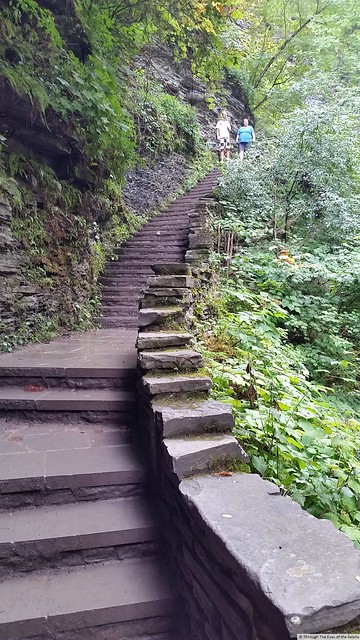
I was looking through some literature about the area and came across Watkins Glen State Park about thirty minutes from our campground. I read that in 2015 it was voted the third most beautiful state park in the country in a USA Today poll. All the reviews I read talked about a gorgeous 1.5 mile (three miles roundtrip) hike with 832 steps and nineteen waterfalls. We both love waterfalls so even though the 832 steps seemed a bit daunting, we decided to give it a try.20160909_111629
20160909_093118We headed out early Friday morning. On the way to Watkins Glen we came across a plaque in the small town of Waterloo. We had no idea that Waterloo, NY was the official birthplace of Memorial Day, with the first ceremony held in 1866. Some of the interesting things we just happen to stumble across is amazing to us. 20160909_093044We drove beside Seneca Lake, the largest of the Finger Lakes and the deepest lake in the state.
We didn’t realize that the town of Watkins Glen is renowned for auto racing and is considered the birthplace of American racing.   Since 1948 Watkins Gen has hosted international automobile car racing and in 2015 was voted the best NASCAR track in the country in a USA Today Reader’s Poll.  The town has an International Motor Racing Research Center with 5,000 square feet of racing history.  From April through September they host NASCAR sports car and racing events. This weekend was the U.S. Vintage Grand Prix and as we drove down Main Street they were getting ready to close off the street for a parade. To our dismay we discovered that even though the state park was open, the parking lot was closed. We asked where we could park and they said our only option was to find a parking lot or side street parking, which seemed highly unlikely on a parade day in a tiny town. Across the street from the park was a restaurant and Bill decided to go inside and ask if we could park in their restaurant parking lot for a few hours. I told him there was no way they would allow that on parade day. We pulled into the lot and I stayed with the car while he went inside to ask. He came back a few minutes later and said the owner said no problem and refused to take any money. Yeah!!
We grabbed our walking sticks and headed over to the entrance. We had an idea what was ahead when we saw a beautiful waterfall at the entrance. This park certainly lived up to its #3 best ranking. Everywhere we looked there was beauty. We were apprehensive about the steps but they were nice stone steps put in years ago by the CCC and easy to climb. I had worried they might be uneven and slick, but no problem. The hike on the Gorge Trail was not tiring at all because we were constantly stopping to gaze in wonder and awe at the beauty. We followed the gorge trail as it wound over and under waterfalls.20160909_11111420160909_11403320160909_11431820160909_11592220160909_12072320160909_12192020160909_12201920160909_12264920160909_11234620160909_135502
At the end we walked up the last of the stairs which were steel steps called “Jacob’s Ladder”. Once at the top we could either walk back down the 832 steps or take the easy “Indian Trail” back. We chose the easy hike and once we were back to the car we put our hiking gear away and decided to go into the restaurant for a late lunch. We thought it was a small way to thank them for letting us park in their lot. Bill had lunch and I had a big slice of fresh blueberry pie! On the way home we took a different route and followed Cayuga Lake seeing wineries along the lake.20160909_154053
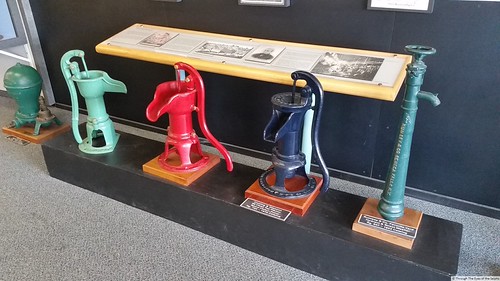
20160910_14073820160910_142224On Saturday we decided to spend our last day in Seneca Falls exploring the small town and finding some geocaches. First we stopped by the town Visitors Center which had a fantastic museum detailing the history of the town. European settlers first moved to the area and began farming. In the 1820’s the construction of the Erie Canal changed Seneca Falls to an industrial and shipping center. We were surprised to see all the items designed and manufactured there from water pumps, TV picture tubes to wooden rulers.20160910_13314820160910_13425520160910_13505320160910_140408
20160910_150328Seneca Falls is the birthplace of the Women’s Rights Movement led by resident Elizabeth Cady Stanton. The first women’s rights convention was held here on July 19-20, 1848. Today there is a Women’s Rights National Historical Park, established in 1980, in the middle of town. We stopped by the park, saw a film and looked at the exhibits. Amelia Bloomer, for whom bloomers were named, lived in Seneca Falls. She didn’t invent bloomers but wore them and promoted them in magazines.20160910_15050020160910_150738
20160910_14312620160910_143112Our last stop of the day was at the “It’s a Wonderful Life” museum. In 1945 Frank Capra stopped by Seneca Falls to get a haircut on his way to visit his sister. It is said that he was so taken with the quaint little town that it was his inspiration for the fictional town of Bedford Falls in the famous Christmas movie. There are several similarities between Seneca Falls and the fictional Bedford Falls, including they are both mill towns, had a grassy median down Main Street, homes of Victorian architecture, a large Italian population and a toll bridge. The free museum opened in 2010 and is full of memorabilia from the film that fans have donated or loaned to the museum. We were the only visitors there when we stopped by and enjoyed talking with the guide who obviously loves the movie. He said he has lost track of the number of times he has seen it. Every year in December they celebrate with a parade and all sorts of events. This year will be a big celebration since it is the 70th anniversary of the movie.20160910_144641 20160910_14471220160910_14474820160910_142407The guide so enthusiastically described the upcoming celebration it almost made me want to brave the snow to attend. Almost, but not quite!
Yes, tiny Seneca Falls far exceeded our expectations. We could have stayed a couple more days but Niagara Falls was calling!

Sept 6, 2016 Ticonderoga, NY

20160906_14423220160906_10033920160906_103144Our time in the Adirondacks was drawing to a close so on Tuesday we traveled to nearby Ticonderoga where Bill was ecstatic to visit the newly opened Star Trek: The Original Series Set Tour.  The sets, under license by CBS Consumer Products, recreated the sets of the Starship Enterprise as they were laid out at Desilu Studios Stage 9 in Hollywood.  Visitors are transported back to 1966.  Bill is a huge Star Trek fan and loved touring this set.  He didn’t know that Lucille Ball was instrumental in getting Star Trek on the air when she agreed to film the series at Desilu Studios.20160906_10111220160906_10121420160906_10143120160906_10163120160906_10253420160906_10275820160906_114618
20160906_115101Next we went to Fort Ticonderoga which played an important role both in the French and Indian War and the Revolutionary War.  It was originally built by the French in 1755 and called Fort Carillon.  Located a the southern end of Lake Champlain, it was captured by the British in 1759 and named Ticonderoga, an Iroquois name meaning “it is at the junction of two waterways”.  In 1775 Ethan Allen and his Green Mountain Boys along with Benedict Arnold took the fort from the British in a surprise attack during the Revolutionary War.  This was the first victory of the Revolutionary War.  The cannons from the fort were taken to Boston and helped persuade the British to evacuate Boston in 1777.20160906_11443920160906_11470620160906_12225020160906_12270720160906_122723
20160906_12395720160906_124005The British abandoned the fort in 1781 and it was looted for stone, metal and wood by settlers looking for material to build homes.  In 1785 the fort’s lands became the property of New York state who then donated the property to Columbia and Union colleges in 1803.   In 1820 the fort was sold to William Ferris Pell who first used the property for a summer home.  When more and more tourists came to the Adirondacks, he converted his home to a hotel.  In 1909 the Pell family restored the fort and opened it to the public.  The fort is now maintained by the Fort Ticonderoga Association, a not for profit organization.
We enjoyed touring the fort, soaking up the historical significance of the events which took place here.  It was somewhat disappointing to discover the original fort was wooden, not the stone structure of today.  We asked about this and it was explained that the fort was in such poor shape that only the stone foundation remained, leading the Pell family to mistakenly believe that the entire fort was stone.  It was also pointed out that a member of the Pell family was related to a stone mason so they were able to get stonework done easily and cheaply.
20160906_14422420160906_145725As part of our admission we were given access to Mount Defiance, an 853 foot high hill on the New York side of Lake Champlain.  In the 1777 Siege of Fort Ticonderoga, the British army placed artillery on Mount Defiance, causing the Americans to withdraw without a fight.  The Americans had mistakenly thought the hill to be inaccessible and never fortified it.

World War II Navy aircraft carriers were named after Revolutionary War victories: Lexington, Ticonderoga, Saratoga and Yorktown.
20160906_152522On the way home we stopped to find a geocache.  The short hike led us to a peaceful little waterfall.  We love it when geocaching takes us to such beautiful places we wouldn’t otherwise find.
We enjoyed our time in the Adirondacks.  We were glad to see Labor Day end and with it all the summer tourists.  The campground is now quiet and peaceful once again.  Ahhhhhh!
Next stop:. Seneca Falls, New York


Sept 1, 2016 Adirondacks, NY

20160902_153825After a month in Maine it was time to head south.  We had a long travel day as we left Maine and passed through New Hampshire and Vermont before entering New York State.  As soon as we entered New York I started sneezing.  We are thinking either oak trees or goldenrod is bothering me.  Despite the long day the miles went by quickly and before we knew it we arrived at our Lake George campsite for a week.  We were glad to get checked in and settled before the bombardment of Labor Day campers arrived on Friday for the three day weekend.
20160902_15375320160906_092213Lake George is a 32 mile long lake located at the foot of the Adirondack Mountains.  It drains into Lake Champlain and the St Lawrence River basin.  The village of Lake George has a yearly population of around 900 which swells to over 50,000 residents during the summer season.  In 1755 British colonial forces occupied the region during the French and Indian War and the lake was named Lake George for King George II.  On May 31, 1791, Thomas Jefferson wrote a letter to his daughter saying, “Lake George is without comparison, the most beautiful water I ever saw; formed by a contour of mountains into a basin….finely interspersed with islands, its waters limpid as crystal, and the mountain sides covered with rich groves“.
After the long travel day on Thursday and with Labor Day traffic building we stayed close to home Friday and Saturday.  It was amazing to watch the campground swell to full capacity with campers setting up, kids on bikes and pedestrians everywhere.
20160904_122616Sunday we decided to take a scenic drive through the Adirondack Mountains.  The Adirondack Park encompasses two thirds of upstate New York with over six million acres of private and state (40%) land.  Nearly half the land is wilderness.  There are 46 mountains that exceed an elevation of 4,000 feet.  The Adirondack Park includes more than 2,000 miles of hiking trails, 3,000 lakes and ponds, more than 30,000 miles of rivers and streams, 1,100 miles of highway and 120 miles of railroad.  It was named after the Algonquin Indians.  The Iroquois called the Algonquins “Ha-De-Ron-Dah” or “bark eaters” because they ate certain kinds of tree bark.  After the Civil War the area became a summer retreat for the wealthy.
20160904_183240We followed one of several scenic byways which took us from Lake George to the Canadian border.  We passed beautiful Indian Lake, Blue Mountain Lake and Tupper Lake to name just a few.  We stopped along the way finding geocaches, including one less than five miles from the Canadian border.  We could see the border crossing checkpoint which didn’t seem too busy considering the holiday weekend.  As we headed back south towards home we entered the Akwesasne Mohawk Indian Reservation.  We stopped and bought gas which was about 15 cents cheaper per gallon on the reservation.
20160904_184121We stopped by Saranac Lake to see the Robert Louis Stevenson cottage.  The cottage was closed but we did get a picture of the outside.  Stevenson lived here during the winter of 1887-1888 and the cottage has a large collection of Stevenson memorabilia.  The librarian in me was glad to see it!
20160904_185454By now it was getting late.  We reached gorgeous Lake Placid as daylight was fading.  We snapped a couple shots of the lake and grabbed a late dinner.  There is so much to see in Lake Placid, site of the 1932 and 1980 winter Olympics.  It is on our list of places to return to someday.  We arrived home late in the evening after an eleven hour sightseeing adventure.20160904_19013120160904_19004720160904_12255520160904_12252720160904_120624
20160905_12310520160905_13053320160905_145651The next day we decided to take advantage of the Labor Day holiday (therefore no city workers) and drive to Albany to see the state capitol.  One goal we have is to try to see the state capitol building of every state we visit.  We decided to drive first to the small town of Kinderhook to visit the home of Martin Van Buren, the 8th President of the United States.  Near the house was was a tiny “Visitors Center” located in a trailer where we saw a short film on his life.  Van Buren purchased his home and 130 acres of land in 1839 while President.  He named the estate Lindenwald after the linden trees lining the road in front of the home.  He returned here after his presidency ended.  He died here in 1862.
Van Buren was president from 1837 to 1841.  As president he was blamed for the depression of 1837, one of the worst depressions in U.S. history, with hostile newspapers calling him “Martin Van Ruin”.  He also had problems with foreign affairs, denying Texas’ application for admission to the Union because he didn’t want to upset the balance of free and slave states.
In 1840 he was voted out of office when Whig candidate William Henry Harrison won the election.  Van Buren tried to make a comeback in 1844 when he tried to win the Democratic nomination but lost to James Polk who went on to win the election.  In 1848 he ran for president yet again as a third party candidate with the Free-Soil party, a group opposing extending slavery.  His defeat in that election ended his political career.
Before leaving Kinderhook we visited his birthplace (the Van Buren family tavern where he was born burned long ago, no longer stands and is merely noted with a marker) and then his gravesite at the Dutch Reformed Church.

  • Van Buren’s wife Hannah died in 1819 after twelve years of marriage.
  • He is buried with her.
  • He never remarried.
  • They had four sons.

20160905_16115420160905_161829Next was Albany, capital of New York.  The traffic was light and we had no problem finding parking.  Albany was chartered in 1686.  Robert Fulton’s steamboat made the first successful steamboat run from New York to Albany in 1807.  The opening of the Erie Canal between Buffalo and Albany in 1825 caused the city to flourish.  Over the years Presidents Martin Van Buren, Millard Fillmore, Theodore and Franklin Roosevelt all lived at one time in Albany.20160905_16363420160905_165054
The state capitol building was built in the late 1800’s.
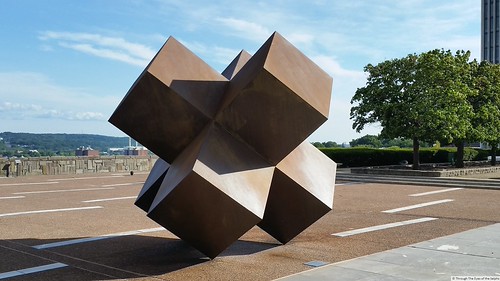
We walked to the Governor Nelson Rockefeller Empire State Plaza, a huge government complex.  This was a massive urban renewal project initiated by then Governor Rockefeller.  It was started in the 1960’s and not completed until 1978.  We found some geocaches in the area, including one at the Egg, a performing arts center.  The plaza’s 96 acres includes more than 90 abstract impressionist paintings, sculptures and tapestries as well as the tallest building in New York state except those in New York City.  The plaza also has several memorials honoring women veterans, fallen firefighters, MIA’s and Vietnam veterans.20160905_162716


July 22, 2016 Plymouth, NH. & Essex Junction, VT

20160722_144234The day before we left Hanover, New Hampshire we drove to Plymouth, Vermont to visit the President Calvin Coolidge State Historic Site. We were quite surprised to find not only a small museum but grounds that included among other things his birthplace, his boyhood home, a church, a general store, an active post office, a one room schoolhouse, a cheese factory and a large barn.20160722_14441220160722_15070320160722_14524520160722_145257
First we watched a video in the museum on his life from his birth in 1872, to his presidency.  It was a nice video but I wish it had continued through his presidency so we could learn more about his accomplishments and challenges while President.  The small museum also told us very little about his presidency.
20160722_152629Calvin Coolidge is the only president born on the 4th of July and he also was the 30th president of the United States.  Vice President Coolidge was actually at his home in Plymouth, Vermont when he received word that President Harding had unexpectedly passed away.  Coolidge’s father was a notary public and swore his son in as president of the United States in the family home on August 3, 1923.  We don’t usually take tours of homes but the tour of his birthplace and boyhood home was included in the admission to the grounds so we took the tour so we could see things like the room where he was sworn in as president.
20160722_145402The church was built in 1840 and was the church the Coolidge family attended.  It was beautiful inside with pine wood cut at a local mill.  The 1900 Estey pump organ is still used today.
Coolidge was president from 1923 to 1929.  20160722_144820He was known as a man of few words and as a small government conservative.  Coolidge’s presidency was during the “Roaring Twenties”, a time of rapid economic growth.  Some historians argue that Coolidge’s laissez-faire ideology and disdain of regulation led the country into the Great Depression.20160722_15433820160722_15450820160722_15345720160722_15574520160722_16084420160722_144044
20160722_153511Coolidge chose not to run for a second term, saying that would mean he would spend ten years as President and that is too long because the office of President takes a heavy toll on the President and his family.
He retired to Northampton, Massachusetts.  He died in 1933 at the age of 60.  He is buried in Plymouth, Vermont down the road from his birthplace.  We stopped by to visit the gravesite.20160722_161818
20160722_165755On the way home we stopped by Quechee Gorge, advertised as Vermont’s Little Grand Canyon.  What a disappointment.  Calling this a little Grand Canyon is quite a stretch.  Thankfully it was on the way home and we didn’t make a special trip to see it.
Saturday we drove to Essex Junction, Vermont for the Escapade RV Rally, held by our camping group: Escapees. Along the way we stopped at the Vermont state capitol building in Montpellier.  20160723_105110Now that is a beautiful gold-plated state capitol building and one of the most picturesque we have seen.  Nestled in the hills, it is one of the oldest preserved state capitols in the country.  The House and Senate Chambers are the oldest legislative chambers in their original condition in the United States.  The building was constructed in 1859 and the Greek Revival Architecture is similar to the US Capitol. The dome was gilded in the early twentieth century  and on top of the building is a statue of the ancient Roman goddess of agriculture.  Montpelier is the smallest capital city in the United States.
20160724_11434320160724_114533On Sunday we took some time before the rally began to drive 45 minutes to the Chester A. Arthur Historic Site in Fairfield, Vermont.   There is some mystery about where Arthur was really born and the granite marker is located where their best guess is for his birthplace.  The house is a replica of what they think his boyhood home looked like and inside is a very small museum with some display boards about Arthur’s life and presidency.  The museum is only open July through mid October.   Arthur, born in 1829 in Fairfield, was the 21st President of the United States and succeeded President James A. Garfield when Garfield was assassinated.  Strangely enough, the only other president from Vermont, Calvin Coolidge, also became president when the incumbent president died in office.  Arthur served from 1881-1885 and did not have a Vice President the entire time he was president.  Our museum volunteer guide and the museum displays were open about Arthur’s early career when he was seen as a corrupt man who used his position as Collector of Customs to collect bribes and was the political puppet of New York Senator Roscoe Conkling. This political control by Conkling continued into Arthur’s vice presidency.  Less than four months after Garfield’s inauguration, he was shot.  President Garfield lingered near death for 80 days.  During that time Arthur was often accused of having something to do with Garfield’s death, reportedly causing him much anguish.  When he assumed the presidency many expected him to continue to be a political puppet of corrupt politicians.  But according to the guide, the museum displays and what I have read, the presidency seemed to bring out the best in Arthur.  As president he is known for signing the Pendleton Civil Service Act:

  • mandating that certain federal government jobs be distributed based on merit rather than political connections
  • The act also forbade workers from being fired for political reasons and prohibited compulsory political employee donations
  • The Civil Service Commission was established to enforce the law

20160724_120904He did not seek reelection due to poor health.  He died in 1886 at the age of 57 and was buried in Menands, New York.  His wife, Nell Arthur died the year before he became President.  Arthur’s sister served as the unofficial First Lady during his Presidency.
20160728_151812We enjoyed the Escapade RV rally. It was a time of fun and fellowship as well as learning new things at daily seminars. Vermont is a beautiful state. We enjoyed being in Essex Junction in the Champlain Valley of Vermont. Nearby Lake Champlain stretches 125 miles to the Canadian border. To the east are the Green Mountains and to the west are the Adirondacks. Vermont:

  • ranks 43rd in population with approximately 626,000 residents
  • was the first state to abolish slavery in its constitution
  • has the highest number of sugar maple trees in the United States
  • the largest producer of sugar maple sugar, producing about 1.3 million gallons per year, which is one third of the country’s supply.

Vermont is a very popular state to view the fall foliage.
Next stop is Glen, New Hampshire for a week.