Category Archives: Exploring

Exploring

July 22, 2015 Fishing Bridge, Yellowstone N.P.

We made the hour drive from Grant Village to another campground in Yellowstone in an area called Fishing Bridge.  This is the only full hookup campground in Yellowstone.  By the time we arrived I had a bad headache and didn’t feel well.  Three days earlier I noticed four blister like places on my lower back.  It had the appearance of poison ivy or bug bites, and even though we couldn’t imagine how I got poison ivy or bites there, we didn’t pay them any attention.  After setting up, since the blisters hadn’t gone away and I was not feeling well, we decided to visit one of three medical clinics located in Yellowstone National Park.  Fortunately one of the clinics was a short drive from our campsite.  The diagnosis was shingles, certainly not what we wanted to hear and very surprising.  The doctor put me on 800 mg of Acyclovir five times a day for seven days.  The doctor said she thought it had been caught early but she had no idea whether I would have a full blown outbreak or if the medicine would lessen the severity of the shingles.  We were prepared if necessary to abandon our Yellowstone plans if the outbreak was severe and I needed to be in a town with doctors and stores with supplies.  As it turned out I was very blessed.  One more small blister appeared and that was it.  I was uncomfortable but it was tolerable.  I cannot imagine the agony someone with a full outbreak must endure.

The next day it rained and we stayed home resting and relaxing.  My mind played tricks on me and every time I had an itch I would run to Bill so he could check my back for a new blister.  And every time I felt great relief when he said nothing new was there.

IMG_20150725_142314This post will focus on the animals we saw during our time in Yellowstone.  Since my shingles was under control and I was feeling better, we decided to take a short hike to Natural Bridge.  The signs warned of bears and suggested walking in groups.  We had our trusty whistle, just in case.  Along the way we saw many places where bears had sharpened their claws and marked their territory on trees.

The hike to Natural Bridge was supposed to be short but we took a wrong turn and ended up on a longer trail that took us to the top of the bridge.  The trail became very steep with several switchbacks.  The trail had small gravel that feels like walking on marbles when descending.  I

hate those kinds of

PANO_20150725_134423

Natural Bridge looking down to the trail below

IMG_20150725_140137trails!  Along the way we met a very nice IMG_20150725_140040couple visiting from England and we enjoyed chatting with them while we stopped to catch our breath.  An older lady was trying to make her way down the steepest part of the trail with walking sticks.  We stopped to wait for her to pass and she apologized for holding us up and commented that her walking sticks were not helping.  Since we have walking sticks, Bill asked if she would like him to show her a different way to hold and use them.  He showed her the correct way to hold them, and right away she could feel the difference and felt so much more confident walking on the trail.  She was so happy and as she walked past me she told me how wonderful my husband was for helping her.  Bill is an Eagle Scout and lives by their motto of “Do A Good Deed Every Day”.  We reached the top of the bridge and enjoyed the view, snapped some pictures and began the hard descent down.  When we reached the bottom we saw the shorter trail that led to the view of Natural Bridge from below.  Natural Bridge is a 51 foot cliff of rhyolite rock cut through by Bridge Creek.  In the end we were glad we took that harder trail because we met a nice couple from England and helped the lady with her walking sticks.  It was all good!

Rangers in the park refer to traffic jams by the animals that cause them.  So there are bison jams, bear jams, elk jams, moose jams etc.  Whenever you see traffic stopped or slow moving, it is most likely to be from an animal jam.IMG_0581

IMG_0583There are between 2,300 and 5,000 bison living in Yellowstone.   We got caught in a huge bison jam one day while heading to Hayden Valley which is known to have a lot of wildlife.  We passed through at the time of day a large number of bison were crossing the road to get to the river.  Traffic slowed to a halt or slow crawl as bison blocked the road or people gawked at the bison along the side of the road, everyone trying to get that perfect picture.  At one point we shut off the car engine and just waited.  No worries.  We had plenty of time and enjoyed watching all the bison around us.  Much later in the day we passed through the area again and most of the bison were gone.  One lone bison slowly sauntered down the middle of the road blocking our lane of traffic.  There was nothing to do but follow him and wait for him to move.  He was headed home after a long hard day entertaining crazy tourists.  We had about ten cars in front of us and traffic was piling up behind us.  One driver behind us blew his horn.  He was too far away for the bison to care and just annoyed others patiently waiting.  He is the kind of tourist who should never come to Yellowstone in July.  Eventually, when the bison was good and ready he left the road and wandered up the hillside and began grazing and we were once again on our way!  We have already posted lots of bison pictures in previous posts so we won’t post too many here.IMG_0572IMG_0573IMG_0579IMG_0585

IMG_0591We stopped at Tower Falls and while we were there a small bear walked across the patio area of the gift shop/general store.  A dog barked, scared it and it ran off into a grassy area.  The grass was so tall we could barely see him, not close enough to get a picture.  Later in the day we came upon a bear jam with a mother bear and her cub digging up and eating grubs along the side of the road.IMG_0617IMG_0624

A smaller pronghorn jam occurred later.  Pronghorn are similar to antelope.IMG_0598IMG_0599IMG_0602

We created our own bald eagle jam.  Bill spotted a bald eagle perched on a rock.  Another eagle circled overhead.  As cars noticed us stopped and Bill with his camera, more cars stopped and pulled over.  Before long we had an eagle jam!IMG_0603IMG_0613
During our time in Yellowstone we also saw elk, moose and even a beaver!
IMG_0588

IMG_0729

This beaver was shy!

IMG_0725

Gibbon Falls

IMG_0727

Gibbon River


July 20, 2015 Grant Village, Yellowstone N.P.

IMG_0648We made the short drive from Grand Teton to Yellowstone National Park along the John D. Rockefeller, Jr. Memorial Parkway.  We were so excited.  Yellowstone was the much anticipated highlight of our summer plans.  Established in 1872, Yellowstone is the world’s first national park.  Of the 2.2 million acres, 80% is forest, 15% is grassland and 5% is water.  Ninety-six percent of the park is in Wyoming with 3% in Montana and 1% in Idaho.

Yellowstone is HUGE with:

  • five entrances into the park
  • ten visitor or information centers
  • three medical clinics
  • six gas stations
  • seven general stores
  • five hotels or lodges
  • twelve campgrounds
  • and numerous restaurants and gift shops

We had camping reservations at several campgrounds throughout the park which we had to make a year in advance.  To say it is a popular tourist destination is an understatement!  Our first reservation was at Grant Campground and we were lucky to be given a site overlooking West Thumb Lake which is connected to Yellowstone Lake.  This is the largest lake in Yellowstone National Park and is beautiful.IMG_0569IMG_0480IMG_0451

Our time in this area of southern Yellowstone centered around what may be the most famous part of Yellowstone, its geysers.

IMG_0494IMG_0568Our first stop of course was to see Old Faithful.  We got up extra early to get a head start on the mobs of tourists.  Each year over three million people visit this park.  Yellowstone is very crowded in July so it is best not to come unless you have plenty of time AND patience.  Old Faithful is the most famous attraction in Yellowstone, so named because it faithfully erupts about every 60 to 90 minutes, spewing 8,400 gallons of steaming hot water up to 180 feet into the air.  It is one of the most predictable geysers on earth.  There are benches around the base of Old Faithful where crowds gather to sit, wait and watch the eruption.  The Visitors Center has a list of several geysers and the times they are predicted to erupt so you know what time to head to each area to watch the eruptions.  The time of some, like Old Faithful, can be easily predicted within ten minutes.  Others can be predicted plus or minus 90 minutes while others are very unpredictable.IMG_0487

Yellowstone is home to more geysers than any other place on earth and is one of the world’s most active geothermal areas.  Within the park are hundreds of geysers, hot springs, mud pots and steam vents.  This is because the park sits atop an enormous “supervolcano” and the immense heat from the underground magma powers the geysers.  The volcano last erupted 640,000 years ago and shows no signs of erupting anytime soon. Water from precipitation seeps into the ground, meeting the superheated earth near the underground magma chamber.  Tremendous pressure builds up until the water is forced back to the surface.  Some geysers like Old Faithful have their own underground “plumbing systems” and erupt at predictable intervals.  Other geysers share plumbing “pipes” with adjacent geysers and erupt more sporadically.

We drove around the West Thumb and Upper Geyser Basins with a variety of geysers, hot springs and bubbling mudpots.  There are more than 150 spouters within a square mile area just in the Upper Geyser Basin alone.  The boardwalk led us around to areas such as the Fishing Cone where years ago fishermen could fish in the lake and then swing around and place the fish in the boiling water of the Fishing Cone to be cooked.  This is no longer allowed.  We saw the colored Paint Pots and the deep blue Abyss Pool.IMG_0463IMG_0462IMG_0454

In the Lower Geyser Basin we drove the Firehole Lake Drive and saw the beautiful multi colored Fountain Paint Pots.IMG_0546IMG_0526

We drove by the White Dome Geyser and as we pulled into the small parking lot a lady leaned out of her car window and told Bill the geyser would go off in about twenty minutes.  Bill spread the word and a small crowd gathered on the boardwalk.  As twenty minutes passed with no eruption we began to wonder if the lady had been mistaken.  Suddenly the geyser erupted, spraying us with cool water.  We were surprised since we expected the water to be warm.  It was a really nice eruption to see and we were really glad we had waited.IMG_0495IMG_0515

The Midway Geyser Basin is known as Hell’s Half Acre where the basin’s hot water gushes into the Firehole River.  The Grand Prismatic Spring is located here, which at 370 feet across and 125 feet deep is the largest hot spring in the United States.  The many colors come from light refraction, mineral particles and heat loving microorganisms called thermophiles.  Hot springs IMG_0547IMG_0555IMG_0556IMG_0565IMG_0560are similar to geysers except they do not have the constrictions in their “plumbing” so water does not reach the temperature needed to set off an eruption.  Around all the thermal areas are really nice boardwalks.  The ground around the boardwalks is very unstable and in many cases consists of bubbling hot water which can exceed a surface boiling point of 199 degrees F. as well as steaming mudpots.  Some of the boardwalks could be crowded and at times I was uneasy as tourists were busy looking instead of watching where they were going.  I sure didn’t want to be knocked off one of those boardwalks!  Most annoying were the tourists walking around with umbrellas to protect themselves from the sun.  Haven’t they heard of hats and sunscreen?  This is what happens to tourists who don’t heed the warnings to stay on the boardwalk.  They disappear and are never seen again!IMG_0554IMG_0529IMG_0567IMG_0501IMG_0500

We also enjoyed seeing bubbling mudpots and steaming fumeroles.  Mudpots occur in places where microorganisms help convert hydrogen sulfide into sulfuric acid which dissolves surrounding rock into clay.  The clay mixes with rising steam and groundwater to form mud of different colors and consistency.IMG_0536

Fumeroles is a vent in the Earth’s crust.  Groundwater comes in contact with hot rocks underground and turns to steam.  The steam rushes up through cracks and fissures and out the vent, sometimes with enough force to create a loud hiss or roar.

here are two videos ; http://youtu.be/ra5QVkWhMhc

https://youtu.be/zEiO-yCk-tU

It seems everywhere we drove in Yellowstone had steam rising, constantly amazing us.

July 16, 2015 Grand Teton National Park

IMG_20150716_121505We made the short drive from Jackson Hole to Grand Teton National Park, a 485 square mile park with breathtaking views of the Teton Mountain Range.  The highest peak, Grand Teton, is 13,770 feet above sea level and the second highest peak in Wyoming.  Thousands of people climb the summit every year.IMG_20150720_103816IMG_0415

The Tetons are a young mountain range.  Ten million years ago the peaks began to rise along the Teton fault line, known as a fault block.  Tons and tons of igneous, metamorphic and sedimentary rock vaulted up and forward while the valley known today as Jackson Hole sank and continues to sink.  This created the many pinnacles which were sculptured by glaciers into the Teton Range we see today.

Grand Teton National Park was created in 1929, one third of the size it is today.  Through land donated by John D Rockefeller, Jr. in 1950 and the addition of Jackson Hole National Monument, the park grew to its current size.IMG_0411IMG_0413

We had reservations at a campground in the park run by a concessionaire, Xanterra Parks and Resorts (they manage campgrounds and lodges at most of the largest parks).  We had a nice full hookup site amid pine trees.  The only problem was the trees were so thick, and even though we tried moving the RV forward and backward, we were unable to get any satellite TV.

We drove the 43 mile scenic loop drive, stopping near the Jackson Lake Dam.   In 1999 Bill and his son Sean visited Grand Teton and Yellowstone National Parks.   Bill has a picture Sean took of him with a beautiful view of the Tetons.  He really wanted to recreate the picture and we were able to find the same location for a 2015 picture!BillSelphJacksonLakeIMG_0443

A steep drive on the Signal Mountain Summit Road took us to the top of Signal Mountain with views of the Jackson Hole valley 800 feet below.  Along the way we spotted a black bear partially hidden in the heavy foliage.IMG_0373

Besides seeing bison, we were on a moose hunt.  We were determined to see a moose!  We drove on  Antelope Flats Road and stopped at an overlook known for wildlife.  Hidden deep in the grass in the distance was a mother and baby moose.  It wasn’t easy but Bill managed to snap a picture.  We decided that would have to be our one moose find of the day.  As we headed home we approached a bridge and noticed a traffic jam with cars pulling over on both sides of the road and people running toward the bridge.  It could only mean one thing, a wildlife sighting!  We squeezed in among the other cars and walked to the bridge.  One large male moose was on the edge of the water and ambled down for a drink.  All that excitement for ONE moose!  But of course we had to join in the fun! Male moose have “antlers” like deer.  Unlike horns, antlers fall off and the animals regrow them each year.IMG_0392IMG_0402IMG_0409

The Jenny Lake Scenic Drive took us to Jenny Lake with fabulous views of Jenny Lake and the Tetons.  We took a nice walk down to see the lake.  We also visited historic Jackson Lake Lodge with 60 foot windows overlooking the Teton Mountain Range.

We loved the Grand Tetons and will definitely be back!

July 12, 2015 Jackson Hole, Wyoming

Welcome to our 200th travel blog post!!

IMG_20150711_155841We left Shoshone National Forest and made the steep climb over the Togwotee Pass, crossing the Continental Divide westward.  Our excitement grew as our first glimpse of the Grand Tetons came into view.  We passed a large 24,700 acre national elk refuge where 7,500 elk live.  Each spring Boy Scouts gather up antlers in the refuge which are then sold at an auction in Jackson.  Half of the proceeds go to the Boy Scouts and the other half is used by the town to provide food for the elk during the long cold winter.IMG_20150712_140426IMG_20150712_135743IMG_20150712_134540

Our destination was Jackson, Wyoming.  It was known as Jackson Hole until the modern zip code system forced the name be changed to Jackson.  Our campground was located outside of Jackson in Wilson.  There are not many campgrounds in the Jackson Hole area and most are located outside of town and ridiculously high priced.  The campsites are very close together, reminding us of why we love to camp in state and national parks and forests.

Jackson Hole gets its name from fur trapper Davey Jackson, one of many fur trappers and mountain men who inhabited the area in the 1800’s.  The town itself was established in 1894.

Occasionally tourists come to Jackson Hole and want to know where the “hole” is.  There is no hole, it is called Jackson Hole because it is located in a valley bordered by mountain ranges.  The town is actually forty eight miles long and eight to fifteen miles wide with the Snake River meandering through the town.  Since 97% of the surrounding Teton County is public land, real estate and housing costs there are very high.  The main industry is tourism, with two thirds occurring during the summer season and one third during the winter ski season.

Jackson Hole has a lot of businesses crammed into a small area.  Traffic is heavy and you have to be very careful not to hit one of the many tourists flooding the streets and sidewalks.

One place of interest was Jackson Square, a park where they have an entryway of elk antlers at each of the four corners.  People were enjoying the cool shade and a band of some sort was playing one day when we drove by.IMG_20150715_152210IMG_20150715_152237

While in Jackson Hole we wanted to go whitewater rafting on the Snake River.  The rafting company picked us up at our campground at 6:15 AM and it was 44 degrees.  Remember, this is July in Wyoming!  We joined a high school math teacher, her husband from Fort Worth, Texas and two families from San Jose, California then boarded a bus down to the river.  Everyone was very friendly and we certainly did have a great time getting to know them.  The first eight miles of the trip was a calm, scenic float down the Snake River where we saw several bald eagles and ospreys.  We then got out of the raft and stretched our legs and had a snack.  The next eight miles of the trip was the exciting whitewater part of the trip as we traveled through many rapids.  The first rapid sent two huge waves of ice cold water over the raft, soaking all of us.  My teeth were chattering!  There were many more times when the freezing water washed over us.  After the trip they provided us with a bagged lunch which we enjoyed while continuing to visit with our new friends before the bus trip back to the campground.  We had a great time!  The only thing that would have made it better would have been temperatures about twenty degrees warmer.  Of course they had a company who takes pictures as you go through one of the larger rapids.  The pictures are pricey but we did splurge and purchase two.IMG_0684IMG_0686

I would like to end on a personal note.  While in Jackson Hole I received word of the passing of my Uncle Arnold.  He was like a father to me and his two sons are like my brothers.  Arnold married my mother’s sister the year I was born, so I have known him my entire life.  We had planned to see him in April 2016 when we pass through Virginia, but God had a better plan for him.  One of the hard things about the full time Rving lifestyle is we are not nearby our family and friends.  It was very hard for me to miss his funeral, but I know I did not have to be present at his funeral for him to know how much he meant to me and how much I love him. -Diane

July 10, 2015 Thermopolis, Wyoming

We stopped in Thermopolis because of the hot springs located there which are advertised as the largest mineral hot springs in the world.  The name Thermopolis comes from the Greek words for hot and cities.  Located at the foot of Owl Creek Mountain and beside the Big Horn River it was once part of the Wind River Indian Reservation.  The town was founded in 1897 and attracted outlaws such as Butch Cassidy and the Sundance Kid.  Today it has a population of around 3,200 and tourists who come for the healing powers of the hot springs.

Hot Springs State Park was purchased from the Arapaho and Shoshone tribes in 1876  for $60,000 as part of a treaty with the provision it remain accessible free of charge to the public.  Native Americans believe the mineral water has therapeutic powers.  Today the park and public bath house are free of charge and it is the most visited state park in Wyoming.
The mineral rich hot water creates colorful geological formations which has occurred over millions of years forming beautiful rainbow terraces.  The hot springs are naturally colored and formed by mineral deposits.  They look like waterfalls and form a 125 degree F lake. The Big Spring in the park has more than 3.6 million gallons of 127 degree F water flow over colorful terraces every day.  The water contains at least 27 different minerals.  Most of the water is IMG_20150710_122608IMG_20150710_122914thought to come underground from the Owl Creek Mountains through the Big Spring.  Rain enters porous rock layers, moves slowly downward and is forced to the surface through crevices in the rock.  The heat and chemicals in the water come from the rock through which it passes and from gases that rise from deeply buried volcanic rocks.  Some geologists think the underground formation that supplies the spring is the same that provides Yellowstone National Park its famous hot waters.IMG_20150710_123625

20150710_114837From the Big Spring the water flows into cooling ponds and runs into swimming pools, jacuzzis and the Big Horn River.  The State Bath House water is 104 degrees F and they have an employee check the water temperature often.  You are limited to 20 minutes in the water.  The pools are filled with 100% mineral water; no chemicals or municipal water is used.  There is an indoor and an outdoor pool and they are both cleaned every 48 hours.  I could not get past the strong sulfur smell of the water and was happy to wait while Bill enjoyed the water.  It took a couple showers to get the sulphur smell out of his skin!

There is a very small bison herd of around eleven buffalo in the park.  We drove around trying to see them but they were hiding.

We stayed one night in Thermopolis and drove towards Jackson Hole.  We drove through the Wind River Indian Reservation through beautiful Wind River Canyon with 2,500 foot walls of rock.  There are informative signs along the route describing the geologic history of over a billion years of geology.

Along the way we continued to enjoy the views of the Wind River Canyon as we followed the Wind River to where it flows into the Big Horn River.  When early explorers came across the river from opposite directions they each named the river.  One named it Wind River and the other named it Big Horn River.  The river changes names just south of Thermopolis.IMG_20150710_144618IMG_20150710_144946IMG_20150710_145050IMG_20150710_145244IMG_20150710_145441IMG_20150710_145455

We  stayed overnight in Riverton at the Wind River Casino.  They allow free overnight parking in their parking lot and even have a few electric (15 AMP) hookups which we were lucky to use.  We went inside the casino and both signed up for a players card which gave us each $10.00 to use at the slot machines.  We had fun playing the machines and ended up winning $8.00 between us.  We had dinner at one of the restaurants in the casino.  We were amazed at how quiet the parking lot was and woke the next morning refreshed and ready to hit the road.

Our next overnight stop was at a national forest campground in Shoshone National Forest. On our route we saw ranches and homes built right up against the canyon walls.  IMG_20150711_134932IMG_20150711_135928IMG_20150711_141212IMG_20150711_141247IMG_20150711_141342We had a nice campsite in the forest with electric only.  For the first time in quite awhile we had absolutely no cell phone service which usually would not have been a problem but we had a family member we needed to check on.  We enjoyed camping in the forest and smelling the pine trees.  IMG_20150711_152105IMG_20150711_161029It has been awhile since we had camped in the forest.  The next day we will finish our drive to Jackson Hole.

July 8, 2015 Buffalo Bill Center – Cody WY

IMG_20150707_172649Cody has a wonderful museum called the Buffalo Bill Center of the West.  It is actually five museums all under one roof on over seven acres.  You could easily spend an entire day there seeing the Buffalo Bill Museum, the Draper Natural History Museum, the Cody Firearms Museum, the Plains Indian Museum, and the Whitney Western Art Museum.IMG_0308

IMG_0322

North African Miquelet Jezail given to Jefferson in 1805 This gift influenced the inclusion of the lyrics “to the shores of Tripoli” in the Marine’s Hymn

Bill loved visiting the Cody Firearms Museum which has one of the largest firearms collections in the world.  They had firearms on loan from the Smithsonian as well.  They had firearms Bill had never seen.  IMG_0320I especially enjoyed seeing a musket once owned by Thomas Jefferson as well as a gun owned by Annie Oakley and several former U.S. Presidents.  I loved seeing the guns IMG_0310IMG_0311IMG_0312IMG_0309IMG_0313IMG_0316used on the TV set by Ben Cartwright and his sons on Bonanza as well as the Lone Ranger. Some interesting people in the development of firearms:

  • Oliver F. Winchester was a successful shirt manufacturer established Winchester Repeating Arms Company in 1866
  • John M. Browning (1855 – 1926)
    • was the most ingenious and prolific arms designer America has produced
    • his designs were manufactured under patent assignment by noted firms like Winchester, Colt and Remington
    • from 1884 to 1901 he worked for Winchester and sold all his patents to them
    • he designed the Colt Model 1911, “Army .45”

We also spent a lot of time in the Buffalo Bill Museum which had many exhibits about the life of Buffalo Bill, including movie footage of one of his Wild West shows.  He took his Wild West shows to England and Europe, once performing for Queen Victoria.IMG_0329IMG_0315

The Buffalo Bill Center of the West is often called the Smithsonian of the West and we could see why!

IMG_0326

Crazy Horse

IMG_0327

Sacagawea

We really enjoyed our short time in Cody.  There were things we didn’t have time to see and added Cody to our list of places we would like to return to someday.

July 1, 2015 Buffalo, Wyoming

IMG_20150629_103912We left Sundance and drove 135 miles to Buffalo, Wyoming.  The drive was rather boring, just an endless straight road with open plains and the occasional herds of cattle and some horses.  I will say the horses in this part of the country are beautiful, looking very much like the horses used by Indians in the old western movies and TV shows.

We arrived in Buffalo for our stay at a private campground.  The temperature was pretty hot and they had some nice shady spots.  Unfortunately in order to get our Dish satellite antenna to work we had to park in the section without a bit of shade.

The park provided internet and therefore we spent time researching and making reservations for November, December and January.  We were shocked and somewhat dismayed to learn many Florida RV parks have a three month minimum stay and most of the popular state parks were already booked!  Since we want to move around Florida during the winter, the three month minimum stay will not work for us.  Foiled by those snowbirds yet again!

IMG_0287While in Buffalo we made the 90 minute drive north into Montana to visit the Little Bighorn National Monument.  It was here in the valley of the Bighorn River that George Custer’s 7th Cavalry Regiment of 600 men met with a gigantic Indian village including several thousand Lakota, Arapaho and Northern Cheyenne braves. Custer divided the regiment into four battalions, keeping a force of 215 under his own command in June, 1876. IMG_0293IMG_0290IMG_0289IMG_0302

The 1.2 square mile site has a Visitors Center with Ranger talks throughout the day, a large memorial, a memorial to Native Americans and a drive around the battlefield with overlooks and descriptive signs.  On the battlefield are approximately 263 white markers showing where IMG_0305human remains were found.  Custer’s marker showing where he died is easy to locate due to its special black markings.  Custer’s brother also died near him.  In the park are two cemeteries.  At the large memorial on Last Stand Hill is buried the remains of those who were found in shallowIMG_0292IMG_0291 graves. The remains were buried together under the memorial.  I asked the ranger why the remains were disturbed and not buried where they were found and he said at that time:

  • they did not have the proper equipment to bury that many bodies in deep graves
  • Custer was buried 18 inches deep
  • in many cases only partial remains were found
  • many wounded solders needed to be transported ASAP to a hospital 500 miles away

The Native American memorial was completed in 2013.  The memorial is in the shape of a circle, which is considered sacred, and is open to ceremonial events.  The inside walls display the names of many who fought here and the words of some.  A “Spirit Warrior” sculpture is IMG_0295IMG_0296IMG_0297IMG_0298prominently displayed.  Throughout the battlefield are several red granite markers to mark the location of fallen Indian warriors.  The first red granite marker was placed on Memorial Day, 1999.  The red granite was chosen by Native Americans.  It was hard to locate the remains of Native Americans because they were removed from the battlefield by the Indians.IMG_0294IMG_0303

Also located in the park is a national cemetery established in 1879, which looks much like Arlington National Cemetery though much much smaller.  Veterans of all wars can be buried there but at this time the cemetery is at its limit.  Any man who fought at Little Bighorn and could be positively identified is denoted with a US flag next to the white marker.

IMG_0288

Marcus Reno was second in command under Custer and survived the battle

Custer was buried at this location but his body was later moved to West Point.  Custer is a controversial figure.  He was said to have bravely fought against Confederate troops during the Civil War, supposedly having eleven horses shot out from under him.  Some would say he was only following government orders in his various interactions with Native Americans.  Others would call him vicious, boastful and arrogant.

Bill and I readily admit we are biased when it comes to battles between the settlers and the Native Americans.  While we do not agree with everything the ranger said in his talk about the Battle of Little Bighorn, we cannot deny he did an excellent job in his presentation.  We learned more about the U.S. invasion of Indian territories.  The government was under pressure from people who wanted western expansion.  The discovery of gold only intensified this push.  As more settlers moved west the Native Americans saw more of their land being taken away with no regard to their way of life.  The American government, feeling it was cheaper to feed the Indians rather than fight them, initiated peace treaties with them which they then turned around and broke.  The 1868 Laramie peace treaty designated a large area of eastern Wyoming as a permanent Indian reservation and the government promised to protect them.  The treaty was broken in 1874 as thousands of gold seekers rushed the territory.  The government tried unsuccessfully to keep them out.  The government then tried to buy the Black Hills from the Indians but they refused to sell.  The Indians left the reservation and resumed raids on settlers and travelers.  In January, 1876 the government then ordered free Plains Indians, who are labeled “hostiles” to return to the small reservations.  When the Indians did not comply, the army was called in to enforce the order.IMG_0299

While this was Custer’s Last Stand, it was also the last stand for the Native Americans.  A huge public outcry over Custer’s defeat led to such events as the Battle of Wounded Knee and the Indians relocation on reservations.  At the Battle of Little Bighorn, the Indians may have won the battle but they lost their land, their culture, their way of life.  They won the battle but lost the war.

June 24, 2015 Sundance, Wyoming

After twelve days we left South Dakota and headed to Wyoming. We enjoyed our time in South Dakota but sure experienced some scary weather there. On our next to the last night in South Dakota we were hit with another frightening thunderstorm with winds over 45 mph, lightning, heavy rain and even more hail than we had in the Badlands.

IMG_0249We arrived in Sundance and checked into a nice campground. Wyoming is the least populous state in the country with approximately 544,270 residents spread out over more than 97,000 square miles. It is nicknamed “The Cowboy State” because of the estimated 11,000 farms and ranches. The Black Hills are 90% in South Dakota but this small area of northeast Wyoming, including Sundance, in part of The Black Hills. Our main reason for stopping in Sundance was to visit Devils Tower National Monument. This granite formation rises 1,267 feet from the prairie and has hundreds of parallel cracks making it one of the finest traditional rock climbing areas in North America. The site is sacred to the Lakota and other tribes. Legend has it that the rock rose up just in time to save seven young Indian girls from a bear and the rock rose higher and higher out of reach of the bear. The marks on the tower were caused by the bear’s claws. The girls were pushed up into the sky where they became seven stars (the Pleiades constellation).IMG_0250IMG_0248

The Devils Tower was proclaimed the first national monument in 1906 by President Theodore Roosevelt. Devils Tower is best remembered as the one of the sites in the 1978 Spielberg movie, “Close Encounters of the Third Kind”. I had never seen the movie and as luck would have it the campground office had it for rent so we watched it before going to see Devils Tower.IMG_0252IMG_0253

We walked the Tower Trail that circles the tower where you can see rockfalls of gigantic columns that have fallen. Devils Tower is 1,000 feet in diameter at the bottom and 275 feet at the top.  It was formed 40 million years ago when a column of molten lava pushed through the limestone.  As the rock cooled, it fractured into vertical columns.  The limestone eventually eroded away revealing the towering formation seen today.  It is a wonderful example of erosion.

After leaving Devils Tower we drove to Aladdin, population 15. Yes, you read that right. Population 15. The town is currently for sale if you want a town.IMG_0256

IMG_20150625_151142Sundance, population 1,182 is the largest town in the area. In 1879, Albert Hoge, a Prussian born immigrant staked his claim and named the town Sundance in honor of the “sun dance” performed by the Native Americans.  Perhaps what Sundance is best known for is the Sundance Kid, friend of Butch Cassity. The Sundance Kid, born Harry Alonzo Longabaugh, got his start as an outlaw when he stole a horse, gun and saddle. He spent the next eighteen months in the Sundance jail, earning him his name.  Outside the former jail is a statue of the Sundance Kid lounging in his cell. Not many towns have a statue of a horse thief and notorious bandit as the focal point of their town!

IMG_0261We drove to Belle Fourche (pronounced “Bell Foosh”) which is located in southwest South Dakota and therefore a closer drive from Sundance than from the Badlands. We came here because there is a Center of the Nation Monument in the shape of a compass rose carved out of South Dakota granite.  We were the only ones there at this 21 foot in diameter monument surrounded by the flags of all 50 states.  We love geographical places like this even though the real geographic center is located twenty miles north of Belle Fourche on private property.  IMG_0257This is the geographic center of the United States if you include Alaska and Hawaii.  It was interesting to read that when Alaska was admitted to the union the geographic center shifted 439 miles northwest and when Hawaii was added it shifted 6 miles west-southwest.  Along with the monument was a nice visitors center and an original 1876 log cabin from the gold rush days.  The cabin was hosted by an elderly gentleman, a Korean War Veteran, and since we were the only ones there he had plenty of time for us.  We certainly enjoyed spending time talking with him about the area and we found a geocache behind the cabin.IMG_0259IMG_0260

IMG_20150627_122423While we were in Sundance the ARRL (American Radio Relay League) was having their annual Field Day.  For 24 hours amateur radio operators contact as many other amateur radio operators around the world.  It is a popular contest and challenge among amateur radio enthusiasts.  An AARL group was getting together in the small town of Upton about thirty miles from Sundance so Bill drove over and spent some time with them.  He had a great time talking with fellow amateur radio enthusiasts!

On our last day in Sundance we drove the Spearfish Canyon Scenic Byway which took us briefly back into South Dakota.  We stopped at two waterfalls, the only waterfalls we saw in South Dakota.  The Spearhead Falls was especially beautiful and had a cool refreshing mist blowing on us from the falls.  The sign said Spearhead Canyon was older than the Grand Canyon.IMG_0273IMG_0277IMG_0271

IMG_0280We drove through Deadwood, a western town much like Tombstone, Virginia City or any other tourist attraction with fake gunfights and plenty of places to spend money.  Wild Bill Hickok was killed here in Saloon #10 and is buried in a cemetery nearby.

IMG_0286Before heading back over the border into Wyoming we drove through Sturgis, famous for one of the largest annual motorcycle events held in the world.  Motorcycle enthusiasts from around the world come here in August.  This year will be the 75th anniversary.  We heard the tiny town makes 90% of their income for the year during that one week in August!  The streets were relatively quiet and we could only imagine what the town is like during that week in August!

June 20, 2015 Badlands NP, South Dakota

IMG_20150620_130336We left the Mount Rushmore Black Hills area and traveled to Badlands National Park for two nights of dry camping in the park. What a beautiful view of the grasslands we had from our front door with a buffalo as our camp host. He was there the entire time, grazing and paying no attention to everyone camping. Badlands National Park is made up of 244,000 acres with the largest expanse of protected prairie ecosystem in the National Park system.IMG_0239

The Lakota Indians called the area “land bad” and French fur trappers referred to the area as “bad land to cross.”. While It is an area of peaks and valleys, wide prairies and wide extremes of weather and appears formidable, much of the land is level, fertile and covered with grasses. The land was homesteaded years ago with many ranchers’ descendants still living on the land with ranches of cattle and sheep. The livestock feed on the native grasses and wheat is often grown.IMG_20150620_130902IMG_20150620_131532IMG_20150620_131536IMG_20150620_131555

This area was once sea level and volcanic activity pushed up the ocean floor leaving marshy plains.  For approximately 30 million years layers of mud, sand and gravel were deposited. Prehistoric animals roaming the area died and were buried beneath the river sediments. The area is known today as being a rich source of fossils. About one to four million years ago erosion began to outpace the deposits, leaving colorful spires and formations. The movie at the visitors center said the formations are eroding at the rate of an inch a year!IMG_20150620_132551IMG_20150620_132641IMG_20150620_132905IMG_20150620_153726

The earliest people were mammoth hunters who came to the area over 11,000 years ago followed by nomadic tribes. By the mid 18th century the Lakota (Sioux) were present and used horses from the Spaniards. French fur trappers were the first Europeans followed by soldiers, miners, farmers and homesteaders. After 40 years of struggle culminating in the Wounded Knee Massacre in 1890 the Lakota were confined to reservations.

Our first night a storm came up. We first noticed the lightning while taking an evening walk. As the night went on the lightning increased to an explosion of light, a constant light show we had never seen the likes of. Our weather system clocked wind gusts of 50 mph followed by rain and hail and we were really rocked in the RV. The most frightening thing was we were in the middle of nowhere with no place to go for shelter. We could not follow the storm’s progress on TV or radio like we did in Denver. We both have weather alerts on our phones and both phones were going crazy.  We watched the intense center of the storm pass fifteen miles north of our campground by using a radar weather app.IMG_20150620_154533IMG_20150620_155007IMG_20150620_155554IMG_20150620_163037

There is nothing quite like having your phone saying you are in a life threatening situation and should seek shelter and having no place to go! The next day a worker at the visitors center told us it was one of the worst storms he had seen and there had been tornado clouds above us. Some other tourists told us two hours to our south there were several semi trucks turned on their sides by the wind.

PANO_20150621_110911

The view out our front door with our Buffalo host far right

The next day we drove the Badlands Loop Road, marveling at the scenery before us. The area reminded us somewhat of the Painted Desert in Arizona but not as colorful. The views and rock formations were magnificent. We saw bison, mule deer, a coyote and many prairie dogs. There is a very nice visitors center with a movie and exhibits about the area.

We were relieved not to have another bad storm during the evening but we were awakened during the night by a thunderstorm with heavy rain. Thankfully it did not include wind and hail.IMG_20150621_110804IMG_20150621_111104IMG_20150620_171331

We left the campground early the next morning since we had a couple places to visit near the small town of Wall.IMG_20150621_120347

IMG_20150620_115121The first was the Minuteman Missile National Historic Site. During the Cold War the Ellsworth Air Force Base located nearby was one of the key facilities whose mission was to install the launch facilities in the 1960s, maintain and launch the Minuteman Intercontinental Ballistic Missiles (ICBM). Two of the ICBM sites have been preserved. Launch Control Facility “Delta One” has a guided tour which requires a free ticket and “Delta Nine” missile silo has a self guided tour. The guided tour can only accommodate 72 people a day and the tickets are usually all given out before 8:00 AM each morning. We toured the excellent visitors center with very informative displays and then drove to the site of the self guided tour. Under the STrategic Arms Reduction Treaty (START) in 1991, the U.S. and U.S.S.R. began to reduce their stockpiles of nuclear arms. Both countries agreed to preserved one missile to preserve the history and significance of the Cold War. The missile is there without the warhead and the door is welded half open. There are no longer any missile silos in South Dakota.IMG_20150621_141537IMG_20150621_141559

We stopped for lunch at Wall Drug, a huge tourist trap located in Wall, SD where everything under the sun with a western theme is sold. I did get some cute pictures of Bill!IMG_20150621_133458IMG_20150621_133524

IMG_20150621_150714We ended the day with a stop at the “Wounded Knee: The Museum”. This Museum documented in detail through exhibits and photos  the events leading to the massacre, the capture by the 7th Calvary,  the massacre of 300 Lakota men, women and children on December 29, 1890, and its aftereffects. It was heartbreaking.  The actual site of the massacre is located several hours away near the Nebraska and South Dakota border.

After leaving Wall we drove an hour to Black Hawk outside of Rapid City for a two night stay so we could get the oil changed and tires rotated on the RV.

June 16, 2015 Rapid City and Custer S.P. South Dakota

While staying at Mount Rushmore we drove to Rapid City, population 70,000, the second largest city in South Dakota.  The town was founded in 1876 by a group of prospectors who had come to the Black Hills in search of gold and named the town after a spring fed creek which passes through it. We took a 90 minute trolley ride tour which included a visit to Dinosaur Park on a hill overlooking the city.  The park has seven life size concrete dinosaur replicas as well as a spectacular view of Rapid City.IMG_0187

Rapid City is known as the “City of Presidents” because of its proximity to Mount Rushmore but also because of a public art project that resulted in 43 life size bronze presidential statues of all past presidents which are located on street corners downtown.  Using a map to guide us we enjoyed finding the statues.  The figures are displayed in different poses and tries to emphasize a unique part of their personality such as Ronald Reagan wearing a cowboy hat. Rapid City was another small western town we have enjoyed on our travels this year.IMG_0199IMG_0200IMG_0194IMG_0196IMG_0189IMG_0190IMG_0201

Another day we wanted to drive back to Custer State Park to continue exploring the rest of the park. At 71,000 acres, it is one of the nation’s largest state parks. We drove towards the park on the Needles Highway through pine and spruce forests with meadows surrounded by rugged IMG_0206IMG_0203IMG_0210IMG_0207granite mountains. The road gets its name from the many needle like granite formations along the highway. The roadway was planned by former South Dakota governor Peter Norbeck who marked the entire course on foot and horseback. With the aid of 150,000 pounds of dynamite, construction was completed in 1922. We passed through three very narrow tunnels.

The State Game Lodge in Custer State Park was the summer White House for President Calvin Coolidge and was visited by Dwight Eisenhower. A really neat time to visit the park would be the last Friday in September when they do the bison roundup. Some of these bison are auctioned off in November with the money going towards operating costs of the park.

Next we drove to Wind Cave National Park. We had driven through a small section of the park on our way to Mount Rushmore and we wanted to continue to explore more of the park and stop by the Visitors Center.

Wind Cave National Park was established in 1903 and is the eighth national park created. It was the first national park set aside to protect a cave. Wind Cave is one of the world’s longest and most complex caves. Currently there are over 143 miles of twisting passageways under only 1.2 square miles of surface area. Close your eyes and visualize what a maze of tunnels that creates deep below the surface of the land! Portions of Wind Cave are believed to be over 300 million years old, making it one of the oldest caves in the world. Barometric wind studies estimate that only five percent of the total cave has been discovered.

Wind Cave is considered sacred and culturally significant to Native Americans who roamed the area for centuries. You could say it was rediscovered in 1881 by Tom and Jesse Bingham when they heard whistling noises coming from the small entrance to the cave.

We enjoyed touring the Visitors Center where they had a movie and many interesting exhibits about the cave.

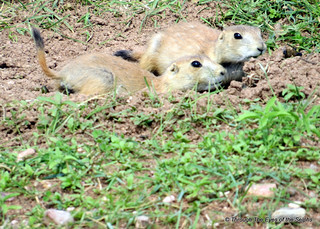
As we drove around the park we continued to see buffalo and a lot of prairie dogs. We stopped to watch them and take pictures as they played a game with us of now you see us, now you don’t.  The prairie dogs live in large social groups called towns.  The round mound of dirt that surrounds the prairie dog hole keeps rain water from running into the burrow and serves as an observation post to watch for danger.IMG_0216IMG_0219IMG_0222IMG_0228IMG_0225IMG_0229IMG_0233IMG_0237

Tomorrow we leave Mount Rushmore for the Badlands of South Dakota.