Category Archives: Exploring

Exploring

Redcrest, CA SEPT 27, 2018

While in Eureka on the California coast we ran the heat in the mornings and evenings and usually wore a jacket.  We left Eureka and headed inland. Remember when we talked about how chilly it was on the Oregon coast but if we had moved just an hour inland we would have been too hot? We followed U. S. Highway 101 south as it curved inland away from the coast. Our destination was Redcrest to spend several days seeing the majestic redwood trees. When we were outside preparing to leave Eureka we had on jackets. By the time we moved inland and reached Redcrest it was 88 degrees. Whew! What a difference. Time to switch from heat to AC. (Yes, we know our family and friends in Florida are laughing at our complaining about 88 degrees!)

We were last here in May, 2014 and pulled into the same RV park as before in tiny Redcrest, pop 112. It is a nice park but has absolutely no Verizon service.

Here we traded the beauty of the Pacific coastline with the magnificence of the redwoods.  And magnificent they are! IMG_4225

We spent our time driving along a road called “The Avenue of the Giants“ and hiked several trails in Humboldt Redwoods State Park, California’s third largest park and containing Rockefeller Forest, the world’s largest remaining contiguous old-growth forest of coast redwoods. 20180928_163540

Our first hike was on the Greig-French-Bell Trail.  This trail is located in the fog prone northern edge of the park and therefore has a lush ground cover. This particular area is so visually striking it is often used as the setting for movies and TV commercials. IMG_20180928_124855IMG_4232IMG_4235IMG_4243

The most well known landmark on the trail is the Girdled Tree where in 1901 the bark was mostly removed and sent to San Francisco so the people there could see what redwoods looked like. IMG_4241

We hiked for well over an hour along the many meandering paths along the trail. Of the trails we hiked it was the least well marked and most overgrown. This was also a great time of year to visit the park since none of the trails were crowded. This is the very end of their tourist season. IMG_4252

IMG_4246

This is not a trail, it is a large fallen tree!

Next up was the most famous trail in the park, Founders Grove. It is described as an ancient forest and one of the greatest forests on earth. 20180928_144757IMG_4253

One highlight was the Dyerville Giant, a redwood that once stood here for as long as 1,600 years. At the time it was taller, larger and older than any other tree around it.  It was 370 feet tall which is two feet taller than Niagara Falls, was seventeen feet in diameter, fifty-two feet in circumference and weighed over one million pounds. When it fell in 1991 it registered on the seismograph and the locals said it sounded like a train wreck. 20180928_150211IMG_4257IMG_20180928_154426-EFFECTSIMG_20180928_160237

Along this trail we also walked the Mahan Plaque Loop. IMG_4254IMG_20180928_145322IMG_20180928_145527IMG_20180928_152639

IMG_4259

Some giant redwood trees shatter when they fall

IMG_4261IMG_20180928_154516

Our final trail was the Rockefeller Loop Trail. This forest grove is dark and very dense. It had started to lightly rain while we were walking on this trail and we hardly felt any raindrops thanks to the redwoods being our natural umbrellas. IMG_4271IMG_4270IMG_4272IMG_4276IMG_4279IMG_4284IMG_4286IMG_4291IMG_4297

We had a wonderful time among these majestic giants. But now it is time to return to the coast. IMG_20180929_114041

Interesting facts:

  • Due to climate change and other factors, Coast Redwoods now only grow naturally in a narrow 40 miles wide and 450 mile long strip from southern Oregon to southern Monterey County in California.
  • Initially, J.D. Rockefeller did not want the forest named after his family, he donated millions of dollars to save these trees. Until 1951 it was known as the Bull Creek-Dyerville Forest. IMG_4267IMG_4268IMG_4277
  • Redwoods are so immense they live simultaneously in three climatic zones. The base, the stem and the crown are in three separate zones.
  • Redwoods need great amounts of moisture. This area of California has 65 inches per year average rainfall plus moisture from summer fog.
  • A very large redwood can release up to 500 gallons of water into the air each day. The redwoods are being affected by the ongoing California drought.
  • It may take 400 years or more for a decaying tree to become integrated into the forest floor.
  • Redwood roots grow only a few feet down into the soil but can grow laterally a hundred feet or more. Their roots can intertwine, helping each other stand up.
  • Redwoods live a long time because they have few enemies. They have a thick fire resistant bark and lack resin.
  • The scientific name for Coast Redwood is Sequoia sempervirens which means “ever living”.

UPDATED: Eureka, CA SEPT 21, 2018

California here we come!  We left Brookings, Oregon and crossed over into California.  Once we entered the state we had to stop at a California Agricultural Checkpoint.  We expected this and had not stocked up on fruits and vegetables ahead of time. They only asked if we had citrus fruits or mangos, which we didn’t so they waved us on. 20180921_084154

Our first stop was a six night stay in Eureka.  We were last here in May, 2014. Eureka has a population of around 27,000.  It has a rich history mainly based on the California Gold Rush in the mid to late 1800’s.  As thousands of people poured into the area in search of gold, their need for housing and the numerous redwood forests in the area provided a prosperous economy for northern California.  Lumber was manufactured and shipped from the region so the area became rich through lumber and shipping. Many people in Eureka became wealthy which can be seen in the many large Victorian style homes. As you may have guessed, Eureka received its name from the Greek word “Eureka” which means “I have found it” and was first used by the Greek mathematician Archimedes.  The gold rushers would say “Eureka!” when they discovered gold and the name stuck for the town.

One day we decided to drive along the California area known as the Lost Coast.  It was a bright sunny day when we left home. We stopped for lunch and by the time we reached the coast and stopped at Centerville Beach a short time later, this is what we found.  Plagued by the sea mist yet again! IMG_4207IMG_4212

The Lost Coast was given this name because of depopulation in the 1930’s.  Because of the steepness and geographical challenges of the coastal mountains, this stretch of the coastline was too costly for the state to build highways or county roads through the area.  Therefore it is the most undeveloped and remote portion of the California coast. Just the kind of area we enjoy visiting! Without any major highways the small communities in this area are isolated from the rest of California. IMG_4172

In Eureka we were reminded once again how expensive food and fuel (thirty cents a gallon) is in California!  Ouch! We still pay deposits on cans and bottles but it is only five cents compared to ten cents in Oregon.  California has a plastic bag ban so we must remember to take our own bags in all the stores.

Next stop:  Redcrest to see the redwoods

Eureka, CA SEPT 21, 2018

California here we come!  We left Brookings, Oregon and crossed over into California.  Once we entered the state we had to stop at a California Agricultural Checkpoint.  We expected this and had not stocked up on fruits and vegetables ahead of time. They only asked if we had citrus fruits or mangos, which we didn’t so they waved us on.

Our first stop was a six night stay in Eureka.  We were last here in May, 2014. Eureka has a population of around 27,000.  It has a rich history mainly based on the California Gold Rush in the mid to late 1800’s.  As thousands of people poured into the area in search of gold, their need for housing and the numerous redwood forests in the area provided a prosperous economy for northern California.  Lumber was manufactured and shipped from the region so the area became rich through lumber and shipping. Many people in Eureka became wealthy which can be seen in the many large Victorian style homes. As you may have guessed, Eureka received its name from the Greek word “Eureka” which means “I have found it” and was first used by the Greek mathematician Archimedes.  The gold rushers would say “Eureka!” when they discovered gold and the name stuck for the town.

One day we decided to drive along the area known as the Lost Coast.  It was a bright sunny day when we left home. We stopped for lunch and by the time we reached the coast and stopped at Centerville Beach a short time later, this is what we found.  Plagued by the sea mist yet again!

The Lost Coast was given this name because of depopulation in the 1930’s.  Because of the steepness and geographical challenges of the coastal mountains, this stretch of the coastline was too costly for the state to build highways or county roads through the area.  Therefore it is the most undeveloped and remote portion of the California coast. Just the kind of area we enjoy visiting! Without any major highways the small communities in this area are isolated from the rest of California.

In Eureka we were reminded once again how expensive food and fuel is in California!  Ouch! We still pay deposits on cans and bottles but it is only 5 cents compared to 10 cents in Oregon.  California has a plastic bag ban so we must remember to take our own bags in all the stores.

Next stop:  Redcrest to see the redwoods

UPDATED: Brookings, OR SEPT 14, 2018

After five months along the Oregon and Washington coast, we headed south to Brookings, our final stop in Oregon.  Even though we waited until almost noon to leave, there was still a heavy fog/sea mist hovering over the area. The drive from Bandon to Brookings is a very scenic and beautiful drive but because of the fog we were unable to see any of the coastline.  We passed over the Isaac Lee Patterson Bridge, over the Rogue River. 20180914_141347Oregon sure has some beautiful bridges! The picture doesn’t show the heavy fog which could be seen just by looking to the right toward the water.

We spent a week in Brookings at Harris Beach State Park, one of the most popular Oregon state parks.  We were last here in May, 2014. Due to its relatively mild climate and the fact that it gets more sun than any other Oregon coastal town because of its south facing position, Brookings is often referred to as “The Banana Belt of Oregon”.  Flowers bloom all year and 90% of the country’s Easter lilies are grown here. It is also home to many myrtle trees and coastal redwoods. IMG_4167IMG_20180921_094946-EFFECTS

One day we drove back up the coast along the Samuel H. Boardman State Scenic Corridor which parallels the Oregon Coast Trail, a 362 mile hiking trail along the entire coast of Oregon.  We stopped at several scenic overlooks including Arch Rock. IMG_4143IMG_4144IMG_4145IMG_4149IMG_4151IMG_4154

We wanted a picture of the Thomas Creek Bridge since it is the highest in Oregon but the bridge was having major construction.  We did find a path which was described as leading to a bridge vista point. A sign said the trail was severely eroded and caution was needed so I stayed behind while Bill walked down to get a picture .  Unfortunately trees have blocked much of the view. IMG_4165

While in Brookings we did a little more weekly shopping to take advantage of Oregon’s no sales tax.  We have enjoyed not paying sales tax but their ten cent deposit on all cans and bottles has been a bit of a pain.  This view in town shows the sea mist wafting through the area creating a smoky looking haze. 20180917_131143

Most evenings the fog prevented us from viewing good sunsets but we did manage to catch one. IMG_4114IMG_4120IMG_4122

Next up:  Eureka, CA

Brookings, OR SEPT 14, 2018

After five months along the Oregon and Washington coast, we headed south to Brookings, our final stop in Oregon.  Even though we waited until almost noon to leave, there was still a heavy fog/sea mist hovering over the area. 20180917_131143The drive from Bandon to Brookings is a very scenic and beautiful drive but because of the fog we were unable to see any of the coastline.  We passed over the Isaac Lee Patterson Bridge, over the Rogue River. 20180914_141347Oregon sure has some beautiful bridges! The picture doesn’t show the heavy fog which could be seen just by looking to the right toward the water.

We spent a week in Brookings at Harris Beach State Park, one of the most popular Oregon state parks.  We were last here in May, 2014. Due to its relatively mild climate and the fact that it gets more sun than any other Oregon coastal town because of its south facing position, Brookings is often referred to as “The Banana Belt of Oregon”.  Flowers bloom all year and 90% of the country’s Easter lilies are grown here. It is also home to many myrtle trees and coastal redwoods. IMG_4167IMG_20180921_094946-EFFECTS

One day we drove back up the coast along the Samuel H. Boardman State Scenic Corridor which parallels the Oregon Coast Trail, a 362 mile hiking trail along the entire coast of Oregon.  We stopped at several scenic overlooks including Arch Rock. IMG_4143IMG_4144IMG_4145IMG_4149IMG_4151IMG_4154

We wanted a picture of the Thomas Creek Bridge since it is the highest in Oregon but the bridge was having major construction.  We did find a path which was described as leading to a bridge vista point. A sign said the trail was severely eroded and caution was needed so I stayed behind while Bill walked down to get a picture .  Unfortunately trees have blocked much of the view. IMG_4165

While in Brookings we did a little more weekly shopping to take advantage of Oregon’s no sales tax.  We have enjoyed not paying sales tax but their ten cent deposit on all cans and bottles has been a bit of a pain.  This view in town shows the sea mist wafting through the area creating a smoky looking haze.

Most evenings the fog prevented us from viewing good sunsets but we did manage to catch one.

Next up:  Eureka, CA

Bandon, OR SEPT 9, 2018

We decided to leave Florence two days early because in our sightseeing travels we stumbled across a really great place to camp right near the beach. The price was certainly right at $12.50 a night with our America the Beautiful senior pass. IMG_4010

Horsfall Beach Campground, a national recreation area campground, was a great place with tall sand dunes. Only problem was they blocked the view of the ocean. We didn’t mind too much since great views of the beach was easily accessible just a short walk from our door. It is also a favorite place for ATV enthusiasts who enjoy racing up and down the dunes. IMG_20180907_142458IMG_3994IMG_3995IMG_3998IMG_4004

While we were there we drove thirty miles to the Dean Creek Elk Viewing Area to see beautiful elk grazing in the meadows. IMG_4011IMG_4017IMG_4035IMG_4015IMG_4016

We certainly enjoyed our two days camping near the sand dunes!

On Sunday we moved further south to Bullards Beach State Park in Bandon, Oregon. We crossed over the beautiful Conde McCullough Memorial Bridge, built in 1936 and once the longest bridge along the coast. We can certainly see why Highway 101 is also called “The Pacific Coast Scenic Byway”. IMG_4045

We were last at Bullards Beach in 2014 and we enjoyed exploring the Bandon area once again. Located in the state park is Coquille River Lighthouse built in 1896.  Located adjacent to the river and lighthouse, it is only forty feet tall and was last operable in 1939. IMG_4053IMG_4047IMG_4055

We enjoyed visiting Old Town Bandon again where Bill returned to the same Bandon Fish Market from 2014 and had some fish and chips. Back in 2014 there was a wonderful bakery owned by an elderly couple and I was really looking forward to going back there. Sadly, it is now out of business. IMG_4052IMG_0614

Bandon is known as the “Cranberry Capital of Oregon” and its main export is cranberries. There is an Ocean Spray plant in Bandon  that receives, cleans and ships from 300,000 to 400,000 pounds of cranberries per day during the peak of the harvest season which is September through November. One interesting tidbit is that when some of the workers work in the bogs they walk on stilts to keep from crushing the berries. The whole process of planting to harvesting is quite fascinating but too detailed to go into on the blog.  We remembered seeing the cranberry bogs last time we were here in June, 2014 and they looked like this. IMG_0615

Don’t know whether it is the very dry weather or time of year, but this time they looked like this. IMG_4097

The beaches here are very popular with rock-hounds since they are strewn with agates, jasper and other semiprecious stones.  In recent years shifting sands have revealed the remains of sunken ships. More than hundred ships, including a 1918 steamship, have shipwrecked in this area.  In fact this area is known as the “Storm Watching Capital of the World”. The beaches with their amazing rock formation sometimes experience winds at hurricane force speed, hurtling sprays of water upon the rocks and shore, sometimes 200 yards straight up.  We could see the power of the ocean with the huge amount of driftwood that lay on the beaches. We read an article where a woman described how people go to the beach and build forts and structures out of the driftwood to be enjoyed during the spring, summer and fall, knowing it will all be destroyed by the winter storms. IMG_4051

One day we drove the scenic Beach Loop Drive, stopping at one of our favorite places we remembered from our last visit called Face Rock State Scenic Viewpoint. Here you can see a rock in the shape of a woman’s face. IMG_4068There is a legend to go with Face Rock which was first told by Old Indian Mary, a member of the Coquille Native American tribe.  Legend has it that Seatka, an evil spirit of the ocean, caused all the storms that blew up and down the coast. If Seatka could cause a person to gaze into his eyes, he would possess their soul forever. Chief Siskiyou and his tribe came to the ocean to feast on the great quantities of seafood. His daughter, Princess Ewauna, failed to heed her father’s warning to stay away from the sea.  Seatka captured her and carried her away. She turned her face away so he would not possess her soul and she turned to rock, with her face forever turned northward toward the moon. If you look closely at the picture you can see her face turned with her hair to the left and her nose and mouth visible to the right. IMG_4060

Speaking of Native American legends, we read that the town had almost been destroyed twice by fire, once in 1914 and 1936.  The second fire in 1936 devastated the town, destroying the entire business district and most of the residences. They do not know how the fires started, but the surrounding shrubs, dead leaves and trees quickly fueled the fire.  The people headed to the nearby beaches to escape the fire, with some people burying themselves in the sand to escape the flames. Legend has it when the white men took the land from the Native Americans, they put a curse on the town and that is why the town has almost been destroyed twice. IMG_4059IMG_4061IMG_4062IMG_406320180911_150020

Another day we drove to Cape Blanco Lighthouse which is the most western point in Oregon. This lighthouse built in 1870 is still an operational lighthouse and is the oldest operating lighthouse in Oregon. It is 256 feet high and can be seen for more than twenty miles out to sea.  IMG_4070IMG_4072IMG_4073IMG_4074IMG_4075IMG_4078

Next we drove to Port Orford which is geographically the westernmost incorporated city in the contiguous United States.  Established in 1851, it is the oldest platted town site on the Oregon coast. By the time we got to Port Orford the sea mist was rapidly moving in and we were unable to get good pictures.

Next up: Brookings, Oregon, our last stop in Oregon before returning to California.

Florence, OR AUG 26, 2018

On August 26th we headed south to Florence, Oregon (pop 8,000)  for a two week stay. We wanted to enjoy the Oregon coast and wait out the Labor Day holiday and all the traffic it brings. On the day after Labor Day all the full time RVers start singing “it is the most wonderful time of the year” because all schools are in session, the campgrounds empty out and things really get quiet. No more dodging kids on bikes or fighting for campground spaces. Nine months of peace and quiet. Ahhhh.

In spite of the holiday traffic and crowds, we did get in a little sightseeing. Florence is a great place to visit the Oregon Dunes National Recreation Area, a forty square mile park and the largest expanse of coastal dunes in North America with peaks up to 300 feet. The area was busy with dune buggies and ATVs which are allowed on the dunes. IMG_20180902_150732IMG_20180902_150222IMG_3965IMG_3967IMG_3968

IMG_20180905_145144-EFFECTS

US-101 Siuslaw River Bridge, Florence OR

Since Florence is a river town along the Siuslaw River, we rode to both the North Jetty and South Jetty where the mouth of the Siuslaw River meets the Pacific Ocean. During our time in Florence it was both chilly and windy; we could certainly feel the cold wind at the jetties. IMG_20180905_145000IMG_20180901_115934IMG_20180901_121721IMG_20180901_121233IMG_20180901_122010

Another day we drove south to see the Umpqua Lighthouse. Built in 1894, it is the only lighthouse on the Oregon coast that emits a red and white light. There are eleven lighthouses on the Oregon coast. IMG_3960IMG_3961IMG_20180903_120931-EFFECTS

The day after Labor Day we drove north to Heceta Head Lighthouse, also built in 1894 and located 206 feet above the Pacific Ocean.  This area of the Oregon coast is especially scenic and beautiful. We never tire of seeing this view! The sea mist, which has annoyed our picture taking all summer, persisted.

IMG_3978

Heceta Head Lighthouse in the Distance

IMG_3954IMG_3974

At the scenic viewpoint where these pictures were taken, we saw down on the rocks hundreds of sea lions barking at each other and frolicking in the icy cold water. IMG_3958IMG_3976

It was a blustery chilly day and I shivered at the thought of being in the water. We could not only see and hear the sea lions, we could smell them too. Certainly not a fragrance anyone would want to bottle! IMG_3975IMG_3986

On the way home we stopped at the very unusual Darlingtonia State Natural Site. Located here is an unusual plant which traps and digests insects. It is also known as the cobra lily and pitcher plant. IMG_3989

Native to the bog areas of Northern California and Southwestern Oregon, insects are lured into the leaf opening under the hood by nectar on the edges of the openings. Once inside the insects are confused and unable to find their way out. They fall into a pool of liquid at the base of the leaf where the insect is digested and absorbed. IMG_3991IMG_3990

Bill and I agreed the plants reminded us of something you would see on Outer Limits or Twilight Zone TV shows. Really creepy. As we stood there we saw a butterfly, moth and fly buzz around the plants. We found ourselves holding our breath and then saying, “No! Don’t land there! Danger, danger! “

And with that, it was time to head a little further south. Oregonians told us Oregon has one day of summer a year. We thought they were kidding. They weren’t. It has been cloudy much of the time, chilly and windy (mid sixties for highs and 50 at night). Now, not all of Washington and Oregon is this cool. If we had gone inland toward Seattle or Portland, we would have had plenty of heat.  Since we will be hugging the coast as we drive south it probably won’t get much warmer. But there is something psychological about heading south in the fall that at least makes you feel warmer.

Next up: Southern Oregon and our last days before hitting California

Central OR Coast, Part 2, AUG 24, 2018

Continuing with our time in Yachats at the Tillicum Beach Campground, we were relieved to finally have the smoky haze gone and see sunshine and clear skies. We drove seven miles south to the Cape Perpetua Headland which at 800 feet is the highest point accessible by car on the Oregon coast.  It was a fairly clear day and there were beautiful views extending 37 miles along the Oregon coastline. Captain James Cook first sighted the Headland in 1778 and named it after Saint Perpetua. 20180824_140451IMG_20180824_141448

In 1933 President Franklin D. Roosevelt formed the Civilian Conservation Corps and Cape Perpetua was a base camp.  The CCC’s built a stone structure which we were able to stand in at the overlook. They chose to build this structure here because of the magnificent views. The stone structure served as a lookout for enemy ships and planes during WWII. IMG_3822IMG_20180824_141755-EFFECTS

One day we were out geocaching and whale watching and stopped to pick some blackberries.  In a short time we had enough for a cobbler. Oregon produces nearly 100% of the nation’s commercial blackberries, black raspberries and boysenberries. They also grow more than 70 million pounds of blueberries a year. 20180824_15491820180824_154949

We spent quite a bit of time stopping at viewpoints looking for whales, often with much success. IMG_20180824_155933IMG_3825IMG_392920180825_161412IMG_3931

One day we took chairs and sat at a viewpoint watching and waiting. As you can see from this picture, it was very chilly.  20180825_133906

We could see whale watching tour boats circling around which meant whales were close by. It takes time and patience when watching for them. IMG_3875IMG_3921

Their pattern is usually they surface and blow or spout to replenish their oxygen supply.  The number of blows depends on how many minutes they have been down, one blow for every minute down. The spout or blow shoots nearly twelve feet high, expelling 400 liters of air in a single blast. They then dive below the surface for three to five minutes and swim 300 to 400 yards. They then come up for another series of blows. IMG_3937

If they are frightened or sense danger they may stay down for 30 minutes. Sometimes they dive and can reappear a quarter of a mile away, so you really have to have a keen eye as you search the horizon. Some whales “spyhop” which means they lift their heads above the surface of the water to get a better view of their surroundings and spy on local whale watching tour boats. Whales have the largest brain of any animal on earth and they are very intelligent and curious. Those whales sure are quick which makes it really hard to get a good picture! IMG_3877-ANIMATIONIMG_3887-ANIMATION

the whales pass twice a year while migrating north in the early spring and south in early winter. Those are the best time to see the whales but there are some resident gray whales who hang out in this area year round, feeding close to shore.  There are volunteers at 24 viewpoints along the coast from Ilwaco, Washington to Crescent City, California to answer questions and help visitors spot whales. IMG_3938-ANIMATION

Our last day in the area we drove north to Cape Foulweather which was discovered by Captain James Cook in 1778.  The weather was particularly stormy the day Cook arrived with winds of 100 MPH so he named the area Cape Foulweather.  Winds of 100 MPH are not uncommon here during storms. 20180825_14181120180825_141746

This area is the first geographic location named on his voyage to the north Pacific coast.  Captain Cook’s accounts of this voyage were published and aroused world wide interest which was followed by the fur trade. The views here are stunning. IMG_393620180825_143432

BYE! IMG_3828

Next up: Florence, OR and huge sand dunes

Central OR Coast Part 1, AUG 21, 2018

After two and a half months in Washington state it was time to continue south back into Oregon. We really hated to leave gorgeous South Beach and our campsite overlooking the ocean. As we pulled out early in the morning there was already someone waiting to grab the site.

We headed south down highway 101.  We spent one night at the Elks Lodge in Hoquiam, WA and the next morning we crossed the Astoria-Megler Bridge which spans the Columbia River. It is the longest continuous truss bridge in North America. In the middle of the bridge is the state line between Washington and Oregon. And just like that, we were back in Oregon!  20180819_111436(0)20180819_112009

Unfortunately it was a foggy morning and we were unable to get good pictures of the bridge or view from the bridge of Astoria. 20180819_11184720180819_111911

We stopped in Seaside for a two night stay and then drove to Tillicum Beach Campground located in the Siuslaw National Forest for a five night stay.  

IMG_3584

US Highway 101 on the Oregon Coast

Along the way we passed the 45th Parallel, the halfway point between the Equator and the North Pole. We were last at the Tillicum campground in June 2014. Our view of the ocean here wasn’t quite as nice as South Beach, but we could see the water and hear the waves crashing.

Tillicum National Forest campground is located just a few miles from the tiny town of Yachats, pop 700. Our first couple days there the sky was hazy and smoky from the Canadian wildfires and we were under an air quality alert. We drove around the beach at Yachats but it was hard to get any pictures through the haze.

We definitely prefer the Oregon coast over the Washington coast. The views driving down the coast are better, the beaches are sandy rather than rocky and the beaches are much more accessible. The beach at the Tillicum campground could be easily reached by walking down some steps. IMG_3760

Even though the haze was still in the area the next day we drove north to see two lighthouses. We crossed the beautiful Yaquina Bay Bridge into Newport and visited the Yaquina Bay Lighthouse, the second oldest standing lighthouse on the Oregon coast.  IMG_3772IMG_3773IMG_3769

Built in 1871 it was decommissioned in 1874. Yes, after only three years! It is the only existing lighthouse with the living quarters attached and the only historic wooden Oregon lighthouse still standing. It was restored to a working lighthouse in 1996 as a privately maintained by the Oregon Parks and Recreation as a navigation aid for the United States Coast Guard. Today a steady white light shines from dusk to dawn. IMG_3764IMG_3767

Next we drove to Yaquina Head Outstanding Natural Area.  The Yaquina Head Lighthouse located there, is also called the Cape Foulweather Lighthouse because when it was built they mistakenly thought they were at Cape Foulweather. At 93 feet, it is the tallest lighthouse in Oregon. It was first lit in 1873 and was automated in 1966.  It is still active today. IMG_3778IMG_3801

We first stopped at the Interpretive Center where we saw exhibits on whales and watched a movie about the area. 

IMG_3779

Even the Doors have Lighthouse Silhouettes

IMG_3776

We then drove to the lighthouse which has beautiful views. IMG_3781IMG_3804

We could see whales spouting in the distance, seals lounging on rocks and lots of birds. IMG_3799

As we walked up towards the lighthouse we noticed a bad smell. At first we thought it was from the seals. Then in the distance we saw huge rocks with  seabirds sitting on them. The rocks were covered in white bird poop. That was the source of the smell. Yuk! IMG_3802

We read that the common murres bird colonies here are the most rapidly growing on the Oregon coast. IMG_3791IMG_3790

Sunset from our beach side campsite. IMG_3806IMG_3809IMG_3813

Next up : more time on the Oregon coast

Beach 4 Olympic NP, WA AUG 17, 2018

While we were staying at South Beach we drove just up the road (US 101) to “Beach 4” in the Olympic National Park.  We had read there was some great tidal pool viewing during low tide. It is very important to look at the tide charts if you want to do any beach activities on the northwest beaches. Most of these pictures can only be taken during low tide. IMG_3506IMG_3557IMG_3514IMG_3519

We hiked the short trail towards the beach which abruptly stopped at the end of a small bridge.  From here you had to climb down an uneven rocky cliff to the beach. 20180817_110507

I am not ashamed to say I was too scared to do it. It is not only steep but the rocks are tilted at odd angles due to continental movement over the past 15 million years. We were shocked that the national park did not provide a safer way to get to the beach. Even though several people came by and carefully picked their way down, I refused to try. I just do not like rock scrambling. I encouraged Bill to go ahead without me and I was more than happy waiting on the bridge. At one point a park ranger came by leading a nature walk and helped his group down the worst part of the rocks. I was still not willing to do it. 20180817_111146

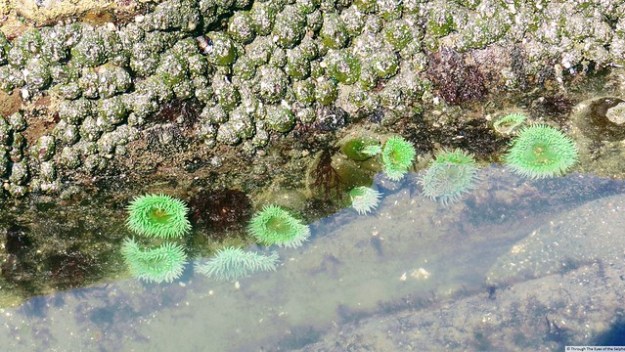
Bill walked down the beach to some rock outcroppings and took some great pictures of many anemones, lots of starfish, a jellyfish and an eagle. I enjoyed seeing the pictures just as you are now. Bill said he had to do a lot of rock scrambling to get the pictures and even if I had gone down to the beach I probably would not have wanted to climb on the rocks to see anything. IMG_3507IMG_3515IMG_3516IMG_3527IMG_3528IMG_3530IMG_3531IMG_3537IMG_3538IMG_3544IMG_3548IMG_3554IMG_3556IMG_3560IMG_3563IMG_3567IMG_3569IMG_3576IMG_3578IMG_3580

Yep, happy just to look at the pictures! While the Washington beaches are rugged, wild and absolutely beautiful, they are not easily accessible. They all require a degree of hiking; some short hikes, some challenging hikes and as I found out, occasionally some rock climbing. I prefer beaches where you park and walk right out across the sand to the water. IMG_3581


IMG_3505

Another Example Of A Nurse Tree

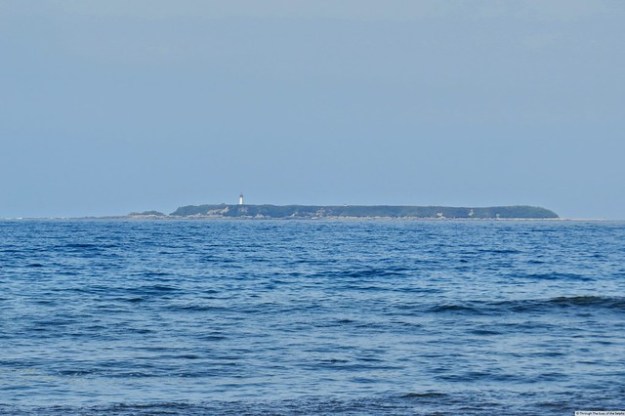
We were happy to see Destruction Island and a lighthouse built in 1891. IMG_3520IMG_3526

Next: As fall approaches we head south back to Oregon