On Tuesday we drove just a few miles down the road to the Kasha-Katuwe Tent Rocks National Monument. The 4,645 acre Park was established in 2001 after being designated an Area of Critical Environmental Concern and is managed by the Bureau of Land Management.
In order to access the Park you need to drive through the Pueblo de Cochiti Reservation. Kasha-Katuwe means “white cliffs” in the native language of the Pueblos. There is evidence of human occupation in the area for over 4,000 years with the first Pueblos in the 14th and 15th centuries. The cone or tent shaped rock formations were created 6 to 7 million years ago from volcanic eruptions of the Jemez volcano that left pumice, ash and volcanic rock over 1,000 feet thick. The tent rock shapes can be up to 90 feet tall.
Here we hiked two trails. The first trail, the Slot Canyon Trail, was a difficult trail involving some difficult scrambling over rocks and rock climbing. I really enjoyed walking in the Slot Canyon but at one point I just didn’t have enough upper body strength and had to give up and let Bill go ahead while I waited.
The second trail, the Cave Loop Trail was a shorter and easier trail.
Bill found a snakeskin but luckily not the owner!
We met a very nice couple from Ohio on the trail and enjoyed talking with them along the way. Before heading home we drove to the Veterans’ Memorial Scenic Overlook with a beautiful view of the picturesque Peralta Canyon and Jemez Mountain peaks.
Next up: Albuquerque and the Albuquerque International Balloon Fiesta.
This replaces previous post of the same name; three videos are available below.
On Tuesday we took the RV to get two new front tires which took a good part of the day. On Wednesday morning we were ready to head out for some more St Louis sightseeing. Our plan for the day was to visit Forest Park where there were several places we wanted to see.
Forest Park is one of the largest municipal parks in the United States (larger than Central Park) and covers 1,300 acres. This park was the site of the 1904 World’s Fair. First we stopped at the Visitors Center to purchase a $2.00 all day trolley pass that would allow us to hop on and off at various places in Forest Park.
We hopped on the trolley and our first stop was at the St Louis History Museum. A free museum, it was built on the site of the main entrance to the 1904 World’s Fair. It was originally built as the first national monument to Thomas Jefferson and honors Jefferson’s role in the Louisiana Purchase, preceding the Jefferson Memorial in Washington DC. Exhibits feature the history of St Louis from 1764 to the present day. While we were there they were having a special exhibit on Route 66 called “Route 66: Main Street Through St Louis”. Route 66 was known as the “Mother Road” and the “Main Street of America”. We really enjoyed seeing the exhibits on the important role this famous road had in American history.
Do you know what these are? (Answer at end of Blog)
They also had a replica of the Spirit of St Louis airplane. This Spirit of St Louis Sister Plane was used in the 1957 Jimmy Stewart movie.
We rode the trolley to our next stop, the St Louis Science Museum, another free museum and one of only two free science centers in the United States. Advertised as one of the largest in the country, one of the top five Science Museums in the country and one of the most visited in the world with 700+ permanent galleries as well as a planetarium and OMNIMAX Theater, our expectations were really high and we were somewhat disappointed.
It was a great science center for children but did not have much for adults. Unfortunately we just missed a King Tut exhibit set to open May 27th. Our favorite thing was the pedestrian bridge over the interstate connecting the north and south sections of the Center. The bridge had glass windows in the floor where you could look down and see the vehicles pass underneath you. They also had windows with radar guns so you could clock the speed of the vehicles as they passed by.
select video above also
Select video above
We took the trolley back to our car and drove a short distance to Pickles Deli, a highly rated deli where Bill got his favorite Reuben sandwich. On the way out of Forest Park we stopped to take a picture of a Confederate statue. We noticed a news van and some people milling round. Ironically minutes later on the way to the deli we were listened to the local radio station and heard that this very statue was vandalized the evening before. Like many other Confederate statues across the country today, discussions are being held about removing this Confederate statue from Forest Park.
On the way back to Forest Park we drove by the beautiful Cathedral Basilica of Saint Louis, built between 1907 and 1914. We didn’t have time to go inside but that is definitely on our list for next time.
Our final stop of the day was the St Louis Zoo. This zoo is free and is advertised as one of the top zoos in the United States and was voted America’s top free attraction. This zoo really wowed us and we really enjoyed our time here and was quite impressed. During our time in St Louis we were really impressed with all the free museums and other places that usually charge an admission in other cities. Well done, St Louis!
The zoo has over 24,000 animals, many of them rare and endangered.
Golden Lion Tamarin
We did pay to ride the Emerson Zooline train which is the nation’s largest miniature rail line, providing a 1.5 mile long narrated tour through the 90+ acre park. The train engines are one third size replicas of the Iron Horse, the historic steam locomotive that helped build the transcontinental railway. We passed through two tunnels as we traveled around the park.
We loved seeing all the animals but our favorites were the giraffes, hippos and penguins. We were amazed at how close we got to the animals and were especially thrilled with the large number of penguins.
Select video above
By the time we got back to the car our Garmin pedometers said we had walked over seven miles. What a great day!
Cody has a wonderful museum called the Buffalo Bill Center of the West. It is actually five museums all under one roof on over seven acres. You could easily spend an entire day there seeing the Buffalo Bill Museum, the Draper Natural History Museum, the Cody Firearms Museum, the Plains Indian Museum, and the Whitney Western Art Museum.
North African Miquelet Jezail given to Jefferson in 1805 This gift influenced the inclusion of the lyrics “to the shores of Tripoli” in the Marine’s Hymn
Bill loved visiting the Cody Firearms Museum which has one of the largest firearms collections in the world. They had firearms on loan from the Smithsonian as well. They had firearms Bill had never seen. I especially enjoyed seeing a musket once owned by Thomas Jefferson as well as a gun owned by Annie Oakley and several former U.S. Presidents. I loved seeing the guns used on the TV set by Ben Cartwright and his sons on Bonanza as well as the Lone Ranger. Some interesting people in the development of firearms:
Oliver F. Winchester was a successful shirt manufacturer established Winchester Repeating Arms Company in 1866
John M. Browning (1855 – 1926)
was the most ingenious and prolific arms designer America has produced
his designs were manufactured under patent assignment by noted firms like Winchester, Colt and Remington
from 1884 to 1901 he worked for Winchester and sold all his patents to them
he designed the Colt Model 1911, “Army .45”
We also spent a lot of time in the Buffalo Bill Museum which had many exhibits about the life of Buffalo Bill, including movie footage of one of his Wild West shows. He took his Wild West shows to England and Europe, once performing for Queen Victoria.
The Buffalo Bill Center of the West is often called the Smithsonian of the West and we could see why!
Crazy Horse
Sacagawea
We really enjoyed our short time in Cody. There were things we didn’t have time to see and added Cody to our list of places we would like to return to someday.
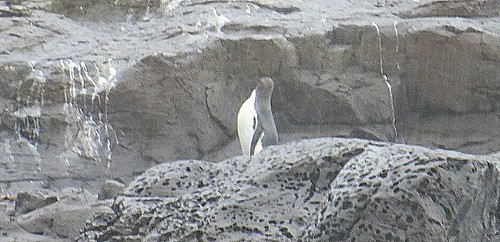
After our visit to Mount Cook we stayed overnight in Timaru. The next morning we drove towards Dunedin. Along the way we passed the 45 parallel south which meant we were now closer to the South Pole than the equator. We stopped at Katiki Point because our tour book said we might be able to spot some yellow eyed penguins, the rarest and most endangered penguins in the world and native to New Zealand. One of our goals while in New Zealand was to see penguins, preferably in the wild in their natural habitat.
We parked and began to walk along the beautiful coastline toward the point. Suddenly Bill stopped and motioned toward a bushy area. There, a few feet away, were two yellow eyed penguins. So exciting!! They are now at the time of year when they are molting, so they looked a little different from what you might expect. At first we barely moved and didn’t utter a sound for fear of scaring them away. Once Bill took some pictures we moved closer down the path and they didn’t appear at all afraid of us. This area is a highly protected reserve and we think they have become accustomed to people and know they have nothing to fear. The area is under video surveillance and everyone is expected to follow the rules or face stiff penalties.
We proceeded down the trail and came upon one more penguin closer to the rocky shoreline. What was really neat was there was also a fur seal not far from the penguin so we were able to get a picture of them together.
We walked to the end of the point passing by huge fur seals lounging on the rocks and upper hillsides. We could have literally stepped over the seals and they would have cared less. We enjoyed the view at the end of the point and walked back to the car, so pleased with our penguin discoveries.
Along the way to Dunedin we saw breathtaking views of the ocean with sheep grazing along the cliffs and people on horseback riding on the beach. As we crested the top of a steep hill, we had a breathtaking view of the Dunedin nestled next to the ocean. The first European settlers were Scottish settlers who arrived in 1848. It was originally named New Edinburgh but the name was changed to Dunedin which is an old Celtic name for Edinburgh.
“The people are Scotch. They stopped here on their way from home to heaven, thinking they had arrived.” Mark Twain
Nearby goldfields generated wealth in the area and New Zealand’s first university, the University of Otago, was established here. The discovery of gold encouraged the arrival of Chinese miners and by 1871 there were over 4,000 Chinese miners in the area. Many settled permanently in Dunedin and are an important part of the community today.
We arrived in Dunedin late in the day since our penguin adventure took longer than expected. We didn’t really have much time to explore the city before dark. We did drive to Baldwin Street which is named in the Guiness Book of Records as the steepest street in the world. The street runs from 98 feet above sea level to 330 feet above sea level with a slope of between 20% to 35%. The lower part of the street is asphalt but the upper reaches of the street, which is the steepest, is surfaced in concrete for safety on frosty mornings.
Dunedin is often called the eco-capital of the world because of all the nature and wildlife in the area. The Dunedin Railway Station is said to be the most photographed building in New Zealand.
I wish we had had more time to explore this charming city with its beautiful old Victorian and Edwardian buildings.
Next we headed to Invercargill. Along the way our tour book suggested we stop by Nugget Point Lighthouse, which is the most photographed lighthouse on the South Island and a location often seen on postcards and brochures of New Zealand. The book said it was possible to see penguins here, though the best time to see them was between 5 and 6 PM We saw a hide which is a little structure where people can hide so they can see the penguins but they don’t see us. It was early afternoon and we didn’t want to wait around that long since we still had a long drive to Invercargill. We did trudge to the end of the trail where the lonely lighthouse sat on the edge of a rocky cliff. We enjoyed talking with a couple visiting from England.
Our time in Invercargill was short but Bill did have time to visit the E Hayes Motorworks Collection where there is a remarkable vintage motorcycle and car collection, but more importantly the world’s fastest motorcycle. Ben Munro, built the World’s Fastest Indian, was born near Invercargill. In 1920 he bought a Indian motorbike for $120 which he modified and tuned to a record of 190.07 mph, a world record.in 2005 the movie “The World’s Fastest Indian” was released and starred Anthony Hopkins as Burt Munro.
Also while in Invercargill we spent one day on another penguin hunting adventure. Using the tour book tip of best places to look, we first headed to the most southern point in all of New Zealand. Here we were the closest we would get to Antarctica. While hiking to the point we walked in a field of sheep who at one point trotted ahead of us as if showing us the way. I tried to get a picture of them up close with Bill but they were very skittish.
We intentionally set out late in the day because the best time to see penguins is around dusk when they swim back to shore to their nest after being at sea ALL DAY. We joined a throng of people waiting anxiously for their arrival in a roped off area with a DOC (Department of Conservation) employee there to be sure everyone followed the rules. We had to stay behind the yellow ropes and no flash photography because they think it hurts the penguins eyes. We waited an hour and a half in a very cold drizzle until we were rewarded with one penguin fairly far away. Just as we were about to give up someone spotted another one closer. He washed up on shore and then proceeded to hop across some rocks and then stop and preen. After watching him for awhile it was getting dark, we were pretty wet and really cold, and we had over an hour’s drive back to the motel. Was it worth the hour and a half wait in the cold and rain? Absolutely!!
Some observations:
We noticed many trucks with an engine breathing apparatus (snorkel). Evidently they like to take their trucks and play in the water and need this engine snorkel.
You occasionally see a business or house for sale, you never see land for sale.
It is strange to see deer fenced in. We are used to seeing them only running wild. Bill has enjoyed eating lamb and venison in New Zealand. Wild deer can be hunted year round.
The motel guest laundry and laundromats use cold water only. This totally freaks out a germ freak like me!
We are enjoying meeting and talking with people from other countries around the world. There are many tourists here from Australia, France, Germany and Japan.
We had not originally planned on visiting this national park, but after reading about it we realized we were about to miss a real treasure so we changed some reservations and altered our itinerary to allow us to spend a day and night in the park.
In 1851 Captain J. L. Stokes, while mapping the West Coast of New Zealand, sighted a huge mountain which he named Mount Cook after Captain James Cook. The Maori called the mountain “Aoraki” which means cloud piercer. In 1998 Mount Cook was renamed Aoraki Mount Cook to incorporate its Maori heritage. Aoraki Mount Cook is the only place to have its English name preceded by its Maori name.
Aoraki Mount Cook National Park became a park in 1953 and is 270 square miles, with 40% of the area glaciers. The park has 27 mountains with 140 peaks more than 600 feet high. Mount Cook at 12,316 feet is the highest in New Zealand. The park is a gorgeous combination of grasslands, huge river valleys, lakes and snow/glacier covered mountains.
Sir Edmund Hillary is New Zealand’s most famous New Zealander. It was at Mount Cook in 1948 that he climbed his first major mountain, including the difficult south face of Mount Cook. Hillary trained here for his Everest and Antarctica expeditions.
We splurged and stayed overnight at the Aoraki Mount Cook Village – Heritage Hotel with a breathtaking view of Mount Cook from the balcony in our room.
Before heading home the next day we decided to hike the Tasman Glacier Lake Trail which gave us a view of Tasman Glacier Lake with small icebergs. Our non-trusty tour book called it an easy 15 minute walk each way. When are we going to learn not to trust that book? The hike started out easy enough and we enjoyed meeting a couple from South Carolina along the way. About a third of the way up the trail we started to come to some rocks to climb on. Uh oh! The climb got steeper with a greater number of rocks. I do okay with steep trails, but I don’t do well with rocks. I would have never made it to the top without my walking sticks and Bill’s patience and helping hand. I felt like quite the wimp as young children sailed past me over the rocks and young people rerouted around me. By the time we got to the top I was sufficiently traumatized and stood frozen to the spot while Bill took pictures of the lake. The icebergs over the years have dwindled.
While Tasman Glazier is New Zealand’s largest glacier and icebergs periodically tear away from the face of the glacier into the rapidly growing lake, the effects of global warming and other climatic processes are taking their toll on glaciers. The Tasman Glacier is melting and calving at an exponentially increasing rate. In recent years the Tasman Glacier has changed from mainly melting to a calving (pieces breaking from the glacier) and melting resulting in a lake that is rapidly increasing in size.
After Bill enjoyed the view and I pondered how in the world I would ever get down, we began our descent. Did I mention we also had winds of around 30 mph during the ascent and descent? Actually the descent wasn’t nearly as bad as climbing up had been but I was relieved to see the car in view. This was my most difficult hike ever and I was proud of myself for doing it.
Some observations:
It feels strange seeing the leaves begin to change color and the farmers clearing their fields as autumn begins in New Zealand.
The drivers in New Zealand are very courteous. If you turn on your signal to change lanes they immediately back off and allow space for you. Merging is called “Zip” on traffic signs because you are supposed to merge alternating one lane at a time like a zipper.
Cost of living here is very high. There is a GST (Goods and Services Tax) of 15% added to all goods and services purchased in New Zealand.
There is no industry in New Zealand so everything is brought in. For example they ship their logs to Japan where they are made into paper products and shipped back to New Zealand. Products may be labeled made FROM New Zealand products but it doesn’t say made IN New Zealand. Everything in New Zealand is centered around farming and horticulture. One man Bill talked with said a Ford F150 pick up truck here would cost about $95,000 New Zealand dollars. The man has family in Dallas, Texas that he goes to visit and he said he is amazed how cheap everything is in America.
We left Nelson and headed to Kaikoura. During the two hour drive we saw many fields of sheep and cattle, as well as several fenced fields with large herds of deer and a field of llamas. Venison is a popular item on menus here.
Shortly before reaching Kaikoura we stopped at Ohau Point where there were a large number of seals of all ages and sizes on the rocks and in the water. People were able to walk down on the rocks and get up close and personal with the seals. They had no fear of people and we hope that people respect the marine life rule: look but don’t touch. While looking at the seals we talked with a family from New York State. Always great to meet people from back home!!
We loved our motel room in Kaikoura. For the equivalent of $106 American dollars we had a large room with a view of the ocean and small kitchenette, but best of all was the bathroom. It had heated towel racks, a heated floor and a heater when you turned on the fan so the air was warm when you stepped out of the shower. Loved, loved, loved it!
After a short one night stay in Kaikoura we headed to Christchurch, the largest city on the South Island with a population of 340,000. The first recorded settlers here were Maori, with European settlers arriving in 1840. In 1850 the first organized group of English immigrants arrived on four ships and are considered the city founders. In 1856 it was declared a city and land was set aside to build the first dwelling, a cathedral.
It is called the “Garden City” but today it is very much a city under extensive regrowth and change. The people of Christchurch are an extremely strong, resilient people full of hope and strength and resolve. You see, since 2010 Christchurch has been shaken by over 10,000 earthquakes. One earthquake was 7.1 magnitude, three earthquakes over 6 magnitude, fifty-seven over 5 magnitude, and many thousand more. The 7.1 earthquake occurred in 2010, but the 6.1 earthquake in February 2011 did the most damage since it was shallow and close to the city center. The 2011 earthquake killed 185 people and brought down many buildings already weakened from the 2010 quake.
The destruction was evident to us as we walked and drove around the city. Complete city blocks in the downtown area are now vacant after the destroyed buildings were razed. In the face of all this tragedy the people have risen to meet the challenge. Two perfect examples are the Cardboard Cathedral and Re:Start.
When the original Angelica Christchurch Cathedral was badly damaged in the quake, the people of Christchurch, just like the city founders before them, found a way to build a church. Japanese architect Shigeru Ban designed one of his famous “Emergency architecture” buildings in which a cathedral was built from 96 cardboard tubes, timber beams, structural steel and a concrete pad. The cathedral opened in August 2013 and is a symbol of innovation, hope, and inspiration. It is built to last for fifty years while the new permanent cathedral is designed and built.
Another example of the tenacity of the people is Re:Start. After the quake destroyed their stores in the downtown area, business owners brought in converted steel shipping containers and operated business from these containers. While many containers remain, we read that the containers are gradually disappearing as more permanent stores are being built. We walked through the shopping area and had lunch at one of the vendors set up near the containers. Bill had a lamb souvlaki which he said was very good.
There was evidence everywhere of construction as the city is hard at work rebuilding. It is somewhat sad to see all the beautiful old buildings razed to make way for the larger new ones because the real charm of the city lies in these past structures.
As we walked their streets, ate in their restaurants, shopped in their stores, stayed at their motel, we were always met with smiling, friendly, cheerful people. It was our pleasure to meet them. They are an inspiration!
The next day we took a day trip to Arthur’s Pass which is the highest pass over the Southern Alps, connecting the east and west sides of the South Island. The Southern Alps is a mountain range which runs along the western side of the South Island and forms a natural dividing range along the entire length of the South Island. Arthur’s Pass is both a national park formed in 1929 and a small village where we had lunch at a small cafe.
After lunch we hiked to Devil’s Punchbowl, a 430 foot waterfall. We use a tour book which we have found tends to underestimate the difficulty of the hikes, and this was another example. This hike was marked as an easy though steep hike to the waterfall. Not quite! We met a couple coming back from the hike and the woman shook her head and sighed and mentioned 289 steps. Didn’t seem a big deal to us until we had started the hike and discovered that some of the 289 steps were cut into the earth and/or high steps which really presents a challenge for my short legs. It was hard for me but the view at the top was amazing. While there we met people from Seattle and Tampa, Florida. For some reason we are meeting many more Americans on the South Island.
Some observations:
Most motels have guest laundry and if you don’t want to use the dryers they often have clothes lines outside. Clothespins are called pegs.
Emergency is 111 not 911.
Reservations are called bookings. When you go to a restaurant they may ask if you have a booking.
All New Zealand tap (faucet) water is among the world’s best and safe to drink.
On both the North and South Islands the motels all keep electric blankets on the bed. The blankets are put under the sheet not on top of the sheet. If you are not careful you will lay on one of the controls which is uncomfortable. The first time we felt it we thought the springs were coming through the mattress. We find having the blanket under the sheet where you lay on it with the wires odd.
The cold and hot water faucets are reversed with the cold water on the left and hot water on the right.
They include French fries (chips) with everything on the menu. Bill ordered chicken parmesan last night and it included chips (no spaghetti). Bill asked if they would substitute mixed vegetables for the chips. We are both really tired of French fries even though the fries here are always good. I never thought I would say I am tired of potatoes, but I am!
We arrived by car ferry in Picton on the South Island. We were excited to see what how the South Island differed from the North Island. We knew that less than one fourth of the population of New Zealand lives on the South Island. We followed the coastline for awhile before starting a steep ascent up a curvy road with many large trucks. We have learned it is a given that on any day when driving from Point A to Point B, at some time during the trip you are going to be driving on a steep and winding road. We didn’t know that New Zealand was so mountainous. The drive to Nelson took longer than we expected and we were tired by the time we arrived.
We were especially glad to be on the South Island since Typhoon Pam was forecast to hit the east coast of the North Island in the next couple of days. We are expected to only get a little rain.
Nelson is New Zealand’s oldest city and this whole area known as “Marlborough” is known for having more sunshine hours than anywhere else in the country. The entire region is known for seafood, horticulture and wineries. This area is New Zealand’s largest grape growing region with 77% of New Zealand’s wine production happening here. It is said that the wine from here tastes like no other wine anywhere else in the world.
One day we drove to Golden Bay to a beach there called Wharariki Beach. We had read of a beautiful short hike from the car park to the beach. The walk turned out to be more than we bargained for as it led us over four fences, through a pasture with cattle and sheep grazing in the fields and then through up and over several sand dunes to get to the beach. When we finally reached the beach it was a beautiful sight to behold. We walked along the beach and Bill took some pictures of seals on the rocks and frolicking in the water. We walked down the beach to a cave where we saw a mother, father and baby seal. They were positioning themselves for a nap and didn’t pay us much attention. Bill found a geocache and we headed back to the car.
The next day we went to Abel Tasman National Park, which was made a park in 1942 and is New Zealand’s smallest national park. It is named for Abel Tasman, the first European in the region. He never landed in New Zealand but was the first to see the area in 1642, even beating James Cook in 1770. We thought it rather odd to name a park after someone who never actually set foot on the land! The park is known for its golden beaches, tranquil lagoons, clear water, walking tracks and forested hills. It is New Zealand’s most visited National Park.
There are no roads into the park so your options are to get their by boat or park and walk about twenty minutes into the park. Many people prefer the water option. You can get water taxis that will drop you off and come back and pick you up after you have finished hiking and enjoying the beach. We chose to take a three hour narrated cruise of the 50 kilometers of shoreline. We passed by Split Apple Rock, Adele Island which is a bird sanctuary, and Pinnacle Island and Tonga Island with seals lounging on the rocks. Every cove had beautiful beaches with the clearest blue water. The main rock along the coast is granite approximately 135 million years old. The granite breaks down and forms the gorgeous golden quartz sand beaches. We put some people from the States for the first time on our tour of the Parliament in Wellington. On this cruise of Abel Tasman National Park we met a couple from Houston.
On the way home we stopped to find some geocaches and came upon this sign along the sign of the road. We loved the picture of the pony on the pottie!
Some observations:
Often the motel proprietor walks you to your room, turns on the lights, puts your milk in the fridge, etc. A nice touch that is not done in the States.
Everywhere we go we notice all the motels have No Vacancy signs by the end of the day.
Many people, especially men have tattoos, some quite large. Many seem to be typical of the Maori culture.
In order to qualify for citizenship you have to be under the age of 55.
I forgot to mention in the last blog when we arrived in Napier we couldn’t figure out why there were cars parked everywhere…on every side street, full parking lots, and up on the grass. Turned out they were having one of the 2015 World Cup Cricket championship playoffs. New Zealand was playing Afghanistan. There were quite a few Afghanistan fans staying at our hotel and dining in the restaurants. Cricket is so popular in New Zealand and every restaurant TV had cricket games playing. Seemed like a weird form of baseball to us!
Before leaving Napier we stopped by Pak n Save to pick up a few supplies. I stopped by their bakery department and bought some fresh blueberry muffins. They were delicious! I told Bill at last I found something better here than back home. Our sales receipt gave us four cents off per liter at their gas pumps so we decided to get gas there too. Their gas pumps are without attendants so you put cash in the machine and push your pump number. If you need money back you have to trot back into the store and wait in line at the service counter. A bit of a hassle but with the price of gas here it is worth it to get the four cents per liter discount.
The drive to Wellington is four hours and with stops for lunch and rest it took us over five hours. We took turns driving. We have found driving here to be tiring. It is as if you are constantly fighting your brain which is yelling that you are driving on the wrong side of the road. And so much to remember with the turn signals on the right of the steering wheel and the passing lane to your right.
We arrived in Wellington, the capital of New Zealand around rush hour but fortunately most of the traffic was driving out of the city. Wellington reminded us of San Francisco with its high density housing dotting the hillsides and the hilly streets.
We settled into our motel and asked the hotel proprietor for a restaurant recommendation. He said there was a restaurant at the bottom of the hill with great fish and chips. We made the short walk down the hill. After two weeks I have come to the realization that I am happiest ordering off the sides part of the menu instead of the entrees. I can make a delicious dinner from a garden salad, fresh mashed potatoes and fresh bread. Here I ordered a garden salad and some garlic bread. It was the best salad I have had since leaving the States. Bill said his fish and chips were the best he has ever had.
The next day we caught the city bus to the cable car. When you board the bus you place your $2 coin in a small tray next to the driver. A machine prints you out a ticket. Seemed like a waste of paper to us but the purpose is to show proof you paid should anyone ask for it.
There was a line at the cable car ticket booth because there was a cruise ship in town and everyone wanted to ride the cable car. We enjoyed chatting with a young lady who was a librarian at the local public library. She had hoped to make a quick run home via the cable car to pick up something she left, but got caught in the cruise ship line. The cable car was fun to ride, especially the trip down when it was less crowded and we stood in front and Bill chatted with the very friendly cable car operator. The trip up and back was steep and went through two tunnels. Quite different from the cable cars in San Francisco. The two cars are connected by ONE cable where the cars are balanced, one car is going up and the other car slides down using gravity. As you can see the cable looks pretty small. At the top we walked through a cable car museum and enjoyed the great views of the Wellington area.
After lunch we walked to the New Zealand Parliament building. After going through security we signed up for their next tour. IWe had an hour to spare and they said we could sit in the public gallery and watch a Parliament session. We went through additional security where we basically had to leave everything behind with the guards except what we had on and Bill’s wallet. Today’s meeting was a question and answer session. On one side of the room was the government and on the other side the opposition. The opposition was asking questions of various government members. The session was presided over by the Speaker. We were amazed as the government and opposition members yelled at and interrupted each other and shook their heads and rolled their eyes. We received a copy of the twelve questions being discussed. There were such questions as: To the Minister of Climate Change: Is the Government’s objective to increase New Zealand’s net greenhouse gas emissions or is the Government’s objective to decrease New Zealand’s net greenhouse gas emissions? To the Minister for Economic Development: What reports has he received on GDP growth in New Zealand’s regions? To the Minister of Justice: What advice, if any has she received about Iriheke Pere given that it is over 18 months since he was shot in the back while he was handcuffed and not resisting arrest. To the Minister for Social Development: What recent announcements has she made on steps to protect children?
Some of the greatest heated responses came came from questions related to roads. One member of the opposition asked the question to the Minister of Transportation: How much has been spent in total by the New Zealand Transport Agency on roads in the Northland region under the National Land Transport Programme set by the current Government since it was elected in November 2008? This question led to a lot of yelling by each side and eye rolling by the opposition. The man who asked the question then held up a big photo of the road mounted on poster board. This infuriated the Speaker who asked him to remove it. When the opposition man got up to take it out he held it up and paraded it out for all to see. This infuriated the Speaker even more and he told the man to collect all his things and leave the session which he did. It was all very entertaining and fascinating and we were sad when our hour was up and we had to leave for the tour.
We had a nice tour of the Parliament building, a beautiful old building. Next door is a building called The Beehive which is very much like our White House except it is not a residence. Their elected government is confusing to us and we still don’t get the government vs opposition thing. The Crown (currently Queen Elizabeth) appoints the Governor General. For the first time since arriving in New Zealand we met some Americans also taking the tour who where from California and Utah.
We finished the day with a drive through Mt Victoria Tunnel and a drive up a steep, narrow and winding road to the Mt Victoria Lookout which gave us a nice view of Wellington and the harbor.
The road was extremely narrow made worse by residents being allowed to park on the side of the road, making it a one lane road in places. You never knew what might be coming at you as you rounded each curve. A real nail biter for me!!
The next day we caught the Interislander car ferry from Wellington to the South Island. Our ferry was named Arahura meaning “Pathway to Dawn”. It is capable of carrying 125 cars and 550 passengers with a crew of 45. It has eight decks. We got there early and were near at the front of the long line of cars, motorcycles and campervans.
The trip took about 3 hours and we sailed 50 nautical miles. It was a perfect day for sailing with blue sky and calm seas. We sailed through Queen Charlotte Sound and Cook Strait. James Cook first sighted land here in 1770, but he wasn’t the first European to do so. More about that in the next blog post.
We landed at Picton, a small seaport on the South Island and began the drive to Nelson, our next overnight destination.
Some observations:
They only put the house dressing on salads, they never give you a choice of dressings. Fortunately most of them have been very good. A couple times I have been disappointed to find beans in my salad….lima, kidney, etc. Love the roasted pumpkin seeds in my salads.
Pharmacists are called chemists.
Catsup is tomato relish or tomato sauce and is not as good as the ketchup back home.
Churches in New Zealand are small and plain, usually made of stone or wood. We have not seen any large, grandiose churches.
Eggs are not refrigerated in the grocery stores.
There are no artificial sweeteners on the tables in restaurants. Only sugar and raw sugar.
They do not put salt and pepper on the tables in restaurants.
We left Turangi and drove toward Napier. We stopped at an an overlook, only expecting a view of the cloud draped landscape but were pleasantly surprised to see a beautiful waterfall Waipunga Falls.
Our two and a half hour drive took us through pastures and I mountainous terrain before descending to the coast and a fabulous view of Hawkes Bay in the Pacific Ocean. Due to its fertile soil and temperate climate, it has thousands of acres of farms, orchards and vineyards. It is a major food producing area of New Zealand.
We arrived in Napier, scene of a devastating earthquake in 1931, and checked into our motel. Our room was on the third floor and motels do not have lifts (elevators), so we had to haul all our stuff up the stairs. It was all worth it when we opened the door to our room and saw the balcony overlooking the Pacific Ocean and heard the waves crashing against the shore.
Napier is a cool little town with tree lined boulevards along the beach and an art deco theme. It is one of the cruise ship destinations and we saw a cruise ship in port while we were there.
We spent one day just exploring the little town, doing some geocaching and enjoying our ocean front balcony.
Our second day we chose to do a hike to Shine Falls. It is 190 feet tall and without a doubt one of the prettiest we have ever seen. It was about an hour’s drive from our motel along some pretty winding roads that included six miles of gravel road. We passed pasture after pasture of cattle sheep and horses along the way. While the hike was advertised as “moderate” in difficulty, it did include some challenging ascents and descents and we were glad we had our walking sticks and hiking boots. We started by walking through a pasture and the path led us over hills to the bush (forest) area. We arrived at the falls hot and tired, but my oh my was it worth the trip!! We sat for awhile drinking in the beauty. Bill contemplated getting in the pool of water at the base of the waterfall until he felt how cold it was!
Some observations:
In our travels so far around the North Island we have seen very very few billboards of any kind along the roadways.
I mentioned the price of gas in the last blog posting. It has averaged us around $1.38 US dollars per liter so far. There are 3.785 liters per gallon, which puts the gas in New Zealand at around $5.22 US dollars per gallon.
We often hear radio stations in restaurants and stores playing American music.
We have been able to watch American Idol, The Tonight Show with Jimmy Fallon and occasionally Fox News on about a seven hour delay. Many other American shows we normally watch on CBS, ABC and NBC are several weeks to months behind schedule so we have seen many of them already. We have also been able to watch some great American movies on the tv in our motel rooms.
Sometimes we see New Zealand on a map in a Visitors Center or on a weather map on tv and we are struck by just how remote and isolated New Zealand really is! We really are in the middle of nowhere! COOL!
Cookie Consent
We use cookies to improve your experience on our site. By using our site, you consent to cookies.
Contains information about the traffic source or campaign that directed user to the website. The cookie is set when the GA.js javascript is loaded and updated when data is sent to the Google Anaytics server
6 months after last activity
__utmv
Contains custom information set by the web developer via the _setCustomVar method in Google Analytics. This cookie is updated every time new data is sent to the Google Analytics server.
2 years after last activity
__utmx
Used to determine whether a user is included in an A / B or Multivariate test.
18 months
_ga
ID used to identify users
2 years
_gali
Used by Google Analytics to determine which links on a page are being clicked
30 seconds
_ga_
ID used to identify users
2 years
_gid
ID used to identify users for 24 hours after last activity
24 hours
_gat
Used to monitor number of Google Analytics server requests when using Google Tag Manager
1 minute
_gac_
Contains information related to marketing campaigns of the user. These are shared with Google AdWords / Google Ads when the Google Ads and Google Analytics accounts are linked together.
90 days
__utma
ID used to identify users and sessions
2 years after last activity
__utmt
Used to monitor number of Google Analytics server requests
10 minutes
__utmb
Used to distinguish new sessions and visits. This cookie is set when the GA.js javascript library is loaded and there is no existing __utmb cookie. The cookie is updated every time data is sent to the Google Analytics server.
30 minutes after last activity
__utmc
Used only with old Urchin versions of Google Analytics and not with GA.js. Was used to distinguish between new sessions and visits at the end of a session.