August 8, 2015 Salt Lake City, Utah

IMG_20150813_113306

Salt Lake City

We made the short drive to a private campground located in North Salt Lake City, about six miles from downtown Salt Lake City which we could see in the distance.   What a difference these private campgrounds are from the state, national and forest campgrounds.  We had to get used to the narrow campsites with close proximity to neighbors that are found in most private campgrounds as well as traffic noise from the nearby freeway.

We settled in and then drove to the nearby Honda dealership to have maintenance done on the Honda.  We were very impressed with the people there.  Even though we were not local, just passing through the area and only having required maintenance done, we could not have been treated nicer.

Our first evening in the area we had a terrible storm with heavy rain and high wind.  Even though the forecast also called for severe lightning and hail, we didn’t experience any of that to our relief.

IMG_20150810_100703

Family History Library

We drove into downtown Salt Lake City on two separate days so Bill could do some research at the Family History Library.  The library was founded in 1894 and is one of the world’s largest genealogical libraries.  The collection mainly focuses on the United States, Canada, the British Isles and Europe, including Scandinavia, however there are genealogy records from other areas of the world.  While we were there many people of different nationalities walked through the door seeking information.  All Family History Library original records are kept at the Granite Records Vault in the mountains near Little Cottonwood Canyon.  Fortunately today many of the records are computerized.  Anyone is welcome to use the library and it is all free!  The library is 145,000 square feet and has more than 300 computers.  They have birth and death certificates, marriage licenses, census returns, property, probate and cemetery records.  HOWEVER, the Library’s collection focuses on people who lived before 1930 so you will need some older information on your family to begin.  I noticed they also have helpers throughout the library who speak other languages to help non-English speaking guests.

When we arrived we were given a first timer name tag and saw a four minute orientation movie (also available in many languages) about the five story library.  We were then ushered into a room full of computers where we were each given our own personal helper to get us logged in and to show us the ropes.  Create your account at familysearch.org then you can do about 99% of the research from the comfort of your home. There are over 4,500 branches of the library located around the world if you want assistance and/or if you want to use their equipment.  After about an hour of family research I had had enough and I went back to the lobby to work on our blog and read.  “… genealogy is the second most popular hobby in the U.S. after gardening, according to ABC News …”. Genealogy is really more Bill’s passion than mine.

IMG_0942

On May 15, 1829, Joseph Smith and Oliver Cowdery went into the woods

When he finished for the day we explored the downtown area some.  Salt Lake City was founded by the Mormons in 1847 and lies at the foot of the Wasatch Mountains.  It is a beautiful setting.  The Great Salt Lake lies to the northwest and the Great Salt Lake Desert to the west.  By the way, the name of the religion is The Church of Jesus Christ of Latter-day Saints.  Mormon is just a nickname.  Joseph Smith, Jr. said an angel entrusted him with golden plates inscribed with symbols which Smith translated into the Book of Mormon.  Smith advocated polygamy.  Although no more than 4% of the Mormons practiced polygamy, advocacy of it led to problems with non-Mormons wherever they tried to settle.  In search of a place where they could practice their religion without prosecution, they tried settling in Missouri and Illinois.  Smith was arrested, jailed and eventually shot to death.

After Smith’s death the church split into two groups with the group opposed to polygamy forming a “Reorganized Church” and returning to Missouri.  A larger group followed Brigham Young, the second president of the Mormon Church to Utah in 1847, establishing Salt Lake City.  By 1869 more than 60,000 Mormons had immigrated to Utah by covered wagon or handcart.  Also in 1869 the transcontinental railroad was completed linking Utah to both coasts.  They applied for statehood in 1849 but their request was not granted until 1896 after the church abolished polygamy.  By the 1900’s there were over 400 cities in Utah.

The streets downtown are laid out in a grid pattern fanning out from Temple Square, the spiritual and historical headquarters of the Mormon Church.  The streets were designed to be “wide enough for a team of four oxen and a covered wagon to turn around”.  The streets are named for their directional distance from the Temple, such as West Temple, North Temple, South Temple and then Main Street.  So one street south of South Temple is 100 South, next street is 200 South, etc.

IMG_0934

Utah State Capitol Building

With a population of 186,440, Salt Lake City is the state capital of Utah.  We stopped by the beautiful capitol building which sits high on a hill overlooking the city below. The Corinthian style building was completed in 1915 and resembles the National Capitol.

Temple Square is advertised as the number one tourist attraction in Utah.  Three of the buildings on the square were built by pioneers; the six-spired granite Salt Lake Temple which took 40 years to complete, the domed Tabernacle which is home to the Mormon Tabernacle Choir and organ, and the Assembly Hall.  Only church members may enter the Temple.  The Mormon Tabernacle Choir began with a small Choir in 1847, twenty-nine days after the first Latter-day Saint pioneers entered the Salt Lake Valley.  Today the choir has 360 members.  The Choir’s first radio broadcast took place in 1929.  Today their broadcast is the longest running continual network broadcast in the world.

IMG_0937

Mormon Assembly Hall

IMG_0943IMG_0945IMG_0947

IMG_0938

Domed Tabernacle Choir Building

IMG_0949We also drove by a small park wedged between two apartment buildings where we found the Mormon Pioneer Memorial park where Brigham Young and several members of his family are buried.  We were surprised to find Young’s grave in such a plain, isolated park not far from the capitol building. Young died in 1877.IMG_0953IMG_0950

IMG_0928

Eagle Gate

On the way to the capitol we passed under the 4,000 pound bronze eagle with a wingspan of 20 feet atop Eagle Gate.  The structure was erected in 1859 and at one time marked the entrance to Brigham Young’s farm.

Unfortunately Salt Lake City has the worst panhandling problem we have seen in our travels.  There are a large number of tourists in the Temple Square area and they are targets of the panhandlers.  While I was waiting for Bill in the lobby of the Family History Library, a lady came in complaining about a panhandler.  Security was called and from what I overheard, it is an ongoing problem with security called almost daily.  Bill and I were approached twice, once when leaving the library and in the parking lot two blocks from the library. Too bad Salt Lake City cannot solve this problem because it is such a turn-off for tourists in an otherwise beautiful city.

Like many cities, Salt Lake City does not have enough parking downtown and what they do have is pretty expensive.  One of the volunteers at the library gave us directions to a parking lot just a couple blocks from the library where the parking was only $1.00 an hour.  We were really glad to find that jewel!

Utah facts:

  • Seven national parks, 45 state parks, 6 national monuments, 8 national forests, 14 ski resorts
  • Population of 2,942,902
  • Symbol is the beehive representing thrift and industry
  • Origin of name is from the Native American Indian Tribe, the Utes

August 6, 2015 Willard Bay State Park, Willard UT

IMG_20150805_125655On our way to Salt Lake City we stopped for two nights at Willard Bay State Park.  There really   is not much to do here except enjoy the views of the water, but we needed a stopover point to break up the drive from Idaho to Salt Lake City.

IMG_20150805_160536Willard Bay State Park has nice long sites with full hookup ups, but it is unfortunately very close to the freeway and therefore has lots of traffic noise.  The positive with that is it is very easy access on and off the freeway.

While there we made the short drive to the Hill Aerospace Museum located at the Hill Air Force Base about five miles from Ogden, Utah.  The museum has more than 90 aircraft, Missiles and aerospace vehicles from around the world and is home of the Utah Aviation Hall of Fame. Ployer Hill was an Army Air Corps’ test pilot for more than 60 aircraft. IMG_0865During his test of a Boeing experimental aircraft, which became the B-17 Flying Fortress of World War II, he died at age 41. In 1939 the Ogden airfield was named Hill Field and now Hill Air Force Base.IMG_0844

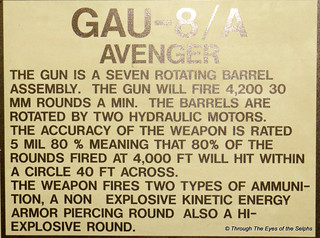
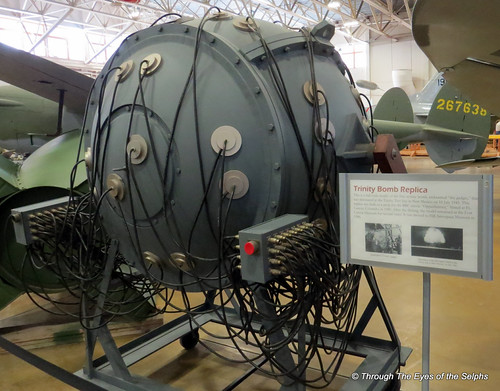
Four exhibits in the museum that are outstanding are the Willys Jeep, Link Pilot Trainer/Simulator, A-10 Thunderbolt/Warthog Aircraft, F-16 Fighting Falcon Aircraft and a Trinity Atomic Bomb Replica. Both aircraft are in service today.IMG_0845IMG_0846IMG_0848IMG_0847IMG_0861IMG_0851IMG_0854IMG_0858IMG_0856IMG_0849

We head next to Salt Lake City!

August 2, 2015 Arco, Idaho

IMG_0831It was a long travel day from West Yellowstone to Arco, Idaho with a stop along the way at the Walmart in Idaho Falls to restock supplies.  Arco is a tiny town with a population of 995 and was the first community in the world to be lit by electricity generated by nuclear power.  This occurred on July 17, 1955.  The area is nothing but sagebrush and open fields and the campground selection is very limited so we settled in at a KOA. The local high school paints their graduation year on the rocks above the city.IMG_0829IMG_0832

IMG_0828Our main reason for coming to this desolate area of Idaho was to visit the 750,000 acre Craters of the Moon National Monument and Preserve located eighteen miles southwest of Arco.  In 1924 President Calvin Coolidge used the 1906 Antiquities Act to proclaim the Craters of the Moon National Monument.  In 1923 geologist Harold T. Stearns described the area as “the surface of the moon as seen through a telescope…. where dark craters and the cold lava were nearly destitute of vegetation”.

IMG_0788While lava flows exist on the moon, astronauts confirmed that most lunar craters resulted from meteorite impacts, not from volcanoes.  But the Craters of the Moon are definitely of volcanic origin.  The vast amount of lava did not come from one volcano but from a series of deep fissures, known as the Great Rift, that cross the Snake River Plain.  Beginning 15,000 years ago lava welled up from the Great Rift to produce this vast area of rock.  The most recent eruption occurred 2,000 years ago and geologists believe future eruptions are likely.IMG_0789IMG_0790IMG_0794IMG_0795IMG_0826IMG_0827

IMG_20150803_114816

Satellite view of the lava flows

Years ago the Northern Shoshone Indians passed through this area on their annual migration from the Snake River to the Camas Prairie.  They left behind well worn trails and mysterious stone circles on top of the lava.  Archeological evidence and oral traditions indicate the Shoshones most likely witnessed some volcanic eruptions.

Craters of the Moon can be seen by satellite and we noticed it shows up on the local TV weather maps when we watch the weather.

In the 1800’s European-Americans in search of gold and farmland avoided the lava fields.  In the 1850s and 1860s pioneers followed the Goodale’s Cutoff of the Oregon Trail as an alternate route to avoid conflicts with the Shoshones and crossed through the northern edge of the lava fields.  Idaho was part of the Oregon Territory then.  In 1863 it became the Idaho Territory and a state in 1890.

In 1969 NASA Apollo astronauts learned about volcanic geology here in preparation for their moon missions.

IMG_0796

Splatter cone

After stopping by the Visitors Center we drove the Craters of the Moon Loop Road, stopping at various places along the route.  The final stop had a trail across the lava that led to several lava tubes or caves.  Entering the caves required some tricky rock scrambling so I was happy to leave the cave exploring to Bill.

IMG_0803

Indian Tunnel

IMG_0808

Indian Tunnel

IMG_0811

Indian Tunnel

IMG_0811

Indian Tunnel

IMG_0817

IMG_0812

Boy Scout Cave looking deep

IMG_20150803_140858

Entrance to Beauty Cave

IMG_0824

Beauty Cave

IMG_0833Also while in Arco we drove to see the Experimental Breeder Reactor #1 (known as EBR-1) at the Idaho National Laboratory.  On December 20, 1951 the reactor became the first nuclear reactor to generate a usable amount of electricity using atomic energy.  From that day until the day it was decommissioned in 1964, EBR-1 generated enough electricity to supply all the power for its own building whenever the reactor operated.

We took a guided tour through the building which explained how atomic energy is used to make electricity.  We had an excellent guide, a University of Idaho graduate student in psychology from the Ukraine.  We were surprised she didn’t have a degree in nuclear engineering.  There wasn’t a question asked she couldn’t answer in detail.IMG_0838IMG_0840

President Lyndon Johnson visited the site in 1966 during a ceremony dedicating EBR-1 as a registered National Historic Landmark.

Among many things our guide told us was that the nuclear waste materials from the Three Mile Island accident site was brought to Idaho to be stored.  It was often brought across the country by train in darkness because of protests by people in states who did not want the waste passing through their states, with some states forbidding the passage.

IMG_0842

Physicist Enrico Fermi was the genius behind the “breeder” concept, but Walter Zinn made it a reality.

The Idaho National Laboratory currently employs more than 8,000 people.IMG_0843

Who knew this desolate area of Idaho could hold such fascinating places!

July 31, 2015 Norris, Yellowstone N.P.

Our last day in the park was spent at Norris which is named after Philetus Norris, the second superintendent of Yellowstone National Park from 1877-1882.  He explored and recorded the area’s hydro-thermal features in detail which added greatly to the geographic knowledge of the park.

This entire geyser basin is the oldest, hottest and most dynamic geyser basin in the park and part of one of the world’s largest active volcanoes.  Many of the hot springs and fumeroles here have temperatures above 200 degrees.  Norris is near the intersection of three major faults which creates this dynamic geyser basin.  Every year new hot springs and geysers appear while others become dormant.IMG_0732
IMG_0737IMG_0766Steamboat Geyser located in Norris is the world’s tallest active geyser. Steamboat Geyser’s eruptions are very unpredictable with the last eruption occurring in September, 2014.  When it does erupt it can shoot water up to 300 feet in the air.  On the day we were there it was spewing plenty of steam with an occasional spurt of water.IMG_0762IMG_0779IMG_0784

We enjoyed walking on the boardwalks seeing the various geysers and hot springs.IMG_0735IMG_0739

The Ranger told us the only predictable geyser here was Vixen Geyser.  It erupts every twenty minutes or so and we only had to wait a few minutes before it put on quite a show for us.  Bill captured some before and after eruption pictures.IMG_0745IMG_0747IMG_0753IMG_0755

Also located in Norris is the Museum of the National Park Ranger.  We stopped by to visit this former Army outpost built in 1908.

While we are talking about geysers, mud pots, fumeroles and hot springs we will include a few pictures taken of Mud Volcano and Dragon’s Mouth we saw while exploring the Fishing Bridge area.IMG_0635IMG_0637IMG_0642IMG_0641

Our time in Yellowstone went by much too quickly.  We look forward to returning again someday.IMG_0629IMG_0626IMG_20150730_170753

July 30, 2015 Mammoth Hot Springs, Yellowstone N.P.


IMG_20150730_153826

IMG_0616With only two days left in Yellowstone we still had the northwest section of the park to explore.   one of those days we drove to Mammoth Hot Springs.  The road to Mammoth was undergoing extensive road work with signs warning of up to 30 minute delays.  We were lucky and only had about a fifteen minute delay going and no delay returning home.

IMG_0696

Liberty Cap, named after the French tall cap

Mammoth Hot Springs has mineral laden hot water from deep within the Earth’s crust which finds its way to the surface and builds beautiful tiers of cascading, terraced stone.  Hot water and gases ascend through limestone deposits, sculpting the rock.  Once exposed to the air, calcium carbonate from the limestone is deposited as a rock called travertine.  These hot springs do not erupt but instead build these spectacular terraces.  The terrace sculpting has been going on for thousands of years as thousands of gallons of water well up and deposit large amounts of travertine, or limestone, daily and as quickly as three feet per year!

We walked along the Hot Springs Terraces Walk, a boardwalk which led us around the terraces and hot springs.IMG_0704IMG_0711IMG_0700

We then drove the Upper Terrace Drive, a road that gave us a perspective from atop the terraces.IMG_0724

IMG_20150729_120532Mammoth Hot Springs is where the Yellowstone park headquarters is located and it has a village of stores, gift shops, a Visitors Center and a couple restaurants.  In the early days of Yellowstone National Park’s existence the park was protected by the U.S. Army from 1886 to 1918. From what you might wonder. From people damaging the geothermal areas and other land and hunting the wildlife.  The original buildings of Fort Yellowstone such as the guardhouse, jail and soldiers’ barracks are preserved and still standing in Mammoth Springs today.

IMG_0717

Fort Yellowstone is the red top buildings in the background

Here is a video showing the water flowing down the terrace:

While in the area we drove the short distance to the north entrance of the park where the Roosevelt Arch is located.  The beautiful arch was constructed under the supervision of the U.S. Army at Fort Yellowstone.  The cornerstone was laid by President Theodore Roosevelt in 1903.  The top of the Arch is inscribed with a quote from the Organic Act of 1872, “For the Benefit and Enjoyment of the People”.IMG_0689IMG_0690

July 27, 2015 Canyon, Yellowstone N. P.

IMG_0657Our last four days in Yellowstone were scheduled to be dry camping at two campgrounds in the park.  But very unseasonably cold weather with nightly temperatures around 30 degrees and my being on medication for shingles convinced us we needed to look for some place else.  The only full hookup campground in the park was booked solid.  Bill found a national forest campground near the small town of West Yellowstone located right outside the west entrance of the park.  The campground had a small number of nonreservable electric sites available on a first come basis.  We got up really early and drove to the campground where we waited for someone to leave so we could grab an electric site.  By 10:00 AM we were all set up in our new site.

When the doctor gave me the pills for shingles she was five pills short and neither of the other two clinics in the park had pills for me.  She gave me a prescription so we headed into West Yellowstone to have the prescription filled.  Not much to say about West Yellowstone except it has a very nice Visitors Center with friendly helpful volunteers, a couple food markets, a few gas stations, one pharmacy, a McDonalds and several hotels, restaurants and gift shops.  Typical tourist town.

By the time we got back home a cold steady rain was falling and the temperatures were in the upper 40’s and falling.  I made some chili and we stayed inside where we were warm and very very thankful to have heat and electricity.  The next few nights the temperature dipped to near freezing.  This campground made for a bit longer drive back into the park to do activities, but it was well worth the extra drive.

IMG_0656Yellowstone National Park has geysers and wild animals and gorgeous scenery.  Would you believe on top of all that it also has a grand canyon?  I kid you not.  It is called The Grand Canyon of the Yellowstone River and it is a beauty!  The canyon is from a lava flow 484,000 years ago.  It is mainly made of rhyolite rock.  Past and current hydrothermal activity weakened and altered the rock, making it softer.  The Yellowstone River eroded these weakened rocks to deepen and widen the canyon, a process continuing today.  The canyon is 20 miles long, more than 1,000 feet deep, between 1,500 and 4,000 feet wide and has two beautiful waterfalls.IMG_20150730_130825IMG_0652

IMG_0666

Lower Falls

IMG_0659

Upper Falls

It took us several days of driving and walking quite a few trails to see the canyon and waterfalls.  One end of the canyon begins at the 308 foot tall Lower Falls which may have formed because the river flows over volcanic rock more resistant to erosion than rocks downstream.  The same is true for the 109 foot Upper Falls.IMG_0653IMG_0667IMG_0678IMG_20150730_130729

IMG_20150726_133631

Brink of the Lower Falls

We walked trails that led us to the brink of both the Upper and Lower Falls.  The Upper Falls trail was easy but the Lower Falls trail involved a steep drop with thirteen switchbacks.  Going down was easy but coming back up was….well you can imagine.  Luckily it was a cool day with a nice breeze and they had benches along the trail to rest.  It was a great view and workout!  There is a viewpoint on the South Rim called Artists Point with gorgeous views of the Lower Falls and the canyon.  The weather was overcast while we were at Artist Point but Bill still got some great pictures.

The North Rim side of the canyon has a 1.2 mile drive with multiple stopping points along the way with amazing views of the canyon.

We took a longer hike on the South Rim Trail which led us along the canyon rim with views of the canyon and both falls.  At one point we came to a great view of the Upper Falls.  I love how there always seems to be a rainbow!  We stood at the overlook and enjoyed the view while talking with a family from Holland who was spending their summer touring the West in their rented RV.IMG_20150730_141027IMG_20150730_140810IMG_20150730_140128IMG_0654

Every day there seems to be more and more to love about this wonderful park.  What an amazing place!!

July 22, 2015 Fishing Bridge, Yellowstone N.P.

We made the hour drive from Grant Village to another campground in Yellowstone in an area called Fishing Bridge.  This is the only full hookup campground in Yellowstone.  By the time we arrived I had a bad headache and didn’t feel well.  Three days earlier I noticed four blister like places on my lower back.  It had the appearance of poison ivy or bug bites, and even though we couldn’t imagine how I got poison ivy or bites there, we didn’t pay them any attention.  After setting up, since the blisters hadn’t gone away and I was not feeling well, we decided to visit one of three medical clinics located in Yellowstone National Park.  Fortunately one of the clinics was a short drive from our campsite.  The diagnosis was shingles, certainly not what we wanted to hear and very surprising.  The doctor put me on 800 mg of Acyclovir five times a day for seven days.  The doctor said she thought it had been caught early but she had no idea whether I would have a full blown outbreak or if the medicine would lessen the severity of the shingles.  We were prepared if necessary to abandon our Yellowstone plans if the outbreak was severe and I needed to be in a town with doctors and stores with supplies.  As it turned out I was very blessed.  One more small blister appeared and that was it.  I was uncomfortable but it was tolerable.  I cannot imagine the agony someone with a full outbreak must endure.

The next day it rained and we stayed home resting and relaxing.  My mind played tricks on me and every time I had an itch I would run to Bill so he could check my back for a new blister.  And every time I felt great relief when he said nothing new was there.

IMG_20150725_142314This post will focus on the animals we saw during our time in Yellowstone.  Since my shingles was under control and I was feeling better, we decided to take a short hike to Natural Bridge.  The signs warned of bears and suggested walking in groups.  We had our trusty whistle, just in case.  Along the way we saw many places where bears had sharpened their claws and marked their territory on trees.

The hike to Natural Bridge was supposed to be short but we took a wrong turn and ended up on a longer trail that took us to the top of the bridge.  The trail became very steep with several switchbacks.  The trail had small gravel that feels like walking on marbles when descending.  I

hate those kinds of

PANO_20150725_134423

Natural Bridge looking down to the trail below

IMG_20150725_140137trails!  Along the way we met a very nice IMG_20150725_140040couple visiting from England and we enjoyed chatting with them while we stopped to catch our breath.  An older lady was trying to make her way down the steepest part of the trail with walking sticks.  We stopped to wait for her to pass and she apologized for holding us up and commented that her walking sticks were not helping.  Since we have walking sticks, Bill asked if she would like him to show her a different way to hold and use them.  He showed her the correct way to hold them, and right away she could feel the difference and felt so much more confident walking on the trail.  She was so happy and as she walked past me she told me how wonderful my husband was for helping her.  Bill is an Eagle Scout and lives by their motto of “Do A Good Deed Every Day”.  We reached the top of the bridge and enjoyed the view, snapped some pictures and began the hard descent down.  When we reached the bottom we saw the shorter trail that led to the view of Natural Bridge from below.  Natural Bridge is a 51 foot cliff of rhyolite rock cut through by Bridge Creek.  In the end we were glad we took that harder trail because we met a nice couple from England and helped the lady with her walking sticks.  It was all good!

Rangers in the park refer to traffic jams by the animals that cause them.  So there are bison jams, bear jams, elk jams, moose jams etc.  Whenever you see traffic stopped or slow moving, it is most likely to be from an animal jam.IMG_0581

IMG_0583There are between 2,300 and 5,000 bison living in Yellowstone.   We got caught in a huge bison jam one day while heading to Hayden Valley which is known to have a lot of wildlife.  We passed through at the time of day a large number of bison were crossing the road to get to the river.  Traffic slowed to a halt or slow crawl as bison blocked the road or people gawked at the bison along the side of the road, everyone trying to get that perfect picture.  At one point we shut off the car engine and just waited.  No worries.  We had plenty of time and enjoyed watching all the bison around us.  Much later in the day we passed through the area again and most of the bison were gone.  One lone bison slowly sauntered down the middle of the road blocking our lane of traffic.  There was nothing to do but follow him and wait for him to move.  He was headed home after a long hard day entertaining crazy tourists.  We had about ten cars in front of us and traffic was piling up behind us.  One driver behind us blew his horn.  He was too far away for the bison to care and just annoyed others patiently waiting.  He is the kind of tourist who should never come to Yellowstone in July.  Eventually, when the bison was good and ready he left the road and wandered up the hillside and began grazing and we were once again on our way!  We have already posted lots of bison pictures in previous posts so we won’t post too many here.IMG_0572IMG_0573IMG_0579IMG_0585

IMG_0591We stopped at Tower Falls and while we were there a small bear walked across the patio area of the gift shop/general store.  A dog barked, scared it and it ran off into a grassy area.  The grass was so tall we could barely see him, not close enough to get a picture.  Later in the day we came upon a bear jam with a mother bear and her cub digging up and eating grubs along the side of the road.IMG_0617IMG_0624

A smaller pronghorn jam occurred later.  Pronghorn are similar to antelope.IMG_0598IMG_0599IMG_0602

We created our own bald eagle jam.  Bill spotted a bald eagle perched on a rock.  Another eagle circled overhead.  As cars noticed us stopped and Bill with his camera, more cars stopped and pulled over.  Before long we had an eagle jam!IMG_0603IMG_0613
During our time in Yellowstone we also saw elk, moose and even a beaver!
IMG_0588

IMG_0729

This beaver was shy!

IMG_0725

Gibbon Falls

IMG_0727

Gibbon River


July 20, 2015 Grant Village, Yellowstone N.P.

IMG_0648We made the short drive from Grand Teton to Yellowstone National Park along the John D. Rockefeller, Jr. Memorial Parkway.  We were so excited.  Yellowstone was the much anticipated highlight of our summer plans.  Established in 1872, Yellowstone is the world’s first national park.  Of the 2.2 million acres, 80% is forest, 15% is grassland and 5% is water.  Ninety-six percent of the park is in Wyoming with 3% in Montana and 1% in Idaho.

Yellowstone is HUGE with:

  • five entrances into the park
  • ten visitor or information centers
  • three medical clinics
  • six gas stations
  • seven general stores
  • five hotels or lodges
  • twelve campgrounds
  • and numerous restaurants and gift shops

We had camping reservations at several campgrounds throughout the park which we had to make a year in advance.  To say it is a popular tourist destination is an understatement!  Our first reservation was at Grant Campground and we were lucky to be given a site overlooking West Thumb Lake which is connected to Yellowstone Lake.  This is the largest lake in Yellowstone National Park and is beautiful.IMG_0569IMG_0480IMG_0451

Our time in this area of southern Yellowstone centered around what may be the most famous part of Yellowstone, its geysers.

IMG_0494IMG_0568Our first stop of course was to see Old Faithful.  We got up extra early to get a head start on the mobs of tourists.  Each year over three million people visit this park.  Yellowstone is very crowded in July so it is best not to come unless you have plenty of time AND patience.  Old Faithful is the most famous attraction in Yellowstone, so named because it faithfully erupts about every 60 to 90 minutes, spewing 8,400 gallons of steaming hot water up to 180 feet into the air.  It is one of the most predictable geysers on earth.  There are benches around the base of Old Faithful where crowds gather to sit, wait and watch the eruption.  The Visitors Center has a list of several geysers and the times they are predicted to erupt so you know what time to head to each area to watch the eruptions.  The time of some, like Old Faithful, can be easily predicted within ten minutes.  Others can be predicted plus or minus 90 minutes while others are very unpredictable.IMG_0487

Yellowstone is home to more geysers than any other place on earth and is one of the world’s most active geothermal areas.  Within the park are hundreds of geysers, hot springs, mud pots and steam vents.  This is because the park sits atop an enormous “supervolcano” and the immense heat from the underground magma powers the geysers.  The volcano last erupted 640,000 years ago and shows no signs of erupting anytime soon. Water from precipitation seeps into the ground, meeting the superheated earth near the underground magma chamber.  Tremendous pressure builds up until the water is forced back to the surface.  Some geysers like Old Faithful have their own underground “plumbing systems” and erupt at predictable intervals.  Other geysers share plumbing “pipes” with adjacent geysers and erupt more sporadically.

We drove around the West Thumb and Upper Geyser Basins with a variety of geysers, hot springs and bubbling mudpots.  There are more than 150 spouters within a square mile area just in the Upper Geyser Basin alone.  The boardwalk led us around to areas such as the Fishing Cone where years ago fishermen could fish in the lake and then swing around and place the fish in the boiling water of the Fishing Cone to be cooked.  This is no longer allowed.  We saw the colored Paint Pots and the deep blue Abyss Pool.IMG_0463IMG_0462IMG_0454

In the Lower Geyser Basin we drove the Firehole Lake Drive and saw the beautiful multi colored Fountain Paint Pots.IMG_0546IMG_0526

We drove by the White Dome Geyser and as we pulled into the small parking lot a lady leaned out of her car window and told Bill the geyser would go off in about twenty minutes.  Bill spread the word and a small crowd gathered on the boardwalk.  As twenty minutes passed with no eruption we began to wonder if the lady had been mistaken.  Suddenly the geyser erupted, spraying us with cool water.  We were surprised since we expected the water to be warm.  It was a really nice eruption to see and we were really glad we had waited.IMG_0495IMG_0515

The Midway Geyser Basin is known as Hell’s Half Acre where the basin’s hot water gushes into the Firehole River.  The Grand Prismatic Spring is located here, which at 370 feet across and 125 feet deep is the largest hot spring in the United States.  The many colors come from light refraction, mineral particles and heat loving microorganisms called thermophiles.  Hot springs IMG_0547IMG_0555IMG_0556IMG_0565IMG_0560are similar to geysers except they do not have the constrictions in their “plumbing” so water does not reach the temperature needed to set off an eruption.  Around all the thermal areas are really nice boardwalks.  The ground around the boardwalks is very unstable and in many cases consists of bubbling hot water which can exceed a surface boiling point of 199 degrees F. as well as steaming mudpots.  Some of the boardwalks could be crowded and at times I was uneasy as tourists were busy looking instead of watching where they were going.  I sure didn’t want to be knocked off one of those boardwalks!  Most annoying were the tourists walking around with umbrellas to protect themselves from the sun.  Haven’t they heard of hats and sunscreen?  This is what happens to tourists who don’t heed the warnings to stay on the boardwalk.  They disappear and are never seen again!IMG_0554IMG_0529IMG_0567IMG_0501IMG_0500

We also enjoyed seeing bubbling mudpots and steaming fumeroles.  Mudpots occur in places where microorganisms help convert hydrogen sulfide into sulfuric acid which dissolves surrounding rock into clay.  The clay mixes with rising steam and groundwater to form mud of different colors and consistency.IMG_0536

Fumeroles is a vent in the Earth’s crust.  Groundwater comes in contact with hot rocks underground and turns to steam.  The steam rushes up through cracks and fissures and out the vent, sometimes with enough force to create a loud hiss or roar.

here are two videos ; http://youtu.be/ra5QVkWhMhc

https://youtu.be/zEiO-yCk-tU

It seems everywhere we drove in Yellowstone had steam rising, constantly amazing us.

July 16, 2015 Grand Teton National Park

IMG_20150716_121505We made the short drive from Jackson Hole to Grand Teton National Park, a 485 square mile park with breathtaking views of the Teton Mountain Range.  The highest peak, Grand Teton, is 13,770 feet above sea level and the second highest peak in Wyoming.  Thousands of people climb the summit every year.IMG_20150720_103816IMG_0415

The Tetons are a young mountain range.  Ten million years ago the peaks began to rise along the Teton fault line, known as a fault block.  Tons and tons of igneous, metamorphic and sedimentary rock vaulted up and forward while the valley known today as Jackson Hole sank and continues to sink.  This created the many pinnacles which were sculptured by glaciers into the Teton Range we see today.

Grand Teton National Park was created in 1929, one third of the size it is today.  Through land donated by John D Rockefeller, Jr. in 1950 and the addition of Jackson Hole National Monument, the park grew to its current size.IMG_0411IMG_0413

We had reservations at a campground in the park run by a concessionaire, Xanterra Parks and Resorts (they manage campgrounds and lodges at most of the largest parks).  We had a nice full hookup site amid pine trees.  The only problem was the trees were so thick, and even though we tried moving the RV forward and backward, we were unable to get any satellite TV.

We drove the 43 mile scenic loop drive, stopping near the Jackson Lake Dam.   In 1999 Bill and his son Sean visited Grand Teton and Yellowstone National Parks.   Bill has a picture Sean took of him with a beautiful view of the Tetons.  He really wanted to recreate the picture and we were able to find the same location for a 2015 picture!BillSelphJacksonLakeIMG_0443

A steep drive on the Signal Mountain Summit Road took us to the top of Signal Mountain with views of the Jackson Hole valley 800 feet below.  Along the way we spotted a black bear partially hidden in the heavy foliage.IMG_0373

Besides seeing bison, we were on a moose hunt.  We were determined to see a moose!  We drove on  Antelope Flats Road and stopped at an overlook known for wildlife.  Hidden deep in the grass in the distance was a mother and baby moose.  It wasn’t easy but Bill managed to snap a picture.  We decided that would have to be our one moose find of the day.  As we headed home we approached a bridge and noticed a traffic jam with cars pulling over on both sides of the road and people running toward the bridge.  It could only mean one thing, a wildlife sighting!  We squeezed in among the other cars and walked to the bridge.  One large male moose was on the edge of the water and ambled down for a drink.  All that excitement for ONE moose!  But of course we had to join in the fun! Male moose have “antlers” like deer.  Unlike horns, antlers fall off and the animals regrow them each year.IMG_0392IMG_0402IMG_0409

The Jenny Lake Scenic Drive took us to Jenny Lake with fabulous views of Jenny Lake and the Tetons.  We took a nice walk down to see the lake.  We also visited historic Jackson Lake Lodge with 60 foot windows overlooking the Teton Mountain Range.

We loved the Grand Tetons and will definitely be back!