Category Archives: National Park or Forest

National Park or Forest

Sept 19, 2016 Warren, PA

With the autumn chill beginning to nip at our heels, we left western New York and headed south to Pennsylvania. We passed farmland and fields preparing the fall harvest. We arrived in western Pennsylvania for a 4 night stay at Buckaloons Recreation Area in the Allegheny National Forest outside of Warren. The French were here in 1749.20160920_105028
20160920_113625On Tuesday we drove twenty miles north to Jamestown, New York right over the Pennsylvania border. I had been looking forward to this all summer because Jamestown is the birthplace of my favorite television personality of all time, Lucille Ball. For as far back in time as I can remember, I have loved Lucy! In Jamestown is Desilu Studios, a re-creation of the studio soundstage  where “I Love Lucy” was filmed. In a separate building is the Lucy-Desi Museum detailing the lives and careers of Lucy (‎Lucille Désirée Ball) and Desi (Desiderio Alberto Arnaz y de Acha III, better known as Desi Arnaz).
20160920_113641First we went to the Desilu Studios where they had re-creations of the living room and kitchen sets from “I Love Lucy” as well as the Hollywood hotel suite from the show. Memorabilia and costumes from the show were on display, along with information on Fred and Ethel (William Frawley and Vivian Vance).20160920_11464220160920_11491120160920_11514720160920_120814
20160920_124628The Lucy-Desi Museum had eight galleries with displays, gowns and costumes, photographs and personal memorabilia for both Lucy and Ricky, including Lucy’s 1972 gold Mercedes-Benz and her grade-school piano.
For twenty five years the town of Jamestown has had a Lucille Ball Comedy Festival, giving new comedians a stage to showcase their talent. Famous comedians have traveled to Jamestown to support the festival with their performances, including Joan Rivers, Jay Leno, Jerry Seinfeld, the Smothers Brothers, Bob Newhart and more than 100 others.20160920_13080020160920_11543820160920_11591620160920_130726
While in Jamestown we also drove by Lucy’s birthplace,20160920_150048

her childhood home in nearby Celeron,20160920_145146

and Lake View Cemetery where Lucy’s ashes are buried.20160920_153136

Lucy and Desi were married November 29, 1940.20160920_125542

Throughout the town are four Lucy murals.20160920_15531020160920_15473020160920_15452620160920_154339
20160921_18292520160921_14381920160921_16090120160921_16100720160921_16104420160921_163834On Wednesday we drove to Titusville, Pennsylvania to tour the Drake Well Museum. We were surprised to find another Titusville in the United States since we were familiar with Titusville, Florida. We discovered that Titusville, Pennsylvania is the birthplace of the American oil industry. In 1859 crude oil was found from the world’s first successful commercial well by Edwin L. Drake. Drake came to Titusville as an agent for the Seneca Oil Company. Oil naturally seeped along Oil Creek, but Drake and his driller, Uncle Billy Smith, adapted existing soft well technology and struck oil. This sweet crude oil (Pennsylvania Grade Crude Oil) is a type of petroleum with less than 0.42% sulfur. The Drake Well Museum has a comprehensive display of over 500 artifacts detailing the history of oil production in the United States. We watched a film called “The Valley That Changed the World” telling the story of oil discovery in Titusville.
On the museum grounds they had replicas of various buildings from the 1800’s as well as drilling rigs and derricks. In one building they had a full size replica of Edwin Drake’s engine house and derrick that encloses the famous well that struck oil in 1859. Also included were working reproductions of the wood-fired boiler and steam engine that Drake used to drill and pump oil. The museum guide turned on the engine to show us how it worked. We enjoyed talking with him about the history of Titusville. After Drake’s discovery of oil, people poured into the town to buy oil leases and work in the new businesses that sprang up. Churches, schools and banks were built and refineries grew throughout the region. Oil related machinery was designed and produced in Titusville.

Here is the how the steam-powered engine drilled then pumped the oil https://youtu.be/SlGsukrneLg

The town became known as “Queen City” because of its rich cultural opportunities including the first opera house in the area. Main Street was lined with beautiful mansions from money made by oil. Today those mansions still stand as evidence of the town’s past wealth, though the population and wealth has steadily declined over the years.20160921_18230420160921_182245

And this sign talked about how many men made money and then loss their money it also suggests that Lincoln may have lived.20160921_154056
The museum certainly exceeded our expectations and we easily spent a couple hours there touring the museum and grounds.

During the early years of oil drilling “torpedoes” were used to increase the yield. These torpedoes consisted of nitroglycerin dropped into the drill hole.  Nitroglycerin was carried by horse and wagon and then to motorized vehicles like this dodge truck.20160921_16442020160921_164332
John Heisman, for whom the Heisman Trophy is named, grew up in Titusville and played a rugby style version of football here in the 1880’s.20160921_151908
The next blog will continue our Pennsylvania travels.

Sept 8, 2016 Seneca Falls, NY

Thursday morning we left the Adirondacks and headed west to Seneca Falls, population 6,700. We thought it was going to be a short three night stop on our way to Niagara Falls without much to see or do. Boy were we wrong!!
We camped at Cayuga Lake State Park near beautiful Cayuga Lake, one of the longest of the Finger Lakes. During the past million years, glaciers covered New York state. As they moved through river valleys they carved deep troughs with steep sides. When the glaciers receded about 10,000 years ago, water filled these troughs, creating eleven Finger Lakes. Cayuga Lake is thirty-eight miles long and 435 feet deep at its deepest spot. Cayuga Lake is named after the Cayuga Indians, one of the Six Nations of the Iroquois in New York.
20160909_110825
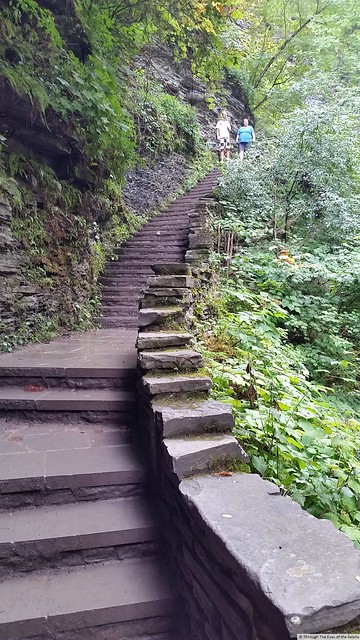
I was looking through some literature about the area and came across Watkins Glen State Park about thirty minutes from our campground. I read that in 2015 it was voted the third most beautiful state park in the country in a USA Today poll. All the reviews I read talked about a gorgeous 1.5 mile (three miles roundtrip) hike with 832 steps and nineteen waterfalls. We both love waterfalls so even though the 832 steps seemed a bit daunting, we decided to give it a try.20160909_111629
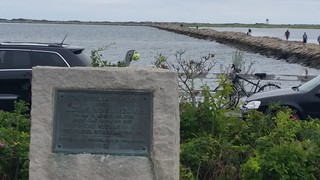
20160909_093118We headed out early Friday morning. On the way to Watkins Glen we came across a plaque in the small town of Waterloo. We had no idea that Waterloo, NY was the official birthplace of Memorial Day, with the first ceremony held in 1866. Some of the interesting things we just happen to stumble across is amazing to us. 20160909_093044We drove beside Seneca Lake, the largest of the Finger Lakes and the deepest lake in the state.
We didn’t realize that the town of Watkins Glen is renowned for auto racing and is considered the birthplace of American racing.   Since 1948 Watkins Gen has hosted international automobile car racing and in 2015 was voted the best NASCAR track in the country in a USA Today Reader’s Poll.  The town has an International Motor Racing Research Center with 5,000 square feet of racing history.  From April through September they host NASCAR sports car and racing events. This weekend was the U.S. Vintage Grand Prix and as we drove down Main Street they were getting ready to close off the street for a parade. To our dismay we discovered that even though the state park was open, the parking lot was closed. We asked where we could park and they said our only option was to find a parking lot or side street parking, which seemed highly unlikely on a parade day in a tiny town. Across the street from the park was a restaurant and Bill decided to go inside and ask if we could park in their restaurant parking lot for a few hours. I told him there was no way they would allow that on parade day. We pulled into the lot and I stayed with the car while he went inside to ask. He came back a few minutes later and said the owner said no problem and refused to take any money. Yeah!!
We grabbed our walking sticks and headed over to the entrance. We had an idea what was ahead when we saw a beautiful waterfall at the entrance. This park certainly lived up to its #3 best ranking. Everywhere we looked there was beauty. We were apprehensive about the steps but they were nice stone steps put in years ago by the CCC and easy to climb. I had worried they might be uneven and slick, but no problem. The hike on the Gorge Trail was not tiring at all because we were constantly stopping to gaze in wonder and awe at the beauty. We followed the gorge trail as it wound over and under waterfalls.20160909_11111420160909_11403320160909_11431820160909_11592220160909_12072320160909_12192020160909_12201920160909_12264920160909_11234620160909_135502
At the end we walked up the last of the stairs which were steel steps called “Jacob’s Ladder”. Once at the top we could either walk back down the 832 steps or take the easy “Indian Trail” back. We chose the easy hike and once we were back to the car we put our hiking gear away and decided to go into the restaurant for a late lunch. We thought it was a small way to thank them for letting us park in their lot. Bill had lunch and I had a big slice of fresh blueberry pie! On the way home we took a different route and followed Cayuga Lake seeing wineries along the lake.20160909_154053
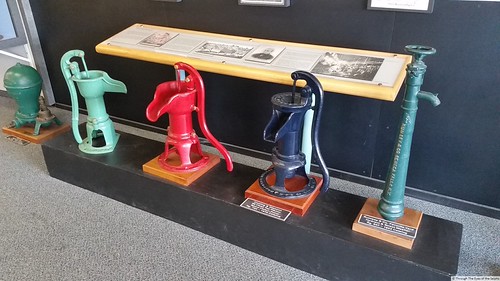
20160910_14073820160910_142224On Saturday we decided to spend our last day in Seneca Falls exploring the small town and finding some geocaches. First we stopped by the town Visitors Center which had a fantastic museum detailing the history of the town. European settlers first moved to the area and began farming. In the 1820’s the construction of the Erie Canal changed Seneca Falls to an industrial and shipping center. We were surprised to see all the items designed and manufactured there from water pumps, TV picture tubes to wooden rulers.20160910_13314820160910_13425520160910_13505320160910_140408
20160910_150328Seneca Falls is the birthplace of the Women’s Rights Movement led by resident Elizabeth Cady Stanton. The first women’s rights convention was held here on July 19-20, 1848. Today there is a Women’s Rights National Historical Park, established in 1980, in the middle of town. We stopped by the park, saw a film and looked at the exhibits. Amelia Bloomer, for whom bloomers were named, lived in Seneca Falls. She didn’t invent bloomers but wore them and promoted them in magazines.20160910_15050020160910_150738
20160910_14312620160910_143112Our last stop of the day was at the “It’s a Wonderful Life” museum. In 1945 Frank Capra stopped by Seneca Falls to get a haircut on his way to visit his sister. It is said that he was so taken with the quaint little town that it was his inspiration for the fictional town of Bedford Falls in the famous Christmas movie. There are several similarities between Seneca Falls and the fictional Bedford Falls, including they are both mill towns, had a grassy median down Main Street, homes of Victorian architecture, a large Italian population and a toll bridge. The free museum opened in 2010 and is full of memorabilia from the film that fans have donated or loaned to the museum. We were the only visitors there when we stopped by and enjoyed talking with the guide who obviously loves the movie. He said he has lost track of the number of times he has seen it. Every year in December they celebrate with a parade and all sorts of events. This year will be a big celebration since it is the 70th anniversary of the movie.20160910_144641 20160910_14471220160910_14474820160910_142407The guide so enthusiastically described the upcoming celebration it almost made me want to brave the snow to attend. Almost, but not quite!
Yes, tiny Seneca Falls far exceeded our expectations. We could have stayed a couple more days but Niagara Falls was calling!

August 23, 2016 Bar Harbor & Acadia N. P. Part 2

We spent most of our time in Acadia National Park but we did go into Bar Harbor a couple times. Bar Harbor was originally incorporated in 1763 and named Eden after Sir Richard Eden, an English statesman. It was renamed Bar Harbor in 1918 because of a sand bar that is visible at low tide. In the 1800’s tourists were attracted to Bar Harbor by the writings of Henry David Thoreau and paintings showing the Maine landscapes by famous painters. The area attracted families such as the Astors, Fords, Morgans, Rockefellers and Vanderbilts. The Great Fire of 1947 destroyed nearly half of the eastern side of Mount Desert Island. Sixty-seven of the 222 palatial summer homes and five grand hotels were destroyed in addition to 170 year round homes. The town’s business district survived the fire. More than 10,000 acres of Acadia National Park was destroyed.
Parking in Bar Harbor is scarce so a free shuttle bus called the “Island Explorer” is available to residents and tourists. The shuttle stops at several campgrounds near Bar Harbor, including ours. There are also shuttle buses that travel throughout Acadia National Park to encourage people not to drive. The shuttle buses are all free and funded by local, state and federal tax dollars, including a sizable donation from L. L. Bean whose flagship store is located in Freeport, Maine.
We usually don’t do many activities geared to tourists because they tend to be expensive, but two activities caught our eye. The first was a horse drawn carriage ride along one of the carriage roads in the park. John D Rockefeller Jr was one of the main contributors of Acadia National Park, donating about a third of the park’s land. In his efforts to preserve the park he had over 45 miles of crushed stone roads built between 1913 and 1940. The roads are sixteen feet wide with crowns that provide drainage. The roads are considered the best example of broken stone roads in the United States. Local workers quarried granite from the island to build the roads and seventeen stone bridges. No motor vehicle traffic is allowed on the carriage roads throughout the park, allowing for a safe and peaceful roadway for hikers, bikers and horses.
20160823_08241820160823_09005720160823_09055020160823_09504820160823_100914We decided to take a one hour carriage ride on a carriage road and made a reservation with Wildwood Stables located in the park. The morning of our ride we arrived early enough to see some of the horses having a morning bath. I must say I have been opposed to horses being used in places like Central Park where they spend hours each day pulling people around in carriages in all kinds of weather. I was very glad to hear that there are 26 horses and only three tours conducted each day. The horses work no more than four hours a day, twice a week. They also only work five months of the year. We were assured they really have an easy life and are very well cared for. There were three families on the tour with us with children ranging in age from twelve years to thirteen months. They were all very well behaved. We really enjoyed our ride along the tree lined shaded road with occasional views of the ocean shimmering in the morning sun.20160823_09501720160823_095153
20160820_14203220160820_14111020160820_13393920160823_144745Our second activity was a two hour excursion on a sailboat. Bill had mentioned he would really like to go on a sailboat while in Bar Harbor, so we were excited to find the 151 foot Margaret Todd, the first four masted schooner to sail the New England waters in over half a century. We knew parking in the afternoon would be hard to find so we took the shuttle bus from the campground into Bar Harbor and then back home after our cruise. So convenient! Our voyage took us around Frenchman’s Bay with beautiful views of Acadia National Park. We saw lobster boats, many many lobster pots, a porpoise and several seals. They are so quick it is impossible to get a picture. We loved our time on the boat!

20160823_142833

All these floats are connected to lobster traps

20160823_14345720160823_143759

20160823_142338

The view of Cadillac Mountain from Bar Harbor and our ship

20160824_16031720160824_145428Our last day in Bar Harbor we decided to drive around the “quiet” side of the island. This part of the island is less visited by tourists and is more like what the island was like before Bar Harbor became so touristy. 20160824_160005We enjoyed riding through the small villages finding geocaches and taking a picture of the most photographed bridge in Maine.  We took our last hike of the visit on the Wonderland Trail.  It was an easy trail and we were rewarded with a beautiful ocean view at the end. On the way home we stopped at a restaurant where Bill had a lobster dinner. We left the camera in the car so I missed getting a picture of him with the lobster bib!

Bar Harbor Facts:

  • Bar Harbor and two other Mount Desert towns have light ordinances to protect the quality of the night skies.
  • Bar Harbor was the birthplace of vice president Nelson Rockefeller.
  • The Bar Harbor area was used for naval practices during World War II when nearby Bald Porcupine Island was fired upon by live torpedoes from the submarine USS Piper.
  • President William Howard Taft enjoyed playing golf in Bar Harbor.
  • Current residents include Martha Stewart and Roxanne Quincy, the co-founder and CEO of Burt’s Bees.


August 18, 2016 Bar Harbor & Acadia National Park, Maine

On August 18th we left the easternmost area of the United States and headed south to Bar Harbor and Acadia National Park. I have mentioned before how bad the roads are in Maine, and this trip was no better. The roads do not seem that bad in a car, but in a large vehicle it is a bumpy and rocky trip. By the time we reached the campground the cap on our exhaust pipe had once again worked loose.
20160819_104734Bar Harbor and Acadia National Park are both located on Mount Desert Island. There are no fast food restaurants, box stores or large grocery stores on the island, so just before crossing the Trenton Bridge we stopped at a Walmart Supercenter and stocked up. Before leaving New Hampshire three weeks ago we planned ahead and bought a month’s worth of any drinks that come in bottles and cans because Maine has deposits on all of them. We also liked New Hampshire’s no state sales tax and stocked up on paper products, canned goods etc, keeping in mind we only have so much room in the pantry and freezer.
20160819_12041820160819_12200120160819_133241We then crossed Trenton Bridge onto Mount Desert Island. The views were amazing. Mount Desert Island is the third largest island on the eastern seaboard and the largest rock based island on the Atlantic coast. It is 108 square miles; sixteen miles wide and thirteen miles long. It also has “Some Sound”, the only national fjord on the east coast.
Our major reason for coming to this area was to visit Acadia National Park. We had so much to see and do, we hit the ground running the next day. We stopped by the Visitors Center first and bought an audio tape tour of the park to listen to as we drove around the Park Loop Road. Unlike most parks, they did not have a free list of hiking trails so we bought a book on hiking trails in the park that listed details such as length and difficulty.
20160819_141217Acadia National Park is the second most visited national park in the country with over two million visitors a year (Smoky Mountain is the most visited) and one of the smallest. It covers over 2/5 of Mount Desert Island and is 35,000 acres in area with 41 miles of spectacular coastline. Established in 1916 by President Woodrow Wilson, it is the oldest American national park east of the Mississippi River, the only national park in the northeast, and the first park where land was donated to the federal government (most notable being 11,000 acres by John D Rockefeller, Jr). The park has a diverse landscape with glacial mountain ridges, rivers, lakes and streams carved from receding glaciers at the end of the last Ice Age, woodland forests and miles of dramatic rocky coastline.
French explorer Samuel Champlain documented the first European record of this area in 1604. Attempts were made to settle the island after his visit but 150 years of war between the French and British made the area unsafe for habitation until 1761 when English colonists established a permanent settlement. Colonists farmed, fished, quarried granite and engaged in shipping. When tourists began to arrive in the mid 1800’s, tourism became a new and important source of income. The small farming and fishing villages were transformed with hotels and large extravagant summer cottages for wealthy summer residents.
This first day our plan was to drive the 27 mile Park Loop Road and listen to the audio tour.

20160819_131150

Two Beaver Lodges are across the lake they made

This took pretty much all day because of all the overlooks where we passed some beaver lodges and admired the magnificent beauty of the park.

20160819_151137

Bar Harbor is located on the left

Our last stop of the day was on Cadillac Mountain which at 1,530 feet is the highest point on the eastern seaboard north of Rio de Janeiro. Bill and I spent two days in Acadia back in 2011. It was rainy and foggy and we couldn’t see a thing from Cadillac Mountain. What a difference today was! We had a 360° view of Bar Harbor, Frenchman Bay and Cranberry Isles (see our video below). One bit of drama was I left my cell phone in the restroom. Thirty minutes later as we were getting ready to leave I remembered. Fortunately some kind person has turned it in to the gift shop personnel.
20160820_094251We knew we wanted to do some hiking and with 120 miles of hiking trails in the park we had several to choose from. Our first choice was the Ocean Path Trail which we started at Sand Beach, a popular spot in the park. In order to get a parking spot this time of year you have to arrive no later than 10:00 A.M. The trail was an easy hike along the cliff with views of Sand Beach and the coastline.20160819_14121720160819_14131720160819_14134220160819_142824
20160821_132813Sunday was our one foggy day and we drove past a harbor and hiked up 200 primitive rock steps and along a trail to find two geocaches. What we thought was going to be an easy walk turned into a longer hike along a rocky trail with big tree roots in the path. But we found two geocaches!
On Wednesday we hiked the popular Jordan Pond Trail which took us around the beautiful peaceful pond where we saw kayakers.
In the next blog we will talk about Bar Harbor and a couple special activities!20160824_10074920160824_10080820160824_10110820160824_10113620160824_10115620160824_10200520160824_11074320160824_11141320160824_111500
Maine Facts:

  • Maine has 3,500 miles of coastline.  That is all the way across the United States and halfway back.
  • There are over 3,000 islands along Maine’s coast.
  • Maine’s coastline has so many deep harbors, it could provide anchorage for all the navy fleets in the world.
  • Smoking is prohibited in a motor vehicle by the driver or passenger when a person under the age of 16 is present.

Our Video http://www.youtube.com/watch?v=VEi7pWtz3nk

July 11, 2016 Concord, Mass

We were apprehensive about the amount of traffic we would encounter as we left Cape Cod and the rain and fog didn’t help.  Thankfully the traffic wasn’t bad and the worst of the rain ended before we pulled out of the campground.
Our next destination was Brookline, New Hampshire about an hour from Boston.  We were grateful for an easy travel day as we pulled into our new campground.
With so much to see in this area, we headed out Monday to explore Concord, site of “the shot heard round the world”.  Concord is a really lovely little town with beautiful churches and a patriotic feel.
20160711_155215Our first stop was the Minute Man National Historic Park.  There are two Visitors Centers in the park and we wanted to visit both of them.  We stopped first at the North Bridge Visitors Center where we saw a short film.  20160711_14383420160711_143943We walked a quarter mile down to the North Bridge where “the shot heard round the world” was fired.  It is a little confusing because the first shot was actually fired in Lexington by the British at the minutemen, but the minutemen did not fire back.  Eight minutemen were killed and ten wounded.  Because the minutemen did not fire back, this was not considered the start of the war. In Concord at the North Bridge, both sides fired upon each other and thus this is the place where the war began with the shot heard around the world.  There seems to be some disagreement between Lexington and Concord as to where the war began.  What do you think?
We also learned that the correct term to use for the British is “regulars” not redcoats.  They were regular members of the King’s army.  In all our years of reading history, we had never heard them called regulars. Have you? 20160711_14255520160711_14240120160711_142753
At the North Bridge is a nice Minute Man Statue and a tall Minute Man Monument commemorating the events at this location.  There are also the graves of British soldiers, the first British to die.20160711_142838
As we traveled through the 20 miles of road with so much history, we stopped at the site of Paul Revere’s capture.  Did you know he was captured as he made his midnight ride spreading the alarm?  Revere and fellow patriot William Dawes had ridden to Lexington to warn Samuel Adams and 20160711_152245(1)20160711_15260020160711_152543John Hancock and to rouse the militia.  They were on their way to Concord and were joined by a young patriot doctor by the name of Samuel Prescott.  Revere was stopped and captured by a British patrol.  Dawes managed to escape but lost his horse and had to walk back to Lexington.  Prescott escaped and rode to Concord to continue to spread the alarm.  Paul Revere was held for an hour or two until the British were distracted when they heard the guns of the Minutemen as they approached Lexington.
On the way to the second Visitors Center we stopped at two homes.  The first, The Wayside, was where Louisa May Alcott lived as a child and was also once the home of Nathaniel Hawthorne (“The Scarlet Letter”, “The House of the Seven Gables”, etc). We also saw The Orchard House where Louisa May

20160711_150947

Wayside House where Louisa Alcott and Nathaniel Hawthorne once lived

20160711_150632

Orchard House

Alcott lived as an adult and wrote “Little Women”.  There was more to see in Concord than we had time for.  We didn’t have time to visit the homes of Ralph Waldo Emerson and Henry David Thoreau.
Our last stop was at the second Visitors Center where we watched the award winning presentation of “The Road to Revolution”. It was quite different in that it was a multimedia presentation with Revolutionary War props and sets located in the auditorium with us.
In the next blog we will write about our visit to Quincy, Massachusetts to learn about John Adams and John Quincy Adams. We will also tell you about our visit to the Kennedy Presidential Library and Museum.

July 8, 2016 Cape Cod, Mass. Part 2

A man may stand there and put all America behind him.” Henry David Thoreau
After seven days in Sandwich we moved further east in Cape Cod to Nickerson State Park in the town of Orleans.  We only reserved two nights at this park since it was dry camping.
20160707_151108We had a lot to see in this area and a short time so we had no time to waste.  Bill wanted to visit the Chatham Marconi Maritime Center in nearby Chatham.  Here numerous exhibits and short films tells the story of Marconi’s role in the history of wireless communication.  20160707_150752

Marconi’s original 1914 TransAtlantic Wireless Receiving Station where telegrams were sent from ship to shore was on display. Exhibits showed how the U.S. Navy used the station during WWII as well as displaying a highly classified Enigma cypher machine used by the German Navy for communications.20160707_15082320160707_150109
20160709_110033On Saturday we had a busy day exploring the Cape Cod National Seashore Park and the small towns and villages in the upper part of Cape Cod.
Cape Cod National Seashore has two Visitors Centers at each end of the park and we stopped at both of them.  At the first center we toured the museum about the history of Cape Cod and saw a movie detailing how the it  was formed. Cape Cod is a glacial deposit always undergoing natural changes as water and wind move sand along the shoreline, tearing away some places and building up others. The harsh North Atlantic winters contributes to these changes which can quickly take place. Native people began living on Cape Cod about 10,000 years ago. The Pilgrims arrived here in 1620 and briefly stayed before sailing across the bay to Plymouth.
20160709_115333We then stopped at the first Marconi Station Site where the first transatlantic wireless communication was sent from President Theodore Roosevelt to King Edward VII of England. Marconi built his first towers here in 1901. As just described, the forces of nature has eroded much of this high cliff to the extent that the towers and station had to be removed. We visited the plaques and exhibits now placed a safe distance from the edge of the cliffs.20160709_114343
20160709_14025220160709_135347Next we drove to Provincetown at the end of Cape Cod.  Here we found a Pilgrim Tower to commemorate the first landing of the Pilgrims.  We then went to First Landing Park where the Pilgrims first set foot on American soil. (No, it wasn’t at Plymouth Rock).  The area wasn’t to their liking so after a short time on the cape they sailed across the bay to Plymouth.20160709_13543720160709_135310
20160709_15374520160709_153643Afterwards we drove back towards home, stopping at three more historic places.  At Corn Hill there is a plaque commem-orating the place where starving Pilgrims stumbled across a stockpile of corn the Indians had left for later use.  The plaque says the Pilgrims said they didn’t know what would have become of them if they had not found the corn. I am sure hungry Indians were not happy to find the corn missing and we read that the Pilgrims later paid restitution to the Native Americans.
20160709_164611Next was Encounter Beach.  Here a plaque commemorates the place where the Pilgrims and Native Americans first encountered each other.  Bill and I both love historical places like this.
Our last stop of the day, very close to home was Nauset Beach.  It is here at Nauset Beach in Orleans, Mass. that a German submarine fired on a tug, four unarmed barges and sank them during WWI.

20160709_173258Nauset Beach is the only place on American soil attacked during WWI.
At several of the historical sites we visited today we found geocaches. What fun!
I mentioned in an earlier blog about meeting Bob and Sue during our trip to Europe and the wonderful afternoon we spent at a cookout at their house.  Our good luck continued since it turned out Sue’s mother and stepfather live 5 minutes from Nickerson State Park where we were staying.  So Friday night we went to Earl and Bea’s house and had a delicious dinner and were able to spend more time with Bob and Sue.  A great time was had by all!  We could get use to this!
Next stop: Boston area.  Can’t wait for more history coming up!!


January 16, 2016 Everglades N.P.

IMG_20151214_104921First, a quick catch up.  Since our last posting we have really been on the go.
We spent eight days in Jacksonville at Kathryn Hanna City Park.  While in Jacksonville we visited my Uncle Bill and Aunt Peggy and were able to spend time with their daughters, granddaughter and three adorable great grandchildren.  It is always a real treat to visit my Jacksonville family.  They are always so gracious, welcoming and fun.  You haven’t truly lived until you experience one of their Sunday family dinners.20151207_163828
Bill grew up in Jacksonville Beach so while we were there we were able to catch up with several of his good friends.  Old friends are such a treasure!  We enjoyed some of the area Christmas decorations.
It was hard to leave family and friends behind but our next stop was St Augustine for a short stay.  The Spaniards created the City of St Augustine 450 years ago (1565), making it the oldest settlement in America, not to be confused with the settlement of Jamestown (1607), the oldest English settlement in America. We didn’t have enough time to explore and do the town justice so it is on our list of places to visit again.  Since it was December we were able to enjoy all the white lights and Christmas decorations, especially beautiful at night!  We enjoyed dinner with Bill’s ex boss Robert and his lovely wife Donna.IMG_20151210_193736IMG_20151210_205706~2
Flagler Beach was next on the list where we stayed at Gamble Rogers State Park.  Wow we loved this park on the Atlantic Ocean.  The state park has done a nice job of providing several boardwalks leading down to the water.  We enjoyed walking on the beach.  We can never get too much beach time!!
After a short stay in Titusville we arrived in Vero Beach for a week long stay over Christmas.  We were so happy to spend time with Bill’s son Sean and his girlfriend Cathy.  We enjoyed some beach time on Christmas Day.  Notice Santa relaxing on the beach after a busy night.  He was still wearing his Santa hat!IMG_20151225_142835
New Years found us in Clearwater, the area we lived in before beginning our grand adventure.  We caught up with friends and some of Bill’s former coworkers.  We were thrilled to spend New Years Eve with our friends Ben, Anne, Denise and Ralph at their annual party.  During the party we launched Chinese lanterns after making New Years wishes. Yes, good friends are truly a treasure!20151231_230834
20160104_103510January found us in southwest Florida in Fort Myers.  What a beautiful area along the Gulf of Mexico!  We liked our RV park even though it was crowded and tight.  We had great neighbors and hope to return next year to the same spot.  The beaches are beautiful and there is a trolley which you can ride from the campground to the beach for 75 cents.  What a bargain, especially considering parking at the beach is expensive and limited.  While there we had a bad storm and our cell phones shrieked with weather alerts of tornado warnings.  Bill monitored the storm on the local TV station. The weatherman I used to watch for years on the local tv station in Charlottesville is now the chief senior weatherman in Fort Myers.  We found out the next day that a tornado touched down about four miles from our campground.  This weather is unusual for Florida in January.  Thanks a lot El Nino!  While in Fort Myers we drove north to meet Bill’s cousin Shirley, her husband Jim, and two of their friends for dinner.IMG_20160108_194024~2
We reluctantly left Fort Myers and headed to a campground near Miami.  Our main reason for stopping here was to visit my cousin Duane.  IMG_20160113_194602~2We hadn’t seen each other in almost five years and I was beyond excited to see him.  We made the short drive to Coral Gables to meet him for dinner.  The time went by much too quickly.  There is never enough time to spend with family and friends!
IMG_20160119_104730Well, you are caught up on our travels and now on to the subject of this blog, Everglades National Park.  We had reservations at Flamingo Campground at the very tip end of the park.  Once you enter the park entrance it is 37 miles to the campground.  From the time we left Miami until we reached the campground we drove through torrential rain with poor visibility.  Thanks again, El Nino!
We stopped at the Visitors Center at the entrance of the park.  We put on our rain gear and splashed our way to the door.  They had nice displays and we saw a movie about the park.  Our national park system throughout the United States sure has great and informational movies.  We always come away impressed!
The movie said many people think of the Everglades as looking like a swamp, and I was one of them.  It is actually mostly grasslands along with jungle like tropical hardwood hammock, massive mahogany trees, mangrove trees and subtropical pine forest.  It is the only place in the world where both alligators and crocodiles live.  The park was established in 1934 to protect the fragile ecosystem and was dedicated by President Truman in 1947.  At 1.5 million acres it is the third largest national park, the largest tropical wilderness in the U.S. and the largest mangrove ecosystem in the Western Hemisphere.  It is the most significant breeding ground for tropical wading birds in North America and home to 36 threatened or protected species including the Florida panther, the American crocodile and the West Indian manatee.
With the heavy rain we were glad to arrive at our campsite.  Once we left the Visitors Center near the park entrance we lost all cell phone service.  Flamingo Campground has electric sites but no water or sewer at each site.
Since neither of us had ever seen a crocodile in its natural habitat, we were biting at the bit to see one.  The Ranger told us there were “over a million alligators in the Everglades but only about four thousand crocodiles”.  We didn’t think our odds of seeing one was very good but we got a tip that there were two over behind the marina store.  So we hopped in the car and made the short drive to check it out.  First we saw some manatees near the parking lot in a little docking area of the marina.  IMG_20160116_114740IMG_20160116_115414They sure are shy, quick and hard to photograph.  It didn’t help that the water was murky.  We were still on a crocodile hunt.  We saw a huge osprey nest with one lone bird peeking out of the top.  IMG_20160116_120538We walked around the back of the marina store looking in the water but saw nothing.  Suddenly we glanced on the bank and there were two huge crocodiles basking in the sun.  What joy!  The area near them was blocked off so we had to settle for some long distance shots and help from the zoom lens.IMG_20160116_120255
IMG_20160118_155728Another day we drove almost back to the park entrance to walk the Anhinga Trail which we were told was the best place to see alligators.  We only saw four, including this beauty who was completely oblivious to the people around him.  He appeared to be sleeping with his eyes open or playing possum, waiting to pounce when someone turned their back.  One older lady near me commented on how cute he was.  I would have to agree!IMG_20160118_162039~2IMG_20160118_155714
We were told that usually winter in the Everglades is the dry season and it is usually possible to see alligators by the dozens on the banks and even in the roadways.  Thanks to El Nino it has been a very cool, wet winter and alligator sightings are way down.  Sigh.
One fear I had when in the Everglades was encountering snakes.  Bill can’t understand why I have no fear of alligators but am terrified of snakes.  I have read stories of people who buy pythons for pets and when they  get too big or they tire of caring for them, they release them in the Everglades.  It has become a real problem and hunters come to hunt them.  I have seen the pictures of the 200+ pound pythons in the Everglades.  I am happy to report I left the Everglades without seeing a single snake.  But boy was I careful where I walked!
IMG_20160118_153018IMG_20160118_150815One surprise was to discover that Everglades National Park houses one of the best preserved relics of the Cold War in Florida.  The historic Nike Hercules Missile Base, dubbed HM-69, remains virtually the same as when its use was terminated in 1979.  The missile base was built by the US Army Corps of Engineers in 1964 at the height of the Cold War, immediately following the Cuban Missile Crisis in 1962.  The United States Army chose this strategic site within Everglades National Park because of its location 160 miles from the Cuban coast.
The missile site was listed on the National Register of Historic Places in 2004.  Bill took a 90 minute tour of the site conducted by a  park ranger. IMG_20160118_153334IMG_20160118_143836IMG_20160118_150656 IMG_20160116_141924Since we arrived in Florida the mosquitoes and especially the no-see-ums have just about eaten me alive.  Bill found a solution at the Everglades gift shop.
Our next stop is a week long stay at Big Pine Key, about thirty miles north of Key West.

November 21, 2015 Gulf Shores, ALA & FLA at last

We left Lakewood, New Mexico and hit the road running toward Florida. After overnight stops in Fort Stockton and Junction, Texas, we pulled into a nice campground in Columbus, Texas for a three day rest. We planned to leave Columbus early on a Sunday morning to avoid the weekday traffic nightmare around Houston. So much for that plan. We got up early and had everything ready to go. Bill got in the driver’s seat, turned the ignition key, and NOTHING happened. We had a broken starter. Of course nothing is open on Sunday, so we had no choice but to tell the campground we would be staying another day. We were SO lucky this didn’t happen somewhere along the road when we stopped for gas or at a rest area. We were so thankful to be in a nice campground with helpful people offering us any tools we might need and plenty of advice. This bad starter was just one of several bad luck events that happened to us, beginning back in September when a passing truck threw up a rock and chipped our windshield just as we were getting ready to turn into a campground. At our next stop in Phoenix in early October the motor on the large motorized windshield night shade broke and the shade would not go up. So while in Phoenix we had the windshield fixed and a new motor installed in the night shade. Now the starter! Whew!

20151116_142935Luckily we have roadside service on the RV so the next day the RV was towed in the rain to a repair facility in a nearby town. It kind of makes a big lump in your throat to see your home being towed away. Ford was able to get right to work on the warranty replacement of the starter. By late afternoon we were back on the road. That was the good news. The bad news was it put us going through Houston at rush hour. It took a giant margarita to get me through that without freaking out.

We stopped for the night at a casino in Vinton, Louisiana. We had a nice boondocking spot in a back parking lot with several other RVs doing the same thing to keep us company. By the time we got there it was late and we were pretty exhausted so it was a very easy, safe spot to stop for the night.
The next morning we headed to a campground in Livingston, Louisiana, passing through Baton Rouge which had some traffic back up due to an accident. We originally had planned to drive down to beautiful Palmetto Island State Park for several days, but since we were now on a fast track east, the state park was too far off I-10 for just a couple days. Another place to add to our growing list of future places to visit. We were not thrilled with our campsite at this Livingston campground. The site they put us on backed up to a busy road and traffic noise was a problem day and night. While we were there we had heavy wind and torrential rain and the bad luck continued when one of the windows began to drip water. Not a big deal since Bill could fix the problem with some additional caulking once everything dried. Just one of those nuisance problems.
IMG_20151120_161853IMG_20151120_161906Next stop was a nice campground near Gulf Shores, Alabama for a two night stay. While there we drove down to the beach. Our first beach in quite awhile. The beach was surprisingly deserted. We don’t know why except it was a weekday in late November. We enjoyed the views but the biting flies were terrible.
While in Gulf Shores we celebrated Bill’s birthday (NOV 22). I bought a birthday cake at Publix and we had dinner at Longhorns, one of Bill’s favorite restaurants. The steak was exceptionally good!IMG_20151122_182855
We enjoyed our stay in Gulf Shores but were anxious to get back on the road and see the Florida border. Bill honked the horn as we passed from Alabama into Florida. We were back after 877 days on the road. I think Bill was especially happy to be back in his home state.
Our first stop in Florida was a week at Rocky Bayou State Park in Niceville. We had a great campsite except for the oak tree towering above us which deposited acorns on the roof of the RV day and night, sometimes waking us up with loud pinging as they hit the roof.
While in Niceville we enjoyed visiting Bill’s cousin June, her husband Randy and their family. June fixed us two really delicious meals and we enjoyed watching the Alabama/Auburn football game with them. We can’t wait to see them again next November!

Our next stop was a COE (Army Corp of Engineers) campground called Eastbank, just over the border in Georgia.

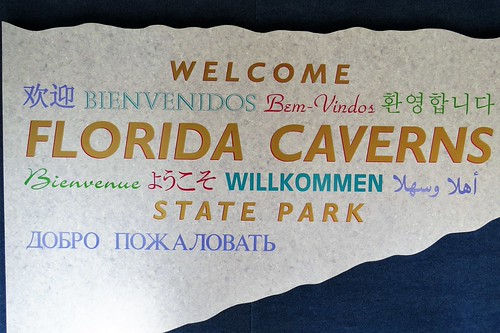
IMG_1366We left Niceville early and stopped by the Florida Caverns State Park on the way to the campground. Who knew Florida had caverns! We took a tour of the caverns with a great guide. Some of the places on the tour had really low ceilings so Bill had to do quite a bit of bending over while walking. It wasn’t equal to Carlsbad Caverns, but still a great place to visit!IMG_1367IMG_1368IMG_1369IMG_1372IMG_1374IMG_1377
IMG_1379The Eastbank Campground was on a lake overlooking a dam. We enjoyed views of the lake with ducks and birds splashing in the water. It was a very quiet and peaceful campground and we enjoyed our time there. So far Florida has been pretty chilly and the mosquitoes are biting!IMG_1380
We left Georgia and were back in Florida, heading to Osceola National Forest for a three day stay in the forest. We had hoped to get one of the electric sites in the Ocean Pond Campground, but since hunting season has begun and snowbirds are migrating back, all the electric sites were taken at this nonreservable campground. No problem since we were able to get a site with water hookup and open sky for our satellite TV and solar panels. The solar panels we had installed in Phoenix are really coming in handy.
We are enjoying our time in the forest. Tomorrow we head to Jacksonville to see family and friends. Remember earlier in this post I mentioned the bad luck we experienced? All of that is behind us and we feel really blessed to have made it safely back over those 1,800+ miles and back in Florida!!

October 5, 2015 Heading east AT LAST!

This blog is from events of almost two months ago.  We have been on a fast track east and have had little time for blogging and/or poor internet service.

We only planned to stay in Yuma, Arizona for 5 days.  But due to a series of unplanned circumstances, our stay there turned into over a month.  While we love Yuma, a place very friendly to RVers with great weather this time of year, we were more than happy to finally pull out of the campground.  We had originally planned on taking a slow stroll across the country to Florida. But due to our extended stay in Yuma, now we had to travel at a fast jog. We were forced to skip stops in Austin and Big Bend National Park in Texas and New Orleans. Other stops were shortened with several one night stopovers and an occasional two or three night stop for Bill to rest from all the driving.
It seemed like a long way from Yuma to Florida, and it was at over 1,800 miles. Our first stop was Tucson followed by Deming, New Mexico. Two places we had not canceled were Roswell and Carlsbad Caverns, both in New Mexico.

IMG_20151108_111755Our drive took us through the White Sands Missile Range. The world forever changed here on July 16, 1945 at the Trinity Test Site when the first atomic bomb was detonated. The national historic site is open to visitors just ONE day a YEAR, and today was not the day. We did stop at the White Sands National Monument, the largest gypsum dune field in the world. Considered one of the world’s great natural wonders, the white dunes range over 275 square miles. We stopped at the Visitors Center and saw an excellent movie explaining how the dunes were shaped by natural forces. We decided not to take the scenic drive to see the dunes since we had the car hooked to the RV and we still had a long drive to our destination of Lakewood, New Mexico. We put the White Sands National Monument on our list of places to return to in a future visit.IMG_20151108_114734IMG_20151108_114859

IMG_20151108_134732After passing through Cloudcroft Tunnel, built in 1949 under a rock formation and is the only automotive tunnel in New Mexico, we finally arrived in Lakewood for a three night stay. Lakewood was a convenient destination because it was halfway between two places we wanted to visit in the area.

20151109_114759The next day we set out to see Roswell, New Mexico to visit the International UFO Museum and Research Centers. On July 6, 1947, a local rancher told Roswell authorities about an object that had crashed in his field. Investigating officials at the Roswell Army Air Field reported they discovered a “flying disk”. A few hours later they revised their story, saying it was not a UFO but a weather balloon. What really happened that day is a mystery and a source of speculation and debate to this very day. The UFO Museum mainly consisted of wall after wall of newspaper stories and eyewitness accounts told by local residents. There was a small theater with documentaries and movies, with the most interesting being eyewitness accounts of the days following the crash when townspeople were threatened to keep quiet and those who had supposedly witnessed things the government did not want them to see suddenly disappeared. I entered the museum with disbelief and skepticism and perhaps a somewhat closed mind. I did not see anything in the museum to make me a believer. Bill, on the other hand, has a much more open mind than I do and still entertains the idea of a UFO visit.20151109_12405520151109_124618

20151109_124340

This is a painted picture from eyewitness(s)

20151109_124018

The spaceship and robot from the movie: The Day The Earth Stood Still

20151109_125111
There is more to Roswell than the incident in 1947. In the 1800’s this was an area of frontier living with Apache Indians and often visited by Billy the Kid. Roswell is also the home of one of the largest mozzarella cheese factories in the world.
IMG_20151109_145415Of special interest to Bill was that in the 1930’s, Roswell was the place where Robert H. Goddard, known as the Father of Modern Rocketry, attempted to defy gravity. During this time Goddard worked with Charles Lindbergh and Harry Guggenheim. We stopped by the Roswell Museum and Art Center where we toured Goddard’s actual workshop and saw fascinating home movies made by Goddard’s wife showing Goddard launching his first rockets.IMG_20151109_145221IMG_20151109_145244
IMG_20151110_095248On our last day in the area we drove south from the campground to Carlsbad Caverns. It is considered by many to be the Eighth Wonder of the World with some of the world’s largest underground chambers. The Big Room alone would hold fourteen Astrodomes. We were really looking forward to touring the caverns and it is one of the few places we didn’t eliminate from our revised itinerary. Our plan was to hike the steep 800 foot descent into the cave and then take the elevator back up. Unfortunately, the elevator was broken.IMG_20151110_095301IMG_20151110_112126IMG_20151110_102641

I was fighting a cold and neither of us was in the mood for the steep hike down and especially the climb back out which was equal to climbing 79 stories. We did see a movie at the Visitors Center and walked to the entrance of the cave. We were disappointed to say the least since we had eliminated other places on the itinerary to come here. But we had no choice except to put it on the list for the future. We returned to the campground and prepared to hit the road running tomorrow.

September 18, 2015 Flagstaff and Phoenix, AZ

It was hard to leave Page with beautiful Antelope Canyon, Horseshoe Bend and Monument Valley.  What a gorgeous area of Arizona!!  The weather was really hot so we decided to spend five days in Flagstaff, which at an elevation of almost 7,000 feet was going to be cooler.

We thought we would just hang out in Flagstaff and enjoy the weather, but there turned out to be more to do than we expected.

A short drive from our campground was Wupatki National Monument, Sunset Crater Volcano National Monument and Walnut Canyon National Monument.

IMG_1364Sunset Crater Volcano National Monument is a 2,200 square mile volcanic field with more than 400 cinder cones.  Sunset Crater is the youngest volcano in the area, having exploded in 1065 AD.  Because it was pretty hot and we had already experienced a lot of lava fields at Craters of the Moon in Idaho and in Hawaii, we didn’t spend a lot of time here.  We saw a movie at the Visitors Center and we found a really cool geocache.  The geocache was located inside an extinct fumerole (an opening in the earth’s crust which emits steam and gases).  Since the fumerole was extinct it was no longer emitting steam and gases, but I was still surprised Bill jumped down into the fumerole to find this geocache.  Really, Bill??!!IMG_1362IMG_1361

IMG_1360Within Wupatki National Monument are 800 ruins, the homes and villages of the Sinagua and Ancient Puebloans.  These ancient people felt the warning tremors before the volcano erupted in 1065 AD.  The lava flows forced them to vacate the land they had cultivated for over 400 years, and they moved to Wupatki and Walnut Canyon.  Here they lived for another 100 years before moving to other areas of the Colorado plateau.  The agricultural potential of the area actually improved after the eruption because the thin layer of ash absorbed moisture and helped prevent evaporation in the hot, dry landscape.  By 1250 AD the pueblos in Wupatki stood empty.  While there we walked a paved trail which took us up close to several dwellings.IMG_1352IMG_1353IMG_1355IMG_1358

In the early nineteenth century settlers and visitors to the Flagstaff area explored the Wupatki and Sunset Crater National Monuments, looting the area for souvenirs and damaging the landscape.  In 1928 filmmakers planned to use explosives at Sunset Crater to create a landslide for filming.  This led to a public outcry and a push to preserve the area.  In 1930 President Herbert Hoover established Sunset Crater National Monument as part of the national park system.  Wupatki had already been designated a national monument in 1924 after extensive looting of the dwellings.

IMG_1365I think our favorite trip was to nearby Walnut Canyon National Monument.  Here there are dwellings sheltered by overhanging cliffs inhabited here in Walnut Canyon for over 800 years.  The people, known as Sinagua, meaning without water in Spanish, lived by farming, hunting deer and small game, and gathering plants.  It is amazing how they were able to turn this dry land into a homeland.  It is not known why they left, perhaps due to a severe drought.  It is thought they traveled southeast and assimilated into the Hopi culture.

In the 1880’s the railroad brought souvenir hunters to the region, and like Wupatki and Sunset Crater,  looting and destruction of the area caused alarm and dismay.  In 1915 Walnut Canyon was protected as a national monument.IMG_20150921_113003IMG_20150921_105715PANO_20150921_120825

We intended to only walk the Rim Trail around the top of the canyon which would have given us a distant view of the cliff dwellings.  The day was cloudy and cooler, so we decided to walk the Island Trail which was listed as a strenuous trail mostly because of the 240 steps each way which would take us closer to some of the cliff dwellings.  As it turned out it was more moderate than strenuous and we found the walk pleasant and very informative.IMG_20150921_115331IMG_20150921_110159IMG_20150921_111032IMG_20150921_112243IMG_20150921_111259IMG_20150921_112607

We left Flagstaff and drove to Phoenix and our elevation dropped 6,000 feet.  Boy could we feel a difference in temperature!!  Now the temperature climbed to 111 degrees during the day.  After several days of this, the local weatherman said it was going to be cooler with temperatures “only” around 100 degrees.  We were practically the only ones in the campground resort.  The snowbirds will not be arriving for at least another month.

PicsArt_10-08-06.54.23While in Phoenix we did drive into the downtown area on a Sunday to see the state capitol building.  We found some geocaches including one at the Liberty Bell located on the capitol grounds.  This Liberty Bell is identical in dimensions and tone to the Liberty Bell in Philadelphia.  The bell is one of 53 cast in France in 1950 and given to the United States government by several copper mining companies. PicsArt_10-08-06.58.20 It is dedicated to us, free citizens in a free country.  Every September the Bell is moved to Gilbert, Arizona where it is displayed as part of Constitution Week.  Close to the capitol grounds we found Wesley Bolin Memorial Plaza where there are many memorials honoring important people in Arizona history as well as memorializing wars and significant historical events.  We found a geocache at the USS Arizona anchor (see our post of the USS Arizona memorial).   The 16,000 pound anchor was part of the ship which was bombed and sank during the attack on Pearl Harbor.  The ship still lies at the bottom of Pearl Harbor.  In the plaza is also the USS Arizona signal mast and gun barrel.  Inside the capitol museum is a superstructure salvaged from the ship and the US flag which flew on the battleship when it sank.PicsArt_10-08-06.55.00PicsArt_10-08-07.00.19

Next we head to Yuma, Arizona for a few days before we begin our slow trek back east.