This blog is from events of almost two months ago. We have been on a fast track east and have had little time for blogging and/or poor internet service.
We only planned to stay in Yuma, Arizona for 5 days. But due to a series of unplanned circumstances, our stay there turned into over a month. While we love Yuma, a place very friendly to RVers with great weather this time of year, we were more than happy to finally pull out of the campground. We had originally planned on taking a slow stroll across the country to Florida. But due to our extended stay in Yuma, now we had to travel at a fast jog. We were forced to skip stops in Austin and Big Bend National Park in Texas and New Orleans. Other stops were shortened with several one night stopovers and an occasional two or three night stop for Bill to rest from all the driving.
It seemed like a long way from Yuma to Florida, and it was at over 1,800 miles. Our first stop was Tucson followed by Deming, New Mexico. Two places we had not canceled were Roswell and Carlsbad Caverns, both in New Mexico.
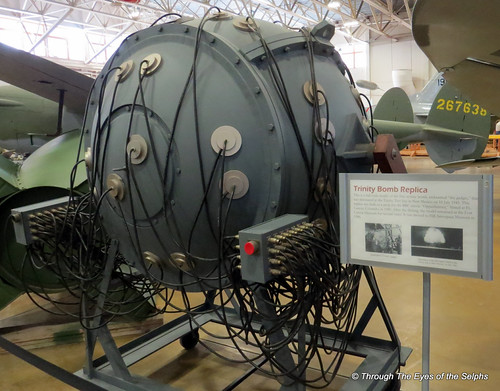
 Our drive took us through the White Sands Missile Range. The world forever changed here on July 16, 1945 at the Trinity Test Site when the first atomic bomb was detonated. The national historic site is open to visitors just ONE day a YEAR, and today was not the day. We did stop at the White Sands National Monument, the largest gypsum dune field in the world. Considered one of the world’s great natural wonders, the white dunes range over 275 square miles. We stopped at the Visitors Center and saw an excellent movie explaining how the dunes were shaped by natural forces. We decided not to take the scenic drive to see the dunes since we had the car hooked to the RV and we still had a long drive to our destination of Lakewood, New Mexico. We put the White Sands National Monument on our list of places to return to in a future visit.

 After passing through Cloudcroft Tunnel, built in 1949 under a rock formation and is the only automotive tunnel in New Mexico, we finally arrived in Lakewood for a three night stay. Lakewood was a convenient destination because it was halfway between two places we wanted to visit in the area.
 The next day we set out to see Roswell, New Mexico to visit the International UFO Museum and Research Centers. On July 6, 1947, a local rancher told Roswell authorities about an object that had crashed in his field. Investigating officials at the Roswell Army Air Field reported they discovered a “flying disk”. A few hours later they revised their story, saying it was not a UFO but a weather balloon. What really happened that day is a mystery and a source of speculation and debate to this very day. The UFO Museum mainly consisted of wall after wall of newspaper stories and eyewitness accounts told by local residents. There was a small theater with documentaries and movies, with the most interesting being eyewitness accounts of the days following the crash when townspeople were threatened to keep quiet and those who had supposedly witnessed things the government did not want them to see suddenly disappeared. I entered the museum with disbelief and skepticism and perhaps a somewhat closed mind. I did not see anything in the museum to make me a believer. Bill, on the other hand, has a much more open mind than I do and still entertains the idea of a UFO visit.


This is a painted picture from eyewitness(s)

The spaceship and robot from the movie: The Day The Earth Stood Still

There is more to Roswell than the incident in 1947. In the 1800’s this was an area of frontier living with Apache Indians and often visited by Billy the Kid. Roswell is also the home of one of the largest mozzarella cheese factories in the world.
 Of special interest to Bill was that in the 1930’s, Roswell was the place where Robert H. Goddard, known as the Father of Modern Rocketry, attempted to defy gravity. During this time Goddard worked with Charles Lindbergh and Harry Guggenheim. We stopped by the Roswell Museum and Art Center where we toured Goddard’s actual workshop and saw fascinating home movies made by Goddard’s wife showing Goddard launching his first rockets.

 On our last day in the area we drove south from the campground to Carlsbad Caverns. It is considered by many to be the Eighth Wonder of the World with some of the world’s largest underground chambers. The Big Room alone would hold fourteen Astrodomes. We were really looking forward to touring the caverns and it is one of the few places we didn’t eliminate from our revised itinerary. Our plan was to hike the steep 800 foot descent into the cave and then take the elevator back up. Unfortunately, the elevator was broken.


I was fighting a cold and neither of us was in the mood for the steep hike down and especially the climb back out which was equal to climbing 79 stories. We did see a movie at the Visitors Center and walked to the entrance of the cave. We were disappointed to say the least since we had eliminated other places on the itinerary to come here. But we had no choice except to put it on the list for the future. We returned to the campground and prepared to hit the road running tomorrow.