Category Archives: Exploring

Exploring

Kobe, Japan PT 1 MAR 2 2024

In the last blog I mentioned the captain hinted that bad weather might prevent us from docking at Omaezaki, Japan. Did we get there? The answer is no. The seas were very rough during the night with the wind howling continuously. There is something spooky about a dark night with howling winds. 

The next morning we were not surprised when morning arrived and the captain announced the port was canceled. It was too rough for the pilot boat to bring the local pilot to join the ship, and local regulations required a regional pilot onboard when docking. The port was closed. 

The captain had an unexpected sea day so he slowed the ship down to a scenic cruising speed. A couple hours later we were sitting inside on the upper deck when Bill suddenly saw Mt Fuji. Until now it had been clouded in, but there it was in all its glory. We headed to the open aft deck to take pictures. Just then an announcement was made and everyone headed outside. It was like a big party with people taking pictures, selfies and exclaiming over Mt Fuji’s beauty. Disappointment over the missed port was quickly forgotten.

The rough seas continued all day. At one point we went down to deck two where people were standing in front of the large windows, memorized by the huge waves right outside the windows. We tried to get pictures, but it was too difficult to get a perspective through the glass. I walked through the indoor pool area. There is a retractable roof that slides open when the weather is warm and sunny. Today the roof was closed and it was making a very loud combination of a squeal and bang as the roof flexed in the rough seas. 

At bedtime I told Bill I was physically tired from trying to stay upright all day. It seemed like whatever direction I wanted to move, the ship pushed me in the opposite direction. But neither of us were seasick, and for that we were very grateful. 

The next day we arrived at Kobe, Japan. Even though it was very cold, it turned out to be our favorite Japanese port.

As we arrived in the harbor, a fire boat met us and put on a welcoming water display with changing colors.

Kobe has a population of 1.5 million, making it the seventh largest city and third largest port city in Japan. Several companies such as Eli Lilly, Proctor and Gamble and Nestlé have their Asian or Japanese headquarters in Kobe. It is also famous for a very expensive beef called “Kobe beef”. The beef comes from Japanese Black cattle and is known as a delicacy because of its flavor, tenderness and fatty, well marbled texture. It has only been exported since 2012.

The ship was scheduled to stay overnight in Kobe which gave us two full days to explore. We had an excursion booked for the second day but decided to explore on our own the first day. Bill found a Hard Rock Cafe at Universal Studios located in the nearby city of Osaka. The Kobe Port Authority provided a well-staffed information center at the port terminal. We asked the friendly, helpful staff the easiest way to get from Kobe to Osaka. No problem. Just take the monorail from the port to the train station and then take three trains to Universal Studios Osaka. Bill was confident we could figure it out, so off we went.

Buying tickets for the monorail and trains was easy since they had a button for English instructions and we had plenty of Japanese yen. The hardest thing was trying to figure out which platform each train left from since everything here was in Japanese only. We only needed to ask for help a couple times. They have guard rails that come up and down to stop people.

They also have floor instructions to control the flow onto and off of the trains.

The third train let us out right at Universal Studios where many stores and restaurants were located, including the Hard Rock Cafe. Fortunately, everything was outside the entrance to Universal Studios, so we didn’t have to pay to go in.

We bought Bill a shirt, had lunch nearby and reversed directions back to the ship with the three trains and the monorail. The biggest problem was it was just so cold. We stopped at an outside mall before getting back on the monorail but it was so cold we gave up.

Our appetizer of hot French Onion soup for dinner that night was especially tasty and warmed us up. 

After dinner the city put on fireworks display, we could see from the outer decks of the starboard side of the ship. It was very cold, but the always thoughtful crew were outside handing out deck blankets to drape around us for warmth.

Next up: Kobe part 2

Ishigaki, Japan FEB 23 2024

After three rough days at sea, we arrived at our first Japanese port, the island of Ishigaki. The island is located surprisingly close to Taiwan. 

Japan is an archipelago of 6,852 islands of which 416 are inhabited. It has 18,486 miles of coastline. It has four writing systems and the main language is Japanese. The currency is the Japanese yen. Ishigaki has a population of 48,000 and is 86 square miles in size.

We decided not to take an excursion but instead explore on our own. We were very pleased to find that Ishigaki provided free shuttle bus service from the port into town.  A very nice, large, clean bus.

First we had to have a face to face meeting with the Japanese immigration authorities on the ship and turn in our declaration forms. We received stamps in our passports and colored stickers on our ship cards and we were then free to go off the ship. After stepping off the ship we once again had to show our passports and ship cards to more Japanese officials in the terminal. They also had people standing with large signs with pictures of all the things we could not take off the ship including meat, vegetables and fruit. No way people could later say they didn’t know the rules. Some people try to take fruit and sandwiches off the ship from the buffet area to snack on. It is prohibited in all ports but usually they get away with it. In Japan they do random checks of bags taken off the ship. We were all warned if caught, you face a very large fine and even the ship can be fined.

The ship always provides us with a map of the area which also shows the location of the ship, how to say “Take me back to the ship” in the local language, and the ship’s emergency phone number. 

We had studied the map and selected a few places within easy walking distance. It was the Emperor’s birthday, a big holiday in Japan. Some things were closed such as banks. We had a little trouble finding an ATM that would work with our bank cards so we could get some Japanese currency. We could have gotten it on the ship but knew the exchange rate was better off the ship. We finally found an ATM that worked, most machines appear to be for local bank accounts.

We enjoyed the sights walking through town. Throughout Japan you will find “shisas” on rooftops and entrance ways of homes and businesses. It is believed they protect you from evil. The left shisa has a closed mouth and the right shisa an open mouth. The open mouth wards off evil spirits and the closed mouth keeps good spirits in.

We visited the Tourinji Temple and Gongendo Shrine. The original was built in 1614 and was washed away in a tsunami in 1771.  It was then rebuilt and has been restored several times.

Inside the Closed Temple

Gongendo Shrine


It is always interesting to walk in a food market and compare it with what we have back home.

The Euglena Mall was a fun, colorful place to walk through.

We caught the shuttle bus back to the port where an official boarded the bus to check our passports and ship cards. Once in the terminal there were more Japanese officials to once again carefully check our passports and ship cards to be sure the names matched.

Next up: Okinawa, Japan

Oahu Hawaii FEB 8 2024

After another rough night sailing from the Big Island to the island of Oahu, we arrived at the port in Honolulu in the early morning. We were welcomed with a beautiful rainbow.

Our goal today was to take the city bus from the port to Waikiki Beach to get Bill a shirt at Hard Rock Cafe. We then wandered around the area looking for a food truck on the beach that had garlic shrimp. When we were on Oahu in 2014 we found a roadside stand on the North Shore of the island that had the best garlic shrimp that Bill had ever tasted.  Unfortunately this time around, we didn’t find any garlic shrimp on Waikiki. To show you how wonderful the crew of Holland America are, that evening on the ship one of the chefs stopped by our table. He asked how our day in Honolulu had gone. Bill casually mentioned that he was disappointed he never found any garlic shrimp. The chef immediately pulled out his notebook and made a note to have garlic shrimp especially made for Bill the next night. He said just tell the waiter. Sure enough, the next evening Bill told our waiter, and sure enough the garlic shrimp was prepared for him. How nice is that!

We had a great view of Diamond Head from Waikiki Beach and even from the ship.

In 2014 we rented a car and spent a week on the island of Oahu. The following pictures are from that visit.

Houses are built everywhere

Houses are built everywhere

Diamond Head is the most recognized landmark in Oahu.  The actual name of the volcano is Le’ahi.  It is believed to have been formed about 300,000 years ago during a single brief eruption.  The broad crater covers 350 acres with its width being greater than its height.  The southwestern rim is highest because winds were blowing ash in this direction during the eruption.  Since the eruption the slopes of the crater have been eroded and weathered by wind, rain, and the pounding sea.

Diamond Head got its nickname because in the late 1700’s, Western explorers and traders visited Le’ahi and mistook the calcite crystals in the rocks on the slope of the crater for diamonds.  Imagine their disappointment when they discovered it was not diamonds!  Because of its panoramic view, Diamond Head has been used over the years as a site for coastal defense. Most pictures of Waikiki will have Diamond Head in the background.IMG_3223


Kalaniana'Ole Highway

Kalaniana’Ole Highway

Halona Blowhole

Halona Blowhole

Eastern shore

Eastern shore

IMG_3202

Puu Ualakaa State Wayside Park is on a cinder cone with a breathtaking sweeping view of downtown Honolulu and Diamond Head.  IMG_3228

Overlook of Diamond Head Crater and Waikiki Beach hotels

Overlook of Diamond Head Crater and Waikiki Beach hotels

The National Memorial Cemetery of the Pacific is otherwise known as the Punchbowl.  The cemetery is located in the Punchbowl Crater, an extinct volcanic tuff cone that was formed 75,000 to 100,000 years ago.  The Hawaiian name is Puowaina which means “Hill of Sacrifice” because the area was first used as an altar where Hawaiians offered human sacrifices to pagan gods.  In 1948 Congress approved funding to make it a national cemetery as a permanent burial site for the remains of thousands of World War II servicemen.

National Memorial Cemetery of the Pacific

National Memorial Cemetery of the Pacific

It is a very lovely, peaceful setting with beautiful views of Honolulu and Diamond Head.

How does one even begin to write about Pearl Harbor, such a hallowed place? The USS Arizona Memorial is built over the sunken hull and honors the 1,177 crewmen who died.  The memorial was dedicated in 1962 and the hull is a tomb for over 900 sailors who died inside. IMG_3242

Display of what the USS Arizona looks like underwater

Display of what the USS Arizona looks like underwater

The names of all those who died are on a wall inside the memorial

The names of all those who died are on a wall inside the memorial

Some survivors later chose to be buried inside the memorial

Some survivors later chose to be buried inside the memorial

Also nearby is the USS Oklahoma honoring 429 sailors who died when the ship capsized, as well as the visible hull of the USS Utah Memorial commemorating its 58 dead.

The ships in red were sank during the attack

The ships in red were sank during the attack

Bill took a tour of the Battleship Missouri Memorial which was docked nearby.  The USS Missouri was launched on January 29, 1944, and is the last U.S. battleship ever built.  She is three football fields long and towers over twenty stories tall.  Most importantly, after joining the battle of Okinawa, she became the site of the Japanese surrender on September 2, 1945.IMG_3244 IMG_3253 IMG_3254 IMG_3255 IMG_3258 IMG_3259 IMG_3262IMG_3260

The attack on Pearl Harbor killed 2,400 people and sank or damaged 21 vessels and 323 military planes.

The North Shore area of Oahu is made up of beautiful beaches with dramatic mountains  towering above the shore.  This area is famous for its “pipeline” waves, the massive waves you see at the beginning of the tv show “Hawaii 5-0”.  It is a surfers paradise.  We saw larger waves than we had seen on other parts of the island, but the massive pipeline waves usually occur during the winter months.IMG_3396 IMG_3402

Turtle Beach with no turtles

Turtle Beach with no turtles

Watching the world go by

Watching the world go by

Nuuanu Pali State Wayside Overlook which at an elevation of 1,200 feet had amazing views of Oahu from a stone terrace on the edge of cliffs.  The Hawaiian word “pali” means cliff.  This area is of historical importance to the Hawaiian people because on these cliffs in 1795 is where King Kamehameha won a battle that united Oahu under his rule.  The battle was fierce and during the battle hundreds of soldiers lost their lives, including some who were forced off the edge of the sheer cliffs.

Impressive view of windward O'ahu from Nu'uanu Pali State Wayside (cliffs) at 1200 feet elevation

Impressive view of windward O’ahu from Nu’uanu Pali State Wayside (cliffs) at 1200 feet elevation

A view of Waimea Valley and the northern shoreline from the Puu O Mahuka Heiau on O’ahu

King Kamehameha the first

King Kamehameha the first

The statue is of King Kamehameha the Great (1756-1819), perhaps Hawaii’s greatest historical figure.  There are four statues of the King; this one in downtown Honolulu, on the Big Island at his birthplace, another in Hilo, and in Washington, DC.

We sailed out of Honolulu at 11:00 PM, so no whale watching on our last sail away in Hawaii.

Next up: eight days at sea as we sail towards Guam, including crossing the International Date Line. What day is it????


Hilo Hawaii FEB 7 2024

As we sailed around The Big Island to get from Kona to Hilo, the rough waters continued throughout the night.

At 7:00 A.M. we were luck to see this fat rainbow and the nearby mountain appeared red in the early morning light.

In 2014 we rented a car and drove around the Big Island, including visiting Hilo. Many of these pictures are from that trip. We decided not to pay for an excursion on the cruise since we had already visited most of the places.

Widescreen view of Akaka Falls, 422 feet tall

Hilo is known as Hawaii’s Little Big City and is nestled on the slopes of three volcanoes. It has a population of around 41,000.  It is one of the wettest towns in the United States.  The University of Hawaii has a campus there as well as on other islands.  Hilo was hit by tsunamis in 1946 and 1960.  

We love the huge, lovely trees called Monkeypod we noticed around the town of Hilo.

The Monkeypod trees look like large umbrellas

The Monkeypod trees look like large umbrellas

Rainbow Falls usually make rainbows in the morning hours

Rainbow Falls usually make rainbows in the morning hours

There is a lighthouse on the easternmost point of the state of Hawaii called Cape Kumukahi.  Since this is where the sun first shines in Hawaii every day of every year, it is of spiritual importance to native Hawaiians.  In 1960 Kilauea erupted, destroying a town near the lighthouse and crops nearby.  Just as it appeared the lighthouse would be engulfed by the lava, it split into two streams and flowed into the sea on either side, sparing the structure.  People were amazed by this phenomenon and felt it was a message from the god Pele telling them of the lighthouse’s importance to the people.

This Cape Kumukahi lighhouse was saved in 1960 when the lava flow split and went around the lighhouse fence

This Cape Kumukahi lighhouse was saved on 1960 when the lava flow split and went around the lighhouse fence

Here is the height of the 1960 lava flow next to the Cape Kumukahi lighthouse

Here is the height of the 1960 lava flow next to the Cape Kumukahi lighthouse

IMG_3151

Volcanoes National Park was established in 1916 and became a World Heritage Site in 1987.  The Big Island is the largest and the youngest of the Hawaiian Islands, home to the world’s most active volcanoes, and this park is a good example of why and how this is true.  The overcast sky is due to increases in gasses called “volcanic smog”, also called “vog”.  This vog blows west towards Kona during trade wind weather. The park is 33,000 acres of lava land on the slopes of Mauna Loa, the world’s largest mountain by volume and the world’s tallest when measured from the ocean floor.  Five volcanoes make up the Big Island. 

Mauna Loa is not only 56,000 feet above the ocean floor but also has a large volume.

Kilauea is a relatively young volcano estimated to be 600,000 years old and first erupted 2,500 years ago.

Kilauea Crater leaks lava through its top and side rift zones

Kilauea Crater leaks lava through its top and side rift zones

Halemaumau Crater emitting gas plume at the summit of Kilauea Crater/Volcano

Halemaumau Crater emitting gas plume at the summit of Kilauea Crater/Volcano

The newest Hawaiian island, already named Loihi, is being created 22 miles offshore from volcanic activity growing on the ocean floor.  It will be thousands of years before the new island emerges, so don’t let anyone try to sell you a cheap condo there!

Night view of Halemaumau Crater emitting gas plume

Night view of Halemaumau Crater emitting gas plume

Thurston Lava Tube is a 500 year old massive lava cave.  It was an easy walk through the well lighted cave.

Thurston Lava Tube

Thurston Lava Tube

Thurston Lava Tube

Thurston Lava Tube

Kilauea Iki Crater created in 1959

Kilauea Iki Crater created in 1959

Kilauea Iki Crater with Halemaumau Crater emitting gas plume in the distance

Kilauea Iki Crater with Halemaumau Crater emitting gas plume in the distance

Pauahi Crater

Pauahi Crater

Younger lava flows are dark

Younger lava flows are dark

Some of the newest coastline looks like this

Some of the newest coastline looks like this

Sea arch within the Volcanoes NP

Sea arch within the Volcanoes NP

The port is located in an industral area, not very attractive and not convenient to the city.

View of Hilo from the Ship

These are pictures we took of the city and breakwater that protects the harbor.

Once again as we sailed away from Hilo, whales were spotted off the back of the ship and they put on quite a show. Everytime one was spotted the crowd would cheer, making for a very fun, festive atmosphere.

Next up: Island of Oahu and Honolulu


Kona Hawaii FEB 6 2024

We had six sea days between Mexico and Hawaii. Everyone was kept busy attending lectures on the history, animals, sea life, etc of Hawaii. Also available were lessons on making leis and learning to hula dance. 

The days would have been very pleasant except for the gale force winds and rough seas on days 4, 5 and 6. The Captain had warned us of 17 foot sea swells, common in the Pacific Ocean during the winter. It was so windy we could barely get our balcony door open. The rolling of the ship was constant and relentless. 

One morning the Cruise Director’s “Coffee Talk” was with the Captain. For thirty minutes he answered questions from the audience. He has a quick wit and is very open with the passengers. They put a box at Guest Services for people to submit additional questions and he promised to answer one or two questions each day during his noon commentary.

When we boarded the ship back in January, Holland America took our passports to hold. We were now required to have a face to face meeting with immigration officials at our first port in Hawaii. This requirement was because we had been out of the country since leaving Fort Lauderdale on January 3rd.  We picked up our passports and met with an immigration official at our assigned time.  As we filed through the line, the immigration official barely glanced at our passports. Obviously just a formality.

Two of our Hawaiian ports is on The Big Island, with the first being the town of Kona. The Big Island is really an island of contrasts with Kona on one side and Hilo on the other.  Kona is a major beach resort area with less than ten inches of rain a year.  Hilo is the largest city on the island and tropical with more than 150 inches of rain annually.  The total population of the island is around 185,000.

The Big Island is the biggest of all the Hawaiian islands with 4,028 miles, twice the size of all the other islands combined, and most importantly, it is still growing!!  It is the youngest of all the islands, estimated to be about 800,000 years old.  This is the most volcanic of all the islands, with Kilauea near Hilo being the world’s most active volcano.  Kilauea has been sending rivers of lava since January 1983, adding more real estate to the island every day.  It is also an island seeped in history.  It is the birthplace and deathplace of King Kamehameha, a great king who united all the Hawaiian Islands under his rule.  He died in 1819.

British Captain James Cook, after exploring in 1778 the islands of Kauai and Oahu, arrived on the Big Island in 1779.  At first, thinking Cook was perhaps a god, the natives welcomed him with great feasts.  After discovering he was in fact not a god, they became hostile.  Cook and four of his men died on the Big Island during a battle.  A small bronze plaque at the north end of Kealakekua Bay marks the spot of his death.  Cook’s countrymen erected a 27-foot memorial near the plaque to honor him.

We had spent a week on The Big Island in 2014 so we didn’t feel the need to pay for an excursion. Our plan was to walk around the port area and go to Walmart. Problem was we had forgotten how hilly Kona is and it was a steep uphill walk to Walmart.

On the way back we saw a man with his dog on a surfboard. Really cute.


IMG_3006

Kona is a great place to snorkel. Living coral can be found in 57% of the waters surrounding this island. 

Kahalu'u Bay

Kahalu’u Bay

 Also on the Big Island is the South Point, the southernmost point in the United States.  (Sorry Key West).  This South Point has a latitude 500 miles farther south than Miami.  It is believed in 150 A.D. the first Polynesian explorers set foot on the island near this point.  IMG_3047 IMG_3053 IMG_3055

These pictures are from our trip in 2014.

Punalu’u Black Sand Beach Park is one of the most famous black sand beaches in Hawaii.  The black sand is made from basalt created by lava flowing into the ocean which exploded as it reached the ocean and cooled. IMG_3074 IMG_3068 IMG_3069

Again, these pictures are from 2014. On the island you can find sandy beaches or lava rock beaches. IMG_3076

IMG_3077

As we went through security to get back on the ship, the Hawaiian port authorities had us show both our ship ID and also our driver’s license and each passenger was wanded. Most thorough security since we left Fort Lauderdale.

Shortly after leaving Kona someone reported seeing whales. That caused everyone to scatter to all the decks.  We were at the rear of the ship and saw quite a few whales breaching and spouting. It was as if they were putting on a farewell show for us.

Next up: Hilo, Hawaii

Puerto Vallarta MX JAN 30 2024

Our next port was Puerto Vallarta, Mexico pop 225,000. We last visited here in May, 2022. It is often portrayed as one of the most beautiful, cultured and luxurious vacation spots in all of Mexico. It was a sleepy, quiet town until Richard Burton Ava Gardner and Elizabeth Taylor showed up for the filming of the movie, “The Night of the Iguana” in the early 1960’s, and put the town on the map. 

A popular spot is the Malecon, or boardwalk, in downtown Puerto Vallarta overlooking Banderas Bay. Notice the cairns, rocks piled in groups, which people like to do when they come here. PXL_20220507_152129130PXL_20220507_152252322

The Boy on the Seahorse, sculpted in 1976, is one of the iconic symbols of the city. 20220507_10250220220507_102418~2

Another is Triton and the Mermaid. According to Greek mythology, Triton is the son of the Greek sea god, Poseidon. Triton is reaching out to his wife, Amphitrite, goddess of the sea. 20220507_10231620220507_10281920220507_102757

Lluvia (Rain) symbolizes openness in which the man is receiving what the world offers him with eyes looking up into the rain and enjoying the water falling on him. It represents the people of Puerto Vallarta who welcome locals and visitors with open arms. 20220507_102000

A pirate boat sailing in the Banderas Bay offered tours of Puerto Vallarta that evidently included sound effects. It startled us as it fired a cannon as it passed by. 20220507_102203

Some young men dressed as Aztec warriors tried to entertain the crowd. Our guide said they were just there to perform for tourists and then ask for money. We avoided them. 20220507_102719PXL_20220507_204844389.MP

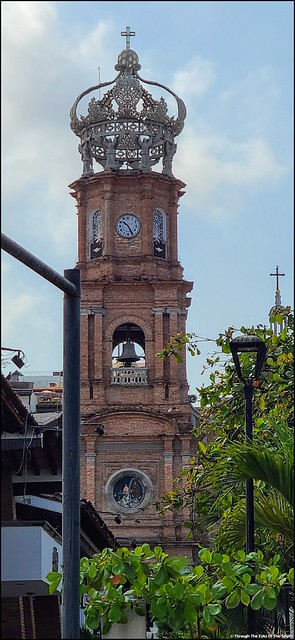
Our next stop was at The Church of Our Lady of Guadalupe, located in the center of the town square. 20220507_102932

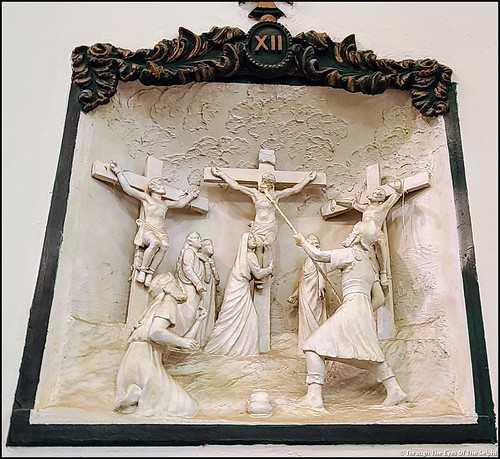
The church was built between 1930 and 1940 and has services on the weekends in both Spanish and English. The church is dedicated to Our Lady of Guadalupe, also known as the Virgin Mary, the patron saint of Mexico. 20220507_103738PXL_20220507_15392142320220507_10410120220507_104028PXL_20220507_154046559PXL_20220507_154146989original_4c0684fe-b7bd-4c76-8831-c6b021ebe737_PXL_20220507_154621002 

In Mexico they don’t have signs on the bus announcing the stops. They take soap and write the names of the stops. Notice Walmart is at the top of the list. PXL_20220507_155356191.MPoriginal_7f196126-77f4-4a85-bd4b-28c8871c0f51_PXL_20220507_154347370  PXL_20220507_16545692420220507_105927

 PXL_20220507_172613891

This is Mismaloya Beach, Mexico. PXL_20220507_172852961

Across the street was a number of kudamundi, also known as a Mexican raccoon. 20220507_122555


20220507_101325

We noticed when we docked this morning that directly across the street was a Walmart Supercenter and a Sam’s Club. Since we had plenty of time before the ship left, we walked over to Walmart to get a few things.  It was so crowded we walked out without buying anything. All the ship’s crew loves to go to Walmart and get toiletries and snacks. With 2 ships in port, the store was mobbed with crew and passengers. The aisles were crowded and the lines long.

As We Approach the Dock, Walmart and Sam’s Club Will Be Nearby

We stood on our balcony during the sail away. Once we were out of the harbor, a pilot boat pulled alongside the ship to pick up their pilot who helped guide us safely away from the dock. After getting in the pilot boat they blew whistles in farewell. Our captain blew the ship’s horn several times and the pilot waved to the passengers on the decks and balconies. At one point he took off his hat and bowed low, a nice gesture of goodwill and appreciation for visiting.

The captain said they could see whales from the bridge of the ship. Sure enough from our balcony we saw a whale breach and some whales spouting. They are too quick to get good pictures but it sure was fun to see them. During the winter months, whales migrate to the warm water of Mexico.

That’s All Folks!

Evening entertainment was a comedian. He incorporated his life story into his act. He was born in Cuba and his family escaped Cuba as political prisoners when he was five. He worked hard, went to the Air Force Academy in Colorado, retired as a pilot and serves in the reserves as a Lieutenant Colonel. He decided he wanted to be a stand up comedian working in comedy clubs and on cruise ships.

Jose Sarduy

The next morning our Cruise Director interviewed him on her daily “Coffee Break” get together and passengers were able to ask him questions. As far as we know Holland America is the only cruise line that has these get to know sessions with the crew and entertainers. The Cruise Director has a “Coffee Break” session in the morning and one in the evening that is a “Cocktail get together”.

Something else only Holland America has is a show late at night for all the crew and workers. If the entertainers oblige, and most of them do, a third late show is done for them. By the way, one day Bill asked one of the chefs in the upstairs buffet area what happened to all the food left from breakfast, lunch and dinner. The chef said it was taken downstairs for the crew to enjoy.

We have a wonderful crew of workers on this voyage. They are always smiling, hard working and eager to help. I would say all, or most of them, are from the Philippines and Indonesia. And of course they all speak English.

Next up: six sea days and then Kona Hawaii


REVISED Manzanillo MX JAN 29 2024

We had two sea days on the way to Mexico from Costa Rica. On the second morning at sea we went to the Cruise Director’s “Coffee Talk”. Bill especially wanted to attend this one because she was interviewing the ship’s Chief Engineer and Staff Engineer. It was very interesting to hear about their careers and some facts about their jobs on the ship. We were all given the opportunity to ask questions. One person asked the Chief Engineer his favorite place he has sailed to. He quickly answered Antarctica. He said he gets tears in his eyes remembering its beauty.

Our next port of call was Manzanillo (pop 160,000) on the west coast of Mexico. This small fishing village only gets around 16 cruise ships a year. They are working hard to attract more cruise ships and tourists. This port also plays an important role in transporting cargo for Mexico City and is considered Mexico’s busiest port for commercial ships.

There was a visible military police presence guarding our ship’s restricted pier area as we headed into town.  We smiled and said “Hola” and they returned the greeting. As we greeted people in their language throughout the town they smiled shyly and greeted us back. Along the Malecon de Manzanillo we strolled along the seaside boardwalk. Manzanillo is known as the sailfish capital of the world, hosting national and international fishing competitions. It has a large sailfish sculpture as its most iconic sculpture.

Manzanillo is a sister city of the U.S. cities of Flagstaff, Arizona, San Pablo, California and Saint Paul, Minnesota.

We Saw Several Places Making Tortillas

Our most important goal for today was to get Bill a haircut. He googled barbers and found one a reasonable walk from the ship. The young lady there spoke absolutely no English. We needed to find out if the shop accepted American dollars and how much a haircut cost. Between my limited Spanish and Google translate, we figured it all out. She worked meticulously on Bill’s hair and did a great job. We gave her a nice tip and we all left happy.

We went to see Church Nuestra Señora Del Carmen, a catholic church.

We then decided to walk around the hilly town. Again, we noticed some local police. We felt safe. They are working hard to build up tourism and want tourists to have a safe and enjoyable visit. We walked for quite awhile seeing the homes and businesses in the El Centro part of town. It is very humbling to see the way others live and the poverty they endure.

The fact that we leave there and step back on a cruise ship is not lost on us.

This Photo Taken From The Dock

We do believe there are some more resort type areas with much nicer homes closer to the beach areas.

This Photo Was Taken From the Height of the Ship

As we were walking back to the ship we saw a car with Oregon license plates! 

Next up: Puerto Vallarta, Mexico 


Manzanillo MX JAN 29 2024

We had two sea days on the way to Mexico from Costa Rica. On the second morning at sea we went to the Cruise Director’s “Coffee Talk”. Bill especially wanted to attend this one because she was interviewing the ship’s Chief Engineer and Staff Engineer. It was very interesting to hear about their careers and some facts about their jobs on the ship. We were all given the opportunity to ask questions. One person asked the Chief Engineer his favorite place he has sailed to. He quickly answered Antarctica. He said he gets tears in his eyes remembering its beauty.

Our next port of call was Manzanillo (pop 160,000) on the west coast of Mexico. This small fishing village only gets around 16 cruise ships a year. They are working hard to attract more cruise ships and tourists. This port also plays an important role in transporting cargo for Mexico City and is considered Mexico’s busiest port for commercial ships.

There was a visible military police presence guarding our ship’s restricted pier area as we headed into town.  We smiled and said “Hola” and they returned the greeting. As we greeted people in their language throughout the town they smiled shyly and greeted us back. Along the Malecon de Manzanillo we strolled along the seaside boardwalk. Manzanillo is known as the sailfish capital of the world, hosting national and international fishing competitions. It has a large sailfish sculpture as its most iconic sculpture.

Manzanillo is a sister city of the U.S. cities of Flagstaff, Arizona, San Pablo, California and Saint Paul, Minnesota.

Our most important goal for today was to get Bill a haircut. He googled barbers and found one a reasonable walk from the ship. The young lady there spoke absolutely no English. We needed to find out if the shop accepted American dollars and how much a haircut cost. Between my limited Spanish and Google translate, we figured it all out. She worked meticulously on Bill’s hair and did a great job. We gave her a nice tip and we all left happy.

We went to see Church Nuestra Señora Del Carmen, a catholic church.

We then decided to walk around the hilly town. Again, we noticed some local police. We felt safe. They are working hard to build up tourism and want tourists to have a safe and enjoyable visit. We walked for quite awhile seeing the homes and businesses in the El Centro part of town. It is very humbling to see the way others live and the poverty they endure.

The fact that we leave there and step back on a cruise ship is not lost on us.

This Photo Taken From The Dock

We do believe there are some more resort type areas with much nicer homes closer to the beach areas.

This Photo Was Taken From the Height of the Ship

As we were walking back to the ship we saw a car with Oregon license plates! 

Next up: Puerto Vallarta, Mexico 


St George’s, Grenada JAN 20, 2024

After three relaxing days at sea, we reached St George’s, Grenada. And it wasn’t a tender port,  Yay!! I don’t know who was happier, the passengers or the exhausted tender boat drivers.

St George’s, pop 34,000, is the capital city of Grenada.  With a picturesque horseshoe shaped harbor, the town is surrounded by the hillside of an old volcano crater. Grenada (pop 125,000) and its smaller surrounding islands are known as the spice islands with nutmeg being the main crop along with cocoa, mace, cloves, vanilla, cinnamon and ginger.

Grenada achieved independence from Britain in 1974. After a leftist coup in 1983, U.S. troops invaded the island and a pro USA government was reinstated.  In 2004, the island was devastated by Hurricane Ivan with 90% of the homes damaged or destroyed. Nutmeg trees, the key to their economy, were destroyed. With help from the United States, Canada, China, Venezuela, European Union, Trinidad and Tobego, the country has made significant progress in rebuilding their country and economy.

It was a sunny, hot and humid day as we made our way off the ship. Instead of an excursion, we had decided to walk around and explore on our own. We quickly discovered that St George’s is severely lacking in sidewalks, making for potential hazardous conditions for pedestrians. There were lots of people milling around since there were two cruise ships in port. It has been many days since we had the company of another cruise ship. They were parked right next to us so they couldn’t be missed.

Our map took us through the 350 foot Sendall Tunnel which was an experience in itself with no pedestrain walkways. We also found they drive on the left side of the road like the United Kingdom.

We continued climbing up steep streets to reach St Andrew’s Presbyterian Church. There was quite a view from the top.

We continued back down to the harbor where the water was so clear we could see tiny minnows in the water.  Next was their open air market where we didn’t see anything of interest. We checked into buying tickets to ride their little town trolley but there was over a two hour wait so we passed. By now we were really hot and decided to head back to the ship. We spent the afternoon working on blogs, using the first cell phone signal we have had in many days.

We noticed some of the crew bringing a small truckload of palm fronds onto the ship in St George’s. The next morning at breakfast we noticed the entire buffet area had been magically transformed overnight into a Caribbean setting with palm fronds and shells. All done to prepare for our upcoming time in the Caribbean. The crew is always finding ways to surprise us!

That evening the captain told us to watch out for Pico Naiguata, the summit of a mountain near Caracas, Venezuela. Around 6:00 p.m. we could make it out in the distance from our balcony using binoculars. It was impossible to get a good picture because of the sea mist.

Next up: Willemstad, Curacao

Willemstad, Curaçao JAN 22, 2024

After a day at sea, we arrived at Willemstad, Curaçao. This island is one of what is known as the ABC islands consisting of Aruba, Bonaire and Curaçao. Last fall we visited Aruba and Bonaire so we are glad to complete the ABC’s. The captain commented that Curaçao is his favorite Caribbean port.

Willemstad, pop 137,000, is the capital of Curaçao. Willemstad is home to the oldest surviving synagogue in the Americas. In the 1600’s, Jews fleeing persecution in Spain and Portugal settled here. 

Curaçao, pop 150,000, is in the southern Caribbean and north of the Venezuela coast. It is a country within the Kingdom of the Netherlands with the kingdom responsible for defense, foreign policy and ensuring that parliamentary elections are held. . The ABC islands are often referred to as the Dutch Caribbean. Curaçao is the largest of the ABC islands in population and area. The people here speak Dutch, English, Spanish and Papiamento, a Creole language.

Curaçao’s economy is based on tourism, international trade, shipping services and oil refining. Curaçao has a continental shelf with a sharp drop off known as “The Blue Edge” which attracts scuba divers from around the world. Its coral reefs, which can be reached without a boat, are popular for snorkeling. Unfortunately some of the coral reefs have been affected by tourism.

We really liked Curaçao. It was pedestrian friendly and the people were welcoming. We got off the ship early for our walk around the town. We walked across the Queen Emma pontoon bridge, nicknamed “The Swinging Lady”. Built in 1888, it is the oldest and longest floating bridge in the world. It rests on 15 pontoons and swings open 30 times a day to let tankers, container and cruise ships in and out of the harbor.

The Rif Fort was built in 1828 to protect the bay and area. It now has many shops and restaurants on four levels inside.

The Governor’s Palace is both a residence and a place of work.

The Fort Church is a Protestant church dating from 1796 and is still being used as a church today.

There are many colorful murals throughout the area.

We also managed to find a geocache! By the bridge is three heart shaped places to put your “love locks”.

The day before we reached Curaçao, the captain mentioned during his noon announcements that we would have windy weather in Curacao. The waves were crashing on the shore giving us a nice breeze throughout the day. It made for pleasant walking around the town, such a welcome relief from the heat that had plagued us for days.

The captain also said once we left Curaçao we would be moving into significant tradewinds on the way to the Panama Canal that would be giving us gale force winds and 15 foot seas. Oh boy! Hope I have enough Dramamine to weather that storm! Stay tuned! 

Next up : the Panama Canal