Category Archives: Exploring

Exploring

Alamogordo, NM OCT 26, 2017

Leaving Lakewood on Thursday we headed west towards Alamogordo.  We again passed by the pumps pumping oil.  20171022_145029

We had to drive over the Cloudcroft summit, elevation 8,650 ft.  Due to the high elevation and the steep grade on the way down from the peak, we disconnected the car and I drove the car down the mountain.  I was able to snap a quick picture of Bill driving the RV through a tunnel on the way down.20171026_114759(0)

We arrived in Alamogordo and set up at the local friendly Elks Lodge where they have electric, water and sewer RV sites.  Alamogordo is home to the Holloman Air Force Base and much of the city’s industry is related to the Air Base and space travel.

After getting settled in we drove to the nearby New Mexico Museum of Space History. It is appropriate that the museum is here since this area of New Mexico is known as the cradle of America’s space program.  It was not the most extensive space museum we have ever been to, and some of the museum was under renovation and in disarray, but we enjoyed our visit.  IMG_20171026_13585920171026_14072320171026_140819

20171026_141214

This is the Elevator

On the grounds was the burial site of HAM, the first “Astrochimp”.  (Previously dogs and other animals had been launched by Soviets and NASA as merely passengers.) HAM was launched in a Mercury capsule on January 31, 1961.  Three months later the first manned flight was launched into space with Alan Shepard becoming the first American in space.   IMG_20171026_142931IMG_20171026_14294420171026_142947

We both enjoyed the Star Trek collection.20171026_150627IMG_20171026_151133IMG_20171026_151047

 Bill was especially interested in the Daisy Track.  It was used from 1955 to 1985 and was converted from rocket to air powered sled track. It was used to study the effects of acceleration, deceleration and impact on the human body of different equipment systems.  It was used for biological and mechanical research and testing for NASA’s Mercury space flights and the Apollo moon landings. It was used to test the idea of seat belts for automobile use.IMG_20171026_151629IMG_20171026_152437IMG_20171026_152827IMG_20171026_152907IMG_20171026_153025

Thursday evening was Wing Night at the Elks and we went over and had some wings in hot sauce, very hot sauce!

IMG_20171027_132702Friday we drove to White Sands National Monument.  Here, rare gypsum sands form beautiful white dunes that rise up to sixty feet above the Tularosa Basin floor at the northern end of the Chihuahuan Desert.  How were they formed?  Basically when the Permian Sea retreated millions of years ago, it left behind deep layers of gypsum fields.  Mountains rose and carried  the gypsum higher. The dunes were created when rain and melting snow dissolved gypsum from the surrounding mountains and carried it into Lake Lucero.  Desert heat evaporated the water, causing gypsum crystals to form.  Dry southwest winds exposed the crystals, eroding them into sand size particles that were blown to form the dunes.  

Today, wind, snow and rain continue the process.  Inches below the surface is water which prevents the dunes from blowing away.  At 275 square miles, White Sands is the world’s largest gypsum dune field.  It is truly like no other place on earth and one of the world’s great natural wonders.  People are allowed to go dune sledding here.  President Herbert Hoover declared it a national monument in 1933.  

We saw an interesting movie in the Visitors Center on how the dunes were formed and are ever changing.  Of particular interest was a description of how the animals such as lizards and rodents have adapted to the harsh, white environment by evolving to a white color to camouflage themselves from their enemies. IMG_20171027_132756 

This can be a surprisingly dangerous environment where it is easy to get lost and lose your bearings in all the whiteness.  A couple years ago a family visiting from France became disoriented on one of the trails on a hot day.  They had failed to bring enough water with them on the hike.  The parents died and their son survived because the parents gave their water to their son.  IMG_1517IMG_1519IMG_1521IMG_1522IMG_1526IMG_1532IMG_1544IMG_1552

We walked on a couple of the easier trails.  In the parking lot of one of the trails we noticed a vehicle with Virginia license plates so of course we had to stop and talk with them.  They were from Henrico County and had been traveling full time in their RV for four months.  We stood in the parking lot and chatted with them for about an hour, sharing our experience over the last four years.  Always excited to meet someone from my birth state.  We exchanged contact information so hopefully we will meet up with this nice couple sometime down the road.IMG_1557IMG_1563IMG_1553

Nearby is White Sands Missile Range where the Trinity Site is located.  It was here on July 16,1945 the first atomic bomb was detonated.  From 1945 to 1949 the German V2 rockets and their engineers assembled and tested their rockets here. In the 1960’s, testing for the lunar module engines that propelled Apollo astronauts off the moon’s surface was done here.  Today the facilities are used for radar, laser and flight research.IMG_20171026_145557

On Saturday Bill helped some men from the Elks replace some electrical power cables.  Some of the electrical outlets at various campsites were not working.  When the men came on Saturday morning to fix them, Bill went out to ask if they needed help.  They accepted his offer so he spent several hours helping them pull power cables underground. Their next step will be to connect up the RV sites to the new cables.

Next up: Willcox, Arizona

Carlsbad Caverns NP, NM OCT 24, 2017

We left Valley of Fires and headed towards Carlsbad Caverns.  We hadn’t planned on visiting Carlsbad but decided since we had some extra days to spend in New Mexico and the Caverns were fairly close, now was a good time.  In November, 2015 we stopped there on our way back home to Florida.  We discovered the elevator was broken and it is a very long uphill climb out of the Caverns if you can’t take the elevator!  We decided to skip the tour and visit another time.  We usually are up for the challenge but back then I had a chest cold and didn’t feel like the exertion it would take to hike out.

Along the way we passed oil pumps pumping oil before pulling into an Escapees RV Park called The Ranch.   Located in Lakewood, it is about 45 minutes from Carlsbad Caverns.  Without a doubt Escapees are the nicest and friendliest people you would ever want to meet.  Immediately upon our arrival, someone rang the big bell outside the office and people starting walking up to greet us and invite us to the afternoon Happy Hour.

The next morning we drove to Carlsbad Caverns which required us driving through the city of Carlsbad.  The traffic was really tedious with lots of traffic lights, none of which appeared to be synchronized.IMG_20171024_091223

Carlsbad Caverns, located in the Chihuahuan Desert of the Guadalupe Mountains, is one of the largest caves in the Western Hemisphere.  It is also one of deepest, longest and darkest caverns ever found.  It is considered to be the Eighth Wonder of the World.

We decided to take the self guided tour and our Golden Age Pass prevented us from having to pay a fee to enter the Caverns.  We did rent a headset in the bookstore with a narrated tour.  We began by hiking 1.25 miles into the cave through the Natural Entrance.  IMG_20171024_095652IMG_20171024_095833IMG_20171024_101434

We descended 800 feet which was very steep in places and gave our legs and knees quite a workout.IMG_20171024_103452IMG_20171024_104302IMG_20171024_120002

The chambers of the Caverns were beautiful, though not as colorful as caverns we have visited in other states.  The prevalent color was brown and it felt drier than other caves.  The highlight was The Big Room, which at 8.2 acres is one of the world’s largest and most accessible underground chambers.IMG_20171024_104318IMG_20171024_115037

IMG_20171024_124511

The ripples are from water dropping into the pool

IMG_20171024_124001

This one is called “Rock of the Ages”

Carlsbad Caverns is a sanctuary to several hundred thousand Mexican bats.  During the day they congregate together in a section of the Caverns called the Bat Cave.  As we passed through this area we could hear them.  Since they have started their winter migration, we did not see their nightly flight from the Caverns which can be seen at other times of the year.  Back in the 1800’s settlers explored the Caverns and used the huge deposits left behind by the bats, called guano, as natural fertilizer.  IMG_20171024_110532IMG_20171024_114854IMG_20171024_105122IMG_20171024_115309IMG_20171024_122844IMG_20171024_113549IMG_20171024_113850IMG_20171024_113946IMG_20171024_114210IMG_20171024_114307IMG_20171024_114825IMG_20171024_114907IMG_20171024_124653IMG_20171024_114358IMG_20171024_124844

In the early 1900’s a cowboy named Jim White was the first person to extensively explore the Caverns and led the first tours.  It is hard to comprehend what it must have been like for them to enter such a huge, dark abyss.  Today there are paved walkways and electric lights.  It is  also hard to grasp the labor that went into putting in those walkways and lights.  After first becoming a national monument, it became a national park in 1930.

After spending about three hours walking through the Caverns we took the elevator back up.  We were very happy to see it working this time!

The 1959 movie, “Journey to the Center of the Earth” was filmed here.

Next up: Alamogordo, NM

Valley of Fires, NM OCT 17, 2017

By the time we left Albuquerque we were really tired from all the early mornings and physical exertion from the Balloon Fiesta.  After filling the RV up with propane we headed south to Valley of Fires Recreation Area where we had a very nice electric and water site overlooking the lava fields.  This may be the youngest lava flow in the continental United States, with scientific evidence estimating that the most recent flow occurred 1,500 to 2,000 years ago.  The lava spewed from volcanic vents, covering the valley floor.  Occasionally it would surround areas of higher ground, forming islands called “kipukas”.  Our campground was located on a kipuka.

IMG_20171020_133558

The campground is surrounded by the lava field

20171020_124711

In the lava fields we hiked a very nice paved walkway where we saw lava, in some cases smooth like blocks and in other areas more ropy-looking.  20171020_13162120171020_13181020171020_132151

The lava is more than 160 feet thick near the center and covers over 125 square miles.  20171016_125532IMG_20171016_153241IMG_20171020_132521IMG_20171020_132545

We could see pressure ridges, collapsed lava bubbles, fissures, pits, collapsed lava tubes and rock shelters.  IMG_20171020_13034820171020_131158

We loved seeing all the cacti and plants growing among the lava.IMG_20171016_153322

Valley of Fires is located just outside of the town of Carrizozo, NM.  In the period between 1910 and 1920 it was a thriving railroad town and open for homesteading, with many railroad families claiming their 640 acres of free land.  With the modernization of railroad machinery and the introduction of new diesel engines, the need for the town’s railroad workforce was eliminated.  Today Carrizozo has a population of 940 and the town is showing signs of disrepair.  One of the main streets was used in a post apocalypse scene from the 2010 movie “The Book of Eli” with Denzel Washington.

IMG_20171017_132037We had planned to rest and relax here but we seem to always find things to do wherever we go!  Tuesday we drove an hour north to the Salinas Pueblo Missions National Monument.  This is made up of three pueblos and 17th century Spanish Franciscan missions.  The missions were abandoned in the late 17th century and the masonry ruins are surprisingly intact.  We first went to the Visitors Center to see a short film and view the exhibits.  

The three ruins, called the Abo Ruins, Gran Quivira Ruins and the Quarai Ruins, are within a thirty mile radius of each other.  Before the Spaniards came, these pueblos were major trade centers, with salt from the nearby salt lakes being an important trade commodity between the Pueblo and Plains Indians.  Between 1630 and 1680, Franciscan missionaries and Spanish colonists came and built churches using Indian labor and forced their religion and way of life on the Native Americans.  Drought, famine, disease and Apache raids were devastating on the Pueblo people.

IMG_20171017_133633First up was Quarai.  Here are remnants of church walls and remains of what was once a bustling Indian pueblo and Franciscan mission.  At one time the square was surrounded on three sides by blocks of stone houses three stories high.  Over 600 people hunted, farmed and traded goods and salt from nearby lake beds.  The first stone houses were built here around 1300.  By 1677, Quarai was deserted.20171017_13401420171017_13460220171017_134714IMG_20171017_135155

IMG_20171017_142306Next was the Abo Mission.  When the first Spanish priest walked into Abo in 1622, nothing would ever be the same for the Native Americans again.  Life as they knew it changed forever.  Artifacts uncovered from this area included a ceramic candlestick, mother-of-pearl cross and stone effigies all telling the story of conflicting religions.  We saw a large kiva, which is an underground meeting chamber for conducting religious ceremonies, teaching children, telling stories and weaving.  20171017_14271320171017_143008IMG_20171017_143044

The Franciscan priest supervised the construction of the massive church using Pueblo labor.  The walls were sandstone held together with mud mortar and plastered white with gypsum on the inside and whitewashed adobe on the outside.  When it was completed in 1651 it resembled the fortress churches in Mexico.IMG_20171017_142755

Last up was Gran Quivira, the largest of the pueblos.  At one time it was a village of more than twenty masonry house blocks and between 1,500 and 2,000 people.  There were approximately 300 rooms and six kivas.  They occupied this area for over 900 years.IMG_20171017_152715IMG_20171017_154304IMG_20171017_15442420171017_154902

20171018_131635Thursday we drove a short distance to the Three Rivers Petroglyph Site.  The Jornada Mogollon people carved more than 21,000 designs of humans, birds, animals, fish, insects, plants and geometric shapes in the basalt of the Three Rivers Valley in over 50 acres of the northern Chihuahuan Desert.  This area is one of the largest rock art sites in North America.  We followed a trail, somewhat challenging at times, through the desert looking at the petroglyphs and keeping a vigilant watch for rattlesnakes. 20171018_135949 

Thankfully we didn’t see any, but Bill did see a rattlesnake crossing the road across from our RV at the campground!  We only have a few pictures to show you because the pictures accidentally got deleted when transferring from the camera to the laptop.  Oh well, stuff happens sometimes!  

Here is a link to the BLM site where you can see some petroglyph pictures located at Flickr.

On Saturday we drove 45 minutes to Ruidoso to have lunch with Bill’s cousin Julie and her daughter.  Bill and Julie had not seen each other for 35 years!  We had a nice time catching up.IMG_20171021_145412

Next stop: A visit to Carlsbad Caverns National Park

Albuquerque Part 2, NM OCT 14, 2017

As I mentioned in the previous blog, Bill’s college friend Peter and his wife Beth flew in from Florida and joined us for several days in Albuquerque.  Besides the Balloon Fiesta there were other things to enjoy in the area.00000IMG_00000_BURST20171014150352_COVER
One afternoon we went to the National Museum of Nuclear Science and History.  This is the country’s official museum for the history and science of the Nuclear Age.  They have replicas of Little Boy and Fat Man, the world’s first two atomic weapons.

IMG_20171012_151508

The Trinity Test Tower. At 5:30 a.m. on July 16, 1945, Los Alamos scientists detonated a plutonium bomb at a test site located on the U.S. Air Force base at Alamogordo, New Mexico, some 120 miles south of Albuquerque.

They have exhibits on atomic theory, the Cold War, pioneers in nuclear science, uranium processing, facts about radiation and nuclear medicine/ medical technology.  We saw a movie about the Manhattan Project in Los Alamos about the design and testing of the nuclear bomb.  Outside were several planes, rockets, bombs and missiles.IMG_20171012_13231320171012_153936PANO_20171012_160821IMG_20171012_160938IMG_20171012_16101220171012_153807IMG_20171012_153345IMG_20171012_153053IMG_20171012_135248

Another day we all went into Old Town Albuquerque for lunch and wandered through some shops.IMG_20171014_152926IMG_20171014_150438IMG_20171014_150505IMG_20171014_132808IMG_20171014_132827

Bill and I visited Albuquerque in May, 2015.  You can read about our visit here. https://dianeandbill.selph.info/?p=4440

It was fun to catch up with the Wienermobile outside Peter and Beth’s hotel!20171012_130750

Many of you have commented on how much you enjoyed the Balloon Fiesta pictures in the last blog. There were way too many pictures to post in one blog.  Here is a link to more Balloon Fiesta pictures if you would like to see more. https://www.flickr.com/gp/lrun/Qw2399

Next stop: Valley of Fires, New Mexico for some rest and relaxation

Albuquerque International Balloon Fiesta, NM OCT 7, 2017

All year we had been anticipating and looking forward to the Albuquerque International Balloon Fiesta.  On Wednesday we arrived at the Balloon Fiesta RV park across the street from the balloon grounds where we camped for twelve days with the Escapees Boomers RV Club.

Balloonists come from all over the world to fly here.  An atmospheric effect called “The Albuquerque Box” makes precision flying possible.  The “box” is a set of predictable wind patterns in the Rio Grande Valley beside the Sandia Mountains.  Pilots launch into cold surface winds from the north and ascend into winds from the south which allows balloonists to take advantage of the winds to change direction by varying their altitude.  Balloons cannot be steered so there is no control over where they fly, but pilots can change their altitude and take advantage of the wind in different wind layers to control their direction.  They like the challenge of using the Albuquerque Box to attempt to launch and land in almost exactly the same spot.  Few balloonists achieve this feat.

Friday morning we got up at 5:00 A.M. to go with a group of Boomers to a local elementary school.  We met a balloonist who was going to launch a balloon from the school so the children could watch.  Since it was 7:00 A.M., we assumed this was a before school care program.  This was our introduction to hot air ballooning as we watched him launch his “Alley Cat” balloon.  

Friday afternoon during Boomer Happy Hour we were given our pilot assignment for the week.  We had a choice of signing up to crew for a limited number of days or the entire week.  In our excitement we bit off more than we could chew by signing up for all nine days of the Fiesta!

IMG_20171013_062115

The Balloons Are Required To Hang A Navigational Light

Saturday morning we got up at 5:00 A.M. and took the shuttle bus from the RV park over to the balloon field.  As we entered the park we could see the Dawn Patrol, several balloons which go up each morning to test the weather conditions. In order for the balloons to fly, visibility has to be no less than 3 miles, clouds not below 1,500 feet and winds no faster than 10 knots.  

The Balloonmeister will postpone or cancel flights if the weather conditions are not right.  Likewise the pilots may decide not to fly if the winds are too light.  Sounds a lot like Goldilocks’ porridge, doesn’t it!  For that reason, if you want to attend the Balloon Fiesta and have a good chance of seeing  balloons launch, you need to come for several days.  Each morning the pilots have a briefing before they meet their crew on the field.  We met our pilot Layne from Jefferson City, Missouri.  There was one other Boomer to help us.  With no training other than having watched the pilot on Friday, we hit the ground running.  It is hard work.  The balloon and wicker basket has to be placed on the ground.  Both are very heavy.  The balloon is taken from the bag and spread out on the field.  IMG_20171007_072856

A fan is turned on and a person stands on each side of the balloon and holds the mouth of the balloon open while the balloon fills with air.20171006_065932

Another person holds the crown line which stabilizes the balloon both during inflation and later during deflation.  Once the balloon is full of air, the pilot uses burners to blast hot air in the balloon to finish preparing it to launch.  20171006_070557

One of the “zebras”, who are the Launch Directors in black and white outfits, gives the okay for him to launch.  Every morning just after dawn there is a mass ascension where up to 550 balloons are launched in two waves which takes about two hours.  Some mornings we were in the first wave and other mornings we were second wave.  20171012_093749

This allows the 550+ balloons to launch safely in the crowded sky.  What was amazing to us is how close they allow the massive crowds of people to get to the balloons on the field.  There are no barricades keeping the crowds away.  You can walk right up and watch any balloon being launched.  IMG_20171014_083717

In fact the pilot might even ask for your help.  It is the only hot air balloon event in the world we know of where such open access occurs.IMG_20171008_075213IMG_20171008_075723IMG_20171008_083210IMG_20171010_074723IMG_20171014_074723IMG_20171014_082837IMG_20171014_090006

Once the balloon is launched, a chase vehicle needs to follow the balloon to help with the deflation and storing of the balloon and basket once it lands.  Bill was asked to drive the chase vehicle which was difficult since we don’t really know the layout of Albuquerque!  But Bill did a great job and the pilot had a cell phone to notify us of his location if we lost sight of the balloon.

Once the balloon landed we had to get the air out of the balloon, roll it up, put it back in the bag and load the basket on the back of the van.

IMG_20171010_074723

The View From Our Campsite

Saturday evening we went back and did it all over again for the Saturday evening “Glow”.  This is when the pilots inflate their balloons and they all fire their burners at the same time.  The balloon light up the night sky, a beautiful sight!  20171013_18560120171014_080856IMG_20171007_193326

IMG_20171012_192429IMG_20171012_192557IMG_20171012_193738

Bill was taught how to do the crown rope, probably the most strenuous job because you have to keep the huge balloon stabilized as it fills with air.  

We were really tired by the time we caught the shuttle bus back home.  It was then quick baths and hurry to bed so we could get up the next morning at 5:00 A.M.  Fortunately this was the only nightly event our pilot participated in and the only two launches in one day we had to do.  I don’t think we would have been physically able to do many two launches a day.20171012_181408

On the first Saturday they launched eight gas hydrogen balloons which raced each other across the country over a course of several days. These balloons are trying to break distance and or time records.IMG_20171007_175019

In the nine days of the Fiesta we helped launch and put away the balloon seven times.  It was hard getting up each morning at 5:00, being out in the cold and using muscles we hadn’t used so strenuously in awhile.  A couple times the balloon launches were canceled due to wind.  We still had to report to the field by 6:30 A.M., only to find out the launches were canceled.  Most mornings it was really cold.  The first morning I thought I had enough clothes on, but I didn’t, and just about froze to death.  From then on I wore two long sleeved shirts, a light jacket, a heavy winter coat and three pairs of socks.  Once the sun came out we needed to shed the layers.

One day our pilot landed in Indian territory.  The Native Americans really dislike balloons landing on their land.  If that happens the chase vehicle has to call a number and wait for an Indian escort to the balloon.  The pilot and chase car driver have to fill out forms provided by the Native Americans.  There were some days pilots didn’t fly because the winds were blowing toward the Indian reservations.

Several days they had Special Shapes Day when huge balloons in different shapes were inflated.  At night when the special shapes were all lighted it was called a “Glowdeo”.  

Bill especially enjoyed the Star Wars balloons and one evening they had different Star Wars characters and Bill had his picture taken with several of them.  20171013_18431720171013_184703IMG_20171010_074715

The last evening of the Glowdeo the wind was strong and the balloonists were struggling to get the huge balloons inflated and tethered.  We were standing next to two of our favorites, adorable boy and girl Mexican balloons.  They were huge and the balloon owner had a mariachi band playing.  Suddenly one of the tethered ropes of the Mexican girl balloon broke and the balloon with the pilot in the basket went soaring through the night sky.  The crowd gasped in alarm, it was really quite scary to see.  We were all concerned about the safety of the pilot and where he would land in the dark and windy night.  It made the local news that night and we learned the pilot was safe.IMG_20171007_193822

Each night at the end of the evening they had a laser show and fireworks.IMG_1439

On Wednesday Bill’s college friend Peter and his wife Beth flew in from Florida.  This was their fifth time to the Albuquerque International Balloon Fiesta.  They stayed at a nearby hotel and joined us for each day’s events.  They also agreed to help us crew our balloon which was a big help!

On Thursday Bill went flying with Layne and I was able to go flying on Friday, the 13th.  It was both Bill’s and my first hot air balloon ride.  It was amazing!  So smooth you could hardly tell we were moving and the views were amazing.  The hardest part was climbing in the balloon!20171012_08072620171012_08074520171013_082505IMG_20171012_082608IMG_20171012_08274720171012_083836IMG_20171013_082314IMG_20171013_090647

During the Balloon Fiesta commercial balloonists were charging $350 per person for rides.  Every time you entered the field for the morning or evening events it cost $10 per person.  In exchange for helping our pilot we each received a free ride and free passes for the week to all events.  We estimate helping crew saved us over $1,000.  They also had a Pilot Picnic for the crew.  We thought they were having hamburgers, hot dogs and beer.  I decided not to go so Bill went with a Boomer friend parked next to us.  Turns out they had steak, chicken, potatoes, green beans, Caesar salad, strawberry shortcake and all the mixed drinks or beer you wanted.  That will teach me to turn my nose up to hot dogs and beer!

Besides saving money, we also had a great experience learning all the ins and outs of launching, piloting and landing a hot air balloon.  It was hard work, cold and getting up really early was difficult.  The traffic is beyond crazy and the crowds huge.  It is such a big event in Albuquerque they close schools on Thursday and Friday of Fiesta week so children can attend with their families.  We would do it again, but next time we probably won’t volunteer to help the entire week, but would gladly help for several days.  Attending the Balloon Fiesta and riding in a hot air balloon had been on our bucket list for some time.  Now we can check it off!

On the last day we told Layne goodbye.  He sent us a Facebook request and posted a nice comment on his wall about what a big help we had been to him.  Nice to know he was pleased with us rookies.IMG_20171012_104224

Next up: More about our time in Albuquerque with Peter and Beth. It wasn’t all about the Balloon Fiesta!

Hot Air Balloon facts:

  • Joseph-Michael and Jacques-Etienne Montgolfier invented hot air balloons in 1783 in France.  They discovered if a lightweight paper or fabric bag was placed over a fire, the hot air made the bag rise.  They built a balloon, and a duck, sheep and rooster were the first passengers to fly in a hot air balloon.  They flew almost two miles in eight minutes.
  • The first human passengers flew in a balloon built by the Montgolfier brothers on November 21, 1783.  They flew over Paris for 5.5 miles for 25 minutes.  Today November 21 is known as Montgolfier Day.  (By the way, our pilot Layne made his own balloon.)
  • Hot air balloons usually do not fly in the rain because the heat on the inside of the balloon when combined with the rain on the outside of the balloon can damage the fabric.
  • Burners on hot air balloons produces enough air to heat almost 200 homes.
  • A hot air balloon rises because the temperature inside the balloon is warmer than the temperature outside.  The average temperature inside a hot air balloon is around 200 degrees Fahrenheit.
  • The average height of a hot air balloon is approximately 90 feet tall, the height of a nine story building.IMG_20171008_084336
  • The Balloon Fiesta launch field is almost 80 acres, the size of 54 football fields.

Tent Rocks National Monument, NM SEPT 26, 2017

On Tuesday we drove just a few miles down the road to the Kasha-Katuwe Tent Rocks National Monument.  The 4,645 acre Park was established in 2001 after being designated an Area of Critical Environmental Concern and is managed by the Bureau of Land Management.  IMG_20170926_104514

In order to access the Park you need to drive through the Pueblo de Cochiti Reservation.  Kasha-Katuwe means “white cliffs” in the native language of the Pueblos.  There is evidence of human occupation in the area for over 4,000 years with the first Pueblos in the 14th and 15th centuries. The cone or tent shaped rock formations were created 6 to 7 million years ago from volcanic eruptions of the Jemez volcano that left pumice, ash and volcanic rock over 1,000 feet thick.  The tent rock shapes can be up to 90 feet tall.  IMG_20170926_105103IMG_20170926_112330

Here we hiked two trails.  The first trail, the Slot Canyon Trail, was a difficult trail involving some difficult scrambling over rocks and rock climbing.  IMG_20170926_112341IMG_20170926_112403IMG_20170926_112552IMG_20170926_112908IMG_20170926_113609IMG_20170926_113748IMG_20170926_114018IMG_20170926_114603IMG_20170926_114706IMG_20170926_114800IMG_20170926_114826
I really enjoyed walking in the Slot Canyon but at one point I just didn’t have enough upper body strength and had to give up and let Bill go ahead while I waited.
IMG_20170926_114832IMG_20170926_114907IMG_20170926_114931

The second trail, the Cave Loop Trail was a shorter and easier trail.  IMG_20170926_122947IMG_20170926_123136IMG_20170926_123145IMG_20170926_123254IMG_20170926_123225IMG_20170926_123314IMG_20170926_123355IMG_20170926_123806

Bill found a snakeskin but luckily not the owner!  IMG_20170926_122942

We met a very nice couple from Ohio on the trail and enjoyed talking with them along the way.  Before heading home we drove to the Veterans’ Memorial Scenic Overlook with a beautiful view of the picturesque Peralta Canyon and Jemez Mountain peaks.IMG_20170926_124034IMG_20170926_124706IMG_20170926_132648IMG_20170926_132713IMG_20170926_134515

Next up: Albuquerque and the Albuquerque International Balloon Fiesta.IMG_20170926_104809

Cochiti Lake COE, NM SEPT 25, 2017

After a short stop in White Rock we headed to Cochiti Lake Corps of Engineering campground about thirty miles outside of Santa Fe. It was a beautiful drive.20170922_10594220170922_112220

Cochiti Lake is located on the Rio Grande, the fifth longest river in North America.  The name Cochiti comes from the Native Americans who have lived in the area for over seven hundred years.  We passed through several Indian reservations on our way from White Rock to Cochiti Lake.  Many had signs prohibiting photography.IMG_20170924_155357

Cochiti Lake has one of the ten largest earthen dams in the United States.  It is 5.5 miles long and is 251 feet tall to enclose water from the Rio Grande and Santa Fe Rivers.  We paid a visit to the Dam Visitors Center.  A couple from Martinsville, Virginia was also visiting and it was nice to meet someone from my birth state!IMG_20170924_154626

On Monday we drove into Santa Fe, the oldest (407 years) and highest (7,000 ft above sea level) capital city in the United States.  We were there in 2015 and you can read about that visit here: Santa Fe, NM May 23, 2015 IMG_20170925_130324

This visit we wanted to tour the state capitol building.  The original capitol building was the Palace of Governors built in 1609 on the Plaza and served the Spanish, Mexican and American governments.  This current capitol building was constructed in 1966 and is the only round state capitol building in the United States.  IMG_20170925_122655IMG_20170925_123033

The building design forms the Zia sun symbol, a design found on a 19th century water jar from the Zia Pueblo.  The sun with four rays symbolizes the four directions, the four seasons, the four times of the day (sunrise, noon, evening and night) and life’s four divisions (childhood, youth, adulthood and old age).  The circle represents the circle of life, without a beginning or end.IMG_20170925_124249

 The Zia also believed man has four sacred obligations: strong body, clear mind, pure spirit and devotion to the welfare of his people.  We enjoyed walking around looking at the beautiful Native American and southwestern artwork. 20170925_12333420170925_12352220170925_12455820170925_12484620170925_124950

Of particular interest was a buffalo head made completely out of recycled materials including old paintbrushes, paper-mache, scrap metal and movie film.IMG_20170925_124309IMG_20170925_124454IMG_20170925_124503

On the way to lunch we stopped by Cross of the Martyrs, a park that was once the site of Fort Marcy and has a spectacular view of Santa Fe.  The white cross commemorates 21 Franciscan priests killed during the Pueblo Revolt of 1680.IMG_20170925_131428

We had lunch at a local recommended Mexican restaurant.  We struggled to eat our lunch with the hot green chile sauce.  Can you see the pain on Bill’s face?20170925_135626IMG_20170925_135646

After lunch we drove several miles east to the Pecos National Historical Park.  The Park was formed in 1990 and had a Visitors Center with an interesting movie and exhibits.IMG_20170925_143622

The area has a rich history.  From 1350-1838 it was home to the powerful Pecos Pueblo with pueblos rising four to five stories high and home to 2,000 people, including 500 warriors.  In the 1540’s Spain tried to colonize the area and convert the people to Catholicism.  Coronado and his men searching for the seven cities of gold clashed with the powerful, determined Pecos.  In the early 1600’s Franciscan friars again tried to convert the Pecos, destroying kivas, smashing statues and banning Pueblo ceremonies.  In 1621 a friar arrived who acknowledged the Pueblo culture, language and beliefs while also trying to educate and convert them.  A large mission church was built, some of which is still standing and we were able to visit.20170925_14480720170925_15081820170925_150834

By the late 1700’s, drought, disease, migration and Comanche raids greatly decreased the Peso population and by 1838 the last of the inhabitants had moved from the region.  From 1915-1929 archeological excavations of the site were done to study and save the remnants of six hundred plus years of human occupation.20170925_15153020170925_15164720170925_15173820170925_15191220170925_152648IMG_20170925_152117IMG_20170925_152609IMG_20170925_152011

In 1925, a man purchased 5,500 acres and created the Forked Lightning Ranch which was sold in 1941 to Buddy Fogelson, husband of actress Greer Garson.  In 1991 Greer Garson sold the ranch to a Conservation Fund which then donated it to the National Park Service.20170925_150917

There is always work to do!

Santa Fe facts:

  • Population of 82,800 (Santa Fe county is 147,423)
  • 37 square miles (Santa Fe county is 121,298 square miles)
  • Averages 325 days of sunshine a year
  • USA Today Readers’ Choice named it one of Top Historic Cities in the U.S.

White Rock, NM SEPT 20, 2017

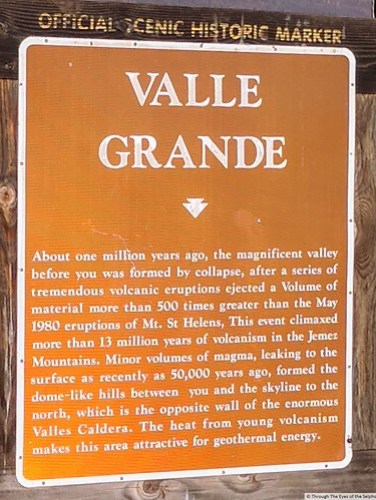
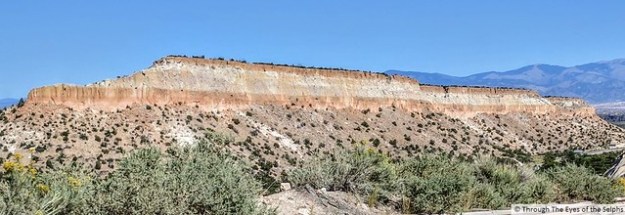
We left Abiquiu COE campground and headed to White Rock, New Mexico, elevation 6,365, just outside Los Alamos.  This was a short two night stopover, mainly to visit the Valles Caldera National Preserve, one of three super volcanoes in the United States.  The 89,000 acre Preserve is one of the newest additions to the National Park Service in October, 2015.  The Valles Caldera supervolcano erupted 1.2 million years ago and the center of the volcano collapsed, creating a volcanic caldera 13.7 miles wide.IMG_20170921_080004IMG_20170921_075645

Since they only allow thirty cars a day to drive around the backcountry of the Preserve, we got up earlier than we normally do to make the thirty minute drive there in order to arrive when they opened at 8:00 A.M.  It was a good thing we did because archery hunting season has begun and by the time we arrived fifteen of the passes had already been given out to hunters looking for elk.IMG_20170921_075709IMG_20170921_084139

We received our car pass from the ranger at the Valle Grande Contact Station and began our drive around the Preserve.  We were at an elevation of almost 10,000 feet and the car thermometer registered 28 degrees!IMG_20170921_083421  Can’t remember the last time we were in weather that cold. As we began the drive in the Valle Grande Valley, we saw a couple prairie dogs. We drove on unpaved roads around the dormant volcano caldera with expansive valley meadows, lush forested volcanic domes and streams where we saw an occasional fisherman.  Even though herds of elk and black bear also live in the Preserve, we only saw deer, cattle and prairie dogs.  Scenes from the 2013 movie “Lone Ranger” were filmed here.

IMG_20170921_083348

Prairie Dog

Los Alamos is famous as “The Secret City”, site of the top secret Manhattan Project during World War II which focused on atomic bomb design and testing.  When we were here in 2015 we toured the Bradbury Science Museum and the Los Alamos History Museum Campus.  You can read the blog about that visit here: Los Alamos, NM May, 20 201520170921_13224420170921_132336IMG_20170921_14503020170921_13200320170921_132059

This visit we wanted to see the new Manhattan Project National Historical Park operated by the National Park Service.  It is one of the few national parks that focuses on American science, technology and industry during World  War II.  We watched the movie about the Manhattan Project and looked at exhibits in the Visitors Center which focused not only on science but also the social and cultural life of the people who lived and worked in the “Secret City”.  Located in the Historical Park are life size bronze statues of Dr. J. Robert Oppenheimer and General Leslie R. Groves, leaders of the Manhattan Project.IMG_20170921_145021IMG_20170921_124449

IMG_20170921_141814

This is Where Dr. J. Robert Oppenheimer Lived

IMG_20170921_142836IMG_20170921_142817

Since we were last there the History Museum had been remodeled and additional exhibits added so we paid a second visit there.IMG_20170921_152816

IMG_20170921_152747

The Road To Los Alamos

The two days went by quickly and it was time to head to Cochiti Lake, outside of Santa Fe.

20170920_123935

Available at Local Grocery Store

Riana-Abiquiu COE, NM SEPT 12, 2017

After a very enjoyable stay in Eagle Nest, we traveled west and crossed Palo Flechado Pass, elevation 9,109 feet.  After a gradual descent we continued through the Carson National Forest and then followed the Rio Grande River further west.  The scenery, especially the red rocks, was absolutely breathtaking.IMG_20170914_152356

We arrived at the Riana-Abiquiu Campground COE located near Abiquiu (AH-be-cue) in northern New Mexico, about an hour northwest of Santa Fe.  This is a very nice Corps of Engineers campground with a few electric and water hookups.  We did not have a reservation and hoped to get a first come first serve electric campsite, so we hoped arriving early on a Sunday would help.  When we arrived the campground was pretty full and we were not sure they would have an electric site for us.  Bill was talking to the campground host who assigns the available sites.  The subject of football came up and the host mentioned he loved the Redskins.  Bill said his wife loved the Redskins too.  The host said in that case, he just had to get us a good site.  We ended up with an electric and water site with a beautiful view of the 5,200 acre Abiquiu Lake, the northern most flood control reservoir in New Mexico.  Never expected being a Redskins fan would help me in New Mexico.  Strange, small world!IMG_20170913_144811

The host also told Bill to be careful of rattlesnakes.  He said people and dogs had been bitten, to be careful in the park bathrooms as they had been seen there, and advised against wearing flip flops.  Great, just great.  My one and only phobia and he had to tell us that news.

From our RV we could see Cerro Pedernal, a distinctive flat top mesa rising 9,862 feet.  This was Georgia O’Keefe’s favorite subject to paint.IMG_20170917_105253

One day we drove to the nearby Abiquiu Dam Visitors Center with exhibits on the Dam, area history and natural resources of the area.  Farming and ranching in the area is made possible through flood control and irrigation provided by Abiquiu Dam.  Most of the water is headed to Albuquerque, but irrigation ditches provide water to the area’s arid land.IMG_20170913_142324IMG_20170913_144834

On another day we spent the day touring northern New Mexico.  The geological beauty of the spectacular red cliffs, rock formations and mesas is enough to take your breath away and bring tears to your eyes.  This area was the inspiration for much of the work of Georgia O’Keefe and inspired her to leave New York City and make her home in New Mexico.IMG_20170914_152505IMG_20170916_135747IMG_20170916_135825IMG_20170916_135901IMG_20170916_140014IMG_20170916_140022

We stopped by Ghost Ranch where O’Keefe owned a summerhouse and painted scenes of the area.  It was formerly a 21,000 acre ranch but is now a Presbyterian education and retreat center. The movie “3:10 to Yuma” was filmed extensively at Ghost Ranch.IMG_20170916_142106IMG_20170916_140240IMG_20170916_140405

In the distance we could see Chimney Rock, a well known landmark.IMG_20170916_141145IMG_20170916_141156

Next we drove to the nearby Echo Amphitheater where a natural walled area of sandstone creates an echo chamber.IMG_20170916_142810IMG_20170916_144113IMG_20170916_144620IMG_20170916_145343

We finished the day at Plaza Blanca (White Place), made famous by Georgia O’Keefe’s paintings.  The area is actually on the grounds of a mosque, but they welcome visitors to hike and enjoy the amazing landscape of 60 foot tall towering white stone pillars and hoodoos.  The 2011 movie “Cowboys and Aliens” was filmed here.IMG_20170916_153832IMG_20170916_154405IMG_20170916_154411IMG_20170916_154632IMG_20170916_154713IMG_20170916_155037

Along with sightseeing we spent many relaxing, fun days just enjoying the gorgeous scenery from our RV windows.IMG_20170913_144938

Interesting tidbits:

  • Abiquiu is known among New Mexican Hispanics as a former dwelling place of witches.  Many tales are told by the local villagers about witches that still roam Abiquiu.  In the mid 1760’s there was an outbreak of witch hysteria in the area.
  • Kit Carson was among one of the first Anglo-Americans to arrive in the area.  He served as an Indian agent at Abiquiu.

Angel Fire, NM SEPT 4, 2017

As we continued our stay in Eagle Nest, one day we drove ten miles to visit the nearby town of Angel Fire.  The name Angel Fire comes from the Moache Ute Indians in the 1780’s.  During their autumn celebration they noticed red and orange flickering in the northern sky.  They saw it as a blessing of the fire gods and named their yearly celebration “Angel Fire”.  Years later Kit Carson mentioned seeing the Angel Fire at dawn and dusk and accredited the glow to sunlight striking frost on the branches of trees.

Eagle Nest and Angel Fire are very popular ski resort areas in the winter and fishing in the summer.IMG_20170905_123706

Some of the TV series “Lonesome Dove” was filmed around Angel Fire.  We drove to the location where the closing cabin scene was filmed here at Black Lake and meadow.  The property is now privately owned and we could not get close for a great picture. IMG_20170905_130104

After lunch at the local barbecue restaurant, we visited the Vietnam Veterans Memorial.  This Memorial was the first major Vietnam Veterans Memorial in the United States.  It was built by Dr. Victor and Jeanne Westphall to honor their son, 1st Lt. David Westphall who died in combat in a 1968 ambush in Vietnam.  In 1994 Dr. Westphall visited  the site in Vietnam where his son died. He took with him a handful of soil from the Memorial to scatter at the site of the ambush.  He also brought back Vietnamese soil from the site and scattered it at the Memorial.   

This Memorial received national attention in the 1970’s and was the inspiration for the Vietnam Veterans Memorial in Washington, D.C in 1982.  In 1987 the Angel Fire Memorial was recognized as a Memorial of National Significance.  IMG_20170905_133307IMG_20170905_133046IMG_20170905_160200

Today the Memorial is maintained by the David Westphall Veterans Foundation and the New Mexico Department of Veterans Affairs.20170905_15250020170905_15273120170905_152653

At the entrance to the free Memorial is a Huey helicopter which served two tours in Vietnam.  On its first tour it was badly damaged with 135 bullet holes, repaired and sent for a second tour.IMG_20170905_133743

Along the sidewalk leading to the Visitors Center are sponsored bricks with names of veterans.  The dates are dates of service.  Two stars signify a person killed in action and one star is missing in action.  New bricks are added every September and bricks were being added while we were there.

20170905_134650

Pop Music Was Nostalgic Reminder of the World They Left Behind

This statue is of a soldier in the field trying to write a letter to keep in touch with family back home.  It is called “Dear Mom and Dad”.IMG_20170905_13382220170905_133826

The Visitors Center has exhibits and a very moving ninety minute HBO documentary titled “Dear America: Letters Home From Vietnam”. It was extremely moving; there are no words to describe the power of the movie.  

The Visitors Center has over 2,000 photos.

IMG_20170905_134709

98 Pairs of Empty Boots Bear Witness to the 173rd Airborne Casualties from the Battle For Hill 875

Just like the Memorial in Washington, D.C., notes and mementos are left around the Memorial.  They collect them and put them on display in the Visitors Center.  One brief, heartfelt note caught my attention.  Well said!20170905_154151

This painting shows a shackled eagle, representing the frustration and futility of being captured.   The Statue of Liberty in the distance and sunshine represents freedom and a ray of hope for the future.20170905_152845

In a separate area is the Peace and Brotherhood Chapel which displays a photo of David Westphall and rotating photos of thirteen men also killed in the ambush.20170905_15162720170905_15433320170905_15430620170905_154245

Many Native American volunteered and died in Vietnam.IMG_20170905_154326IMG_20170905_153308

Next up: A drive on the Enchanted Circle