Author Archives: billNdiane selph

Eyota, MN June 5, 2017

We left Forest City, Iowa and headed north towards Minnesota, another new state for us.  Even though Minnesota is known as “The Land of 10,000 Lakes”, the landscape between Iowa and southern Minnesota did not really change.  We continued to see farmland, silos and many wind turbines.  All beautiful scenery.

Our next stop was four nights at Chester Woods County Park in Eyota.  I wasn’t happy to see the signs at the park entrance warning of ticks and Lyme Disease.  It was a nice county park with electric only sites.  It was about a fifth full while we were there during the week.  I am sure it is full on the weekends.

IMG_20170606_111725One day we drove to Austin, MN to visit the SPAM Museum.  The museum included interactive exhibits and galleries on the history of the company, but was mainly dedicated to their product, SPAM.  We didn’t know what to expect but found the museum very interesting.  We were welcomed by a friendly greeter and then immediately someone came over to give us a free sample of their teriyaki SPAM.  Bill said it was good, I passed.20170606_115430IMG_20170606_114530IMG_20170606_11252520170606_112424

Hormel Foods Corporation is based in Austin, Minnesota.  It was founded in 1891 by George A. Hormel and named George A. Hormel & Company.  In 1993 the name was changed to Hormel Foods.  Today they have 40 manufacturing and distribution facilities.  They developed the world’s first canned ham in 1926.  20170606_112512Dinty Moore beef stew and Hormel Chili was introduced in 1935.  When the Federal Government abruptly ended a Depression era program to aid livestock farmers which left Hormel with 500,000 empty cans, they decided to sell beef stew.   They acquired the Dinty Moore name from another company and sold beef stew for 15 cents a can.  

20170606_114800When Hormel introduced their Hormel Chili Con Carne they organized a twenty piece Mexican song and dance troupe called The Hormel Chili Beaners to promote the product and give away samples.  They also offered double money back to anyone dissatisfied with their chili.  

SPAM luncheon meat was introduced in 1937.IMG_20170606_11222320170606_113217

In 1941 Congress passed the Lend-Lease Act, in which the U.S. agreed to provide “as much aid, short of war,” to the people of Great Britain, France and Russia.  In response, Hormel Foods supplied 15 million cans weekly.  By 1945 over 133 million cans (100 million pounds) of SPAM, had been shipped overseas to feed hungry soldiers and civilians. Nikita Khrushchev once said, “Without SPAM, we wouldn’t have been able to feed our army”.IMG_20170606_11240520170606_112959

In 1942, the Austin Hormel Foods facility became a War Facility with its workers photographed and fingerprinted and its perimeter fenced.  During World War Two, 1,961 Hormel employees went off to to serve with written promises they would have jobs when they returned.  By 1944 more than 90% of the canned food produced by Hormel Foods was destined for war operations.  Supplying food to troops has continued through the Korean, Vietnam and Persian Gulf Wars and recently in the Middle East.20170606_113404

SPAM Fun Facts:
  • SPAM can be stored in the can for up to five years.
  • SPAM is sold in 44 countries around the world.
  • Over 8 billion cans of SPAM products have been sold.
  • Guam is the largest consumer of SPAM with an annual average of 16 cans per person.  Hawaii is second.20170606_112611
  • The SPAM JAM Festival is one of Hawaii’s largest festivals every year.
  • There are now over thirteen varieties of SPAM.20170606_113204
  • SPAM products are made from six simple ingredients.IMG_20170606_114139
  • Hawaii consumes 8+ million cans a year, more SPAM products than any other state.  It is sold all over the islands including at 7-Eleven, McDonalds and Burger King.  
  • In 2015 the SPAM Portuguese Sausage was created for Hawaii.20170606_112914
  • Dwight Eisenhower said in a letter to Hormel Foods on their 75th anniversary, “I ate my share of SPAM along with millions of soldiers.  I’ll even confess to a few unkind remarks about it.  As former Commander in Chief, I officially forgive you of your only sin: sending us so much of it”.
  • A U.S. Marine on leave from the South Pacific once said, “You never fully realize how delicious and good SPAM really is until you taste it out here in the bottom of a fox hole”.
Minnesota Fun Facts:
  • Even though it is nicknamed “Land of 10,000 Lakes”, there are actually around 15,000 lakes in Minnesota.
  • Legend is that Paul Bunyan’s Blue Ox named Babe trampled the land leaving his footprints in the mud which created 10,000 lakes.  Along roadways throughout Minnesota are statues of Paul Bunyan and Babe.  The real geological story is the grinding force of advancing and retreating glaciers left behind beautiful lakes and vast, fertile prairie.
  • The state was built by immigrants from Scandinavia, Germany, Finland, and other areas of Europe.
  • Early settlers used prairie grass sod that was cut and stacked to build crude shelters.  Many lived in these for years until they could afford to build a wooden prairie home.  This is described​ in Laura Ingalls Wilder’s account in “Little House on the Prairie”.
  • Minnesota is known for formidable winters with intense cold and large amounts of snow.  The first snowmobile was used in Minnesota.
  • The first permanent settlement was in 1819 at Fort St Anthony, later renamed Fort Snelling.
  • In 1858 Minnesota became the 32nd state.
  • In 1863 Dr William Mayo started a medical practice in Rochester that later became the Mayo Clinic.

Forest City, IA June 1, 2017

20170530_174831From West Branch we headed towards Forest City, Iowa.  Along the way we passed through the lovely city of Waterloo.  John Deere is the area’s largest employer and there is a John Deere Museum in Waterloo which we did not have time to stop at.  As we continued northwest we saw many farms and windmills.20170531_105515IMG_20170603_143119IMG_20170603_143551

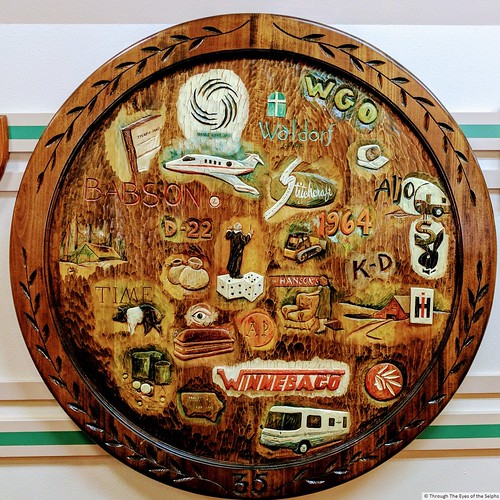
We arrived at Forest City where we stayed for five days getting some minor repairs done on the RV at the Winnebago factory.  Winnebago provides free camping sites with electricity for everyone getting service done at the facility.   We were very pleased with the quality of the service we received at what we felt was a fair price.  All the service people we worked with were very polite, friendly and accommodating.

One day we took a two hour tour of the factory​, the largest RV manufacturing plant in the country.  This factory produces an average of forty RVs a day!  We saw everything from the sewing room where they make cushions to watching them install flooring and roofs.  We were not allowed to take pictures so unfortunately no pictures for the blog.  During the tour we had to wear closed toed shoes, a safety vest, safety glasses and ear plugs.

IMG_20170601_130036On the top floor of the Winnebago Visitors Center is a museum on the history of the  Winnebago Company which was named for the Winnebago Indian tribe.IMG_20170601_130746IMG_20170601_130804

On Saturday we drove to the Buddy Holly crash site, located in the middle of a cornfield.  At the side of the road there is a large replica of the big glasses Buddy Holly wore.  A three quarter mile walk took us to the actual crash site.  On February 3, 1959 Buddy Holly, Ritchie Valens and J.P. “The Big Bopper” Richardson, along with pilot Roger Petersen, were killed in a plane crash near Clear Lake, Iowa.  Holly and his band were playing a “Winter Dance Party” tour across the Midwest.  After performing in Clear Lake, Holly was frustrated with the cold tour buses and decided to charter a plane for their next show in Minnesota.  The plane crashed in wintry conditions late at night soon after takeoff.  Holly is known for songs such as “Peggy Sue” and “That’ll Be the Day”.  The day of his death is often referred to as “The Day The Music Died”.IMG_20170603_135227IMG_20170603_140136

We really enjoyed our time in Forest City.  We fell in love with the Iowa people with their hard work ethic and friendly personalities.  The kind of town where you can pull up to a gas station and put air in your tires for free.  A town with few stoplights.

A town with a touching memorial to those who gave the ultimate sacrifice in a small park next to the courthouse where we sat and enjoyed lunch one day.IMG_20170601_123759IMG_20170601_123713

A town with miles and miles of beautiful farmland, silos, cattle and American flags.

Next stop: Minnesota

West Branch, IA May 30, 2017

20170530_115021(1)On Tuesday May 30th we left Hannibal, Missouri and soon crossed over into Iowa, a new state for us.  On the way north we made a stop at the Herbert Hoover Presidential Library and Museum in West Branch, Iowa.  Another presidential library to mark off the list!IMG_20170530_141859

We started at the Visitors Center where we watched a twelve minute movie.  Then we began a walking tour of the area.  When Hoover was born in 1874 the town of West Branch had a population of 350 people who were mainly farmers.  IMG_20170530_150534Hoover’s father did not like farming so he had a blacksmith shop.  The walking tour around the Herbert Hoover National Historic Site included his birthplace cottage, the schoolhouse where he attended school, the Friends Meetinghouse where he attended church as a young boy with his family and a replica of his father’s blacksmith shop.IMG_20170530_144912

IMG_20170530_150506The birthplace cottage, 14 by 20 feet and built in 1871, was sold and later bought and restored by Herbert Hoover and his wife.  Hoover said the cottage “was physical proof of the unbounded opportunity of American life”.

The schoolhouse was built in 1853.  This Quaker community believed strongly in education for both boys and girls.  We saw evidence of how Hoover’s Quaker upbringing and faith shaped his life as we toured the Presidential Library and Museum.IMG_20170530_165204

The Friends Meetinghouse, built in 1857, was simply furnished with wooden benches and an iron stove.  Hoover’s family belonged to the Religious Society of Friends (Quakers), and his mother was a minister and devout Quaker who often spoke on temperance and other causes.  Services of silent meditation were held here twice a week.  People sat for long periods of time waiting for anyone who had an insight or spiritual message to feel compelled to speak.  Hoover said those services lasting hours taught him great patience and “intense repression”.  20170530_164919Notice in the picture there is a partition that could be lowered between the two sides.  Men and women were separated with the idea that the separation would allow women to feel more free to speak up.

IMG_20170530_150733Also in the historic area was a statue of Isis, the Egyptian Goddess of Life.  It was given to Herbert Hoover by the children and citizens of Belgium in gratitude for his work on their behalf during and after World War I when he was Chairman of Commission for Relief in Belgium.IMG_20170530_150719

IMG_20170530_151111Next was the Presidential Library and Museum, built in 1962 and dedicated by former Presidents Hoover and Truman.  The library/museum was small but well done and gave us great insight into our 31st President.  Before this visit we thought of Hoover as a lesser known President who led us into the Great Depression and was a failure as President.  We came away with a greater appreciation of Hoover the man and the struggles he faced as president.

As a young child Hoover faced great tragedy.  His father died in 1880 when Hoover was six.  His mother used life insurance money to buy food and clothing and did needlepoint to bring in extra money.  His mother made sure the children remained strong in their community, school and religious activities.  Four years later in 1884 he was orphaned at the age of ten when his mother died of typhoid and pneumonia.  Hoover and his two siblings were split up when Hoover went to live with a maternal aunt and uncle in Oregon he hardly knew.  He left West Branch with a suitcase full of clothing, a little food, and two dimes sewn in his clothing.  His siblings remained in Iowa but in separate homes.

In Oregon he was quickly put to work, spending long hours helping at home.  His time there was not a happy one, though his aunt and uncle loved him and taught him a strong work ethic. He dropped out of school at the age of thirteen and went to work at his uncle’s real estate office. He later went to night school and attended Stanford University where he graduated with a degree in mining.  While at Stanford he met his wife, Lou Henry.

After graduation he worked as a mining engineer in Nevada, California and Australia.  Later Hoover and his wife lived in China where he was a chief mining engineer.  While in China the Boxer Rebellion trapped them there in 1900.  While the city they lived in was under fire, the Hoovers worked to help defend the city, with Hoover guiding U.S. Marines around during the battle because he knew the terrain.  Mrs. Hoover helped in hospitals and was fearless as she carried on her duties with a 38 pistol strapped to her side.

20170530_151504Hoover became an independent mining consultant, traveling around the world, and becoming a millionaire by the age of 40.  He had investments on every continent and offices in San Francisco, London, New York City, St Petersburg, Paris and Burma.  He specialized in helping troubled mining operations, bringing them back into the black and taking a share of the profits for his expertise. By 1914 he had an estimated fortune of $4 million.

After World War I began in 1914, Hoover helped organize the return of around 120,000 Americans from Europe, distributing food, clothing, steamship tickets and cash.  When Belgium suffered a food crisis after they were invaded by Germany in 1914, Hoover led an immense relief effort to feed the entire Nation during the war.  They obtained and imported millions of tons of food to distribute to the Belgium people, being sure none of it went to the German army.

20170530_152125In 1917 President Woodrow Wilson appointed Hoover to head the U.S. Food Administration to ensure the United State’s food needs during the war. Hoover believed “food will win the war” and in an attempt to avoid rationing he came up with “meatless Mondays, wheatless Wednesdays and the slogan when in doubt eat potatoes”.

After his efforts during World War I, Hoover was well known, perhaps second only to President Wilson.  His rags to riches story and humanitarian efforts were very appealing to the American people.  But it wasn’t yet his time to achieve success in politics though he considered running in 1920.

After Harding was elected president in 1920, he appointed Hoover as Secretary of Commerce.  He remained in that office until 1928, serving under both Harding and Coolidge.  Much of his work as Commerce Secretary centered around eliminating waste and increasing efficiency in business and industry.  He worked on the early organization, development and regulation of radio broadcasting and was influential in the early development of air travel.20170530_152826

20170530_153946He ran for president in 1928 on the Republican ticket and won a landslide victory with 58% of the popular vote.20170530_153818

Hoover held a press conference on his first day in office and in his first 120 days in office held more press conferences than any other president, then or since.

His plan was to reform the nation’s regulatory system, believing a federal bureaucracy should have limited regulation over the country’s economic system.  Hoover wanted a balance among labor, capital and the government.

Hoover early on tried to warn of the dangers of speculation and rampant investments in the Stock Market.  He tried to discourage people from uncontrolled investments and encouraged people to invest in bonds rather than stocks.  But only months after he took office the Stock Market Crash of 1929 occurred, resulting in the Great Depression.

20170530_155002Hoover implemented many policies in an attempt to pull the country out of the Depression but in 1930 the unemployment rate was 8.9%, rising to 24.9% in 1932.  Businesses had defaulted in record numbers on loans and more than 5,000 banks failed.  Homeless people lived in shantytowns called “Hoovervilles”.

Hoover believed in a balanced budget and to pay for government programs and make up for lost revenue he signed the Revenue Act of 1932 which raised taxes.  Top earners were taxed at 63%, up from 25% when Hoover took office.  Also estate tax was doubled and corporate taxes were raised almost 15%.

Hoover did not take a salary as president, instead he split his salary between a number of charities and put the rest toward the salaries of his staff.

Hoover ran against Franklin Roosevelt in 1932.  As he campaigned around the country he faced the most hostile crowds of any sitting president as he was pelted with eggs and rotten fruit and heckled during speeches.  On several occasions the Secret Service stopped attempts on his life.

20170530_154413Despite Hoover’s efforts, he was blamed for causing the Great Depression.  Roosevelt won the election 57.4% to Hoover’s 39.7%.  Roosevelt was the first Democratic Presidential nominee to win a majority of the popular vote since the Civil War.

20170530_154356Hoover left office bitter at his election loss and continuing unpopularity.  He was a constant critic of Roosevelt and the New Deal.  He wrote more than a dozen books, many critical of the New Deal, and even hoped to possibly run for president again in 1936 and 1940.  He lost to other Republican candidates both times during the nominating process.

Following World War II Hoover became friends with President Truman.  Truman appointed Hoover to a commission to reorganize the executive departments which became known as the Hoover Commission.20170530_153138

In his retirement he continued writing books and was a major fundraiser for the Boys Club of America.  He died at the age of 90 in 1964. (Mrs. Hoover passed away in 1944). They are both buried a short walk from the Presidential Library and Museum in very simple graves, reflecting the Quaker ideals.IMG_20170530_163843IMG_20170530_163809

His time as president was unfortunate.  Perhaps he is best remembered as the “Humanitarian President”.  As well as feeding millions during wartime, he increased the Federal budget to include children’s programs.  He had the first ever White House Conference on Child Health and Protection.  In 1949 he co-founded UNICEF.  He oversaw disaster relief for ten states after the Great Mississippi Flood of 1927.  He achieved unprecedented prison reform including building new prisons and increasing rights and humanitarian treatment of prisoners.  He increased the amount of land in the National Park System and canceled private oil leases on public land.  There can be no denying the influence his early life as the poor son of Quakers in a small town in Iowa had on the man who would one day become President.

IMG_20170530_142723My country owes me no debt.  It gave me, as it gives every boy and girl, a chance.  It gave me schooling, independence of action, opportunity for service and honor.  In no other land could a boy from a country village, without inheritance or influential friends, look forward with unbounded hope.  My whole life has taught me what America means.  I am indebted to my country beyond any human power to repay“.  Herbert Hoover, 1920

Next stop: Forest City, Iowa

Hannibal, MO May 28, 2017

Our time in St Louis came to an end and we left with great memories of a wonderful and historic city.  We drove north to a Corps of Engineers park outside of Hannibal, crossing the Missouri River.  The park was located on the Mark Twain Lake, a result of the construction of the Clarence Cannon Dam and Power Plant.  The campground was full for the Memorial Day weekend and we were glad to be off the road and away from the holiday traffic.

IMG_20170528_143010Our main reason for coming to Hannibal was to see the Mark Twain locations.  First we went to the tiny town of Florida, Missouri which was the birthplace of Samuel Clemens who became known as Mark Twain.  The population of the tiny town has declined over the years and according to the ranger the current population is four.  Yes, she said four!

IMG_20170528_134430The Mark Twain Birthplace and Museum, owned by the Missouri State Parks was quite impressive.  Mark Twain’s parents moved here from Tennessee in 1835 and Twain was born later that same year in November, two weeks after the appearance of Halley’s Comet.IMG_20170528_134526IMG_20170528_134545

IMG_20170528_141225He died in 1910, one day after Halley’s Comet appeared once again.  When Twain was four the family moved to Hannibal which was the inspiration for St Petersburg, the fictional home of Huckleberry Finn and Tom Sawyer. His birthplace, a two room cabin, was moved to the current site at the museum and the museum was built around the small house.IMG_20170528_142337IMG_20170528_142433IMG_20170528_143643IMG_20170528_143656

There were many exhibits on Twain’s life including a handwritten manuscript of “The Adventures of Tom Sawyer” and furnishings from his Hartford, Connecticut home.IMG_20170528_144436

Over the course of his life Twain was:

  • an apprentice for a printer (after quitting school after fifth grade),
  • riverboat pilot,
  • miner,
  • writer,
  • humorist,
  • entrepreneur,
  • publisher
  • and lecturer.

Twain’s personal life was tragic.  Twain’s father died when he was eleven.  His only son died at nineteen months, two of his three daughters and his wife Olivia predeceased him.IMG_20170528_144647IMG_20170528_144659

Twain lost a substantial amount of money on bad investments.  His writings and lectures helped him recover financially, including a year long around the world tour in 1895 for the purpose of paying off his debts.  We were surprised at the amount of time Twain and his family lived overseas in Europe, mainly England and Austria.  Later in life Twain suffered from depression due to the deaths of his wife and children.  There are no known descendants.

Afterwards we drove the short distance to the original location of the cabin where a red granite monument marks the spot.

We then drove to Hannibal, population 18,000.  Here Mark Twain tourism is evident.  There is the Mark Twain Boyhood Home and Museum (privately owned), IMG_20170528_170823IMG_20170528_163959the Mark Twain Cave and the Mark Twain Riverboat to name a few.  In the area were a number of buildings including Becky Thatcher’s house,IMG_20170528_163948IMG_20170528_163910

reconstructed Huckleberry Finn’s houseIMG_20170528_165152IMG_20170528_165124

and a statue of Tom and Huck.IMG_20170528_164821

Hannibal is a pretty little riverboat town and we walked over for a glimpse of the Mississippi River.IMG_20170528_165652IMG_20170528_165643IMG_20170528_165603IMG_20170528_165708IMG_20170528_165858

IMG_20170528_171632Before leaving town we rode by the Molly Brown Birthplace and Museum.  Molly was born in Hannibal and is best known as a survivor on the Titanic who helped with the ship’s evacuation and had to be persuaded to get into Lifeboat No. 6.  She insisted the boat go back to look for survivors and threatened to throw the crew overboard if they didn’t.  She became known as “The Unsinkable Molly Brown”.  I remember watching a movie by that name starring Debbie Reynolds in 1964 and there have been many movies and musicals about her life.

Next stop: Iowa

St Louis, MO Part 4 May 25, 2017

We originally planned to stay in the St Louis area for four nights, but it became evident we couldn’t see everything in four days so we extended our stay an additional night.

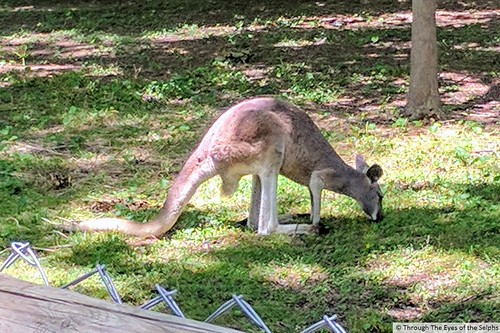
20170525_103805Thursday we had two places to visit.  First up was Grant’s Farm.  This 281 acre farm is operated by Anheuser- Busch and is the ancestral estate of the Busch family.  Open since 1954, it has 900 animals, a Clydesdale stable and breeding farm, animal shows, a collection of the Busch family’s carriages and trophies and the replica of a 19th century Bavarian village.  The farm is named in honor of Ulysses S. Grant who built a cabin here in 1856 on land he once owned and farmed.20170525_104254

The tram guide pointed out that this fence was made from welded civil war gun barrels.IMG_20170525_143127IMG_20170525_143142

Entrance to the farm is free but you do have to pay $12 to park.  The only way in and out of the farm and village area is by riding a free tram with a narrated tour of the property.  Lines to the tram can get quite long and by the time we left in the early afternoon the line stretched back to the parking area.

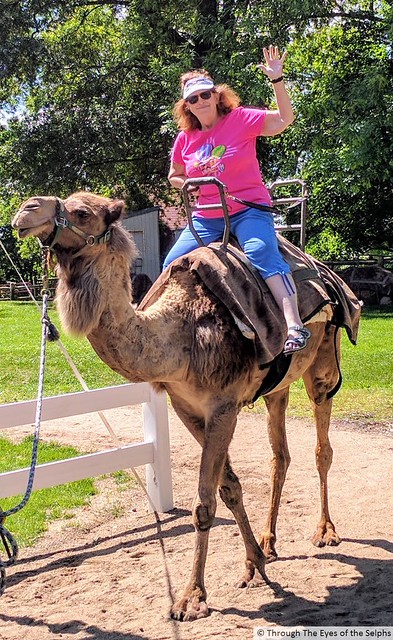
It would be pretty impossible for the farm to match our zoo experience the day before, and it didn’t.  We didn’t expect it to.  Our main reason for visiting Grants Farm was for the camel ride.  For $6 each we were able to mark an item off our bucket list.  We rode a camel and didn’t have to go to the Middle East to do it!  It was lots of fun riding Ruby but I found it very uncomfortable sitting on the hump, especially without a saddle.  I certainly would not want to ride one across the desert!IMG_20170525_104850IMG_20170525_105005

We attended an elephant show where the trainers told us about elephants and had the elephant do some tricks.20170525_11195120170525_111745IMG_20170525_11234120170525_112826

We had lunch at the little Bavarian village with Bill getting a Bratwurst and each visitor over 21 receiving free beer.IMG_20170525_121838IMG_20170525_122231IMG_20170525_105905IMG_20170525_105601IMG_20170525_105752

We enjoyed our time at Grant’s Farm but it is definitely geared more for small children.

IMG_20170525_142600Next we drove down the road to the Ulysses S. Grant National Historic Site.  First we watched a sixteen minute introductory film and then walked up to look at the house.  This 9.65 acre site was the family home of Grant’s wife Julia Dent.  Ulysses and Julia purchased the farm from her family during the Civil War.  Tours of the house are available but we did not take it.  IMG_20170525_132353We did spend time inside the stable which is now an interpretive museum, similar to a presidential library.  The museum was very well done and informative covering his early years, military career including leading the Union Army during the Civil War, and two terms as president from 1869-1877.  20170525_141331IMG_20170525_14240120170525_141645During his presidency he stabilized the country in the years after the war ended and enforced civil rights and voting laws.  20170525_134950He signed the Civil Rights Act of 1875 and strengthened the Republican party in the South.  His administration implemented the gold standard and tried to strengthen the dollar. He was unable to effectively halt a five year depression after the “Panic of 1873”.  This produced high unemployment and bankruptcies.  Corruption charges escalated during his second term and Grant’s administration faced more charges of corruption than any other 19th Century president.  20170525_13453220170525_134628Grant died from throat cancer in 1885 at the age of 63.  He had been a heavy cigar smoker.  He is buried at Grant’s Tomb in New York City along with his wife Julia.20170525_141612

On our last day in St Louis we made another stop by Ted Drewes Frozen Custard for one last treat.

We must say we really really enjoyed our time in St Louis.  We were impressed with all the free attractions and friendly people.  The traffic in and out of the city was not at all bad, even with all the construction around the Arch.  There is still so much we didn’t get to see so we hope to return someday.

Next stop: Hannibal, Missouri to visit Mark Twain

St Louis, MO Part 3 May 24, 2017

On Tuesday we took the RV to get two new front tires which took a good part of the day.  On Wednesday morning we were ready to head out for some more St Louis sightseeing.  Our plan for the day was to visit Forest Park where there were several places we wanted to see.

IMG_20170524_103109Forest Park is one of the largest municipal parks in the United States (larger than Central Park) and covers 1,300 acres.  This park was the site of the 1904 World’s Fair.  First we stopped at the Visitors Center to purchase a $2.00 all day trolley pass that would allow us to hop on and off at various places in Forest Park.IMG_20170524_165938

IMG_20170524_101553We hopped on the trolley and our first stop was at the St Louis History Museum.  A free museum, it was built on the site of the main entrance to the 1904 World’s Fair.  It was originally built as the first national monument to Thomas Jefferson and honors Jefferson’s role in the Louisiana Purchase, preceding the Jefferson Memorial in Washington DC.  IMG_20170524_101857Exhibits feature the history of St Louis from 1764 to the present day.  While we were there they were having a special exhibit on Route 66 called “Route 66: Main Street Through St Louis”.  Route 66 was known as the “Mother Road” and the “Main Street of America”.  We really enjoyed seeing the exhibits on the important role this famous road had in American history.    IMG_20170524_103411IMG_20170524_104326IMG_20170524_104602IMG_20170524_104735IMG_20170524_104829IMG_20170524_105124

IMG_20170524_105611

Do you know what these are? (Answer at end of Blog)

They also had a replica of the Spirit of St Louis airplane. This Spirit of St Louis Sister Plane was used in the 1957 Jimmy Stewart movie.IMG_20170524_110201

We rode the trolley to our next stop, the St Louis Science Museum, another free museum and one of only two free science centers in the United States.  Advertised as one of the largest in the country, one of the top five Science Museums in the country and one of the most visited in the world with 700+ permanent galleries as well as a planetarium and OMNIMAX Theater, our expectations were really high and we were somewhat disappointed.

IMG_20170524_115013IMG_20170524_121921 It was a great science center for children but did not have much for adults.  Unfortunately we just missed a King Tut exhibit set to open May 27th.  Our favorite thing was the pedestrian bridge over the interstate connecting the north and south sections of the Center.  The bridge had glass windows in the floor where you could look down and see the vehicles pass underneath you. They also had windows with radar guns so you could clock the speed of the vehicles as they passed by.

also

We took the trolley back to our car and drove a short distance to Pickles Deli, a highly rated deli where Bill got his favorite Reuben sandwich.  On the way out of Forest Park we stopped to take a picture of a Confederate​ statue.  We noticed a news van and some people milling round.  Ironically minutes later on the way to the deli we were listened to the local radio station and heard that this very statue was vandalized the evening before.  Like many other Confederate statues across the country today, discussions are being held about removing this Confederate statue from Forest Park.IMG_20170524_123407IMG_20170524_123335

On the way back to Forest Park we drove by the beautiful Cathedral Basilica of Saint Louis, built between 1907 and 1914.  We didn’t have time to go inside but that is definitely on our list for next time.IMG_20170524_132228

Our final stop of the day was the St Louis Zoo. This zoo is free and is advertised as one of the top zoos in the United States and was voted America’s top free attraction.  This zoo really wowed us and we really enjoyed our time here and was quite impressed.  During our time in St Louis we were really impressed with all the free museums and other places that usually charge an admission in other cities.  Well done, St Louis!IMG_20170524_144333IMG_20170524_144452

The zoo has over 24,000 animals, many of them rare and endangered.

IMG_20170524_144729

Golden Lion Tamarin

IMG_20170524_155952IMG_20170524_153157IMG_20170524_154133IMG_20170524_145239IMG_20170524_152131IMG_20170524_145440IMG_20170524_145908IMG_20170524_162154

We did pay to ride the Emerson Zooline train which is the nation’s largest miniature rail line, providing a 1.5 mile long narrated tour through the 90+ acre park.  The train engines are one third size replicas of the Iron Horse, the historic steam locomotive that helped build the transcontinental railway.  We passed through two tunnels as we traveled around the park.IMG_20170524_140416

We loved seeing all the animals but our favorites were the giraffes, hippos and penguins.  We were amazed at how close we got to the animals and were especially thrilled with the large number of penguins.IMG_20170524_150803IMG_20170524_150756IMG_20170524_163202

IMG_20170524_154713IMG_20170524_154900IMG_20170524_155154IMG_20170524_155228

By the time we got back to the car our Garmin pedometers said we had walked over seven miles. What a great day!

Next:. Our last day in St Louis and a camel ride!
Answer: Speakers used at a drive-in theatre.

St Louis, MO Part 2 May 22, 2017

Monday morning we were up and out the door early.  We had purchased tickets online to take the 11:00 elevator/tram to the top of the Gateway Arch.  The drive into the city was surprisingly easy with no traffic backups.  We had scoped out parking the day before so we were able to bypass all the construction around the Arch area and pull right into the parking garage.

IMG_20170521_163536Currently there is a $380 million construction makeover of the Arch area including a new Plaza, museum and visitors center.  We had to go to the Old Courthouse to check in and be sure our online tickets were okay since this is the location of the ticketing center during the construction projects.  The Old Courthouse is a beautiful building constructed in 1828 with renovations from 1839-1862.  Inside are restored courtrooms and exhibits on the Dred Scott slavery trials where Dred and Harriet Scott sued for and were granted their freedom in 1846 and Virginia Minor fought for women’s rights.  A gorgeous cast-iron dome designed after the dome on St Peter’s Basilica in Rome wowed us.  The dome was constructed in 1861 at the same time as the U.S. Capitol building in Washington D.C.PANO_20170522_095858IMG_20170521_163522

IMG_20170522_124555We walked seven blocks from the Old Courthouse to the Gateway Arch, stopping to take pictures at the Old Cathedral, consecrated in 1834.

IMG_20170522_104147The Gateway Arch by law is the tallest structure in St Louis, the tallest man-made monument in the United States, the highest point in downtown St Louis and one of the most recognized landmarks in the country.  It was designed by architect Eero Saarinen and is a monument to President Jefferson and his vision of westward expansion across the continent. Nearly 2.4 million people visit the Gateway Arch each year.  The Arch is part of the Jefferson National Expansion Memorial, a 90 acre park operated by the National Park System and was designated a national historic site in 1935.  It is located on the banks of the Mississippi River, steps from where Lewis and Clark completed their historic journey.20170522_10242620170522_102415IMG_20170522_123622IMG_20170522_102231IMG_20170522_101226IMG_20170522_101836

IMG_20170522_110728After checking in we waited until our designated time to board the “Journey to the Top”.  The ride is composed of barrel shaped tram capsules with five cramped seats in each capsule joining together to form a train like vehicle that runs on tracks inside the hollow legs of the Arch.  The capsules remain level during the ride which takes four minutes up and because of gravity three minutes to come back down. The ride design is a combination of a Ferris wheel and elevator technology that carried us 630 feet to the viewing platform at the top of the Arch.  IMG_20170522_111420IMG_20170522_111450IMG_20170522_111325IMG_20170522_111628IMG_20170522_111805At the top is a room with a series of small windows with great views of St Louis and the Mississippi River.

These exhibits were at the bottom of the Arch.

IMG_20170522_103442IMG_20170522_103542IMG_20170522_103616We finished our visit to the Arch by viewing a movie at the Tucker Theater located at the bottom of the Gateway Arch titled “Monument to the Dream”.  It is an excellent movie detailing the construction of the 630 foot Arch from February, 1963 until its completion on October 28, 1968.  The Arch is made up of stainless steel on the outside, carbon steel on the inside and concrete in the middle.IMG_20170521_165844IMG_20170521_170044IMG_20170522_102445IMG_20170522_122905

We grabbed a quick lunch and visited the “Inside the Economy Museum” located inside the Federal Reserve Bank of St Louis.  This Federal Reserve is one of twelve Reserve banks in the U.S. along with the Board of Governors in Washington, D.C. that make up the country’s central bank.

IMG_20170522_133505IMG_20170522_135948We had to show our driver’s licenses, go through security and get a visitor’s badge.  We had hoped there would be a guided tour of the Economy Museum but it was only a self guided tour with movies and exhibits on Global Economy, The Federal Reserve, Markets, Banking, Inflation, etc.  One neat thing was a video where that showed opening up a vault door then we could see real Federal Reserve workers handling and counting money which had been brought to the Reserve to be shredded.

IMG_20170522_154827We then drove to a neighborhood of St Louis called the Delmar Loop.  This is a vibrant, funky and culturally diverse neighborhood.  An eight foot tall statue of Chuck Berry is dedicated to the Father of Rock and Roll.  Our main reason for coming here was to see the St Louis Walk of Fame, with more than 150 stars dedicated to famous St Louisans and plaques summarizing their achievements and connection to the city.  It is much like the Hollywood Walk of Fame in California. We spent some time walking around looking at the stars.  Some of the famous people included Betty Grable, Tina Turner, Bob Costas, Yogi Berra, Joe Garagiola, John Goodman, Maya Angelou, Phyllis Diller, Vincent Price, Shelley Winters,  Charles Lindbergh, and Tennessee Williams.  20170522_15110520170522_15115920170522_15254520170522_15313820170522_15314220170522_153210Also along the sidewalk was the Delmar Loop Planet Walk which takes you on a three billion mile walk (2,880 feet) from the Sun to Neptune on the scale model of the solar system with informative markers at each planet.20170522_15333720170522_153431

IMG_20170522_162218By this time our Garmin pedometers told us we had walked over five miles so we decided to treat ourselves to custard at the famous “Ted Drewes Frozen Custard” on the way home.  This business has been selling frozen custard since 1929 and its location is on a designated section of historic U. S. Route 66.  IMG_20170522_162730They are known for their “concrete” custard which is so thick that if you turn it upside down it will not fall out of the cup.  I had banana and Bill had chocolate and banana flavor.  Super good!

 “History, by apprising the people of the past, will enable them to judge of the future; it will avail them of the experience of other times and other nations; it will qualify them as judges of the actions and designs of men;” Thomas Jefferson, 1782.

St Louis, MO Part 1 May 21, 2017

We left Onondaga Cave State Park and headed towards St Louis.  We were scheduled to visit St Louis in the fall of 2013 but there was a government shutdown which meant the Gateway Arch was closed so we canceled our visit.  This time we were really looking forward to seeing the Arch and other St Louis sites.

We arrived at our campground, Babler Memorial State Park, which is located about thirty minutes outside of St Louis.  It is a lovely campground at a higher elevation so no worries about flooding.  The campground is electric only and the host remarked we had the nicest site (#21) in the campground on a cul de sac with plenty of space between sites.

I always plan activities ahead of time and I knew we had lots of places in St Louis to visit in the short time we were there, so we decided to arrive at the campground early and use the afternoon for sightseeing.  Usually on a move day we don’t plan activities but use the day to travel and get set up at our new site.  Since we always get up early on move days, once we get set up we just relax and take it easy the rest of the day.  But this time we wanted to hit the ground running.  We were anxious to get that first view of St Louis and the Arch.  We were a little worried that since we were arriving several hours before the designated check-in time, maybe our site wouldn’t be ready or they wouldn’t let us set up that early.  But no worries, the friendly camp host checked us in with no comment about us being really early.

IMG_20170521_170924We quickly set up and headed to St Louis.  The Cardinals were playing at home so we were a little concerned about traffic but we timed our arrival into the city after the game had started.  From a distance we were excited to see our first view of the Arch.

IMG_20170521_165853Today being a Sunday, we decided to drive around the city and get acclimated, find places to park when we visit the Arch on Monday and tour the Anheuser Busch Brewery.  There is quite a bit of construction downtown and traffic patterns can be complicated​ so we wanted to take advantage of less traffic on Sunday to look around.

IMG_20170521_165858

Bronze statue of Meriwether Lewis, William Clark and their faithful companion dog, Seaman

IMG_20170521_163540

Next up was the Brewery tour.  Eberhard Anheuser and William D’Oench purchased the St Louis brewery from the brink of bankruptcy in 1860.  In 1861 Adolphus Busch married Anheuser’s daughter and worked as a salesman for the company.  In 1869 Busch bought D’Oench’s share the company substantially expanded its facilities in St Louis in the 1870’s. Production increased from 31,500 barrels in 1875 to more than 200,000 in 1881. In 1879 it was renamed Anheuser Busch.  It was the first American brewery to use pasteurization to keep beer fresh, the first to use mechanical refrigeration and refrigerated railroad cars and the first to bottle beer extensively.  In 1957 it became the largest brewer in the United States.

In 2008 through a series of mergers with three international brewing groups in Belgium, Brazil and Anheuser Busch the name was changed to Anheuser-Busch InBev and is now the world’s largest beer producer.  The company employs over 30,000 people and operates twelve breweries in the United States.

IMG_20170521_162648IMG_20170521_135130I am not a beer drinker and Bill occasionally drinks beer so our main incentive for visiting was to see the Clydesdale horses.  Who has not seen and loved those Clydesdale commercials!  When we arrived we signed up for the complimentary tour which included a brief tour, including free beer samples and a chance to see a few horses.  The tour which gave an introduction to how beer is brewed was very interesting.  After the tour ended they offered a large beer of your choice or a soft drink.IMG_20170521_15243020170521_15221420170521_152126IMG_20170521_143624IMG_20170521_14364720170521_144055IMG_20170521_14420720170521_144403IMG_20170521_14462320170521_15185320170521_150336

On our way to the car we had a wonderful surprise when we saw a Clydesdale horse at the side of the visitors building and we were allowed to go up and pet him.  His name was Alumni and we even felt like he was posing for the pictures!20170521_16112820170521_161209

Next blog will talk about our long awaited visit to the Gateway Arch.

Onondaga Cave State Park, MO May 19, 2017

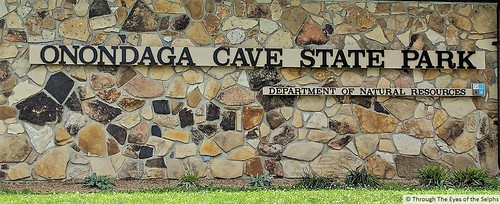
IMG_20170519_124925After leaving Branson our next reservation was supposed to be Meremac State Park in Missouri. But recent rains and substantial flooding left the park closed during our scheduled stay. Missouri State Parks found us a reservation at the nearby Onondaga Cave State Park.  This turned out to be a beautiful Missouri State Park with electric and water hookups.  We were very happy there and loved our campsite.  The recent flooding in the area caused great damage here as well, and we were thankful it was open for us.IMG_20170519_144649IMG_20170519_144745

IMG_20170519_143818During our stay we took a guided tour of Onondaga Cave.  The cave was first discovered in 1886 and opened to the public in 1904.  After years of land disputes and court battles among various  neighbors as well as the potential building of a dam which would have flooded the cave and was voted down, the land was given to the state of Missouri and became a state park in 1982.  The cave was designated a National Historic Landmark. The name Onondaga is the name of an Iroquois tribe and means “People of the Mountain”.  Our tour began with a short video on the history of the cave and cave etiquette.  Our tour guide was a young girl who later said she was new and this was only her second tour, but she did an excellent job.  The cave had impressive walkways and lighting throughout the cave.  The stalagmites and stalactites were beautiful.  As we exited the cave we were required to walk over a mixture of water and bleach to cleanse our shoes on hopes of preventing the spread of bat killing diseases such as white nose syndrome. Missouri is home to about 6,300 caves and back in 2010 many of them were closed to help bats hurt by habitat destruction and disease.  I don’t remember the exact number but the tour guide told us the number of bats in Onondaga Cave alone has been substantially reduced over the years by disease.  We were asked to please change clothes before entering any other area caves in an effort to cut down the spread of white nose syndrome and other disease harmful to bats.IMG_20170519_131243IMG_20170519_131615IMG_20170519_131741IMG_20170519_131757IMG_20170519_132551IMG_20170519_132620IMG_20170519_133529IMG_20170519_133605IMG_20170519_133820IMG_20170519_133923IMG_20170519_133930IMG_20170519_134000IMG_20170519_134227IMG_20170519_140038IMG_20170519_140516IMG_20170519_140917IMG_20170519_141050

We really enjoyed our unexpected visit to Onondaga Cave State Park. Since there was no Verizon signal in the park we visited the public library in Bourbon, MO on Saturday to use their internet.  I was delighted to find the library was having a used book sale and found ten books I just had to have. All the books were priced at 10¢ each, but we always like to support small libraries, so we decided to pay 20¢ per book to help out the library.  On the way out of town we passed a local food stand where the Bourbon area Veterans were having a fundraiser so we stopped and Bill had a Bratwurst for lunch.

Next stop: St Louis

Bentonville, AR & Branson, MO May 16, 2017

Leaving Little Rock we headed west to Bentonville, Arkansas to see my Aunt Shirley and her family.  Bentonville is also know for being the headquarters of Walmart. Bill and I last visited her in October, 2013 so we really looked forward to the visit.  I was still under the weather from the tick bite and between the Prednisone and the effects of the bite itself, I was definitely not well.  While there we had also hoped to take side trips to visit Fort Smith and beautiful Eureka Springs, but all those plans were cancelled.  We did enjoy some delightful time with my Aunt Shirley, sitting on her back deck in the afternoon and watching the sun set from her front porch in the evening.  She fixed some delicious meals and we also had family time with my Uncle Burt and cousins and their children.  While we were there we got to celebrate the graduation of one family member from the University of Arkansas and the 17th birthday of another.  Such treasured memories.

Far too soon it was time to continue our summer travels and head towards Branson, Missouri. Getting from Bentonville to Branson was not easy and a couple times we stopped to let the brakes cool down.  Even though there many hills and curves, it was a beautiful drive through the Mark Twain National Forest.

IMG_20170515_130727We arrived at our nice campground located just outside the Branson town limits and a short drive to Branson Landing.  The campground had recently been closed due to flooding and evidence of flood damage was still visible.   It was  surprisingly hot during our three night stay with daytime highs hovering around 90 degrees.20170518_101714IMG_20170514_183029

IMG_20170517_192617To be honest, Branson is really not our thing.  It is too much of a tourist trap for our liking and we were not interested in the country shows or the Silver Dollar City amusement park.  I can see how it would be a great place for people who like those kinds of things.  Located in the heart of the Ozarks, Branson 25 years ago was nicknamed “the live country music capital of the universe”.  Amazing considering its location deep in the Ozarks and isolated from big cities and interstates.  Along Country Music Boulevard, also called the Strip, think of Lawrence Welk, fake Elvis shows, Jim Stafford, Andy Williams Theater, George Strait, Patsy Cline, Dick Clark’s American Bandstand, Oak Ridge Boys, wax museums, toy museum, Titanic Museum, Ripley’s Believe It Or Not, magic shows, Chinese acrobatics and the list goes on and on and on.  Advertisements refer to more than 100 different shows at 50 different venues to choose from on a regular basis.  For many, the highlight is Silver Dollar City, a theme park modeled after an 1880’s Ozark pioneer village with rides and entertainment.  Branson is definitely a place for wholesome family entertainment and deep pockets.20170518_101838

In 2006 they added Branson Landing along the shore of Lake Taneycomo with high end retail shops and restaurants.  There is a fountain show each hour throughout the day and even though we went twice in hopes of seeing a show, there didn’t seem to be much going on.  The fountain shows were advertised as water fountains shooting 120 foot geysers accompanied by fire, fancy lights and rousing music.  The area was recently flooded so we didn’t know whether the fountains were only partially working because of flood damage or the fact the summer season had not yet started.IMG_20170517_19014320170517_191027IMG_20170516_215749

We walked along Main Street, visiting Dick’s Old Time 5 & 10.  Jammed full of everything you could imagine, it reminded me of the Ben Franklin store from my childhood.  It was fun walking around and browsing all the “stuff”.IMG_20170516_112842

This is certainly a beautiful area of the country.

Next stop: Onondaga Cave State Park, Missouri

Missouri Fun Facts:
  • Nicknamed the Show Me State
  • Aunt Jemima pancake flour invented in St Joseph
  • Tums invented in Missouri
  • A new highway running from Chicago to the West Coast got its name at a meeting in Springfield, Missouri.  Became known as Route 66
  • First Olympics in the U.S. were held in conjunction with the 1904 World’s Fair in St Louis.  It was the only time grease-pole climbing was an Olympic event
  • Theodore Roosevelt was the first President to fly in 1910 in St Louis
  • Waffle cones, hot dogs, cotton candy, Dr. Pepper and iced tea were all first served to the public at the 1904 World’s Fair in St Louis
  • The eight-track tape was invented in 1964 by Bill Lear of Hannibal, Missouri.  He also founded the Lear Jet Corporation.