Author Archives: billNdiane selph

Jefferson Memorial & Arlington National Cemetery NOV 8, 2022

The weather in Charlottesville had been warm and mild, but the morning we left it was cold and blustery. We wouldn’t feel warm again until we arrived back in Florida many days later. 

We headed to DC for three days of sightseeing. The first day we visited the Jefferson Memorial and Arlington National Cemetery, both easily accessed by car rather than metro. As with all major cities, finding a place to park can be a real pain. And DC is no exception. After driving around a little, sharp eyed Bill spotted some metered parking behind an indoor tennis center. It was chilly so we sat in the car and had a lunch of ham rolls and other snacks (thank you Aunt Barbara!). 

The Jefferson Memorial was a reasonable walk nearby. There is a two year project to improve accessibility and visitor services at the memorial so with all the construction it was difficult to get a good picture of the outside. But from the granite steps of the Memorial there are impressive views of The Washington Monument and the White House.

White House in Center

Built between 1939 and 1943 on the shore of the Potomac River, the inside of the Memorial is beautiful.

Multiple quotes capturing Jefferson’s ideology and philosophy are on the walls including quotes from The Declaration of Independence, Virginia Statute of Religious Freedom and Notes on the State of Virginia.

One of his quotes, “I have sworn upon the altar of God eternal hostility against every form of tyranny over the mind of man” is prominently inscribed on, and encircles, the frieze below the dome. 

The focus inside is the 19 foot bronze statue of Jefferson.

Next up was Arlington National Cemetery, a short drive away. In 1862, Congress passed legislation authorizing the federal government to purchase land for national cemeteries for military dead. It is one of two national cemeteries run by the United States Army. All other national cemeteries are run by the Department of Veterans Affairs. Nearly 400,000 people are buried here in its 639 acres. There are about thirty funerals conducted on weekdays and seven on Saturday.

We paid to ride a tram ($17.95 each) around the cemetery, and considering the size of the cemetery, it is the best option. Driving through the cemetery is not allowed unless you are attending a burial. The open air tram stops at the Kennedy gravesites, the Tomb of the Unknown Soldier and Arlington House. At each stop we got off, knowing another tram would come by every 30 minutes. If you didn’t get off the tram, the loop around the cemetery took about 45 minutes. Every tram had a guide who talked about the cemetery and each time we got off and on we had a different guide. When we first got on the tram the guide warned everyone if we came near a active burial service we were to remove our hats, all talking would cease and absolutely no pictures were to be taken of the service. 

It was a cold, windy day and it was really chilly on the open tram. Even with a hooded coat and gloves, we were chilly.

First stop was the Kennedy gravesites of John and Jacqueline Kennedy and two of their children born in 1956 and 1963. This site was chosen instead of Massachusetts because ironically Kennedy had visited the cemetery on Veterans Day mere weeks before his death and remarked on the peaceful beauty of the location. At the time he remarked the views were so wonderful “I could stay here forever”. Due to the sunlight it was hard to get a good picture of the eternal flame. Located nearby are the graves of Robert Kennedy and Edward Kennedy, marked with simple markers and white crosses.

We saw rows of “Unknown Solder” and “Unknown” buried during the Civil War.

The USS Maine Mast Memorial is a memorial honoring those who died aboard the USS Maine on February 15, 1898, after a mysterious explosion destroyed the ship while at anchor in Havana Harbor.

The next stop was The Tomb of the Unknown Soldier. We spent the most time here and timed it perfectly to see the changing of the guard. This Monument was dedicated to deceased U.S. servicemen whose remains have not been identified. The first unidentified American serviceman was buried here in 1921.The changing of the military guard is an elaborate ceremony occurring every hour on the hour from October 1st through March 31st and every half hour from April 1st through September 30th. A military guard is on duty 24 hours a day, 7 days a week, without exception regardless of weather. Since Veterans Day was this week, we saw a lot of Veterans visiting here as well as around DC.

Many Veterans in Attendance (Yellow Coats)


Our last tram stop was the Arlington House. The house was built between 1803-1818 by George Washington Parke Custis, the step grandson of George Washington.

The house was built at a high point, called Mount Washington, overlooking Washington DC. Constructed three years after the death of George Washington, it was to be a living memorial to George Washington. Visitors here have included Lafayette, Washington Irving, Andrew Jackson and Franklin Pierce.

Custis’ only living child Mary Anna Randolph Custis married Confederate general Robert E. Lee. Lee and his wife lived there for 30 years. At the start of the Civil War, Lee left to lead the Confederate Army. He had been asked by Lincoln to lead the Union Army but Lee turned down the offer saying he could not “raise my hand against my native state, my relations, my children, and my home”. General Winifred Scott said, “Lee, you have made the biggest mistake of your life”. Mrs. Lee was forced to leave due to the advancing Union Army and moved throughout Virginia, eventually settling in Richmond.  Before leaving Arlington House the Lees managed to save the most treasured family heirlooms including the bed where Washington died. Arlington House was seized by Union soldiers and served as U.S. Army headquarters during the Civil War and Union soldiers were buried on the grounds. Union soldiers stole family heirlooms as war souvenirs and wrote graffiti on walls throughout the house, even on wooden beams in the attic.  In 1862 the U.S. government imposed a tax on all insurrectionary land and required all taxes be paid in person. Lee and his wife, behind Confederate lines, could not pay the taxes on person so the government seized the property for nonpayment of taxes.

Robert E. Lee never visited the house again. His wife visited one time after the war and was dismayed at the condition of the house and quickly left. In 1874 Lee’s eldest son sued the government to regain the property. It ended up before the U.S. Supreme Court who ruled in favor of Lee. Lee was more interested in the money than the property and sold it to the US government for $150,000 ($4,362,321 in today’s money) . It is thought the government was eager to buy the land and turn it into Arlington National Cemetery to ensure that Lee’s family would never live there again.

In 1955 President Eisenhower signed legislation making Arlington House a permanent national memorial to Robert E. Lee. As punishment for fighting for the Confederacy, Lee, like all Confederates, lost his rights as a US citizen. In order to regain those rights, Lee submitted a request for a presidential pardon two months after he surrendered at Appomattox. His request was denied and he died without having his rights restored.

In 1975 President Gerald Ford pardoned Lee after discovering Lee’s amnesty request from 1865. Ford signed the pardon using Lee’s desk at Arlington House.

There are beautiful views of DC from throughout the Cemetery, but the best views are from Arlington House. In the distance you can see Arlington Memorial Bridge. When the Civil War broke out, the Potomac River became the dividing line between the North and the South. Sixty years after the end of the war the bridge was built connecting the Lincoln Memorial to the Arlington House, a symbolic uniting of the country and a monument to the sacrifices of our nation’s soldiers.

My only criticism of the tram tour is it moves rather quickly making it hard to get pictures. We passed the tombstone of another President buried at Arlington, William Howard Taft, but his grave is not located close to the road so it is hard to focus and take a decent picture.

Same for other notables like Ruth Bader Ginsberg. We actually rode the entire tram route twice to get pictures we missed.

We were able to photograph the tombstones of General Alexander Haig (on left) and General of the Army (five stars) Omar Bradley (on the right).

That evening we met a friend of Bill’s from his Boy Scout days for dinner. It had been 50 years since they last saw each other!! 

Next up: Day 2 sightseeing in DC


Appomattox & Charlottesville, VA Nov 5, 2022

We had really been looking forward to our November road trip. The marriage of the son of Bill’s college friend in Bethlehem, PA was the reason for this trip, along with visiting family and friends and some sightseeing along the way. 

I have always had an interest in American history and my mother often spent her summer vacation time encouraging this love of history. I remember visiting Appomattox Court House with her when I was around fifteen. Bill had never been there and I wanted to return because my memories of this historic site had faded over time. Located in the center of the state, it was somewhat on our route to Charlottesville, my hometown.

Appomattox Court House National Historical Park, a preserved 19th century village, was the site of the April 9, 1865 surrender of the Army of Northern Virginia, signaling the end of the Civil War. In essence, a new nation was born here. The park was established in 1935, made a national monument in 1940 and a national park in 1954.  I am so glad our government over the years had the foresight to preserve and protect these historic sites. Bill and I have visited and enjoyed so many of them over the years. In some cases the government stepped in just in time as people ravaged areas stealing artifacts, spraying graffiti, etc. But I digress. 

General Robert E Lee’s decision to surrender was after The Battle of Appomattox Court House, one of the last battles of The Civil War. Lee had abandoned Richmond, the capital of the Confederacy after a nine and a half month siege of Petersburg. He hoped to join his army with remaining Confederate forces in North Carolina. Union forces pursued Lee and cornered his army at Appomattox Court House. Lee made the decision to surrender and consider the terms that Grant offered. A white linen dish towel was used as a Confederate flag of truce, carried by a staff officer. Lee requested the surrender take place at Appomattox and Grant agreed. The McLean House was selected as the location for the meeting and signing.

We took a tour of the McLean house and surrounding buildings which included much more than just the parlor where the surrender occurred. 

In back of the home was a building where slaves lived.

Also on the property was a traditional “out house”.

Lee arrived first and waited for Grant in the parlor. It was the first time the men had met face to face in almost two decades. Lee was relieved at the terms of the surrender. His men would not be imprisoned or prosecuted for treason and the officers were allowed to keep their sidearm, horses and personal baggage. The men were allowed to take home their horses and mules for spring planting and Lee was given a supply of food rations for his starving army.

Captain Robert Todd Lincoln [8], son of President Lincoln and a junior member of Grant’s military team, stands directly behind his general.

Grant’s only request was that the Confederates pledge not to take up arms against the United States. As Lee left the house and rode away, Grant’s men began cheering in celebration. Grant immediately told them to stop, saying, “the Confederates were now our countrymen”. Three days later, at surrender ceremonies, 28,000 Confederate soldiers came to Appomattox to turn over their flags, stack their weapons and begin the journey home. And with that, the country began the long healing process. In less than a week, President Lincoln would be assassinated by a Southern sympathizer who believed the Confederacy could be restored. 

Nearby was Clover Hill Tavern, where printing presses produced 30,000 blank paroles. These paroles were required for the Confederates en route to their homes.

After finishing at Appomattox we drove to Charlottesville for a quick two night stay. It had been six years since I last visited my hometown and my thoughts were, how could some things have not changed at all and some things changed so much??? Time was spent visiting with family and friends and involved a lot of eating! What hadn’t changed in six years was the love I felt and experienced during the time spent with family and friends. It was as if time had stood still and we picked up as if it had only been yesterday since we last saw each other. A deeply personal and heart wrenching change was that in the past six years my much beloved Uncle Donald had passed away. I was grateful for the time I spent with Aunt Barbara, his wife. An important part of this visit was visiting his grave and those of other family members. Barbara definitely spoiled us with ham biscuits, chocolate chess pie and a big bag of snacks and treats to take on the trip. Thank you so much, Aunt Barbara!!

Now for the changes. The Charlottesville I knew no longer exists, and the changes in six years shook me to the core. Gone is the statue of Stonewall Jackson. This statue once sat next to the County Office Building where my mother worked for over 35 years. She looked out her office window at this statue everyday and often sat on a bench at the base of the statue and ate her lunch. 

Gone is the statue of Robert E Lee in Lee Park.  This park is across the street from the church I attended as a child. I walked through this park and past Lee’s statue countless times on my way to the public library. As a child there was once a live Nativity there every Christmas. That hasn’t occurred for many many years. 

Gone is the statue of Lewis, Clark and Sacajawea, once located on a major thoroughfare in downtown Charlottesville. All that is left is an ugly base with no statues. 

Gone is Jack Jouett Middle School in Albemarle County. It is now called Journey Middle School. Jack Jouett?? Really? 

I heard that next to go is Meriwether Lewis Elementary School, also in Albemarle County. That name change will sting should it happen, and it probably will. My mother and her siblings attended that school as did many of their children. I did my student teaching there and a cousin taught there.

Rumor has it that they want to take any reference to Thomas Jefferson from the University of Virginia. Jefferson is the father of the University of Virginia. It is there because of him. I certainly hope historians and alumni fight any attempts at this. 

Growth has exploded in Charlottesville and Albemarle County with new roads and new construction crammed onto every spot of available space. We drove to my last house in Albemarle County. The area, called Dunlora, once had a beautiful impressive brick entrance . The entrance is now gone due to widening of the road and changes in traffic patterns. It didn’t even look like the same place. 

I drove through the neighborhood where I Iived as a child, not far from the University of Virginia. A few of the homes once had huge yards once full of majestic old magnolia, pine and holly trees. The original owners have died and the homes sold. Because of the large lots, the homes have been rezoned to multi family lots. Huge apartments, townhouses and duplexes have been built, grazing or overshadowing the old, once beautiful homes around them. 

Charlottesville, I hardly knew you. 

NOTES: Legally, the war did not end until August 20, 1866, when President Andrew Johnson issued a proclamation that declared “that the said insurrection is at an end and that peace, order, tranquility, and civil authority now exist in and throughout the whole of the United States of America”.

[from: Trudeau, Noah Andre (1994). Out of the Storm: The End of the Civil War, April-June 1865. Boston: Little, Brown and Company. p. 397. ISBN 978-0-316-85328-6. The Supreme Court decided that the “legal end of the American Civil War had been decided by Congress to be August 20, 1866 — the date of Andrew Johnson’s final proclamation on the conclusion of the Rebellion.” Page 397.]

Next up: 3 days touring DC

Mammoth Cave NP, KY & Metropolis, IL SEP 14, 2022

Our next stop as we continued to Illinois was Mammoth Cave National Park in Kentucky.

With over 400 miles of surveyed passages, it is the longest known cave system in the world! And keep in mind there are sections of Mammoth Cave not yet discovered and explored! Geologists think there could still be 600 more miles of undiscovered passageways and every year more passages are explored. The passageways don’t stretch in a single line, but intersect and run above and below each other like a big plate of spaghetti. Mammoth Cave has at least 27 known entrances, with about a third of those being natural. The next longest known cave is Sistema Sac Actun Cave in Mexico at 234 miles. 

Unlike many caves formed of limestone that erode over time, Mammoth Cave is covered with protective layers of sandstone so water does not easily erode the rock. This protects the many layers of limestone rock that formed the cave passages over the last 10 million years. Mammoth Cave was formed by water sinking into the ground over time and flowing through underground streams to the Green River.

Mammoth Cave is home to diverse life forms including eyeless cavefish which can live for up to two years without food, cave crickets which spend their entire lives underground, and raccoons and bats which shelter in the cave but go outside to hunt for food. Thirteen species of bats can be found at Mammoth Cave. Thousands of bats live in the cave though they are seldom seen. We did not see any during our visit. Crayfish and shrimp live in remote areas of the cave closer to the surface near water. 

American Indians found the underground passageways of Mammoth Cave more than 5,000 years ago. In 1798 a Kentucky homesteader shot and wounded a bear and followed it into the natural cave entrance, bringing the cave into recorded history. Early visitors found discarded moccasins, torches made of reeds and several mummified bodies, preserved by the cool, dry cave air.

By 1816 Mammoth Cave had become a tourist attraction, making it the second oldest attraction after Niagara Falls. In 1926 Congress authorized the creation of Mammoth Cave National Park and the CCC (Civilian Conservation Corps) got to work building trails and cave walkways etc. It officially became a national park in 1941.

One of the earliest uses of Mammoth Cave was as a source of nitrate used for producing saltpeter, a key ingredient of gunpowder. The War of 1812 and the Civil War increased the demand for the nitrate. 

In 1842 a physician believed the constant temperature of the cave air would benefit tuberculosis patients. He had stone and wood huts built inside the cave for a dozen patients. No one was cured and the sanitorium was shut down a year later. Other uses of the cave included a mushroom farm, a sleep cycle experiment and a civil defense shelter in the 1950s and 1960s.

There is a large selection of cave tours to choose from and since we were on a fairly tight schedule, we booked our tour ahead of time to be sure it wasn’t full. It was hard to pick, but we decided on the Historic Tour, a two hour, two mile tour with 540 stairs including squeezing into some tight places. 

When we first arrived we spent some time in the Visitors Center watching a movie about the Cave and looking at the large number of exhibits.

Next was our pre-booked tour. We had an excellent park guide who obviously loves his job. With his charming Kentucky twang, he had us laughing throughout the tour with his sense of humor and interesting stories about the cave.

A Visitor Center Picture

The tour began with a downhill hike to the cave entrance. We knew what that meant. A long uphill hike on the way back!

People who are tall like Bill had to really watch their heads as we bent and stooped along low passageways which were particularly challenging on stairs, and squeezed through “Fat Man’s Misery”.

We really enjoyed Mammoth Cave even though it is not the prettiest cave we have visited. Since most of Mammoth Cave passages are dry, it doesn’t have many stalactites and stalagmites.

Half The Way up the Stairs

Leaving the park, we headed towards Illinois. In Pembroke, Kentucky we noticed a huge monument in the distance rising in the sky. It looked just like the Washington Monument.

Why in the world is that out in the middle of this small farming community in Kentucky? We had to find out so we turned in the direction of the monument. Turns out it was Jefferson Davis State Historic Site. Jefferson Davis was born on this site in 1808 and the 351 foot obelisk is constructed on a foundation of solid Kentucky limestone. NOTE: Washington Monument is 555 feet tall.

There is a museum, visitor’s center and elevator that takes you to the top of the obelisk. We were in a time crunch to get to Illinois by dark so we just took some quick pictures. I would have liked to see the view from the top.

We reached Metropolis, Illinois, our destination for the next several nights.

Can you guess what the top attraction in Metropolis is? Yes, that is right. It is home to Superman.

We did find some time to visit Superman, but most of our time in Metropolis was spent honoring and remembering cousin George and visiting with his family. George proudly served in the Marines during the Vietnam War. He was buried next to his parents with full military honors. His family traveled from Florida, Georgia, North Carolina, Texas, Illinois and California to honor him and it was nice being with them. 

On the way back to Florida we stopped to see some of Bill’s cousins in Alabama and Georgia. 

Next up: Another road trip in November. This time for a happy occasion. A wedding in Bethlehem, PA! 

Nashville TN SEP 13, 2022

We received word in mid September that Bill’s first cousin had passed away. Bill really wanted to attend the funeral in Illinois, so we headed north with a few quick stops along the way to break up the trip.

The first night we stopped in Acworth, Georgia where we met Bill’s niece and her family for dinner. We hadn’t seen them in several years so it was a nice chance to catch up. Boy, her children are growing up fast!! 

The next day we headed towards Nashville, Tennessee. We traveled on the treacherous stretch of Interstate 24 that passes over Monteagle Mountain. There is a song called “The Legend”, played on the opening track in the movie “Smokey and the Bandit”, which tells the story of the Bandit surviving brake failure on the Monteagle Grade. Johnny Cash also had a song called “Monteagle Mountain”. We survived the mountain, though road work caused backups and slow going.

We wanted to visit Nashville’s state capitol building to add to our list of state capitols visited. Somehow during our RVing years we missed Nashville.

Many state capitols provide some type of visitor/guest short term parking. Not so in Nashville. In fact they make it very inconvenient! First challenge was finding reasonably priced parking within walking distance of the capitol. I despise paying exorbitant rates at parking garages. We finally found some on street meter parking.

Andrew Jackson our seventh president of the U.S.

Next challenge was getting to the capitol. The complex sits on a high hill called Capitol Hill, the highest point in downtown Nashville. There are many many steps leading from the street up to the building. I counted all the steps.

I have forgotten the number, but it was a lot! Funny story. Bill forgot he had a pocket knife until we were on our way up the steps. We knew it would never get through security, so he found a place to hide it. And yes, it was still there when we came back down. 

We did a self guided tour of the capitol because we really didn’t have time for anything too involved. Opening in 1859, it is one of twelve state capitols that does not have a dome.

It is Greek Revival Architecture, with the appearance of a temple. Both the interior and exterior are built with limestone from a quarry about a mile away. 

We saw several busts: David Crockett, Andrew Johnson, James Polk and Andrew Jackson.

The senate and house chambers.

My favorite room was the library with the spiral staircase.

Nashville’s historic War Memorial Building had a quote from Woodrow Wilson’s 1917 address to a joint session of Congress in which he asked them to declare war on Germany. This resulted in the United States’ involvement in the Great War later called World War I.

We will have to go back to Nashville someday since we didn’t have time for any of the country music attractions.

We drove by Vanderbilt University.

We stopped by the Parthenon, a full scale replica of the original Parthenon in Athens. It was built in 1897 as part of the Tennessee Centennial Exposition, held in honor of Tennessee’s 100 years of statehood. Today it is an art museum.

Next up: Mammoth Cave in Kentucky 

Cabo San Lucas, Mexico May 9, 2022

The next day was a day at sea. One event was an opportunity to hear from our captain, Captain Mark Rowden. Jeremy, the cruise director “interviewed” the captain who talked about his time during the pandemic, his employment path over the years, and some information about the operation of the ship itself. Very interesting and a nice man. 20220508_100340

Dinner that night was our last Gala Night and they FINALLY served filet mignon and lobster. I don’t like seafood so lucky Bill received two servings of lobster. We shared a table with a couple from upstate New York. He was complaining that his wife had booked an excursion tomorrow in Cabo San Lucas. The excursion included riding a CAMEL on the beach. He was even less happy when he found out during dinner the excursion began at 7:00 AM. The look on his face was priceless. He was actually a good sport and his wife, Bill and I had a lot of fun teasing him. We told him we were going to find him at dinner the next day to learn  if he and the camel survived. Unfortunately we never crossed paths with them again. 

Our last port, Cabo San Lucas, turned out to be our favorite of the cruise. They saved the best for last in our opinion. Cabo San Lucas is located at the tip of Mexico’s 1,000 mile long peninsula called Baja California. It is located at a beautiful bay where the Sea of Cortez meets the Pacific Ocean.

PXL_20220509_123945162

Sunrise as we Arrive in Cabo San Lucas

Because of this meeting of the sea and the ocean, the water in this area is known to be rough. This port is also a tender port, meaning the water is too shallow for the ship to enter so the ship docks off shore and small boats, known as tender boats take you to the pier. 20220509_09074820220509_091037

I have read on numerous blogs that sometimes it can be tricky, even downright dangerous, to step from the ship onto the tender boats if the water is rough. Imagine trying to step from one boat to another as the boats rise and fall with the waves. And you have to do that going and coming back! I will admit I worried about it a lot. They have crew members to help you and the advice is to step only when they tell you to step, not when you want to step. Also I get seasick easily and I worried about the 20 minute ride over in the small tender boat. So what happened? It was fine both ways. We were blessed with relatively calm water that day. All that worrying for nothing. 20220509_09102120220509_12040520220509_09444720220509_09104220220509_094743PXL_20220509_155828595

It was a pretty boat ride to the pier. When we arrived we had a huge seal waiting to greet us. A couple hours later when we went to catch the tender boat back to the ship, he was gone. 20220509_094908image

Built as a beacon to welcome tourists, the 65 foot Tequila Lighthouse is very nicely decorated in front of the tequila distillery, with a large lighthouse tower above the building. We took these pictures outside. 20220509_101259PXL_20220509_161006478.MPPXL_20220509_16122152220220509_101140

We slowly walked along the marina enjoying the views. We had three  destinations planned. PXL_20220509_162150226.MP20220509_102318

First, Bill collects Hard Rock Café shirts from our travels and there was a Hard Rock Café in Cabo San Lucas. We easily found the shop. The hardest thing was trying to select which shirt he wanted. 20220509_11060420220509_104107

Second was to add to our hobby of finding geocaches (described as a global hide-and-seek game). This one was located in a coffee shop. Another easy find. We saw a bicycle taxi and a bus with destinations written on the windshield. PXL_20220509_172907866PXL_20220509_172916646

The third errand was to get my free charm at Diamonds International. Many Caribbean ports give you a free charm at their Diamond International stores. A clever way to get you in the store and hopefully buy something. The man working in the store asked if I had ever been given the charm bracelet to go with the charms. So he gave me a bracelet to go with the free charm! Nice man! PXL_20220509_160904807

We slowly walked back towards the ship and debated stopping to get a cold drink or wait until we got back to the ship. The line at the pier for the tender boat was short so we decided to go back. We got on the waiting boat and it was a quick ride back to the ship. Along the way we saw a fishing boat with a huge sea lion grabbing the back of the boat, hoping to be thrown some fish. It was hilarious to see but unfortunately it went by too fast to get a picture. Here is a picture provided by Holland America. 20220506_103905

And to my relief it was an easy exit from the tender boat onto the ship. 20220509_125912

We enjoyed our balcony for the afternoon, especially when we were leaving Cabo San Lucas and passed right by the famous stone arch, El Arco, that Cabo is known for. Our cruise director had told us there are two famous beaches there. One is named Lovers Beach, so named because of the calm waters on the Gulf of California, perfect for fabulous snorkeling. On the other side is Divorce Beach.  It is named Divorce Beach because of the jagged rocks and formidable waves from the Pacific Ocean, bringing forth images of lovers’ quarrels. 20220509_132049PXL_20220509_202058829

These are pictures taken as we travel north up the coast. 20220509_13315820220509_133203PXL_20220509_202722223

We loved Cabo San Lucas! 

20220509_185644

Sunset

The next day was a day at sea as we headed towards our final destination, San Diego. When we left Cabo San Lucas and entered the open waters of the Pacific Ocean, it was like someone had flipped a switch. It became cold, windy and the water rough. Up until this part of the cruise, the water had been calm. So calm I rarely needed Dramamine, and on cruises in the past I had to constantly take it. Only one morning did I not feel well at breakfast and took one Dramamine tablet which took care of it. Now it felt like the Arctic! We tried to still use our balcony, but it was just too cold. PXL_20220511_010106693PXL_20220508_201724469

May 11th was disembarkation day, our cruise was over. Holland America handled the customs in a new way. We were given a time to report to a room on the ship. Five customs agents had boarded the ship and each person went to an agent with their passport. No searching of suitcases, no asking what we bought or were bringing into the country, no filling out forms. In fact we were told to leave our suitcases in our cabin during this process. It was a quick and smooth disembarkation and re-entry into the country. 20220511_06271020220511_062330_2

We had booked and prepaid through Holland America bus transportation to the airport. Our bus filled quickly and our driver left the port and headed to the airport, a mere three miles. It became apparent fairly soon that our driver did not know where he was going. He missed the turn and went back around and made another wrong turn. This second wrong turn took him to a gate where the arm raises to get your parking ticket. I heard him saying, “Oh no, oh no”. To make matters worse if he made it through the gate, the bus was too large to continue on. The “No RVs or buses” made that clear. I was beginning to wonder if we would make our flight!! Fortunately a security guard came over and raised the arm and led him through an employee parking lot. Whew!! At this point a woman, thankfully sitting at the front of the bus and well acquainted with the San Diego Airport, directed him to passenger drop off. When we got off, the bus driver said he had never driven to this airport before!! Next time we will take a taxi! 

We had an uneventful flight home, flying from San Diego to Minneapolis to Orlando. We had just enough time to use the restroom in Minneapolis before boarding the second plane. In Orlando we sent a text to the place we had left the car, they came and picked us up and took us to retrieve our car. By this time it was after 11:00 PM so we had an easy drive home with little traffic. We had gotten up that morning at 5:30, so it was a long day. 

Many thanks for following along with us. Until the next adventure. 

Bill and Diane 


Puerto Chiapas, Huatulco and Cabo San Lucas, Mexico May 4-7, 2022

On sea days there are a variety of activities. Bingo and the casino are not our thing. We always attend the cruise director’s talks on upcoming ports and excursions. One day, as we headed towards Mexico, there was a cooking presentation on Mexican cuisine called Ports to Table. Jeremy, our fabulous cruise director is on the right, a new hire from Mexico in the middle, and the head chef on the left. The chef prepared two dishes, Chile Rellenos and one with tortillas that I can’t remember the name of. original_a9acde05-d56f-4b87-9a58-851d6f6b76aa_PXL_20220502_194617612.MP

A couple nights ago they had crème brûlée as one of the dessert options in the dining room, Bill’s favorite. The dining room manager told him he could actually order it every night, even if not on the printed menu. One night he asked for one and received two! He was thrilled and took advantage of that offer for the rest of the cruise! 20220504_19240920220502_100330

Day Ten

Our first Mexican port was Puerto Chiapas, located at the very south tip of the Mexican Pacific coast, near the border between with Guatemala. We did not see any excursions that interested us and there really wasn’t anything of interest at the port terminal. It was one of those ports where you wonder why they bothered to stop here. However we were greeted with a warm welcome by some regional dancers. PXL_20220504_151352416.MP20220504_102118PXL_20220504_152118023original_06b9957f-8068-4935-b424-59fb96c8449f_PXL_20220504_162430407

It was such a hot day I wondered how they stood those costumes. We walked off the ship to check out the terminal. Just typical souvenir stores. We could have paid for a shuttle into the town of Tapachula, but we read there really wasn’t anything there worth going to see. We didn’t stay long at the terminal, went back to the ship and enjoyed the afternoon on our balcony. 

Day Eleven

Next day was the port of Huatulco. This was a very picturesque port, the kind of place it would be nice to spend a few months in the winter. It was clean and felt safe. Once again we didn’t see any excursions of interest. 20220505_095553 We took our time having breakfast and leaving the ship. We walked the mile into the town of La Crucecita, a leisurely walk along a nice wide sidewalk. Uphill going, downhill back but with no shade. We went to a large grocery store and bought some canned drinks to take back on the ship and a couple to drink on the way back. We were walking along and somehow I managed to trip and fall hard on the sidewalk, skinning my elbow and knee. While I was sitting there trying to catch my breath and regain my pride, a van pulled over and a man got out to see if we needed help. I assured him I was going to be okay. He obviously knew we were from the ship because he said when we get back to the ship be sure and ask for an ice pack. I was more upset about my canned drink I dropped and spilled than my injuries! 20220505_083023

We enjoyed a lovely sail away that evening from our balcony. PXL_20220505_221803337

Day Twelve – At Sea

Day Thirteen

Our next port was Puerto Vallarta, a port we had heard a lot about and looked forward to visiting. It is often portrayed as one of the most beautiful, cultured and luxurious vacation spots in all of Mexico. It was a sleepy, quiet town until Elizabeth Taylor and Richard Burton showed up for the filming of the movie, “Night of the Iguana” in the early 1960’s, and put the town on the map, so to speak. Elizabeth Taylor was not in the movie but accompanied Richard Burton to the set. They fell in love with the area and bought homes there. They were each married to other people at the time and lived in separate houses across the street from each other. They had a second story bridge built over the street connecting the two houses so they could go from one to the other without being seen. I was hoping to see the houses but it wasn’t on our tour or simply wasn’t pointed out by our guide. 

We had pre-booked an excursion here. Let me start by saying it was a disappointment. More shopping and eating than touring. And I don’t think we were the only ones disappointed.

Our first stop was the Malecon, or boardwalk, in downtown Puerto Vallarta overlooking Banderas Bay. Notice the cairns, rocks piled in groups, which people like to do when they come here. PXL_20220507_152129130PXL_20220507_152252322

The Boy on the Seahorse, sculpted in 1976, is one of the iconic symbols of the city. 20220507_10250220220507_102418~2

Another is Triton and the Mermaid. According to Greek mythology, Triton is the son of the Greek sea god, Poseidon. Triton is reaching out to his wife, Amphitrite, goddess of the sea. 20220507_10231620220507_10281920220507_102757

Lluvia (Rain) symbolizes openness in which the man is receiving what the world offers him with eyes looking up into the rain and enjoying the water falling on him. It represents the people of Puerto Vallarta who welcome locals and visitors with open arms. 20220507_102000

A pirate boat sailing in the Banderas Bay offered tours of Puerto Vallarta that evidently included sound effects. It startled us as it fired a cannon as it passed by. 20220507_102203

Some young men dressed as Aztec warriors tried to entertain the crowd. Our guide said they were just there to perform for tourists and then ask for money. We avoided them. 20220507_102719PXL_20220507_204844389.MP

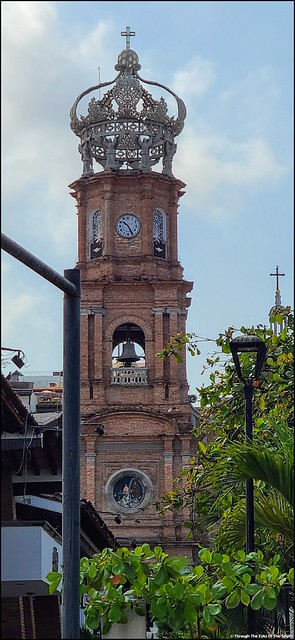
Our next stop was at The Church of Our Lady of Guadalupe, located in the center of the town square. 20220507_102932

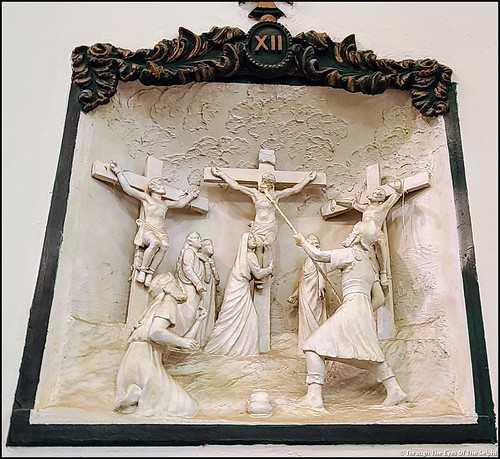
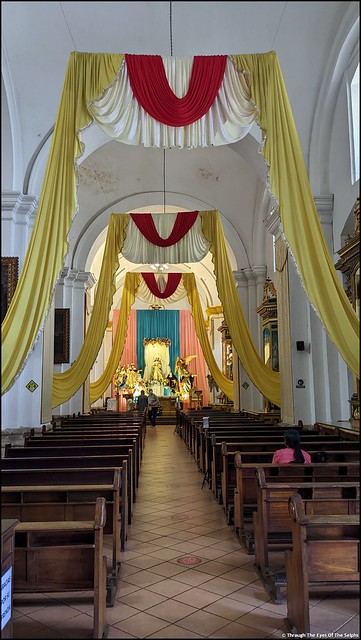
The church was built between 1930 and 1940 and has services on the weekends in both Spanish and English. The church is dedicated to Our Lady of Guadalupe, also known as the Virgin Mary, the patron saint of Mexico. 20220507_103738PXL_20220507_15392142320220507_10410120220507_104028PXL_20220507_154046559PXL_20220507_154146989original_4c0684fe-b7bd-4c76-8831-c6b021ebe737_PXL_20220507_154621002

After touring the church we took a short walk before stopping at a leather shop. Notice the city bus. In Mexico we they don’t have signs on the bus announcing the stops. They take soap and write the names of the stops. Notice Walmart is at the top of the list. PXL_20220507_155356191.MPoriginal_7f196126-77f4-4a85-bd4b-28c8871c0f51_PXL_20220507_154347370

Remember I told you the guides like to take you to shops hoping you will buy something. On this excursion it was a jewelry store followed by a leather shop. The owner talked about how they made shoes and other leather items, and then gave us plenty of time to shop. Shoes, jackets, purses, wallets…..we didn’t buy anything. Both stores offered free small drinks like margarita and beer. PXL_20220507_164057356.MPPXL_20220507_16170542320220507_115707PXL_20220507_16545692420220507_105927

Next up was a drive along the Banderas Bay. We stopped at an overlook where a man stood with a huge iguana. We were told you could hold the iguana, but only for a tip of course. I learned quickly the man wasn’t happy if you were interested in taking pictures only. PXL_20220507_172613891

This is Mismaloya Beach, Mexico. PXL_20220507_172852961

Across the street was a number of kudamundi, also known as a Mexican raccoon. 20220507_122555

From there I hoped we would continue along the scenic bay, but instead we were taken back into town to a Mexican restaurant. Lunch was not part of the excursion, and even though it was too early for lunch, we were all ushered inside to order lunch at our own expense. Rather annoying since we weren’t really hungry and the restaurant wasn’t cheap. 20220507_135734

After lunch we headed back to the ship. 20220507_10122220220507_10132220220507_101325

Another disappointing excursion and guide.  We noticed when we docked this morning that directly across the street was a Walmart Supercenter and a Sam’s Club. Since we had plenty of time before the ship left, we walked over to Walmart to get a few things. As we were rushing with a large group of people to cross the street before the light changed, I stumbled and fell once again. I skinned up the SAME knee as a couple days ago, my arm and even the knuckles on one hand. Bill and a man carrying a baby helped me up. I was too worried about possibly getting hit by a car to worry about my injuries or my pride. PXL_20220507_134142574

The rest of the afternoon we spent enjoying our balcony with ice on my battered knee. 

We managed to get some night pictures of Puerto Vallarta as we sailed away. 20220507_21214720220507_225323

Next up: Our last and favorite port of the cruise, beautiful Cabo San Lucas 


Antigua, Guatemala May 3, 2022

Guatemala, known as the “Home of Great Maya Cities” and “The Land of the Eternal Spring”, was our next port. Originally our next port was supposed to be Nicaragua but before we left home we were notified the stop had been canceled. No explanation was given but perhaps because of political unrest there or it was Covid related. Guatemala, with a population of over 17 million, is the most populous country in Central America. It has a representative democracy and its capital, Guatemala City, is the largest city in Central America. It has a long history of dictatorships and bloody civil wars. Since a United Nations negotiated peace accord was achieved, things have improved but it still struggles with high rates of poverty and crime including drug cartels. 

We had prebooked an excursion at this port and after striking out in Panama City and Costa Rica, we were hoping this wasn’t strike three. It turned out to be a great excursion. 

We left the ship in early morning and headed to the small, colonial city of Antigua, surrounded by volcanoes.  It was formerly the capital of Guatemala, but after a devastating earthquake in 1773, the capital was moved to Guatemala City. Founded in the early 16th century, Antigua is a World Heritage Site. PXL_20220503_150747104PXL_20220503_150427668original_d63dad91-650f-4a83-9931-813929f57040_PXL_20220503_154429296

20220503_095217

Can You See the Profile of the Lady Looking at the Volcanoes?

We enjoyed our ride through the countryside, passing many roadside fruit and vegetable stands. Homes were built right at the base of volcanoes, somewhat frightening since Guatemala has four active volcanoes. PXL_20220503_161951063PXL_20220503_162710632original_00e2c6de-247d-4406-87e4-96d97af1acd8_PXL_20220503_154331099.MPoriginal_f91c6140-12d4-4e72-91c6-f4340dfb459d_PXL_20220503_160805487original_40f6b43f-11db-4cfa-b2ad-da22359ef5fa_PXL_20220503_160840580

We rode through towns with business names we recognized like Chili’s, Panda Express, Taco Bell and Subway. One question that is always asked of the guides is the current price of gas. Interesting that the answer in Colombia, Panama, Costa Rica and Guatemala was always about $5 US per/gallon. Of course in those countries gas is sold in units of liters rather than gallons. original_a5d45b47-492c-4e79-ba9c-3cd5bca248cd_PXL_20220503_154442204

PXL_20220503_164141348

Making Tortillas in a Doorway

Entering Antigua, our first stop was the Cathedral de Santiago de Guatemala. This cathedral was begun in 1545 and destroyed by a devastating earthquake in 1773. It was only partially rebuilt over the next century. original_562c3e70-753b-472a-8de4-e4149c7e7583_PXL_20220503_16411464020220503_104626PXL_20220503_16474587820220503_10490020220503_105120

Across the street was a cultural center and museum. Some places still had symbols of Lent on their buildings. 20220503_110900original_aa8e0337-9cc7-4cfb-8d29-705be6bc471f_PXL_20220503_164538488

Next was the Cathedral San Jose. It was built around 1541 and like many other churches has suffered damage from earthquakes. This church has undergone partial restoration over the years. Simply beautiful. 20220503_11362120220503_111201PXL_20220503_171352509PXL_20220503_171436283PXL_20220503_171448859.MPoriginal_8b7d1417-95a7-4d72-aee0-8bbb1deb54b2_PXL_20220503_172018639

Across from the church was a park with prominent buildings around it. This two-story building was constructed in 1558. The General Captaincy of Guatemala governed the territory from this building. PXL_20220503_171807618.MP

Outside the church, as well as on the streets, were many persistent ladies selling various items. original_c6c1da8e-092e-402e-aa94-802d22cce0c9_PXL_20220503_172052769original_8858d95c-ff32-4b0c-bd24-a5b2755bd61c_PXL_20220503_174802569

The Santa Catalina Arch, built in the 17th century, is one of the distinguishable landmarks in Antigua Guatemala. It originally connected the Santa Catalina convent to a school, which allowed the cloistered nuns to pass from one building to the other without going out on the street. A clock on top was added in the era of the Central American Federation, in the 1830s. PXL_20220503_174550400

PXL_20220503_174526871

Many Walls in the City are Very Thick

For the first time they added small children. I guess they thought it was harder to say no to a child. One man, blowing a flute while holding another flute for sale, followed us for quite awhile through the streets. He simply would not take no for an answer. As far as I know, he never sold one. By the way, the streets in Antigua are all cobblestone. Not easy on the feet and we really had to watch our footing. The sidewalks were very narrow with holes and cracks, a disaster waiting for those not watching carefully. PXL_20220503_174203867.MPPXL_20220503_174326575

Nearby was the Iglesia de la Merced, another Catholic Church. We did not go inside but arrived in time to hear the bells from the two bell towers. 20220503_115446

The Convent of the Capuchins was built in 1731 and housed 25-28 nuns.  The nuns lived by strict regulations and discipline on poverty, penance and fasting. A replica of the tiny “celda” or cell which housed each nun, for sleeping only, was shown. The individual “apartments” were side-by-side in a circle.  20220503_124331PXL_20220503_184446595

The nuns had to be silent at all times except to pray. They could not eat meat or chocolate and ate together in silence. The convent suffered extensive damage in the 1773 earthquake and the nuns were forced to leave and were taken to the new capital in Guatemala City. 

The ruins are a favorite place for weddings and celebrations. We saw a young girl who was there for her “quinceanera” party, the celebration of a girl’s 15th birthday which marks her passage from girlhood to womanhood. Someone asked her if we could take her picture and she very happily agreed. PXL_20220503_182505427PXL_20220503_184039654.MP

After all that walking we were very glad our guide announced it was time for lunch, which was included in the tour. It was quite warm by this point and I think we were all looking forward to some air conditioning and cold drinks. I suppose we all thought the same thing when we were led to tables outside in a grassy area. Each table had a canopy and it really wasn’t as bad as I expected. A small four piece band played while we enjoyed a lunch of rice, refried beans, chicken topped with salsa, plantains, chips and guacamole. 20220503_131123

After lunch we went to Jade Maya, a jade factory and museum. Excursions love to take you to these places, hoping you will buy something. The visit began with an introduction by an archeologist, one of the founders of the museum, which has been open since 1974. PXL_20220503_195645372PXL_20220503_201416183

PXL_20220503_201455920.MP

Copy of the Burial Mask for the King, 683 A.D.

She told us to be sure and see the large piece of jade she and her husband discovered. She called it her source of future retirement income. PXL_20220503_200725379.MP

The museum had displays covering over 3,000 years of history and seven different cultures. Of course there was a gift shop where you could buy all kinds of jade jewelry. We felt this stop was too long, especially for those of us who were tired and ready to go back to the ship. 

The bus dropped us off back at the port and on the short walk back to the ship, we snapped pictures of a couple attractive murals. 20220503_16211220220503_162135

The ship staff greeted us at the gang plank with drinks and cold washcloths. Much appreciated! 

A very enjoyable day with an excellent guide! 

Next up: Mexico! 


Costa Rica May 1, 2022

Next up was the port of Puerto Caldera, Costa Rica. We had read many positive things about Costa Rica so we were looking forward to seeing some of the country. Located between Panama and Nicaragua, Costa Rica has 800 miles of coastline on the Caribbean Sea and Pacific Ocean. It is known for its beaches, volcanoes and biodiversity. Twenty-five percent of the country is made up of protected land and jungles with 75 wildlife refuges, 28 national parks, 13 wetlands and mangroves, 9 forest reserves and 8 biological reserves. It is the only country without an army or military and is called “Switzerland of the America’s” because of its neutrality during international conflicts. We read that Costa Rica has excellent healthcare with reasonable costs. Ninety-nine percent of their energy comes from renewable resources. It has a population of a little over five million. Like Panama, it is very popular with retirees from the United States and other countries looking for a cheaper place to live. 

We booked an excursion which was advertised as an exciting tram ride through the rainforest where you see a variety of birds and animals native to Costa Rica. Their advertisement said “feel the adrenaline”. We were also going to visit a sloth rescue center. After the disappointing excursion in Panama City we were optimistic about this one. Well, it was better than Panama City, but not by much. And these excursions are not cheap!! 

On the positive side we had an excellent guide who continually entertained us with information about her country. She was enthusiastic and really tried hard to make it a great day for everyone. The poor selection of sites to visit was not her fault. 

After a long bus ride through the countryside we arrived at the Rainforest Adventures Jaco park. We didn’t really mind the long ride because our guide’s narration helped pass the time and we enjoyed seeing the countryside. 

The exhilarating tram ride was nothing more than a slow moving covered chair lift through the tree canopy. We saw no birds or animals. We rode to the top and the chair lift turned around and went back down. As I overheard another person behind us comment on the way back, “Well that was pretty boring!” Yes, I would agree. But we did see a small waterfall!  LOL 20220501_094639original_ee98a477-fb35-4ee0-ac8d-df88dd8b228e_PXL_20220501_155754977PXL_20220501_154931513original_2f3de48f-4e79-4941-b817-a2cb5b2680ee_PXL_20220501_161813085

A park guide then took us on a tour through a garden area showing us some of the flora of Costa Rica. There were a number of flowers as well as herbs. 20220501_10503720220501_105059

He showed us how the berries of one plant could be used for face paint. 20220501_110707PXL_20220501_170733798

One very interesting plant had several small bats sleeping under a large leaf. He explained how the bats chew the leaves of the plants to create a folded area for them to sleep under. If a predator moves the leaves, they are instantly alerted to danger. PXL_20220501_165422386.MP20220501_105718

At another location he picked up a tiny ant that had a grip on a long branch and showed how that single ant had enough strength to hold up the branch. PXL_20220501_165903460.MP

We saw a cacao tree or cocoa tree with the fruit attached and a pineapple plant.  20220501_11103120220501_111103

We went to a butterfly garden but there were not many butterflies and they rarely landed on any plants to get a picture of them. Bill managed to snap one picture of a butterfly that appears to have eyes on the wings. 20220501_111551

Lunch was included and it was provided here. It was a typical Costa Rican meal of beans and rice along with some chicken, beef and salad. Our guide had told us earlier on the bus that the typical Costa Rican family has rice and beans at ALL three meals every day. PXL_20220501_172836970PXL_20220501_172909692.MP

I noticed a table with “Pura Vida” painted on it. Our guide told us earlier that is Costa Rica’s motto and means “Pure Life” or “Enjoy Life”, “Live Life”. It is often used in greeting one another and defines the lifestyle of the country. PXL_20220501_195539630

Leaving there we headed back towards the ship and we stopped at the Costa Rica Animal Rescue Center. We had a very sweet young girl as our guide who nervously said she was trying to learn English and she apologized for not speaking well. We thought she did an excellent job and at the end of the tour told her so, along with giving her a tip. original_19a199ab-1dd4-4e06-9a72-4c99e1da3ff0_PXL_20220501_19570001120220501_142946

During our time at the center the animals were being fed in their cages. 20220501_13574320220501_14090520220501_141038

I will let the pictures show the animals we saw.

PXL_20220501_200740565

Mango Tree

PXL_20220501_20044554620220501_141535PXL_20220501_201639936PXL_20220501_20133728520220501_14142820220501_14110720220501_14052820220501_140637 One monkey was released a few months back but returns each day to grab some food. 20220501_141223

The sloths in the trees were camouflaged and hard to see. PXL_20220501_201858412

We did see a two month old baby sloth and a five month old sloth. 20220501_142209PXL_20220501_202216976PXL_20220501_20230780220220501_142231

At dinner that night we shared a table with a gentleman from Toronto traveling alone, as well as a WW2 Navy veteran from Los Angeles traveling with his daughter. He was going to celebrate his 100th birthday a few days after the cruise ended. He told us he plays bridge once a week and gets there by driving on the freeway. He said his driver’s license is good until he is 101. I had to cringe because Bill and I have both experienced the horrendous traffic on the freeways in Los Angeles. He takes no medication and uses glasses for reading only. He has been cruising since 1976. His daughter said he entertained people on the plane to Florida by doing jumping jacks and exercises. Such are the people we meet at shared dinner tables! 

Today, May 1st was a very special day for us, our eleventh wedding anniversary! We felt blessed to be able to celebrate it in Costa Rica. PXL_20220501_155326190

Next up: A day at sea and then Puerto Quetzal, Guatamala 


Panama City, Panama April 29, 2022

Our next port of call was Fuerte Amador, Panama, eight miles form downtown. From here we booked an excursion into Panama City, the capital and largest city. Panama City has a population of two million people which is half of the country’s four million people.

20220429_095453

Biomuseo – Whimsical museum structure by the renowned Frank Gehry with 8 galleries on Panama’s biodiversity

Panama is a country on the isthmus which links Central and South America. It received its independence from the Spanish empire in 1821. It is regarded as having a “high income economy” with a large portion of its income being revenue from Panama Canal tolls. About 40% of its land area is jungle. Panama has also been at the top of the list for retirees from other countries to retire due to their low cost of living, excellent healthcare and no hurricanes. 

We had really been looking forward to visiting Panama City. Unfortunately the excursion we booked there was the most disappointing of our cruise. 20220429_101007

20220429_101049

The F&F Tower is an office tower in Panama City, Panama 797FT almost six degrees floor rotation

The excursion was called “Panama City: Old and New“.  We drove by the oldest part of the city Panama Viejo (Old Panama Ruins and a UNESCO World Heritage Site) without stopping. We struggled to snap pictures through the bus windows of some of the ruins. In fact the guide almost forgot to mention the ruins until someone on the bus asked about them.  Through doing research for the blog I learned that Panama City is the oldest continuously occupied European settlement in the Pacific coast of the Americas, and was founded in 1519.  The town was destroyed during a pirate attack in 1671 and the city center was moved five miles southeast. 20220429_10240320220429_10243920220429_102535

We finally got off the bus and proceeded to walk through an older part of the city. We passed by the Presidential Palace and the guide would not let us stop to get a picture. original_62c347d6-6ee9-4880-bcc9-f84c6f07093e_PXL_20220429_155720569Very strange. Not even a picture from a distance?? I managed to sneak a picture of some police near the palace. The guide did not use a microphone so it was very hard to hear him depending on where you were standing. original_77d13044-4c0c-4893-8d4c-ad84e456af61_PXL_20220429_155524781

We continued walking down some very narrow brick lined streets through the old colonial area of the city. PXL_20220429_160244065PXL_20220429_160341788The Spanish architecture was reminiscent of what we had seen in Colombia with the wrought iron balconies. original_b1a641d9-b2c2-4726-94d8-3ba8c76c41e5_PXL_20220429_160447203.MPPXL_20220429_160551393PXL_20220429_161332978Many of the old colonial buildings are falling apart and in need of repair. PXL_20220429_160023596

We visited Saint Joseph Church with its beautiful golden altar. The altar is considered one of the greatest treasures of Panama. The altar is made of carved wood covered in gold leaf. When the pirate Henry Morgan attacked and destroyed the city in 1621, the Jesuits painted the altar black to hide the gold.

PXL_20220429_161555945.MP

Famous for its baroque altar carved in mahogany and covered in gold leaf.

original_85934fc5-d497-4818-b43d-682fc06276b2_PXL_20220429_161527770.MP

The church had restrooms which some of us desperately needed. While some of us waited in line, the guide took the others to another room in the church where there were very detailed dioramas of The Nativity. Those of us who chose the bathroom were told to meet the group back in the sanctuary. We totally missed seeing the dioramas. Fortunately Bill was able to see the display and took pictures. I do not understand why the guide couldn’t have given us ten minutes so everyone could see them. 20220429_11252020220429_112644

Ruins of the Jesuit temple and convent. Functioned until 1767 when Jesuits were expelled. Built about 1749 and burned in 1781. 20220429_11361920220429_113714

We saw the ruins of the 1741 Old Convent of Santo Domingo. It burned in 1756, it was never repaired and the very unique flat arch located here was key during the negotiations of how to build the Panama Canal.

PXL_20220429_164307476

The Santo Domingo Convent , built in 1678, was one of the first to be founded in the new city.

It is said, that Panama used it as proof that Panama does not have earthquakes because an earthquake would have destroyed the arch. The current arch is a reconstruction with its original bricks. Note: Panama does have earthquakes!

20220429_114712

We visited one more church, the Panama Metropolitan Cathedral, where construction took place from 1688 to 1796.

20220429_120954

The Cathedral Basilica of Santa María la Antigua de Panamá is a Catholic temple. Original building destroyed by earthquake in 1882.


PXL_20220429_172247636.MP

At this point in the tour it started to rain and storm. A very heavy rain as we started to walk back to the bus. Bill and I had brought one umbrella and one poncho. Most of the people had not brought anything and were getting soaked. We took refuge under some awnings but were splashed as trucks passed by. Discussion was held as to whether people wanted to wait or brave getting wet. At this point most everyone was soaked so what difference did it make. The guide said the bus was not allowed on the narrow streets and could not come pick us up. 

When we reached the bus we had a new bus waiting because people had complained earlier that the AC was not working adequately. Now people were drenched to the skin and had a nice cold bus to ride back on. 

At this point we were expecting to ride through some of the newer sections of Panama with skyscrapers and modern buildings along nice beaches. After all, the tour was called Panama City: Old and New. Even after the rain delay we were not behind schedule. Instead, the bus took us directly back to the ship. A disappointing end of the tour and a disappointing tour in all. We hope to return to Panama City someday and see more of it. One thing Panama City did not have was persistent vendors and beggars. Perhaps the rain had something to do with that but I don’t think much. 20220429_202727

Dinner that night was a couple from Stuart, Florida and another from Tampa Fl and sisters cruising together, one from Albuquerque, New Mexico and the other from Henderson, Nevada. All delightful dinner companions. 

After a day at sea our next port will be Costa Rica.

Transiting the Panama Canal April 28, 2022

A highlight of our cruise was transiting the Panama Canal. From the Atlantic to the Pacific it stretches 50 miles. Initially began in 1882 by French builders of the Suez Canal, they gave up in Panama. The U.S. acquired the canal in 1904 and began work.  American crews persevered with tens of thousands of workers drilling dynamite holes, driving steam shovels and laboring with pickaxes to build the canal, all the while fighting the heat, yellow fever and malaria. There were 25,600 fatalities. It took ten years to complete and shortened a ship’s voyage from the Atlantic to the Pacific by 7,800 miles.   In 1999, control of the canal was handed over to Panama from the U.S.

In 2016 an expansion more than doubled the canal’s capacity, allowing ships with a capacity of more than 14,000 containers to pass through. Today more than 12,000 to 15,000 ships transit the canal each year. More than 52 million gallons of water is used during each ship’s transit through the three locks. Recently they have added new locks that recycle some of the water so as not to deplete the lakes and rivers.

It is without a doubt one of the world’s greatest engineering achievements. More than 100 species of mammals and reptiles as well as 500 different birds live in nature reserves on islands and lakes along the canal. An interesting fact is that ships pay $35,000 additional fee for a reserved spot to transit. Otherwise, without the reserved spot, we would have had to wait for a long time to get in line for an unknown transit time. They also have to pay for each person onboard the ship. So Holland America probably paid $444,000 in fees to transit the canal!!

Since the average transit time is 8 to 10 hours, we had to get up before sunrise to see the transit begin. They opened up the bow of the ship, so that is where many people first gathered. The cruise director was up on the bridge of the ship with the captain and other officers and provided commentary throughout the day. 

We first passed under the Atlantic Bridge, spanning the Atlantic entrance to the canal. The best way to show you the transit is with Bill’s pictures rather than with words. 20220428_062103~3PXL_20220428_11321589820220428_063325

A few thoughts. It took all day, from before 6:00 AM to 5:00 PM. We were fortunate it was an overcast day which helped greatly with heat and possible sunburns. We were able to sit on our balcony for much of the time which made it much more enjoyable. Our cabin was located where the ship widened, our balcony allowed us to look toward the front of the ship as well as out to the side. PXL_20220428_115004723~2PXL_20220428_115944563PXL_20220428_120521045.MP

On the bow of the ship at 7:00 AM some crew members brought around warm “Panama Rolls” which is a tradition when transiting the canal. They are yeast rolls with an apricot filling. original_9e6308de-e0f7-4695-9705-38ec2938d11c_PXL_20220428_122623251.MPPXL_20220428_133737851They were very good and available in the dining room and buffet areas throughout the day. They were only available as a special treat that one day. 20220428_07164520220428_07170620220428_083719PXL_20220428_13390699520220428_08512520220428_085130PXL_20220428_140401811~2

20220428_123642

Some of the Culebra Cut

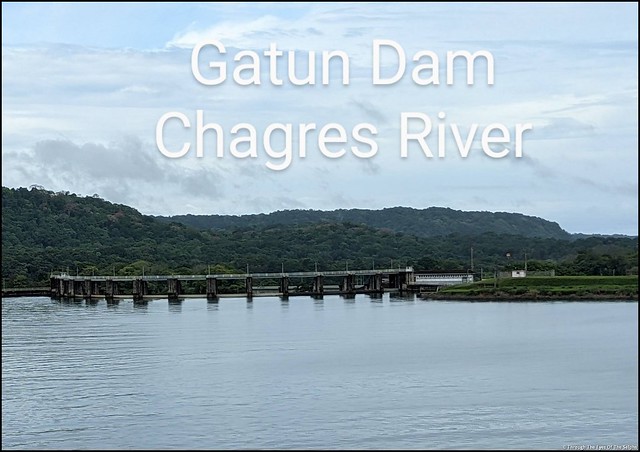
We passed through the Gatun Lake to the second bridge. 20220428_123802~220220428_125014

When your ship approaches the lock a positive arrow sign directs you to the correct side. 20220428_131507

At the Miraflores locks we saw tug boats preparing to help ships transits. PXL_20220428_185824717PXL_20220428_202047018

When we were standing on the bow a large orange and blue cargo ship passed us in the other lock. A man standing next to us said out loud to himself, “Orange and blue, UVA colors.” I couldn’t believe it. Turns out he went to UVA and currently lives in the Winchester area. Of course Bill pointed out that was also the school colors of the University of Florida. 20220428_072433

As we neared the last lock, the cruise director announced a crocodile had been spotted in the water. That added some excitement for those who had never seen a crocodile before. PXL_20220428_20253443120220428_152938~2

We passed the Miraflores Locks and Visitors Center. A very large group of people had gathered on the top deck of the Visitors Center. As we passed by, a man with a microphone would say something in Spanish and then everyone on the deck would yell, cheer and wave to us. It was fun to wave back at them. 20220428_155306

Here we passed the concrete foundations for the swing bridges that were used to cross the canal with by car. 20220428_160816~2

We finally reached the water level of the Pacific Ocean. 20220428_14040620220428_161045

We had a great day and an amazing experience. We were amazed at how narrow the locks were and how little room there was between the ship and the sides. 20220428_083557~2The captain and crew really had to be on their toes all day!! On each side of the ship were four “mules”.  As a safety feature, ships were guided though the lock chambers by electric locomotives known as mules. Mules are used for side-to-side and braking control in the locks. Forward motion into and  through the locks is provided by the ship’s engines. PXL_20220428_122720547.MPPXL_20220428_123918060.MP

Time to go in, we see the third bridge. 20220428_16265120220428_162552~2

That evening we had a very interesting shared table. One couple was from British Columbia and he was a retired forensic psychologist at a mental hospital. His wife had worked there as well. He said he loved it when people asked how they met and he could say “at a mental hospital”. Believe it or not the other couple was from Dallas, Texas and he was a clinical psychologist. Made for a very interesting dinner conversation. As I said before, these shared tables can lead to interesting evenings. 

Next up: Touring Panama City